






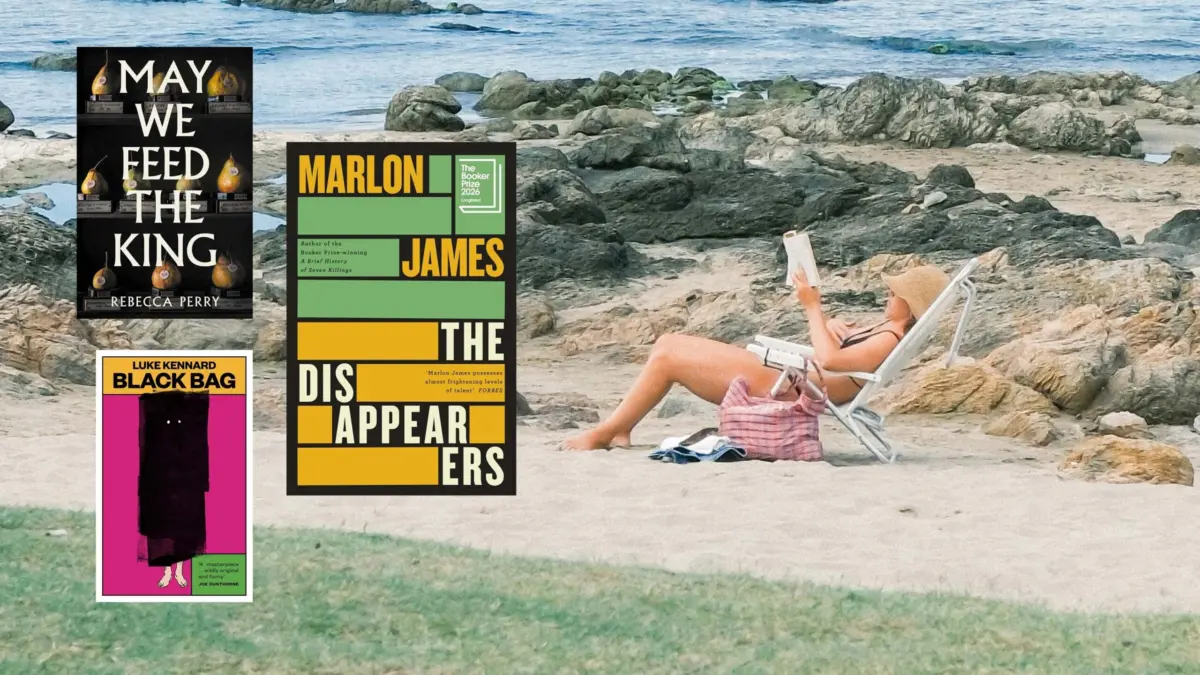
The Booker Prize has long served as a profound vehicle for remarkable travel writing, and the official announcement of the 2026 shortlist proves that this year’s selection of literary works is no exception. Tracing a line from Elizabeth Taylor’s entirely underrated 1971 shortlist contender Mrs Palfrey at the Claremont to this year’s international winner Taiwan Travelogue, the enduring connection between geographical exploration and one of the world’s most prestigious literary honors runs remarkably deep.
"They are set anywhere and everywhere," noted prize committee chair and classicist Mary Beard earlier this summer as she reflected on the curation of the initial longlist. "But there’s one thing they all share. Every writer on our longlist brilliantly musters the power of words on the page to take the reader to new places, to see old places from new angles, to change minds."
Even as the competitive field has now narrowed down to the final six titles, the geographical and chronological breadth of the settings plotted out across the shortlist remains as capacious as ever. Readers are transported across physical and conceptual borders—whisked away to the shores of Jamaica, the wind-swept Outer Hebrides of Scotland, the mist-shrouded Kent coast, the idyllic yet turbulent expanses of Massachusetts Bay, academic lecture halls in London, and meticulously reconstructed medieval English estates. Each selected novel leverages its distinct setting not merely as a passive backdrop, but as an active, breathing muse that shapes the psychological and narrative arcs of its characters.

The End of Everything by M. John Harrison
British science fiction author M. John Harrison stands as the most tenured first-timer on this year’s shortlist. At 81 years old, Harrison reaches new heights within his celebrated literary career through this fabular imagining of the apocalypse. Set along the Kent coast sometime after the arrival of an enigmatic alien species known as the iGhetti, the end times depicted in the novel feel antediluvian in their sheer ambiguity. Characters within the story can no longer agree on what sparked the ongoing global conflict, nor can they definitively explain what is keeping it going.
The narrative follows the parallel lives of beachcomber Phillip Tennent, who scours the coastline for strange detritus washed in from the English Channel, and his sundowning, 70-year-old aunt Marnie, who had lived by the shoreline long before the war broke out. Both set out on deeply personal and transformative journeys after Phillip encounters a mysterious "artefact" that demands remarkably attentive babysitting, and after Marnie commits the murder of a local boy.
The future reveals an uncannily familiar face in this novel, with the Kent coast serving as both canvas and muse for the societal unraveling. Explaining his creative process, Harrison shared in an interview with the Booker Prizes that the art towns of the UK’s East Coast provided the ideal setting. "I love that coast, all the way round from Hastings to the Thames—even up into Suffolk," Harrison noted. "Current affairs provided the themes and the satire: what happens when all of our expectations and explanations of the world become an ongoing disaster, but we still have to make a life?"

The Disappearers by Marlon James
Booker Prize-winning author Marlon James returns to the shortlist with his ambitious new novel, The Disappearers. The story centers on a group of queer men who gather to rehearse a theatrical production only to become the victims of a targeted anti-gay hate crime. The narrative follows the survivors as they navigate the complex socio-political landscapes of the 1980s and 1990s in Jamaica.
Clocking in as a riotous 640-page doorstopper, the novel grapples head-on with historical and contemporary homophobia, the lingering specter of colonialism, the devastating tumult of the AIDS crisis, and rigid frameworks of power that demand either absolute dominance or total submission. To develop the novel authentically, James conducted extensive on-the-ground research in Jamaica to better understand a queer history and heritage that he had personally rejected before coming out.
While the page count might initially intimidate some readers, the pace of James’s writing operates as a bracing, propulsive vehicle that delivers a much-needed perspective to contemporary Caribbean literature. Far from a light beach read, the book offers striking geographical and cultural specificity. "Readers attuned to the uptown/downtown divide in Kingston, Jamaica, will recognize the island and the era immediately, and will love how that specificity never tips into travelogue," the prize committee wrote in their official assessment of the nomination.

Black Bag by Luke Kennard
Addressing the acute economic pressures placed upon contemporary creatives, Luke Kennard’s satirical campus novel asks a distinctly modern question: What new extremes of desperation will working artists sink to in today’s economy? For anyone whose eyes have watered at the rising cost of everyday essentials or the daunting prices of rent in London, the financial anxieties that anchor this narrative will feel immediately familiar.
The story follows a nameless narrator who pushes the absolute boundaries of urban survival when he accepts a gig working for university professor Dr Blend. The employment arrangement requires the protagonist to sit quietly in the back of a university lecture hall, simply existing while zipped entirely inside a person-sized black bag. Kennard’s narrative draws inspiration from a real-life psychological experiment conducted in the 1960s by Oregon State University professor Charles Goetzinger, who instructed a masked student wearing a heavy black bag over his body to attend a course. The original experiment sought to test the "mere-exposure effect"—the psychological phenomenon suggesting that people grow fond of things simply due to familiarity. In a similar vein, Kennard’s novel experiments with human connectivity and the unknowable, while standing out among the Booker cohort for its sharp, abundant humor.
May We Feed the King by Rebecca Perry
For readers drawn to fiction rooted in exquisite literary artistry, Rebecca Perry’s latest project offers a carefully conducted sleight of hand. The novel details intimate historical moments with subtlety rather than didacticism, informing the reader of a medieval king’s personal fondness for horticulture or describing the oblique view into a royal bedroom window from the grounds below. However, Perry deliberately withholds specific names, genders, and geographical markers where readers might typically expect them.

The novel serves as proof that historical particulars are not strictly necessary to grasp the emotional truth of the past, suggesting that the underlying reality of history may forever remain unknowable. The narrative follows a museum curator tasked with recreating authentic scenes for historical reenactments. Equipped with a delightfully idiosyncratic personality, the protagonist tackles the challenge of breathing simulated life into an estate’s vaguely defined 750th anniversary. Though her narrative voice remains decidedly unsentimental, the novel maintains a gentle cadence that invites readers to genuinely care and wonder about history rather than simply mine it for definitive facts.
The Things We Never Say by Elizabeth Strout
Set against the backdrop of Massachusetts Bay, Elizabeth Strout crafts a tender, evocative cradle for high school history teacher Artie Dam as his entire world experiences a profound upheaval. Artie’s life is defined by punctuated equilibrium: largely quotidian routines consisting of teaching the American Civil War to his students, sailing out on the bay during weekends, and attending occasional holiday gatherings hosted by his wife’s politically conservative family friends.
However, external and internal pressures mount simultaneously. Startling revelations about his domestic life disrupt his marriage, encroaching political polarization threatens the professional integrity of his career, and those around him appear entirely disinterested in discussing life on genuine terms. Strout illustrates a fundamentally kind man with an endearing earnestness who struggles against the harsh realization that the modern world is no longer simple. While Strout deliberately refrains from pinpointing the exact fictional municipality where the story unfolds, it is precisely this universal "anywhere-ness" that provides the novel with its greatest emotional strength.

John of John by Douglas Stuart
Encompassing elements of strict Calvinism, traditional weaving, deeply repressed sexuality, and passages written in Scottish Gaelic, Douglas Stuart constructs a rich and textured universe from seemingly spartan materials. Set on the misty, wind-whipped Isle of Harris—a remote and rugged island within Scotland’s Outer Hebrides archipelago—the narrative is wrapped in a palpable, atmospheric chill.
Taking place in the 1990s, prior to the ubiquity of the internet and the transformation of mobile phones into modern appendages, the pacing of the story reflects an era where daily life lacked instantaneous communication. While significant events unfold throughout the narrative, the book functions as a slow, deliberate reveal along a serpentine and occasionally painful journey. The protagonist John, having recently graduated from an art school on the Scottish mainland, is summoned back to the island by his austere, religious, and intensely secretive father—also named John—who expects his son to help care for his grandmother, continue the family’s traditional weaving livelihood, and return to the local church.
Echoing the complex and messy interpersonal dynamics found in Shuggie Bain, Stuart’s 2020 Booker Prize-winning novel, the relationships in this work are deeply complicated yet anchored by genuine human love. True to its setting and themes, the novel weaves recurring metaphors throughout its pages, observing how a careful mix of contrasting colors and inherent imperfections ultimately yields the most compelling cloth.