




The technology behind these devices, known scientifically as photobiomodulation, utilizes specific wavelengths of red and near-infrared light to influence cellular activity. Emerging research suggests that red light therapy may help stimulate collagen production, soften the appearance of fine lines, improve overall skin texture, and reduce certain types of localized inflammation. Meanwhile, near-infrared light penetrates deeper into bodily tissue, where its potential benefits for muscle recovery and physical discomfort are currently being studied by researchers and wellness experts alike.

Unlike traditional LED masks, which are typically contoured strictly to the facial features, expansive therapy panels can illuminate much larger areas of the human body simultaneously. Users can target the back, legs, and shoulders with a single session, marking an interesting next step for beauty enthusiasts who are ready to explore the boundaries of light-based technology beyond just their facial complexion.
Of course, industry experts note that there is considerably more to choosing a quality panel than simply counting an impressive number of glowing bulbs. Wavelength specifications, LED density, irradiance—which measures the precise amount of light energy reaching a given area—and overall treatment coverage all matter significantly when selecting a device. Furthermore, some advanced modern devices now incorporate specialized wavelengths, such as 1064-nanometer near-infrared light, although formal scientific research into its specific applications is still actively developing across the medical and wellness communities.

The modern market now includes everything from compact, targeted devices designed for specific areas to substantial, full-body systems meant to serve as dedicated home-wellness installations. Among the notable options currently available to consumers exploring this space are Helio Cure’s Helio Nova, Mito Red Light’s MitoMega 2.0, Joovv’s Solo 3.0, RLT Home’s Total Spectrum Compact, and PlatinumLED’s Biomax Pro.
The Best Red Light Therapy Panels
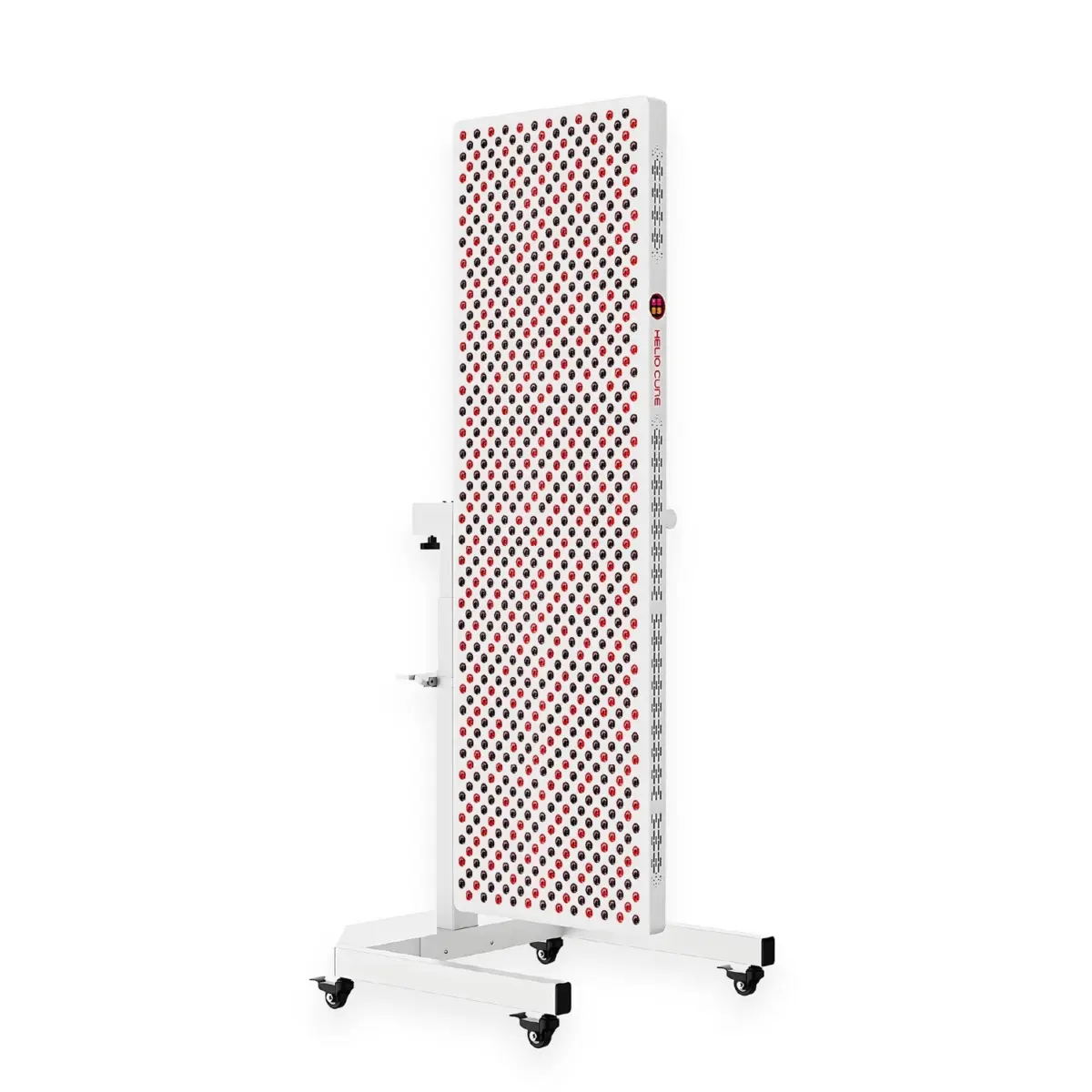
When consumers decide to dedicate precious floor space within their homes to a red light therapy panel, manufacturers are responding by ensuring the equipment features sophisticated technology. Helio Cure’s Helio Nova serves as a prime example of this trend, combining six distinct wavelengths of red and near-infrared light. This includes the 1064-nanometer wavelength designed for potential deeper-tissue applications. Another distinguishing factor for many users is the complete absence of blue light, a design choice that is particularly appealing for individuals whose self-care routines naturally tend to take place late in the evening before sleep.

Beyond its wavelength specifications, the Helio Nova features a substantial array of 864 LEDs spanning 630, 660, 810, 830, 850, and 1064 nanometers across a 65-inch panel engineered specifically for comprehensive head-to-toe sessions. The unit arrives equipped with a 360-degree rotating, remote-controlled, height-adjustable electric stand to accommodate different user preferences and spaces. For operational versatility, the device includes five distinct preset modes focusing on Face and Skin, Pain and Inflammation, Weight Loss, Brain Health, and Hair support, alongside a Full Spectrum setting and a custom mode that allows users to manually adjust light intensity, timing, and pulsing behaviors.
For those seeking a large-scale alternative to a traditional facial mask without a complex installation, the MitoMEGA 2.0 offers a robust configuration. Equipped with 300 LEDs, dual wavelengths, and a digital timer that can be easily adjusted anywhere from one to 20 minutes, the device is explicitly designed for treating broader areas of the human body efficiently. Its integration of a whisper-quiet cooling fan represents another practical detail for consumers looking to incorporate light therapy seamlessly into their daily routine without disruptive mechanical noise.

Red light therapy has also absorbed several modern technological perks through high-tech options like the Joovv Solo 3.0. Alongside its standard red and near-infrared light delivery settings, this panel introduces a pulsing Recovery+ mode, companion app-controlled session management, and an expandable modular design that allows users to scale their setup over time. The inclusion of an ambient lighting mode reflects the broader lifestyle integration of these wellness products, allowing a high-powered therapeutic device to effectively moonlight as ambient mood lighting during morning or evening hours.
For individuals who prioritize high levels of customization in their wellness routines, multi-wavelength panels offer extensive configuration choices. A notable entry in this category is a 216-LED panel featuring seven distinct wavelengths spanning blue, red, and near-infrared light. To support various goals, these systems often incorporate numerous preset modes designed around specific skin care and wellness objectives. Thoughtful hardware additions, such as included wheeled stands, wireless remote controls, and protective eyewear, become particularly important when investing in substantial, high-output home equipment.

Similarly, next-generation systems like the Biomax Pro highlight how the industry is moving past the sole pursuit of a glowing complexion. By utilizing multi-spectrum capabilities covering blue, red, and near-infrared light, these panels cater to a diverse array of dermatological and physical wellness applications. Independent control mechanisms allow users to fine-tune light settings precisely to their personal comfort and goals, while integrated digital applications assist in keeping regular treatment schedules organized and trackable over time.
As beauty and wellness technology continues to evolve, the market for at-home light therapy is increasingly characterized by professional-grade specifications adapted for consumer use. Whether integrated into a dedicated home spa room or incorporated into a flexible living space, these advanced panels represent a significant evolution in how individuals approach light-based treatments at home.