






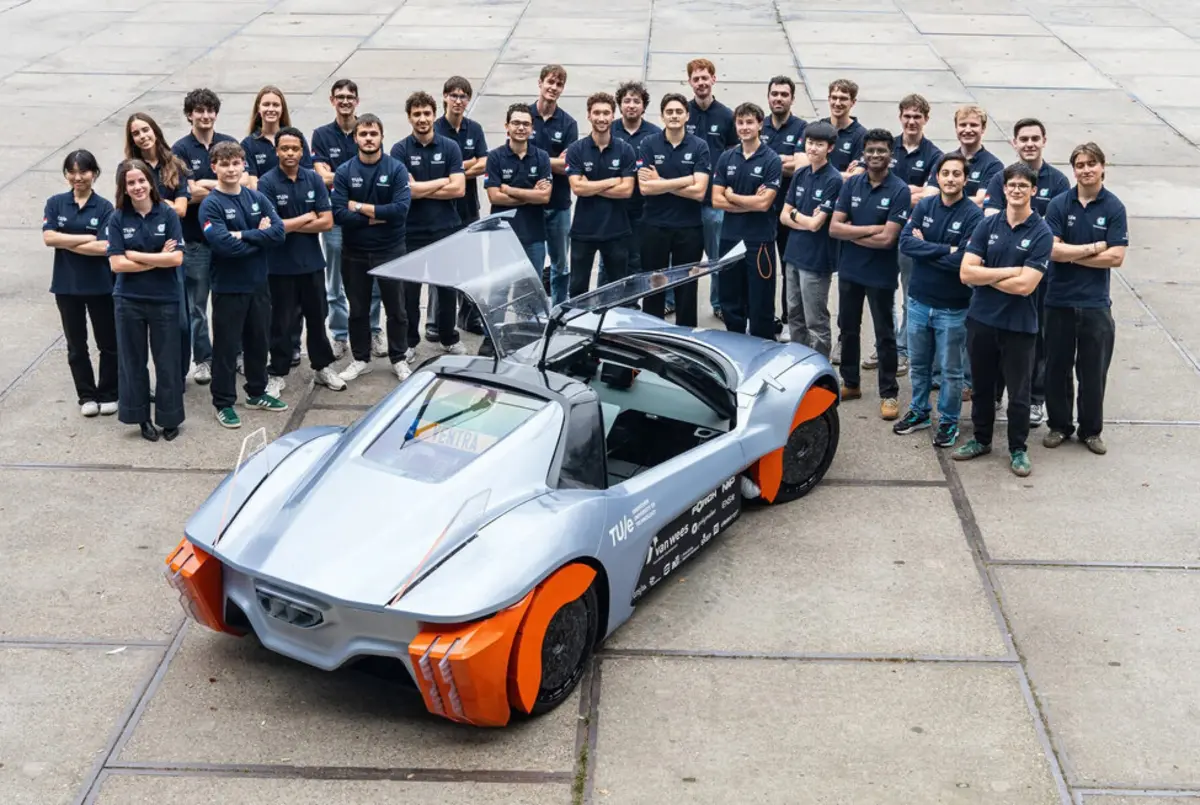
Electric vehicles have fundamentally transformed the automotive landscape by eliminating tailpipe emissions, effectively removing one of the most visible and heavily scrutinized sources of urban air pollution. Yet, as EVs glide quietly down city streets and highways, they continue to leave behind an entirely different kind of footprint—one that has long escaped strict regulation and public attention. Every single rotation of a wheel grinds rubber against asphalt, while the act of braking releases a steady stream of microscopic wear particles into the atmosphere. Confronting this overlooked environmental challenge head-on, a team of ingenious engineering students at Eindhoven University of Technology in the Netherlands has developed a groundbreaking electric vehicle concept known as VENTRA.
The student-built EV is designed specifically to capture non-exhaust emissions directly at the source, preventing harmful tire and brake dust from drifting into the surrounding air and ecosystems. But what makes the VENTRA project truly remarkable is not merely its ability to trap these invisible pollutants, but its innovative approach to giving that captured debris a second life. By integrating advanced collection technology with a remarkably lightweight frame and circular material design, the Dutch student team is challenging the automotive industry to rethink what a truly clean vehicle entails once emissions move away from the tailpipe and toward the mechanical components that have been interacting with the road all along.
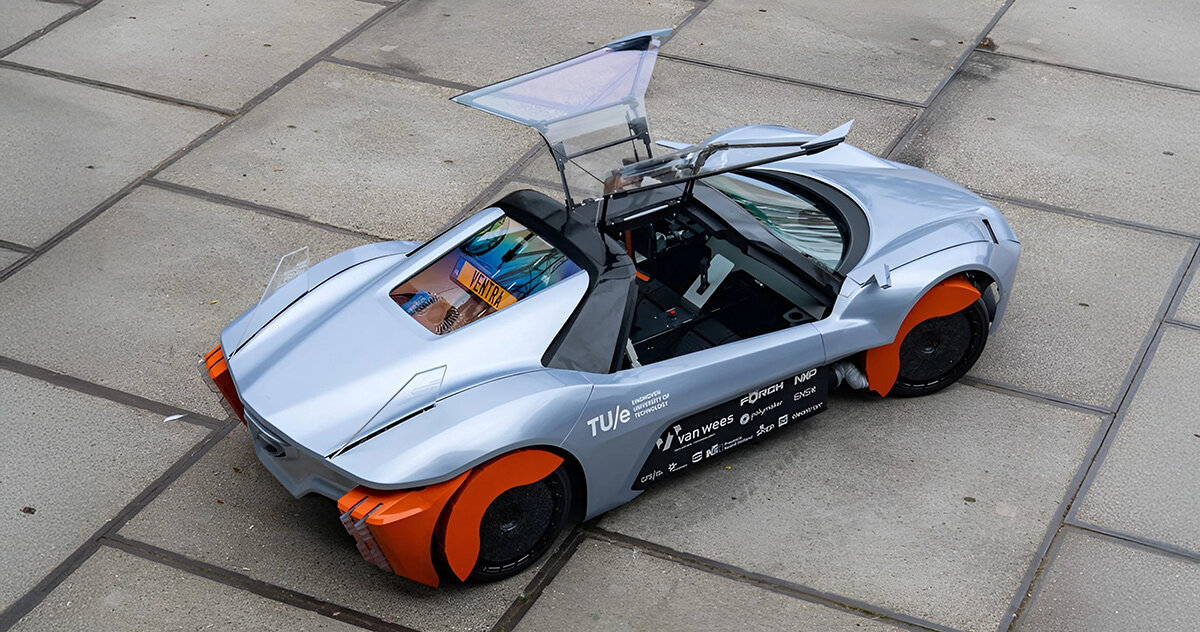
Electrostatic Collectors Sit Close to Each Wheel
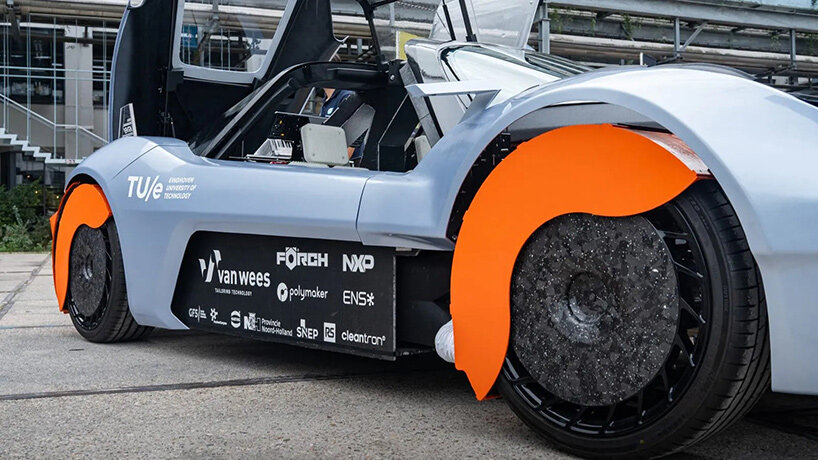
At first glance, the most striking and visually distinct feature of the VENTRA concept is a set of vibrant orange covers wrapped snugly around each of the car’s wheels. Beneath these bright enclosures lies a sophisticated technology developed by the team called T.R.A.C.E., an electrostatic collection system engineered to pull airborne tire and brake particles out of the air as the vehicle moves forward. This represents a remarkably physical, mechanical solution to a category of pollution that typically disperses invisibly into the background environment, accumulating on roadsides, washing into storm drains, and settling in nearby soil and waterways.
The physics behind the system are designed to adapt dynamically to different driving scenarios. At higher cruising speeds, the natural aerodynamic movement of the vehicle naturally directs particle-laden airflow straight through the internal pathways of the collection system. Meanwhile, during slower urban transit where aerodynamic pressure is lower, a series of small, integrated fans assist in drawing the air inward toward the electrostatic plates.
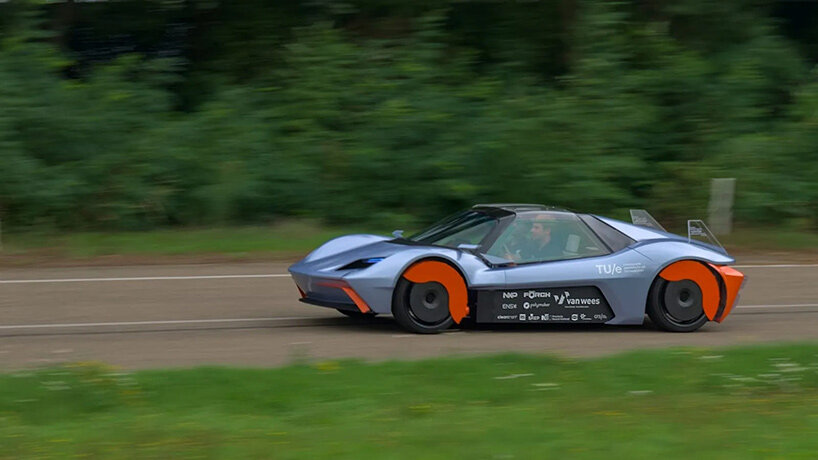
According to comprehensive computer simulations conducted by the student engineers at TU/ecomotive, the VENTRA setup demonstrates impressive capture efficiency rates. The models indicate that the system can successfully capture approximately 24 percent of tire-wear particles when the vehicle is traveling between 31 and 50 miles per hour, translating roughly to 50 and 80 kilometers per hour. That capture rate scales up significantly during slower city driving conditions, reaching an estimated 42 percent efficiency. While these promising figures are currently derived from advanced engineering simulations, transitioning the vehicle to rigorous real-world street testing represents the crucial next phase of development for the team.
Once the particulate matter has been safely accumulated on the collection surfaces, it can be easily extracted using water or a vacuum system. Rather than treating this gathered debris as hazardous waste destined for disposal, TU/ecomotive has already discovered a creative and symbolic application for it. A portion of the captured particulate matter has been successfully incorporated into a specialized enamel coating applied to surfaces inside the vehicle’s cabin. This process seals the dark powder securely into a durable new interior material, physically bringing an otherwise invisible byproduct of driving directly into the passenger space as a reminder of the car’s environmental mission.
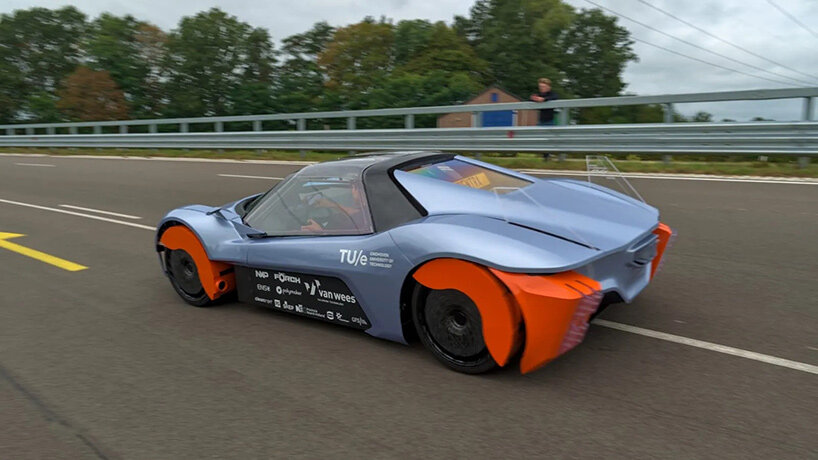
A 790-Kilogram EV Designed to Make Less Tire Dust in the First Place
Capturing particles after they form is only part of the equation; the student team recognized that the best way to address tire dust is to minimize its creation from the outset. One of the primary factors accelerating tire wear in modern electric vehicles is vehicle weight. Because heavy battery packs are required to achieve competitive driving ranges, contemporary EVs often exert substantially more downward force on their tires than their internal combustion engine counterparts, accelerating the rate of rubber degradation.
To combat this inherent physical challenge, the TU/ecomotive team focused heavily on aggressive weight reduction throughout the entire architecture of the VENTRA concept. The structural foundation of the car relies heavily on advanced carbon-fiber-reinforced thermoplastic composite sandwich panels. This cutting-edge material choice allowed the students to construct a complete chassis weighing just 135 kilograms. For comparison, traditional conventional construction methods cited by the team typically yield a chassis weight of roughly 230 kilograms, representing a massive reduction in structural mass.
The benefits of this lightweight philosophy echo throughout the entire vehicle. The finished VENTRA concept tips the scales at a remarkably modest 790 kilograms total. Despite its featherlight construction, the electric car does not compromise heavily on utility, boasting an estimated WLTP driving range of 290 kilometers, which translates to approximately 180 miles on a single charge.
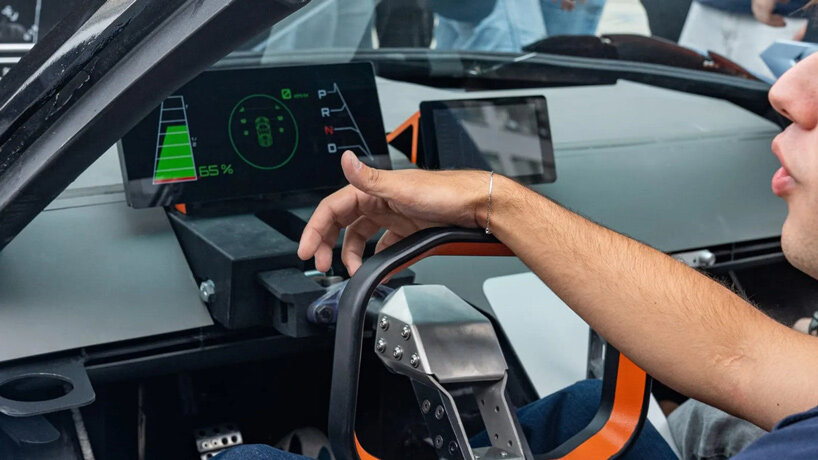
The vehicle’s proactive approach to reducing tire wear extends directly onto the dashboard through a dedicated software system called Clean Drive. This intelligent interface constantly monitors live data streams related to the driver’s steering inputs, braking pressure, and acceleration habits. By processing this information in real time, Clean Drive provides the person behind the wheel with actionable feedback designed to encourage smoother driving habits that inherently minimize unnecessary tire and brake wear. Through these combined strategies, VENTRA functions as a rolling study in what happens when vehicle design shifts its focus toward parts of the car that have been interacting with the road since the dawn of motoring.
VENTRA Follows a Decade of Experimental Cars by TU/ecomotive
The creation of the VENTRA concept does not happen in a vacuum; rather, it represents the latest milestone in a rich, decade-long tradition of experimental automotive innovation by TU/ecomotive. Over the past ten years, successive generations of engineering students at Eindhoven University of Technology have consistently pushed the boundaries of sustainable mobility through a series of thought-provoking prototype vehicles. Previous projects by the student collective have explored diverse avenues of environmental automotive design, ranging from cars constructed entirely from waste materials and modular, repairable city cars designed for infinite longevity, to vehicles built specifically around closed-loop material lifecycles.
With the unveiling of VENTRA, the team has shifted its investigative lens toward the hidden consequences of driving—specifically examining what a vehicle leaves behind in its wake while it is actively in motion. This shift in perspective is becoming increasingly relevant on a regulatory level as well. Across Europe, upcoming legislative frameworks such as the Euro 7 emissions standards are introducing rigorous requirements that specifically address non-exhaust emissions, bringing brake-particle emissions and tire abrasion into the fold of official automotive regulation for the very first time.
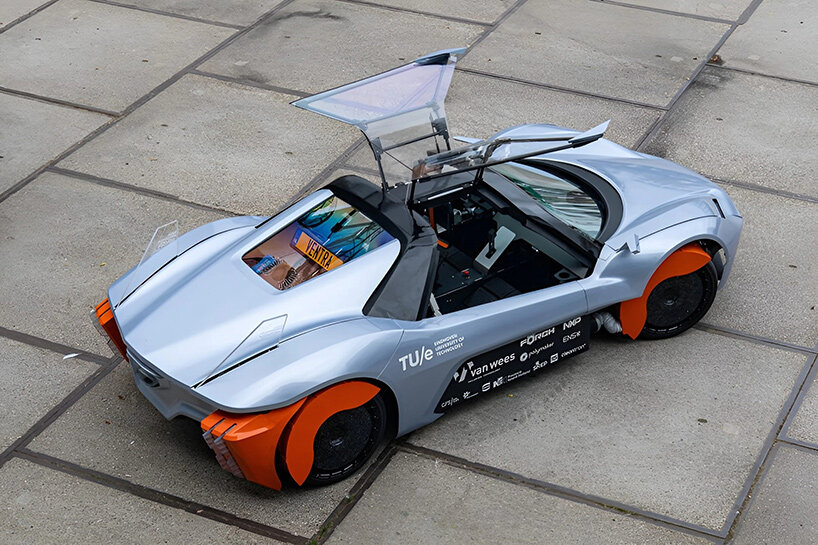
While VENTRA remains strictly an experimental student-built prototype rather than a mass-market production vehicle, its holistic, wheel-level approach gives a tangible, physical form to an environmental issue that is otherwise remarkably easy to overlook. By capturing the microscopic debris of daily transit and sealing it into the very fabric of the cabin interior, the Dutch students have created a compelling vision for how future mobility might account for every single mile traveled.