



As the global fashion industry transitions through the traditional six-month lag between the final curtain of the spring 2027 ready-to-wear season and the arrival of the collections in retail stores, critics and consumers alike are looking deeper into the intellectual foundations of contemporary design. Beyond decoding hemlines, forecasting silhouettes, and tracking historic art influences, understanding the cultural zeitgeist requires examining the specific books, films, albums, and historical moments that inspired designers across the globe.

A comprehensive look across international fashion capitals reveals a fascinating continuity of intellectual and artistic touchstones. Philosophers like Michel Foucault, Modernist literary figures like Virginia Woolf, and the provocative portraiture of Bettina Rheims have emerged as recurring inspirations. Directors like Baz Luhrmann continue to leave an indelible mark on cinematic fashion references, while avant-garde films, historical treatises, and obscure pop culture artifacts have been meticulously woven into the fabric of the season.

Nonfiction and Literary Roots
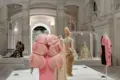
At Valentino, designer Alessandro Michele placed his spring 2027 show within the grand halls of the Bibliothèque Sainte-Geneviève in Paris. For the occasion, Michele curated an imagined bibliography filled with fictitious books, complete with made-up authors, descriptions, and fake ISBNs with titles like A Garden of Small Errors, Elsewhere Is a Precise Place, and The Social Life of Velvet. In his show notes, Michele drew heavily from the Lebanese-American scholar Nassim Nicholas Taleb and his 2007 book, The Black Swan: The Impact of the Highly Improbable, specifically focusing on the concept of the "anti-library"—a collection of unread books.

Comparing the vast potential contained within unread volumes to a closet filled with unworn clothes, Michele wrote that even the garments we never wear speak of the lives we could have lived, not as regrets, but as promises.

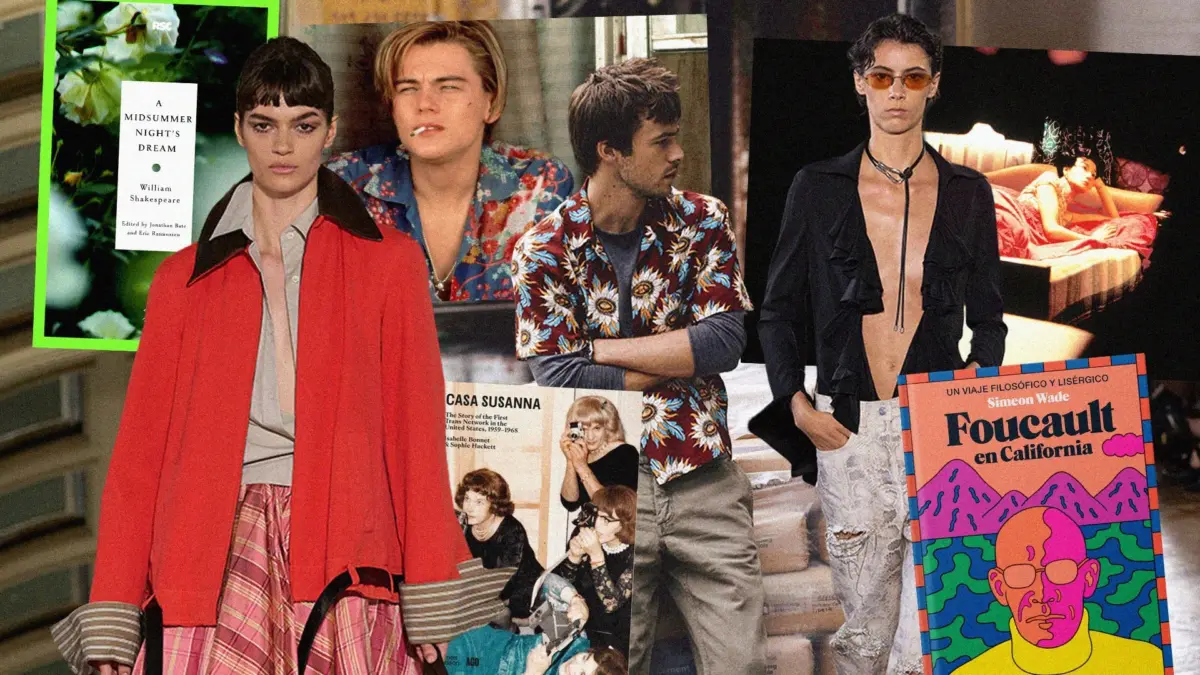
Intellectual rigor also played a central role at Balmain, where Antonin Tron found inspiration in Simeon Wade’s 2019 book, Foucault in California. Tron described the work as an exploration of the French philosopher Michel Foucault experimenting with LSD in Death Valley, a narrative that centers on the desert as a space for expanding consciousness and experiencing profound disillusionment. This served as a catalyst for a collection merging French intellectual thought with the psychic expansiveness of the American West.

Meanwhile, Natasha Zinko turned to Foucault’s 1975 foundational text, Discipline and Punish, to explore the modern, slippery business of being watched. By examining Jeremy Bentham’s panopticon—a circular prison where inmates regulate their own behavior because they never know if they are being observed—Zinko sought to mirror contemporary society’s obsession with live-streaming and social media, which forces individuals to act as though they are under constant surveillance.

Instinctual freedom and historical critique provided the framework for several other houses. At Ambush, Yoon Ahn channeled Clarissa Pinkola Estés’s 1992 bestseller, Women Who Run With the Wolves, to explore the internal tension in Tokyo between societal expectations and natural human impulses. In Berlin, Laura Gerte deconstructed the moral ideals of femininity through Mina Loy’s 1914 Feminist Manifesto, reframing female virtue as a historical tool of patriarchal control. Theory’s Dushane Noble examined taste as a social signifier through W. David Marx’s 2022 sociological study, Status and Culture, while Stine Goya looked back at the restless artistic energy on the eve of World War I through Florian Illies’s 1913: The Year Before the Storm.

Historical documentation and unique domestic practices also shaped the runways. Berlin label GMBH celebrated its tenth anniversary by drawing on Gesa Kessemeier’s historical study Modestadt Berlin, highlighting prewar fashion luminaries. Daniella Kallmeyer found meditative inspiration in Hideyuki Oka’s 1965 text How to Wrap Five Eggs, translating the structural discipline of traditional Japanese packaging into delicate accessories.

Virginia Woolf and Literary Transformations
Virginia Woolf’s enduring influence on gender, identity, and personal space was sharply evident across multiple collections. In Berlin, Mario Keine presented "Remnants and Relics," a collection rooted in Woolf’s 1928 time-traveling classic, Orlando. The pieces embraced an 18th-century rationalism combined with a melancholic, high-buttoned suiting aesthetic reminiscent of Death in Venice. In Italy, Marco Rambaldi looked to Woolf’s 1929 essay A Room of One’s Own, using the concept of home as a physical and psychological shelter where individuals can express themselves freely without judgment.

Other designers turned to classic folktales and literature to evoke deeper psychological metaphors. IM Men drew on a famous poem by Song dynasty scholar Su Shi regarding the vital presence of bamboo for peace of mind, while Yusho Kobayashi bypassed the sanitized versions of Hans Christian Andersen’s 1837 fairy tale The Little Mermaid, choosing instead to focus on the darker themes of pain, physical disorientation, and irreversible choices. In Tokyo, Ryota Murakami of Pillings utilized Kimiko Aman’s 1968 children’s story Shiroi Boshi (The White Hat) to explore the blurred edges of memory and fantasy. At Anrealage, Kunihiko Morinaga explored the concept of physical rebirth through Osamu Tezuka’s sprawling manga epic Phoenix.

The theatricality of literature and drama also heavily influenced the season. Pauline Dujancourt translated the emotional turbulence of Rainer Werner Fassbinder’s play and film The Bitter Tears of Petra von Kant into a tactile "tears library" made of crochet and lace. Susan Fang looked toward David Henry Hwang’s play M. Butterfly to explore the imagined worlds people construct around romantic love, while Antonio Marras layered the comedic structures of Shakespeare’s A Midsummer Night’s Dream with Sardinian folklore and wedding traditions.

Cinematic Visions and Photobooks
Photographic archives and cinematic masterpieces proved equally vital to the spring 2027 vision. Joseph Altuzarra turned to Isabelle Bonnet and Sophie Hackett’s 2024 photobook, Casa Susanna, which documents a midcentury network of individuals expressing gender freedom at a Catskill Mountains retreat. At Isabel Marant, Kim Bekker looked to Sam Haskins’s 1965 photographic study Cowboy Kate & Other Stories for translucent, sun-drenched color palettes. Matteo Tamburini of Tod’s menswear explored authentic Italian identity through Luigi Ghirri’s seminal 1984 photographic project Viaggio in Italia, while John Lawrence Sullivan and KNWLS both returned to the provocative portraiture and intimate hotel room studies of Bettina Rheims.

On the cinematic front, references ranged widely. Hillary Taymour of Collina Strada infused 18th-century romance with medieval chain-mail interpretations after viewing A Knight’s Tale, whereas Lu’u Dan’s Hung La channeled the dark underworld of Takashi Miike’s Ichi the Killer. Patrick McDowell paid homage to Wong Kar-wai’s In the Mood for Love, translating the distinct color grading and iconic cheongsam prints into flowing green silk garments.

Baz Luhrmann’s enduring 1996 aesthetic for Romeo + Juliet resonated strongly with both Emily Dawn Long and Dsquared2, the latter pairing religious symbolism with cinematic Italian gangster tropes. Samuel Guì Yang drew on Tsui Hark’s 1993 fantasy film Green Snake, while Simone Rocha’s menswear presentation in Florence found its character studies in the Merchant Ivory adaptation of A Room with a View. Ernest W. Baker looked to Susan Seidelman’s 1982 cult classic Smithereens, and both Amiri and Ann Demeulemeester explored the darker, more cynical side of Los Angeles through Paul Schrader’s American Gigolo and Billy Wilder’s Sunset Boulevard, respectively.

The season’s auditory landscapes similarly mirrored these cultural explorations. From Adriano Celentano’s 1972 experimental gibberish song at Fendi to Miles Davis’s noir jazz soundtracks for Elevator to the Gallows at Saint Laurent, designers used music, television, and historical theory to ground their visual narratives in a comprehensive, multi-sensory cultural dialogue.