



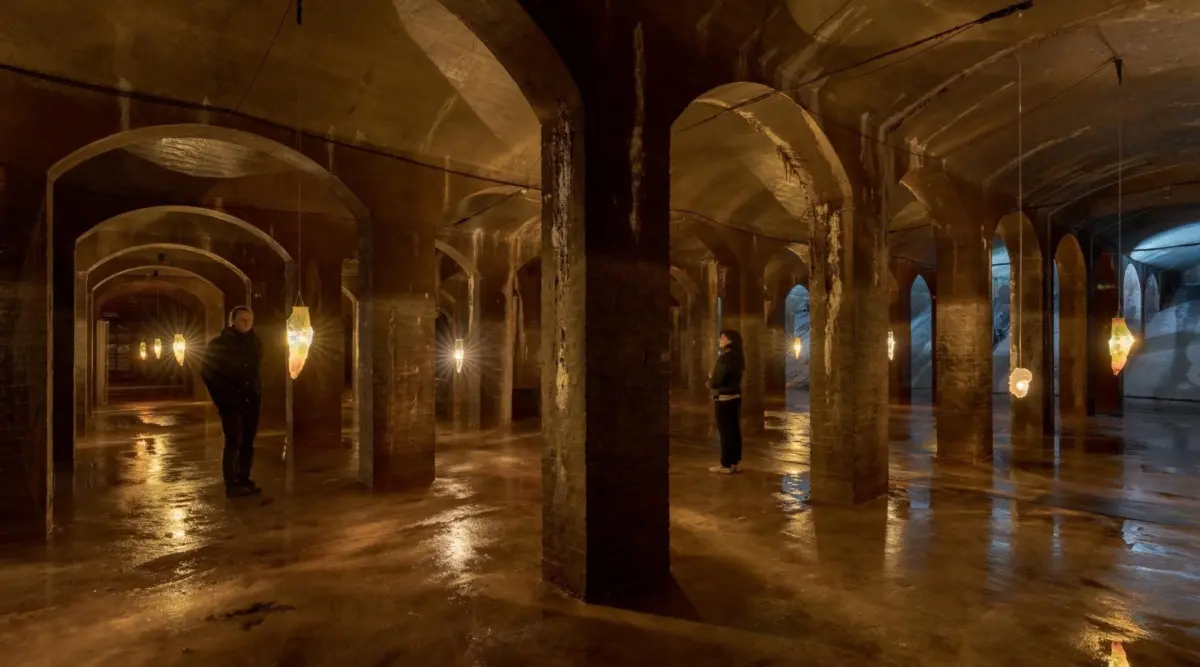
Years of extensive underwater documentation and interdisciplinary collaboration have culminated in a profound artistic exploration of the deep ocean, challenging human-centered perspectives of nature and the ongoing exploitation of marine resources. The result of a painstaking five-year development process by artist Jakob Kudsk Steensen, the installation Psychosphere made its debut at Cisternerne—a subterranean water reservoir managed by The Frederiksberg Museums in Denmark—before traveling to international stages, including the United Nations Ocean Conference.
Bringing together deep-sea footage captured by Steensen himself and specialized marine research groups, the installation fuses sculpture, science, and sound to recreate the near-mystical environment bubbling beneath the surface of the global oceans. By peering into the most remote and mysterious ecosystems on Earth, the project poses fundamental questions about what it means to be a living entity, tracing the origins of life back to the volatile, mineral-rich volcanic vents where it all began. Through this sweeping evolutionary lens, the artist asks audiences to reconsider not only who or what holds agency on this planet, but also how humanity, as one species among many, should approach ecological stewardship and conservation.
The Conceptual Framework of the Psychosphere
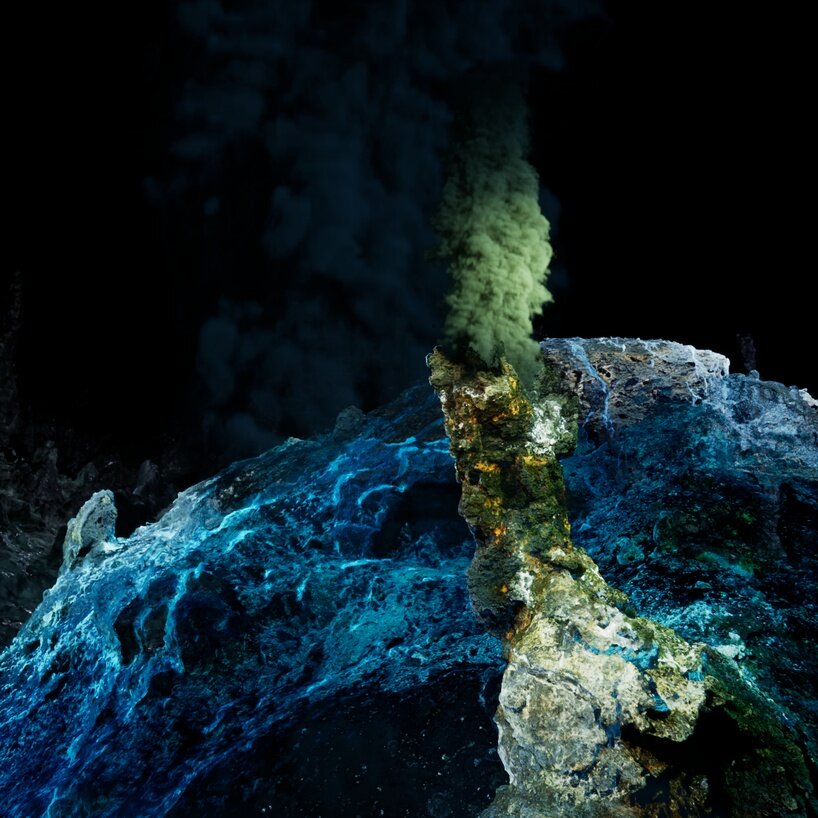
At the heart of the exhibition’s theoretical foundation is a collaboration between Steensen and writer-theorist Melanie Challenger, whose concept of "psychospheres" provides the intellectual scaffolding for the artwork. The project investigates the earliest chapters of biological history, looking back to an era when superheated gases spewed from primordial ocean rocks, interacting under immense pressure and thermal compression to forge the initial structures of DNA—the foundational genetic code of life on Earth.
Working alongside this scientific premise, Challenger introduces the idea that a defining trait separating living beings from inert matter is the presence of a psyche. In a text written for the exhibition, she reflects on the unique nature of existence, noting that living organisms act for reasons, employing distinct survival mechanisms, whereas inanimate matter like rock or water reacts, degrades, and grows passively in response to external forces.
Moving from the chemical genesis of DNA to the individual agency of living organisms, Challenger proposes a radical shift in perspective. She suggests that viewing the world not merely as a biosphere of exploitable genetic resources, but rather as a psychosphere comprised of diverse living agents, fundamentally alters human values and priorities. This philosophical framework offers a model for interspecies relations that rejects human supremacy—which has historically driven severe environmental destruction—and instead frames every living being as an autonomous self and a locus of meaning. Inspired by this vision, Steensen set out to materialize Challenger’s concepts within the dark, damp recesses of the Cisternerne, blending real-world oceanic imagery with sculptural manifestations of deep-sea realms.
Glowing Sculptures and Reflective Waters in the Subterranean Cisternerne
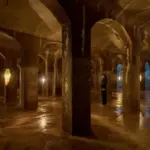
The choice of venue for the exhibition’s premiere in Copenhagen is deeply integral to its atmosphere. The Cisternerne, a former subterranean water reservoir beneath the city streets, is naturally cold, humid, and dripping with condensation. Traversing its arched chambers places visitors inside a wet, enclosed environment that mirrors the alien, fluid worlds glowing across Steensen’s large-scale screens.
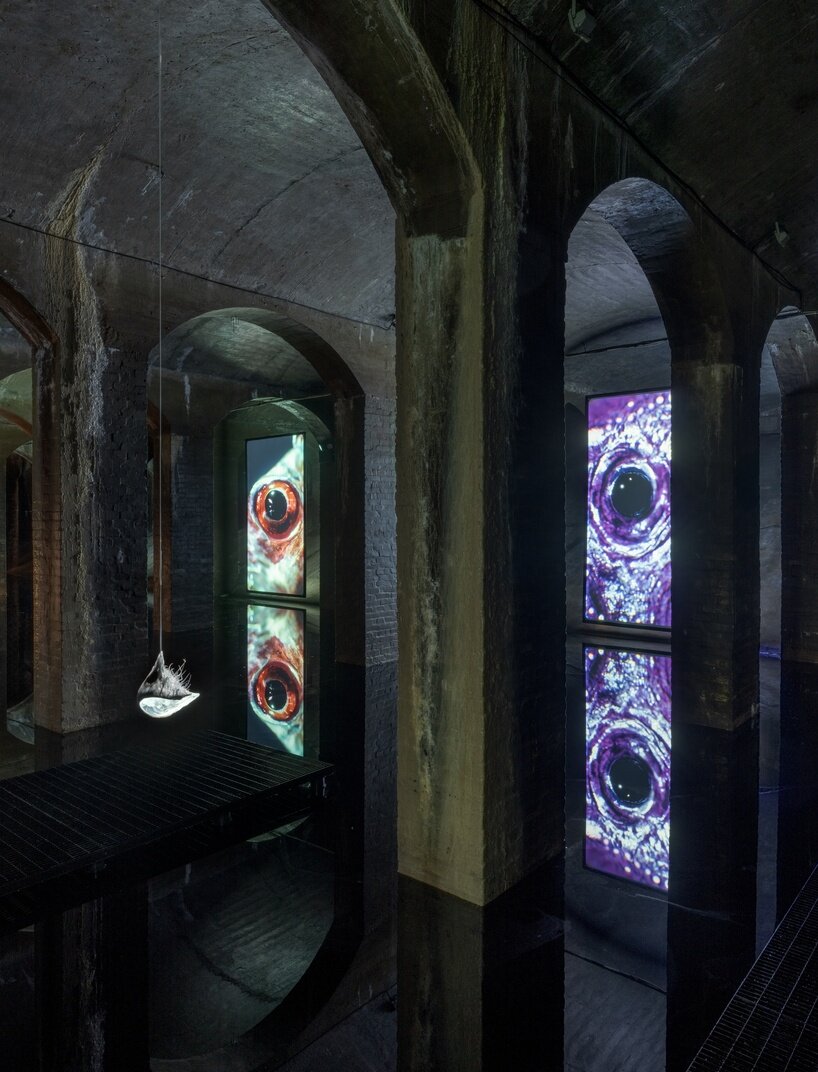
Because a thin layer of water consistently pools across the stone floor, the video projections bounce off the surface, creating a visual doubling effect. In interviews with the museum, Steensen has described how this mirroring produces "a parallel world beneath," recalling his own experiences while diving, where ascending bubbles from his regulator would gather at the surface to form a shimmering mirror reflecting the underwaterscape he was navigating.
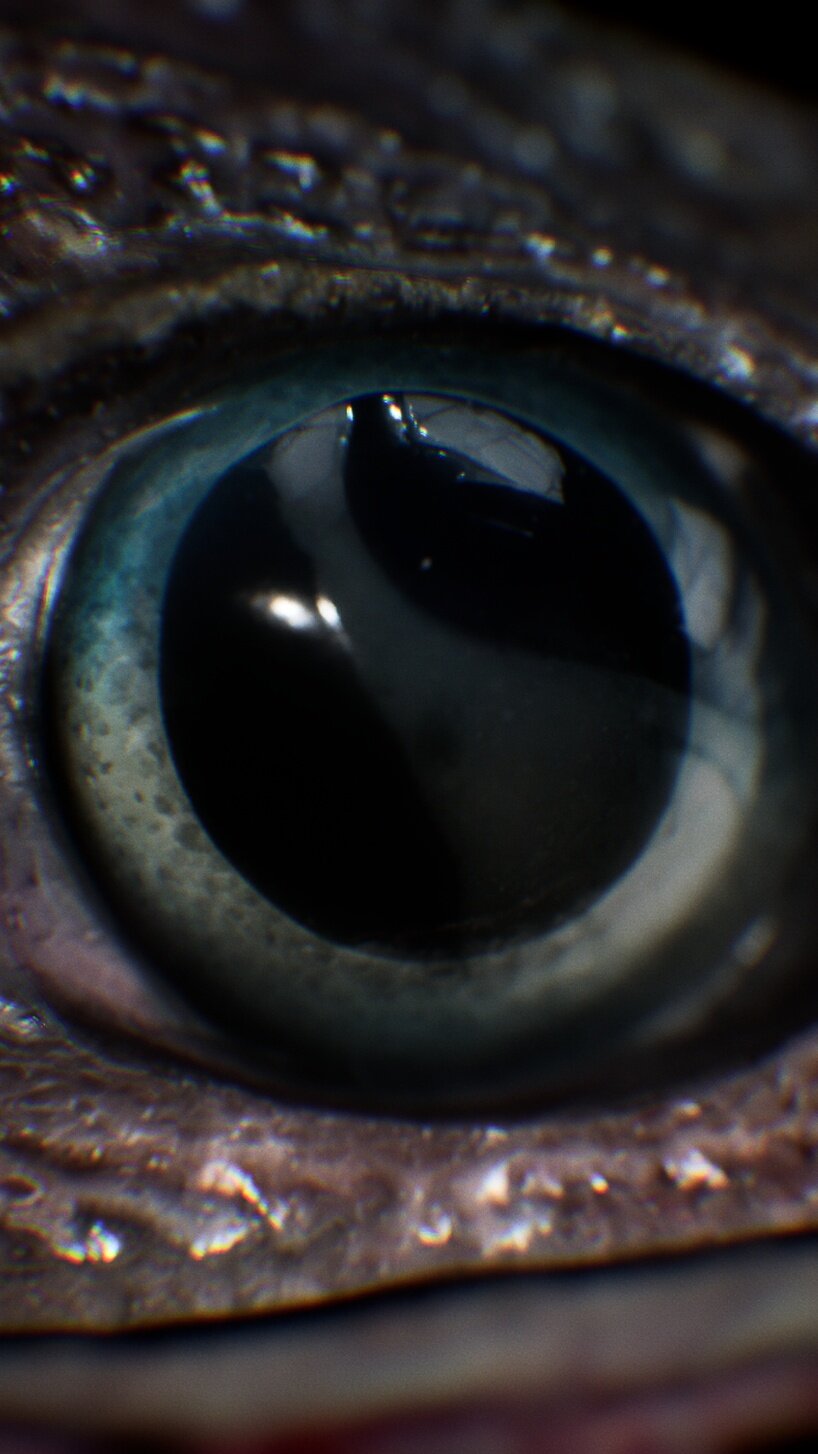
The footage featured in the installation was gathered through a combination of Steensen’s own expeditions—filming while diving from the Azores to the Aeolian Islands—and a vital collaboration with the research vessel REV Ocean/REV Aurora. Through this partnership, the artist gained access to extraordinary views of underwater volcanic landforms and marine fossils, capturing ecosystems largely shielded from human sight.
Interspersed throughout the subterranean expanse of the Cisternerne are three distinct series of sculptural works that anchor the digital projections in physical space. Abiogenesis stands as the central, freestanding piece near the heart of the exhibition, directly referencing the emergence of life from non-living matter. Surrounding it is Orogeny, a collection of interactive glass sculptures inspired by the artist’s research trips to arid deserts that once sat beneath massive prehistoric oceans. Completing the physical installation is the Amorphous series, constructed from resin and fiberglass, which draws its sinuous forms from Steensen’s meticulous sketches and the biological morphologies of extinct sea lily specimens.
Expanding the Dialogue on Deep-Sea Protection
Following its successful run in Copenhagen, Psychosphere crossed international borders to reach policymakers and conservationists, appearing at the 2025 United Nations Ocean Conference in collaboration with ArtExplora. Adapted into an immersive LED tunnel for this high-level political setting, the exhibition served as a powerful visual anchor for ongoing global debates regarding the protection of the deep sea. Against the backdrop of renewed commercial interest in deep-sea mining, the installation champions an expanding movement to recognize the legal and moral rights of deep-water organisms, advocating for a paradigm shift that places environmental preservation far above resource extraction.
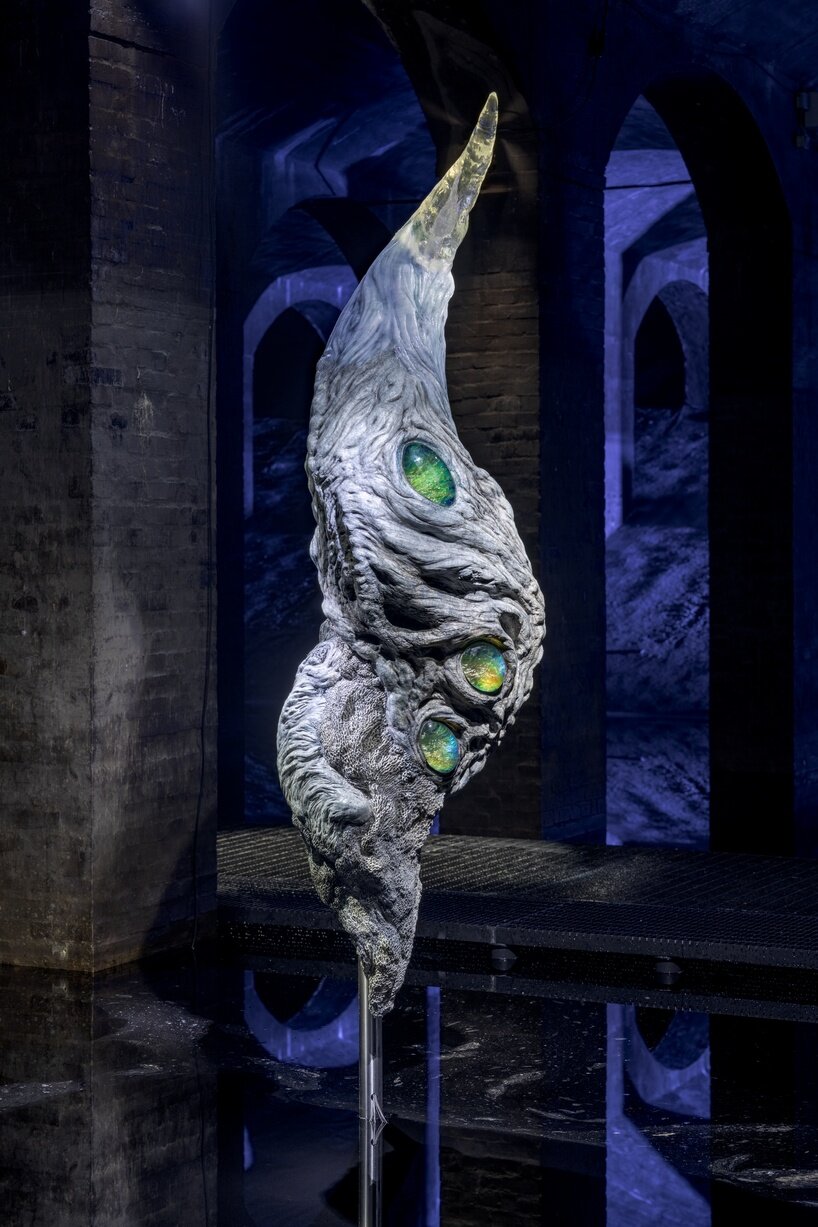
Ultimately, Psychosphere stands as an artistic meditation on abiogenesis—the scientific understanding that life originated from inorganic matter billions of years ago under the extreme pressures and chemical plumes of deep-sea hydrothermal vents. By translating these ancient epochs and hidden ecosystems into an immersive sensory experience, Steensen challenges contemporary audiences to rethink their relationship with the natural world. The project insists on recognizing the agency, complexity, and inherent significance of non-human life, painting a picture of the ocean not as a blank canvas for human utility, but as a vast, interconnected web of living beings, each possessing its own unique form of existence and meaning.