




It is a remarkably good day to be a watch enthusiast, particularly for those who appreciate independent watchmaking and avant-garde design. The newly unveiled Louis Erard × Vianney Halter Futur Antérieur has officially arrived as a limited-edition release that is equal parts striking and utterly unexpected. Though this marks the third creative partnership between independent Swiss watchmaker Louis Erard and legendary master watchmaker Vianney Halter, this latest joint venture takes a decidedly different, more daring approach than its predecessors.

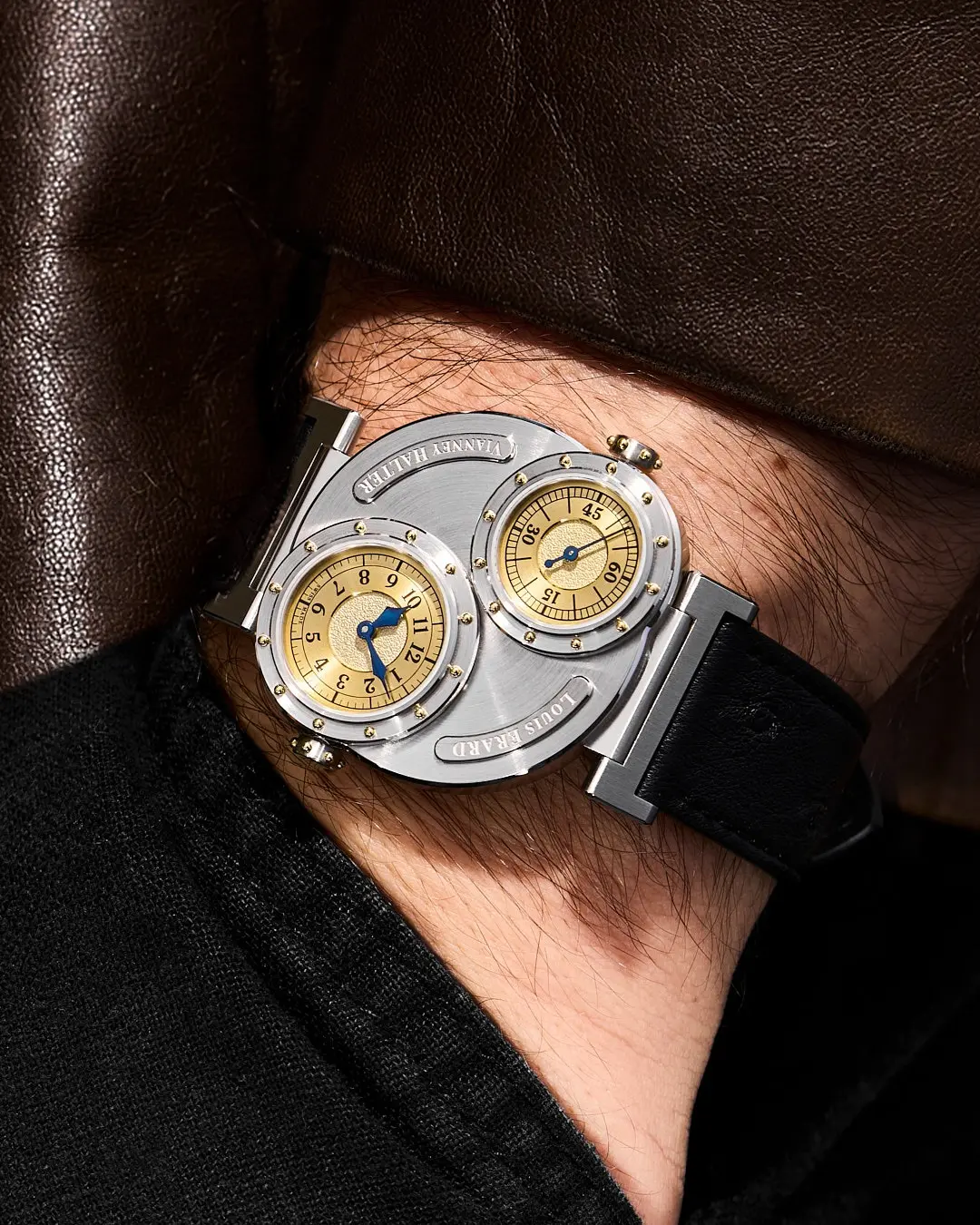
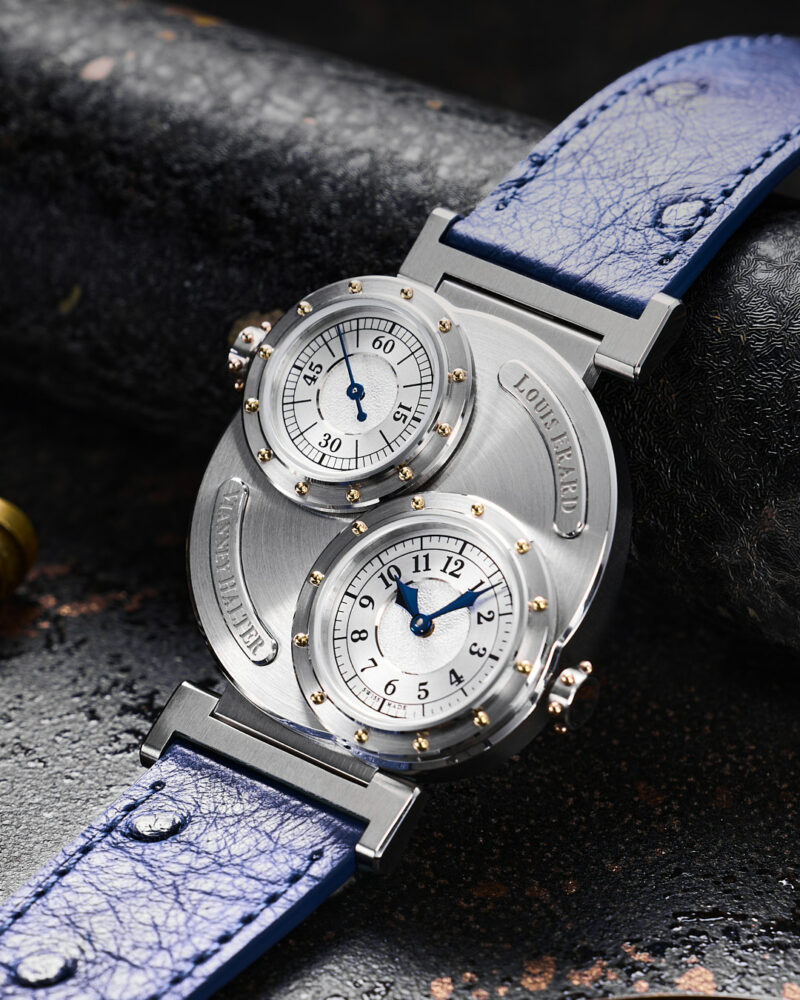
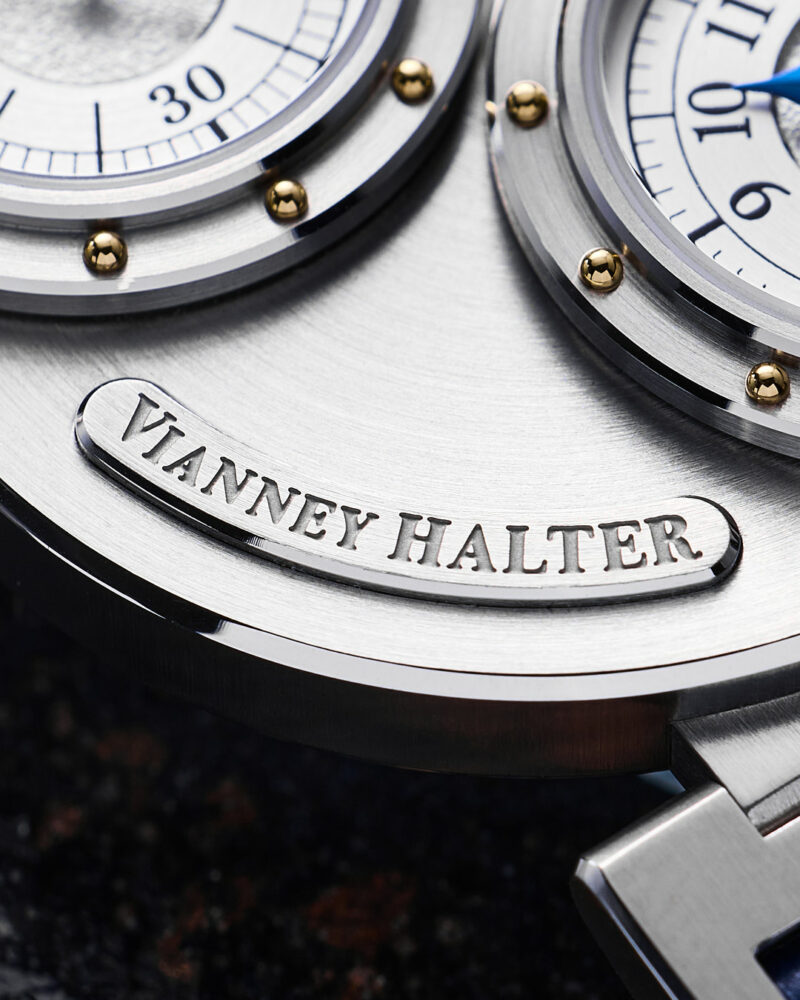
The Futur Antérieur differs dramatically from previous collaborations. Where past editions were essentially clever reinterpretations of existing Louis Erard models—decorated with Vianney Halter’s signature design elements and distinct visual cues—this new release is far more elaborate. Instead of a modified standard platform, the watch appears as a direct adaptation of one of Halter’s most iconic, steampunk-inspired creations. The signature porthole-style dial windows, the characteristic gold-plated rivets adorning the porthole bezels and crowns, and even the intricate dial and hand configurations all pay homage to the legendary perpetual calendar that Vianney Halter originally launched back in 1998, a masterwork that commands a price tag of more than $200,000 on the rare occasions it changes hands.
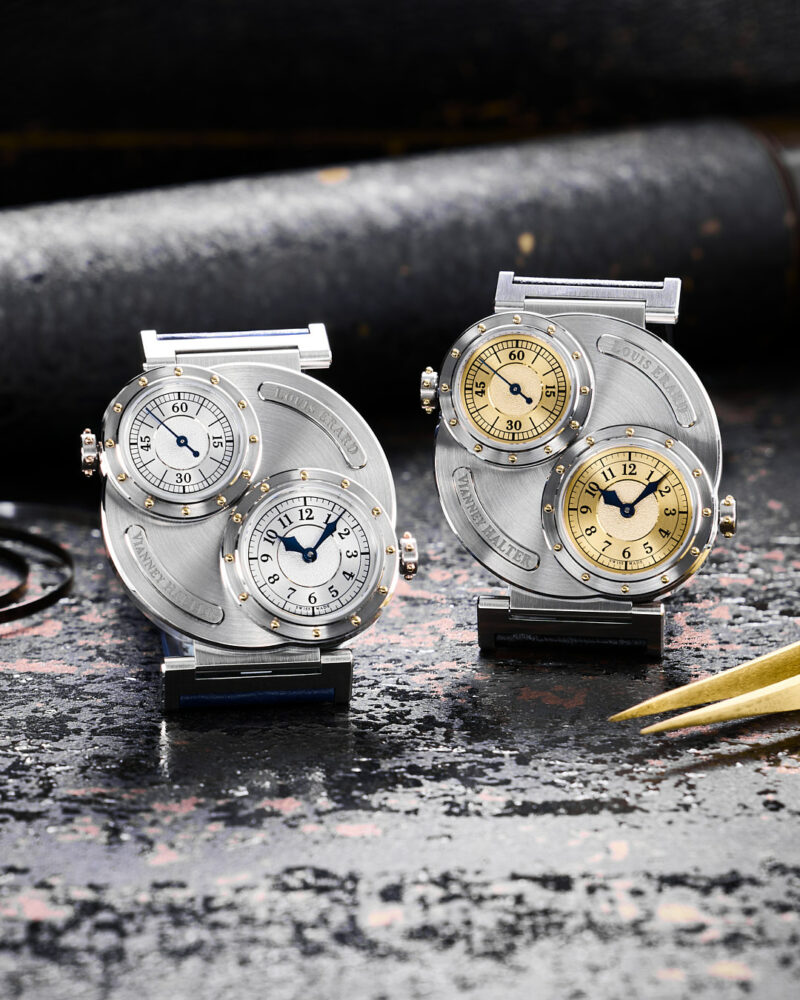
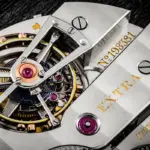
Priced at an accessible list price of about $6,000 USD before applicable taxes, the Futur Antérieur is naturally not a perpetual calendar, and its split-dial layout requires a bit of technical explanation. The complete separation between its primary hour-and-minute dial and its secondary running-seconds dial is achieved through a rather unorthodox yet remarkably straightforward mechanical solution: each dial is driven by its own dedicated Sellita SW100 automatic movement. This dual-engine architecture not only allows for a unique, asymmetrical time display reminiscent of high-end independent horology, but it also enables the watch to keep its case profile remarkably thin, measuring just 8.85 millimeters in thickness.
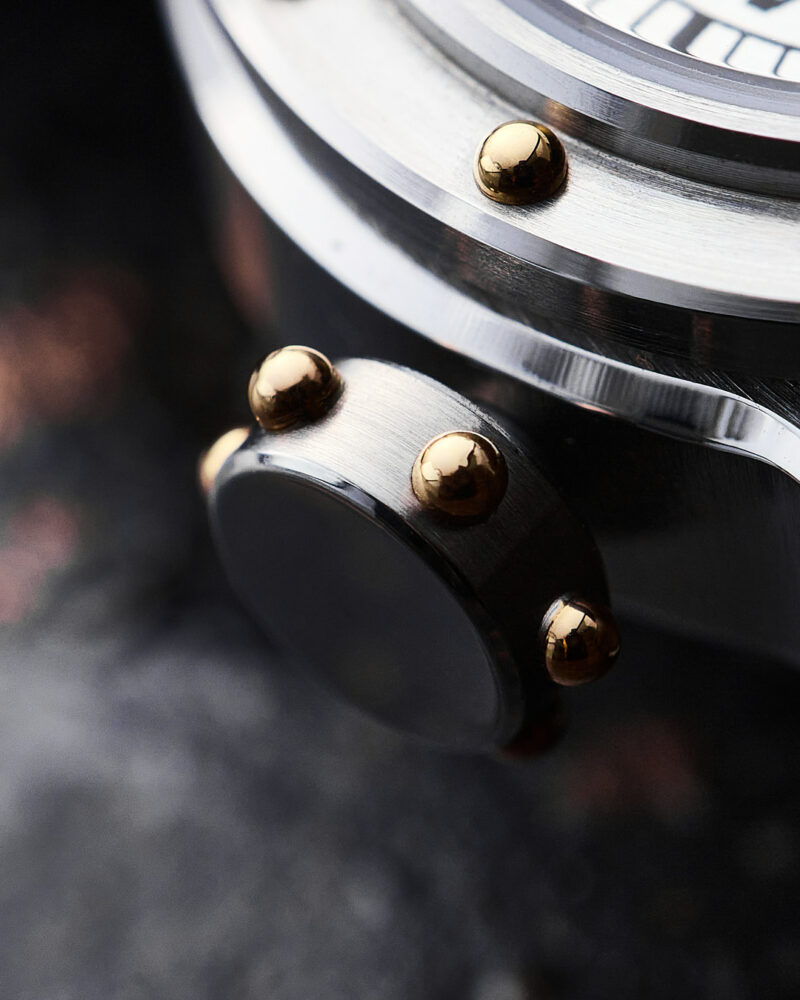
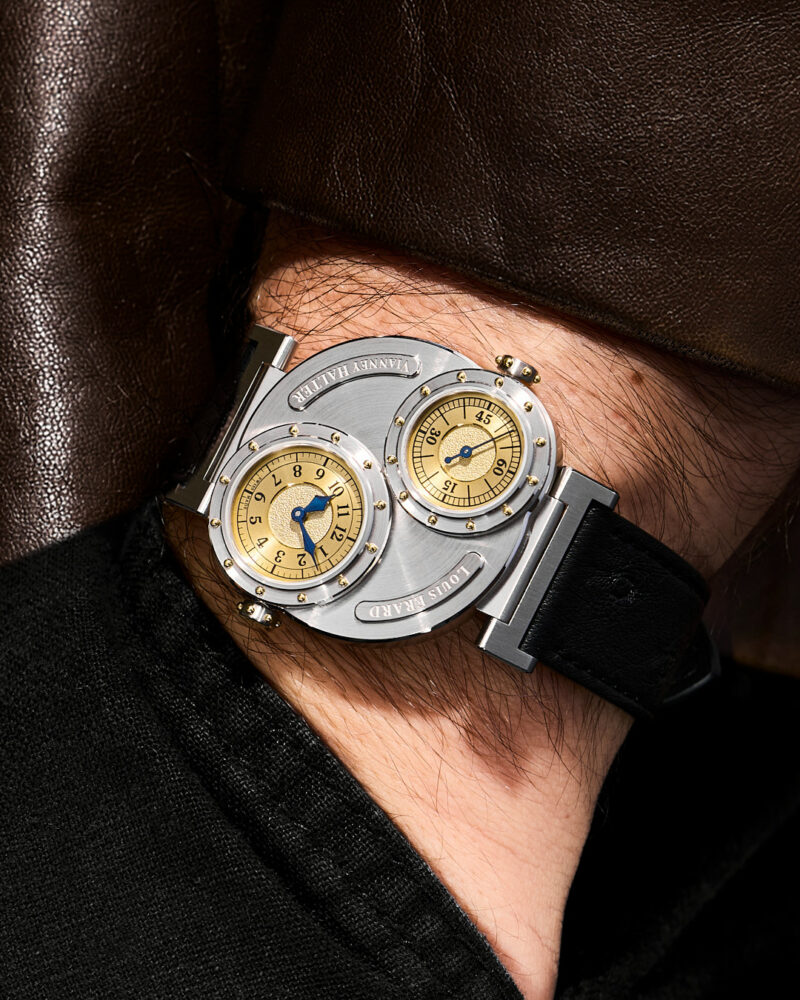
Speaking of dimensions, the overall proportions of the watch are impressive and wearable across the board. The polished case measures a modest 38 millimeters in diameter, making it well-suited for a wide range of wrist sizes. Furthermore, the inclusion of articulating lugs allows the Futur Antérieur to conform comfortably to the wrist. After spending some hands-on time with the timepiece, one quickly realizes something entirely unexpected: it wears exceptionally well on a single-pass fabric or NATO strap, an unorthodox styling choice that one would not necessarily anticipate given its high-concept, steampunk-inspired heritage.
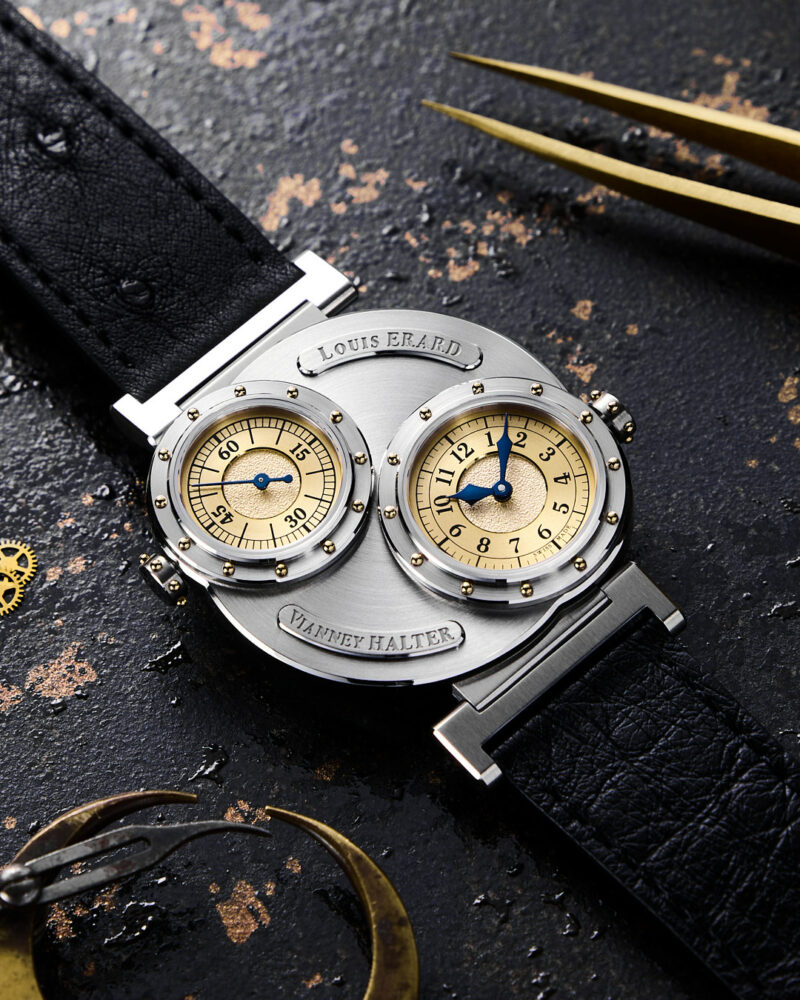
During hands-on evaluations of the watch, one key question naturally arose among collectors and critics alike. If the timepiece is already engineered with two independent movements tucked inside the case, why not configure it as a dual-time or GMT watch capable of tracking two separate time zones? Personally, the choice of a running seconds hand feels like the right aesthetic and conceptual path. The decision seems to echo the historic Antiqua timepiece much more faithfully. With the original Antiqua, each porthole displayed a distinctly different calendar indication, and having a second dial dedicated to another time zone would feel like too great a departure from the intended visionary aesthetic.
According to the team at Louis Erard, the decision was also rooted in practical manufacturing realities. The Sellita SW100, despite its compact and reliable nature, is not the most inherently accurate or easily regulated Swiss automatic movement on the market. Consequently, attempting to get two separate movements to run in close synchronization would prove far too difficult to achieve reliably at the specific price point the brand targeted for this release. Opting for a running-seconds display allows for a much wider margin of tolerance regarding minor differences in daily accuracy between the two independent mechanical engines.
Before anyone gets too critical about movement synchronicity and timekeeping tolerances, it is worth looking closely at how much watchmaking substance is being delivered for the price of entry. The Futur Antérieur is unmistakably a bold statement piece. For buyers whose primary priority is absolute precision and unmatched accuracy, that equivalent dollar figure is likely better spent on one of Grand Seiko’s signature Spring Drive watches or a robust Tudor timepiece featuring METAS certification, which guarantees an exceptional daily accuracy rating of zero to plus-five seconds per day.
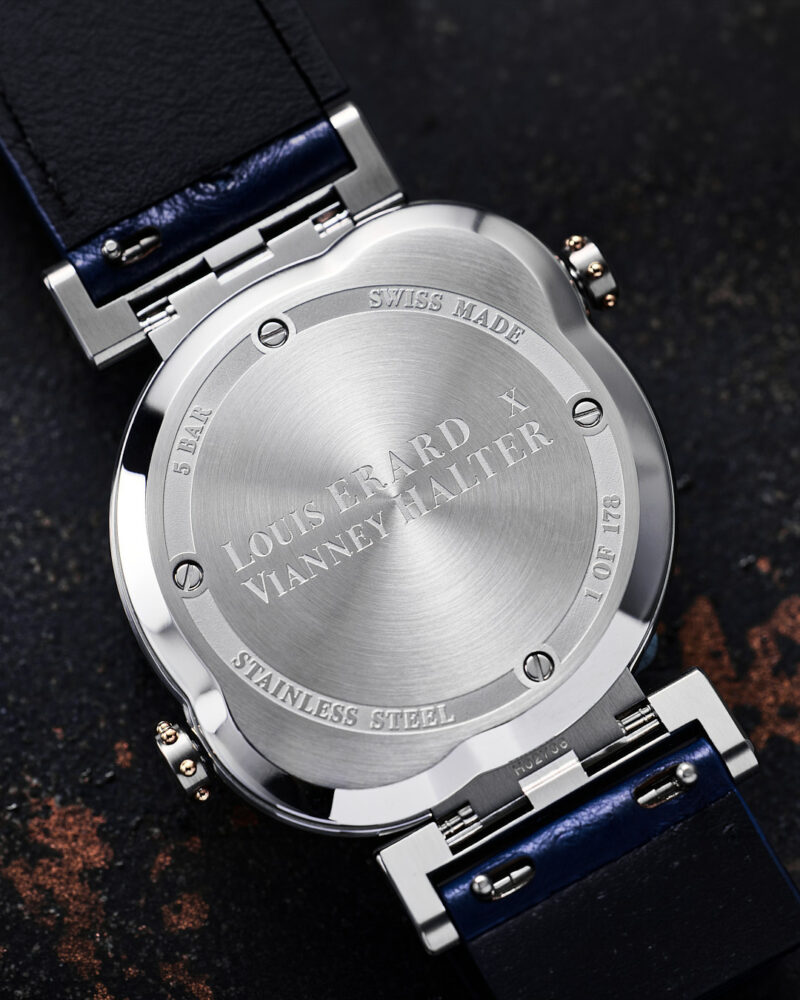
The primary drawback to this compelling release is its extreme scarcity, meaning these pieces are likely already long gone from the primary retail market. Louis Erard is producing a strictly limited run of only 178 examples of each dial configuration. In addition to the individual watches, the brand has prepared just 78 exclusive collector’s box sets containing both dial variations, priced at CHF 9,900, which translates to approximately $12,075 USD.
The creative vision behind these releases continues to be shaped by industry veterans like Justin Mastine-Frost, whose lifelong curiosity and extensive background in photography, technical craftsmanship, and automotive engineering have naturally transitioned into the world of horology. Based in Toronto, his expertise has been featured across numerous prominent international publications and authoritative books on watchmaking, reflecting a deep, hands-on appreciation for independent watch design and the intricate mechanics that drive modern timepieces.