







Mechanical escapements have long captured the hearts of enthusiasts and challenged the minds of watchmakers tasked with improving them. Within the horological industry, escapement development remains a steady, underlying motif, even though entirely novel escapements are only launched on rare occasions.
Recently, however, the industry has experienced a distinct flurry of activity. Just last year, Rolex unveiled a proprietary silicon escapement, while Breguet launched a highly advanced magnetic Swiss lever. These releases offered a glimpse into the exciting research and development work currently being conducted by the watch industry’s leading industrial powerhouses.

At the other end of the spectrum, an increasing number of independent watchmakers are going to great lengths to develop new escapements or provide fresh takes on history’s lesser-known variants. Naturally, smaller players are more resource-constrained, meaning their results tend to be rooted in traditional manufacturing techniques. That said, clever independents retain a remarkable capacity to produce surprising innovations.
This two-part series offers a comprehensive look at the major escapement innovations of recent decades, ranging from products of high-tech industrial manufacturing to innovations championed by individual master craftsmen. We begin by examining classical escapement designs that would be familiar to past generations, which have been painstakingly modernized to suit the demanding operational requirements of the contemporary wristwatch.
Natural Escapement
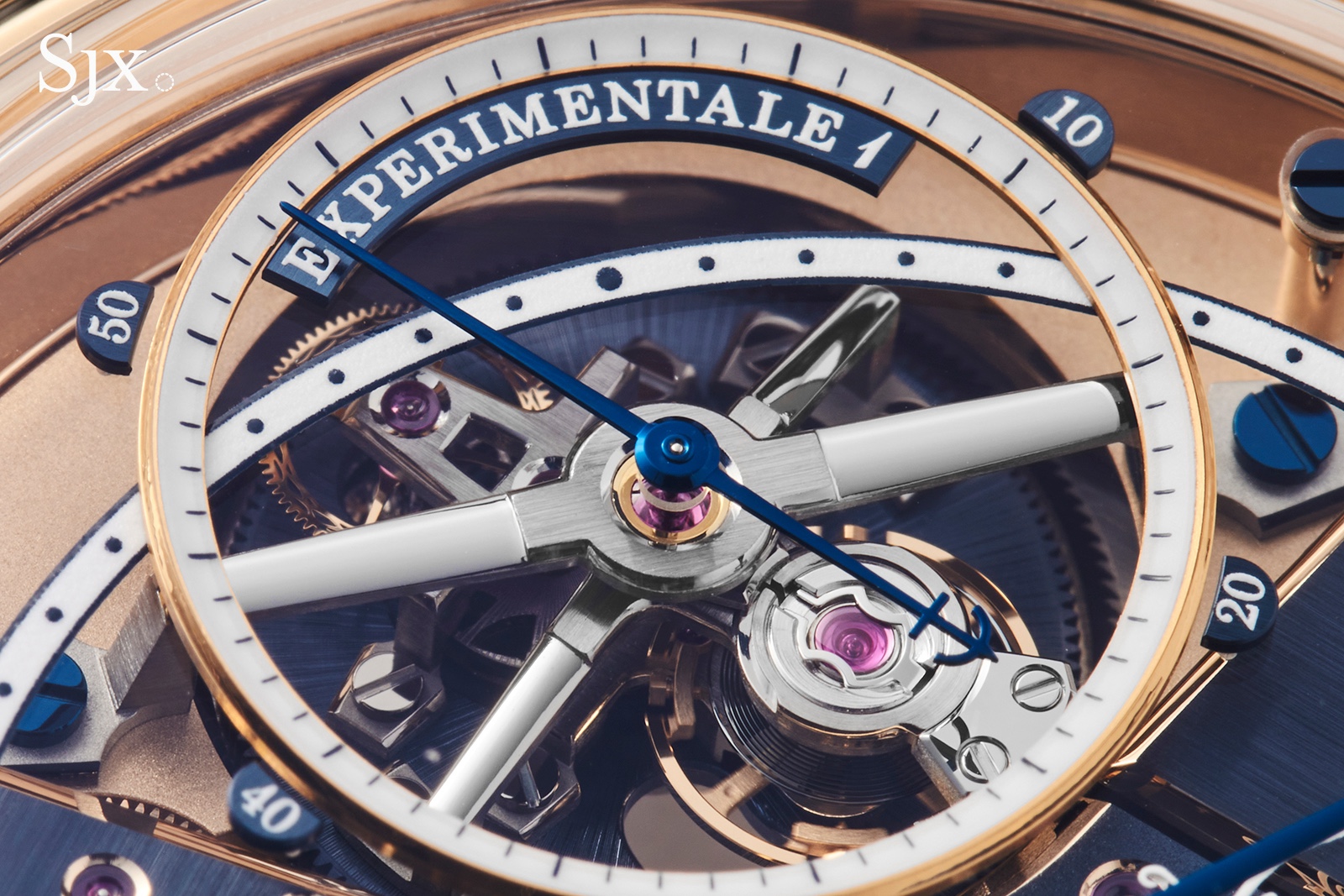
Between the widespread dominance of the classic Swiss lever and Omega’s near-monopoly over the coaxial escapement, independent watchmakers looking to push the boundaries of mechanical watchmaking often resort to revisiting Abraham-Louis Breguet’s historic natural escapement concept. To cite master horologist George Daniels, "the idea of alternate impulsing directly the balance axis with contra-rotating wheels is seductive." The inherently seductive nature of this format undoubtedly explains why the natural escapement seems to be reinvented by watchmakers every few years.
There are, however, several fascinating nuances to address. Currently, three independent manufacturers produce their own distinct takes on the natural escapement: F.P. Journe, Kari Voutilainen (whose design is also found in rejuvenated Urban Jürgensen models), and Laurent Ferrier.

Among these three, the primary outlier is Laurent Ferrier. The brand relies on modern, nickel-phosphorus twin escape wheels featuring pillars for impulse faces, paired with an etched silicon locking lever and roller. Although these materials are decidedly rooted in 21st-century technology, the fundamental geometry of the components remains remarkably faithful to Breguet’s original concept.
The Laurent Ferrier design is not advertised as self-starting due to its unusual geometry, which features short, broadly spaced pallets and wide gaps between teeth. When utilized by Breguet, this specific layout seemed prone to jamming if the gear train was left under zero tension and experienced a slight reverse force, though there are no confirmed reports of this occurring with modern iterations of Laurent Ferrier’s natural escapement.
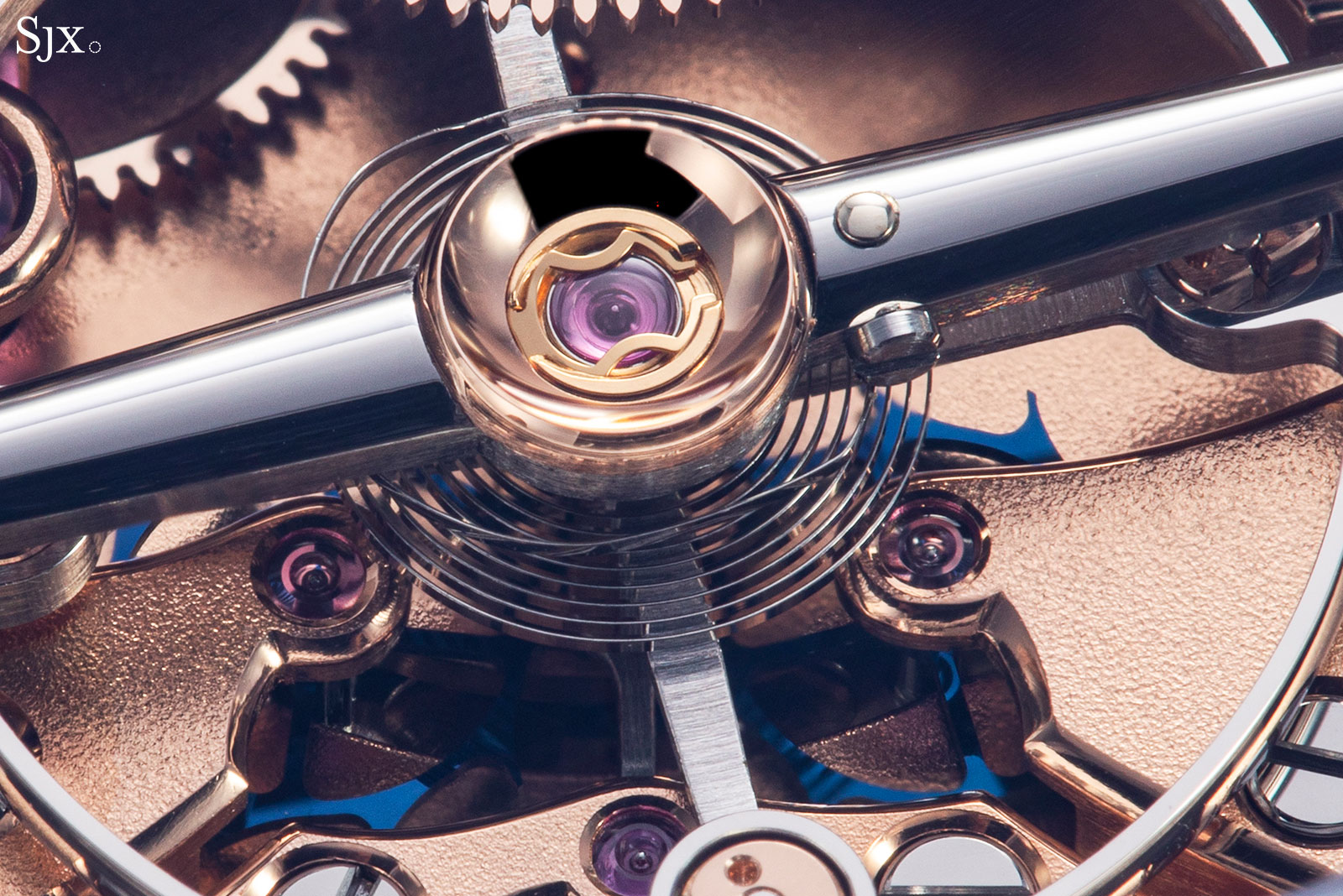
Kari Voutilainen’s approach represents perhaps the most successful implementation of a reliable, simple, and exquisitely crafted natural escapement variant. The placement of the locking stone on the lever ensures that the locked wheel is always the one set to deliver the next impulse, eliminating any undesirable flutter of the driven wheel. A similar arrangement guarantees the same stability for Laurent Ferrier’s version. This configuration cleverly addresses an unresolved challenge that Breguet observed during his own lifetime—an operational hurdle that ultimately led the legendary watchmaker back to the reliable Swiss lever.
Kari Voutilainen’s natural escapement can also be found in the Urban Jürgensen UJ-2 and UJ-3 models, albeit in a slightly thinner execution. While the core geometry of the escapement appears virtually unchanged, this specific version requires a greater number of individual gears in the train compared to the layout found in Voutilainen’s own watches.

The most intriguing aspect of Voutilainen’s escapement is its central locking stone, which is essentially a single ruby cut with two locking faces of opposite slopes. This clever design ensures that each wheel induces a secure draw effect on the lever, keeping it firmly pressed against its bankings. It also forces the escape wheels themselves and the two pallet stones to operate on different vertical levels, explaining the slightly thicker construction of the overall movement.
F.P. Journe’s design is no less ingenious. Beyond making the delicate concept viable, the brand added a truly novel feature to the natural escapement: a guaranteed self-starting capability and the potential to independently support the optimal amplitude of the balance wheel. Technical deep dives into the Chronomètre Optimum and its "High-Performance, Bi-Axial" escapement (EBHP) have explained how the two locking pallets also incorporate an impulse face, potentially doubling the impulse delivered to the balance via an indirect component.

Furthermore, these indirect impulse faces appear to function exclusively at low amplitudes. As the balance accelerates and reaches its optimal operational amplitude, the lever moves out of the path of the escape teeth faster than the sliding lift can take place. Consequently, the escapement’s secondary impulse feature effectively functions only when the balance’s amplitude has degraded. This clever mechanism serves as a mechanical callback to the impulse-on-demand function historically seen in Hipp pendulums.
Reviewing these various natural escapement iterations, each stands as a technical triumph. Laurent Ferrier’s version takes the lead in terms of modern materials and tighter mesh tolerances enabled by LIGA manufacturing processes, while the systems from Voutilainen and Journe maintain an edge in utilizing classical watchmaking principles to their advantage.
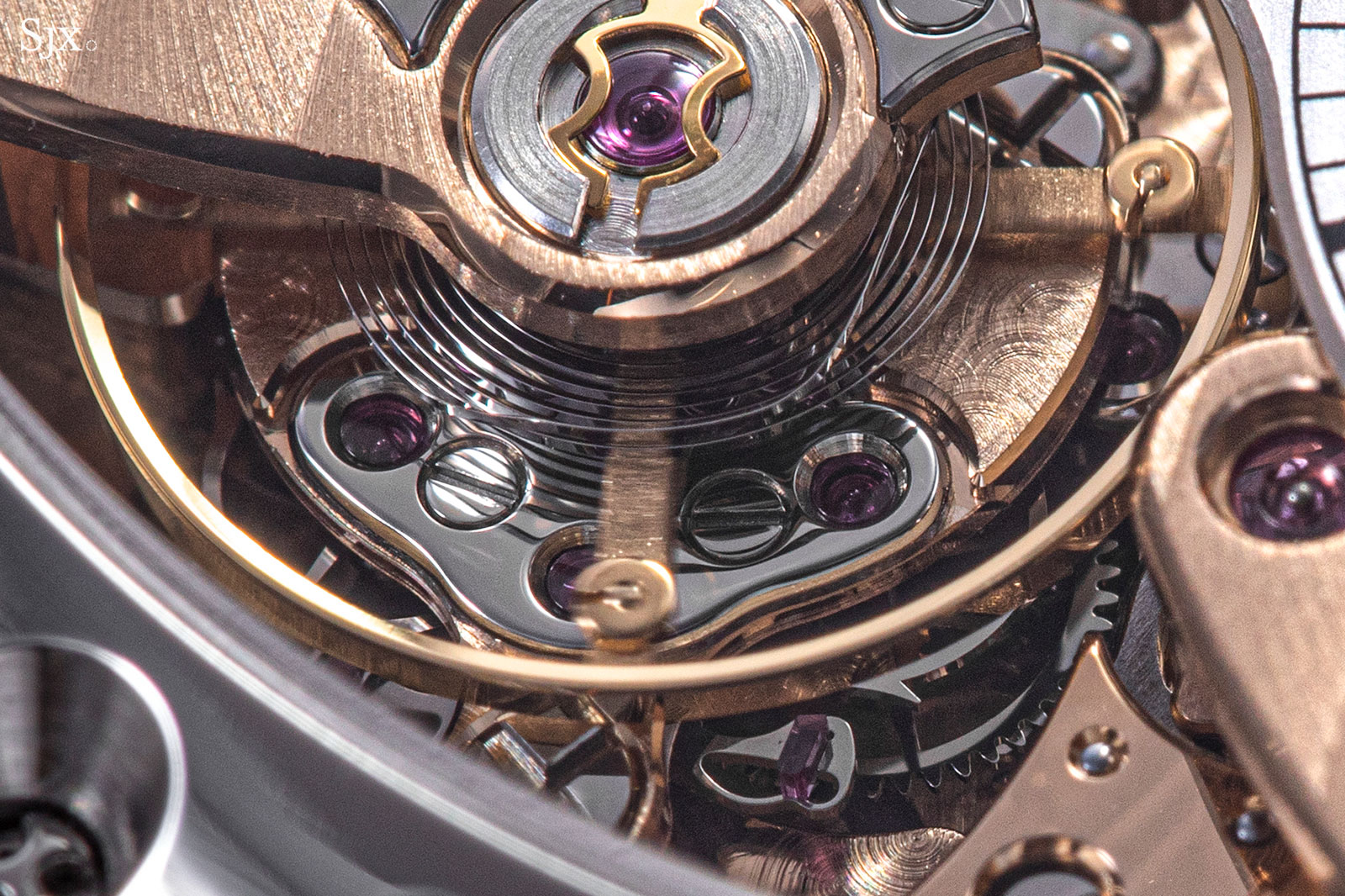
The concept of impulse-on-demand is clearly an F.P. Journe stroke of genius, while Voutilainen’s well-composed escapement speaks volumes about its creator’s meticulous craftsmanship. Both systems utilize a classic roller and dart security system—mirroring the proven Swiss lever—to guarantee secure running across all operational phases. However, Voutilainen may ultimately win on overall reliability, given that his escapement ticks inside a larger number of watches, particularly with its confident introduction into the new Urban Jürgensen models.
Detent Escapements
While the detent escapement became historically synonymous with marine chronometers and is widely hailed for its exceptional efficiency, adapting it for wristwatch use has historically proved exceptionally problematic. In its classical arrangement, the detent escapement possesses virtually no security against accidental unlocking, known as "tripping," save for the feeble holding effect of the draw angle. Accidental unlocking causes the escape wheel to advance rapidly and, depending on the exact position of the pallet, can even cause the escapement to jam completely.

In a traditional detent escapement, a standard dart and roller system cannot be utilized because the detent piece itself is not bi-stable. Unlike a lever-based escapement—where the lever rocks from side to side during its working cycle, with the dart positioned securely on either side of the roller to prevent accidental switching—the detent only shifts slightly to the side during impulse before snapping back immediately. Consequently, watchmakers attempting to adapt the detent escapement for wristwatches have had to engineer entirely alternative safety mechanisms to eliminate accidental tripping.
Despite these inherent mechanical challenges, recent years have seen several notable attempts to revive the detent escapement in a wristwatch format. Charles Frodsham initially considered the approach before eventually pivoting toward its double independent wheel escapement.

The first visionary to attempt adapting the detent escapement for the wrist was the late Peter Baumberger, then-owner of Urban Jürgensen. Because Baumberger was not a watchmaker by trade, he enlisted Derek Pratt and Jean-François Mojon of Chronode to design a movement crowned by a detent escapement. Regrettably, neither Baumberger nor Pratt lived to see their vision brought to market, leaving Mr. Mojon, alongside Kari Voutilainen, to finalize the movement’s development.
Their collaborative work resulted in a patent bearing both Baumberger’s and Mr. Mojon’s names. It described a revised detent escapement secured by two safety fingers designed to prevent a complex pivoted detent lever from unlocking outside of the designated impulse phase. The pivoted detent relies on a rigid lever carrying the locking stone, paired with a spiral spring that binds it against the banking. When the escapement unlocks, the entire lever pivots slightly before instantly snapping back.

In Mr. Mojon’s original patent design, two safety mechanisms were included, though the version ultimately implemented in the P8 movements retained only a single safety finger to allow for looser production tolerances. While the project did not achieve the commercial success initially envisioned, this bold effort remains the first serious attempt to bring the chronometrically efficient detent escapement into a wristwatch.
A second major attempt came from Christophe Claret, whose extravagant Angelico model featured a modified pivoted detent escapement. Claret chose to secure his detent escapement with the aid of a small sprung cam that worked in conjunction with a second unlocking pallet located on the balance wheel. This sprung cam acted near the tip of the detent lever, pressing it firmly against its banking.

Before the detent itself could be unlocked, the secondary unlocking pallet pushed the cam slightly, allowing the primary detent to be moved by the main unlocking pallet. While clever in theory, the mechanical complexity and rapid succession of operational events worked against its practical reliability. Consequently, completed Angelico pieces remain exceedingly scarce.
Finally, the Raúl Pagès RP1 features what is arguably the most noteworthy detent variant currently on the market, though its artisanal nature keeps production numbers exceptionally low. Mr. Pagès also opted for a pivoted detent design, avoiding overly complex shapes and hollowed geometries in favor of a classic counterweighted detent equipped with a safety finger, not unlike Mr. Mojon’s earlier layout. Because the design is significantly less complicated than previous attempts, the safety finger simply drops into its designated crevice and snaps back without interfering with other phases of the escapement.

Two additional, highly obscure developments were created by German independent watchmaker Christian Klings, who introduced unique variants of the detent escapement that stray far from traditional concepts. The "Desmodromic" escapement borrows its name from the engine valve distribution system used by Ducati motorcycles. Rather than relying on traditional camshafts and return springs, a Desmodromic system uses mechanical linkages to actively push and pull valves in both directions.
Klings applied this concept to a pivoted detent escapement by adding a second "recall" pallet directly onto the detent while removing the return spring entirely. As the balance unlocks the lever, the escape wheel accelerates to deliver impulse via one tooth, while a second tooth slides against the recall pallet, mechanically pivoting the lever back into place. While innovative, the design lacks an explicit safety mechanism, meaning tripping and subsequent jamming remain potential risks.

Another creation by Klings is the "Mosquito" escapement, an unconventional take on the detent formed by cutting the detent piece directly out of ruby and scaling it down to an extremely small size to achieve shock resistance. In a standard setup, sudden acceleration from a heavy shock can throw a conventional detent out of lock; however, if the components are extremely light and kept under tension, material rigidity can outweigh inertia. While solid in theory, the minute scale of the components makes consistent large-scale production nearly impossible.
Robin Escapement
Invented around 1791 by French watchmaker Robert Robin—a contemporary of A.-L. Breguet—the Robin escapement is a single tangential impulse escapement conceived as a more secure alternative to the detent. It retains the direct wheel-to-balance impulse of the detent while replacing elastic locking with a lever complete with two locking stones, enabling Robin to implement a traditional dart and roller system to protect against shocks.

The lever unlocked twice per oscillation, though impulse was delivered only every two vibrations. Depending on the construction, the lever allowed up to a full tooth spacing to pass without imparting impulse to the balance, resulting in a waste of mainspring energy. Robin subsequently refined the design so that the "dead" unlocking allowed only a fraction of a tooth spacing to pass, though this tighter tolerance complicated the very safety functions the design was meant to improve.
Although clever, the design was largely forgotten until George Daniels incorporated aspects of the concept into his coaxial and double independent wheel escapements.

In the year 2000, a patent for a revised Robin escapement was filed by Audemars Piguet Renaud et Papi (APRP), Audemars Piguet’s internal experimental workshop for high complications. The patent described a variant featuring a long lever and tightly spaced lockings, allowing inactive unlocking to consume only a small fraction of a tooth spacing, while active unlocking permitted the remainder of the pitch to pass and deliver impulse. Due to the extended lever arm, the moving parts sweep through only a few degrees between positions.
This geometry precluded the use of a classic dart and roller, prompting the development of an entirely new safety system. A finger extends over the lever’s fork, reaching into a hollowed section of the roller equipped with a precise slit that allows the finger to enter and exit at exact moments.

Although the patent was filed in 2000, the escapement did not reach the market until 2006 inside the Audemars Piguet Millenary Tradition d’Excellence 5. While limited to just 20 pieces, the escapement was later updated to a 6 Hz frequency for the Jules Audemars Chronometer and deployed at 5 Hz by Richard Mille in the RM031 High Performance Chronometer.
A close relative to this Robin variant is Cyril Brivet-Naudot’s "free eccentric" escapement, rooted in the 19th-century libre excentrique concept originally developed by Louis Richard. Brivet-Naudot’s design replaces complex safety fingers with a simple passing spring similar to that of a detent. A second roller, mounted offset to the main axis and featuring a circular hole and slit, prevents accidental unlocking as the balance oscillates freely. Once the balance reaches a critical point, the thin spring passes through the slit, dragging the lever into its alternate position.

More recently, young independent watchmaker Logan Rao introduced his prototype "Double Detent" escapement. Despite the name, its mechanical operation closely mirrors the Robin escapement rather than a traditional detent. The design utilizes the lever element of the Robin while splitting the locking function across two levers maintained under tension by thin springs.
During the inactive vibration, an unlocking pallet trips the first lever, allowing the escape wheel to unlock briefly before locking on the second lever. When the balance swings back for impulse, the second lever is tripped, allowing the escape wheel to impart tangential impulse. While the overlapping levers make the current prototype somewhat bulky, it stands as a compelling artisanal mechanism.

The first part of this exploration has covered classic escapements given a new lease on life in the modern era. Part II will continue by examining recent developments that fundamentally reimagine how an escapement functions, blending elements of the systems covered thus far alongside entirely novel mechanical concepts.