





It is rarely advisable for an independent microbrand to make a complete and sudden pivot in its core design language. Once a brand has carefully cultivated an audience and established an identity around a specific product category, introducing a new timepiece with virtually zero aesthetic overlap with its predecessors is a massive commercial and creative gamble. Yet, New York City-based microbrand Wren, founded by Craig Karger of Wrist Enthusiast, has chosen to take that exact risk with the launch of an entirely new, forward-thinking timepiece known as the Wren Vessel.
Last year, watch enthusiasts spent considerable time with the Wren Diver 38 models, which firmly anchored the brand in a singular, reliable design language centered around vintage-inspired dive watches. While a vintage-style diver is not the most groundbreaking concept in the crowded microbrand space, those watches proved impressively specified for their price point. However, it has become increasingly clear that the brand’s ambitions stretch far beyond its initial offerings. The introduction of the Vessel marks a significant and daring next chapter for Wren, signaling a major departure from past conventions and stepping boldly into the realm of modern, integrated steel sports watches.

A Collaborative Design Rooted in Modern Aesthetics
To bring this radical new vision to life, Wren teamed up with watch designer Max Resnick. With a professional background deeply rooted in automotive design, Resnick has previously lent his creative expertise to other prominent independent microbrands, including VPC, Traska, and Anoma. The resulting collaboration yielded a product that feels remarkably original, even within a market segment heavily saturated by high-level concepts of modern, integrated sports watches explored by countless competitors.
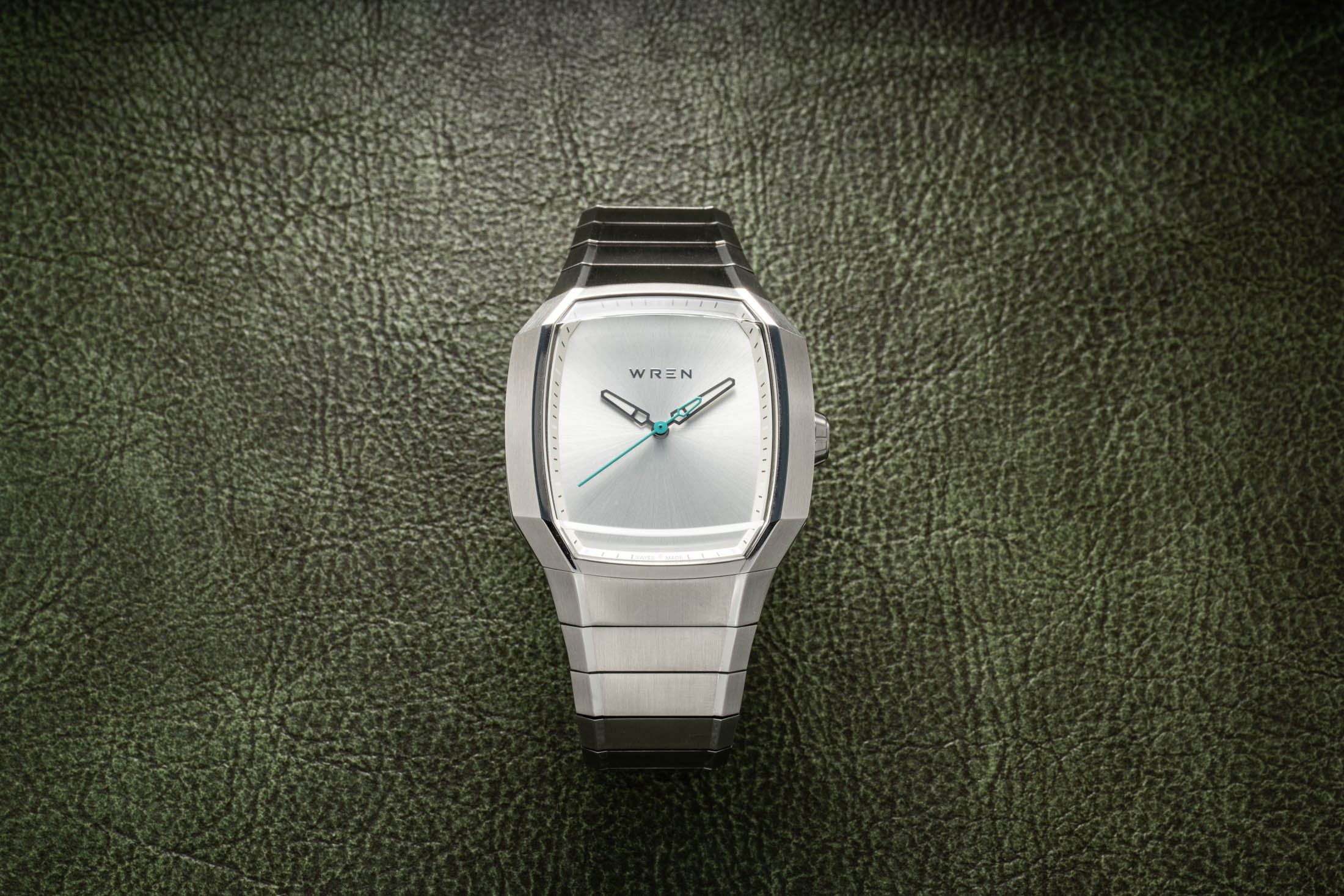
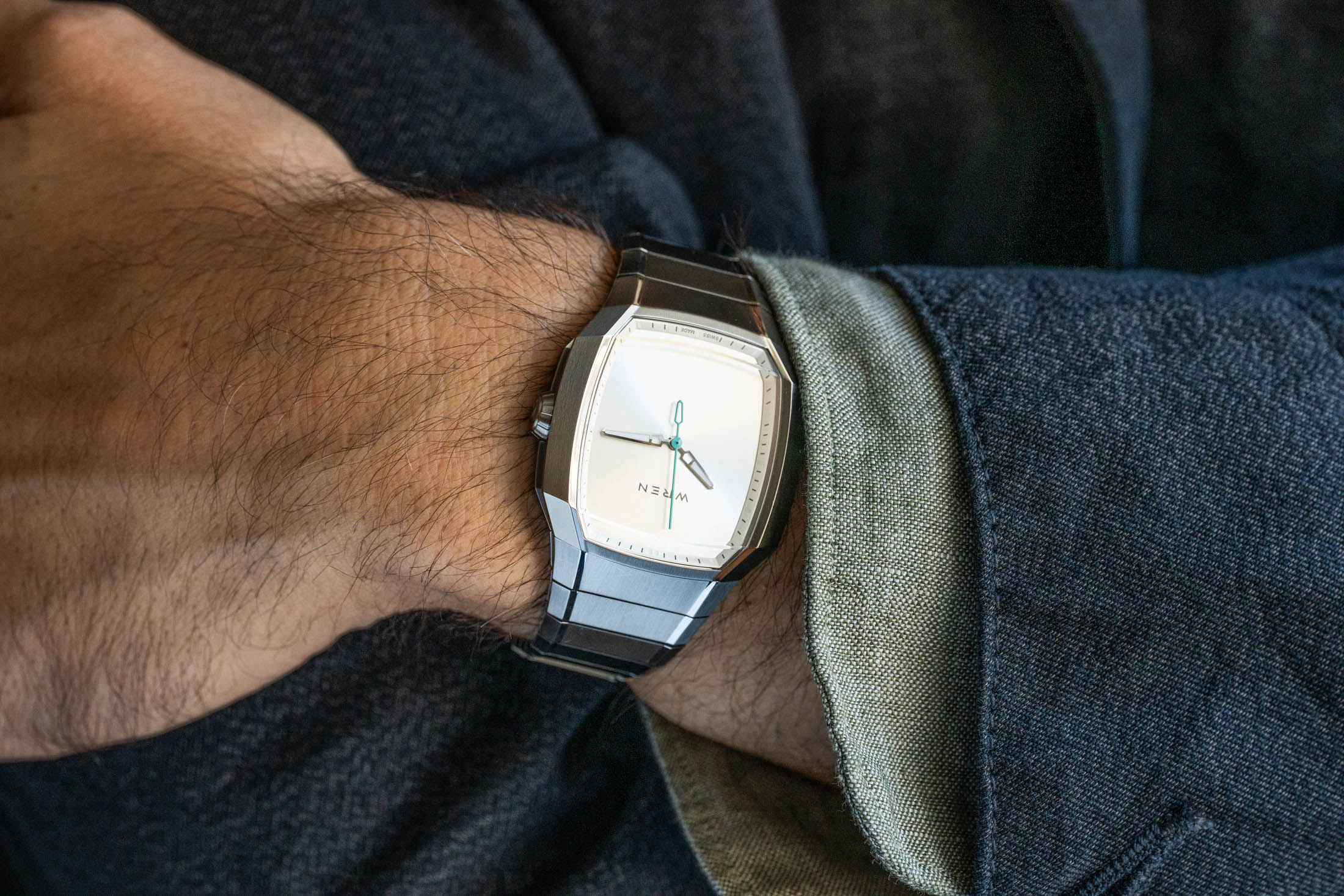
Aside from the Wren logo stamped on the dial, the Vessel shares almost no design similarities with the rest of the brand’s catalog. The timepiece introduces a novel, integrated-style bracelet design that projects a retrofuturistic silhouette. The case adopts a general tonneau shape, but it is executed in a much more angular, geometric style. Fabricated from premium 904L stainless steel, the case measures 39 millimeters by 39 millimeters, with a slim overall height of 10.6 millimeters.

While most square watches notoriously tend to wear significantly broader than their round counterparts at any given diameter, the Vessel avoids this pitfall. Through aggressive tapering at the ends of the case as it flows into the bracelet, combined with a sharp downward slope, the watch achieves a remarkably compact and wearable feel on the wrist.
Engineering the Integrated-Style Bracelet and Crystal
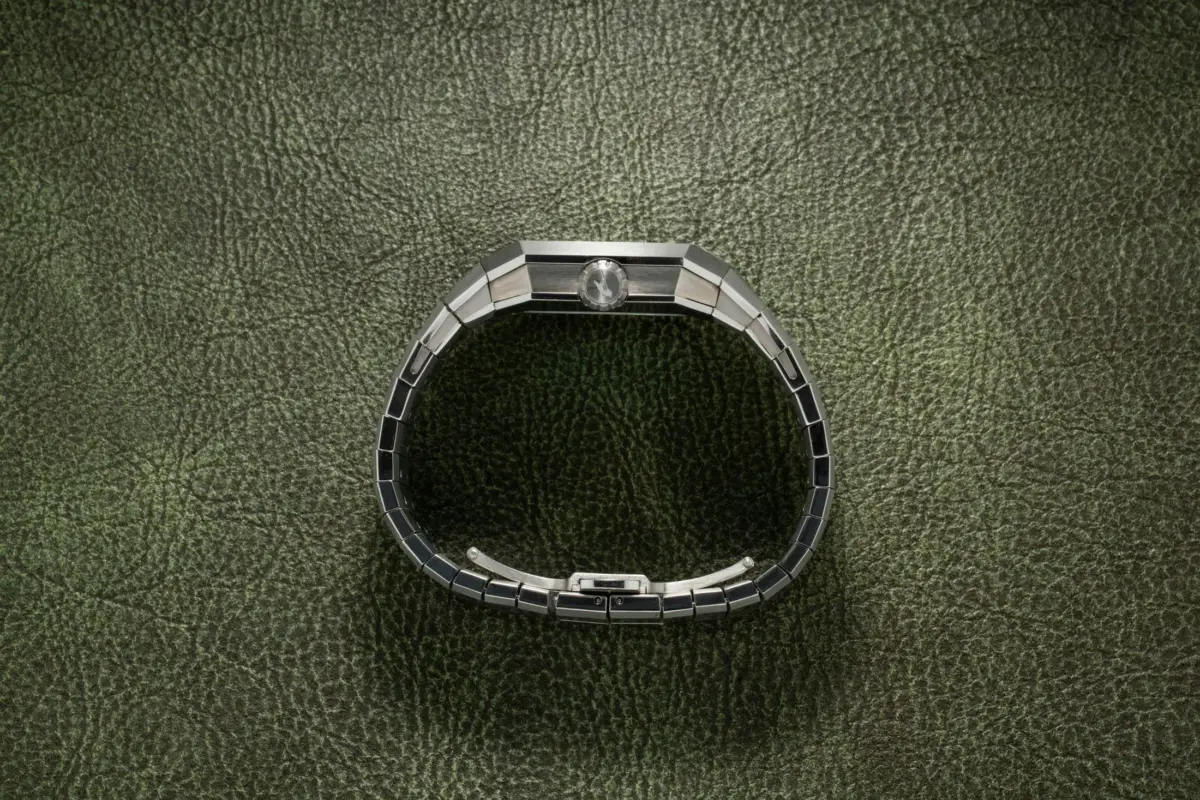
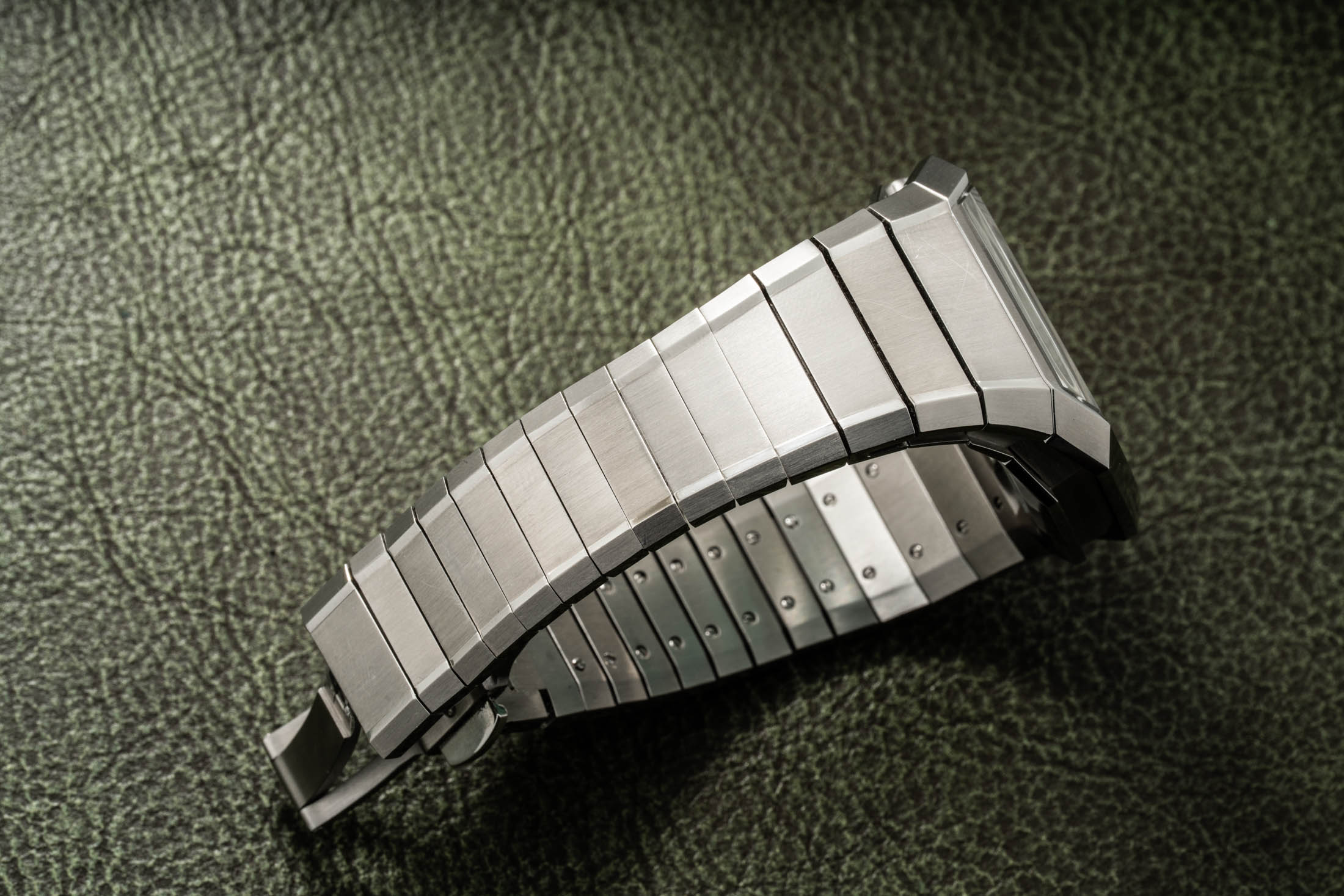
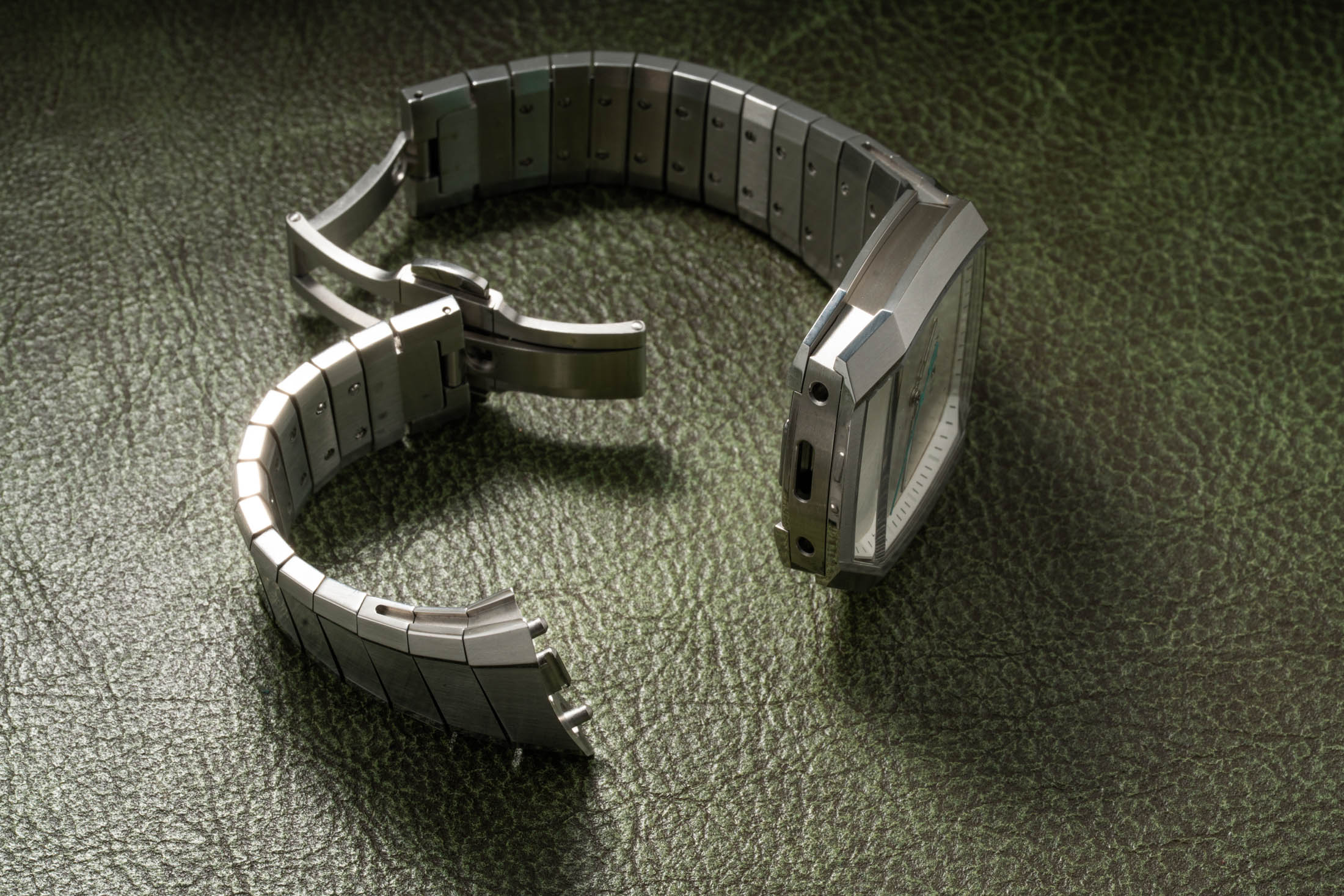
The bracelet is described as integrated-ish, meaning that at first glance, the case and the bracelet appear to form a singular, unbroken architectural unit. There are no exposed spring bars or screw bars visible on the sides of the case. Instead, each end of the case features a discrete push button that releases the bracelet via a proprietary quick-release mechanism. This system proves both secure and remarkably intuitive to operate.
While a dedicated rubber strap is available for separate purchase, the watch shines brightest on its metallic bracelet. Despite the bracelet’s rigid, geometric aesthetic, the links possess a surprising degree of flexibility between each segment, allowing the watch to accommodate a remarkably wide range of wrist sizes.
On a standard 6.5-inch wrist, the Vessel fits wonderfully, wrapping comfortably due to the carefully engineered downturn of the initial links. This flexibility successfully resolves one of the most common ergonomic hurdles plaguing similarly designed integrated sports watches. To fasten the bracelet, Wren utilizes a butterfly-style deployant clasp. While this style of clasp foregoes the expansive range of traditional microadjustments found on the Wren Diver models, the brand still incorporates a clever, hidden push-and-pull microadjustment position discreetly integrated into each side.
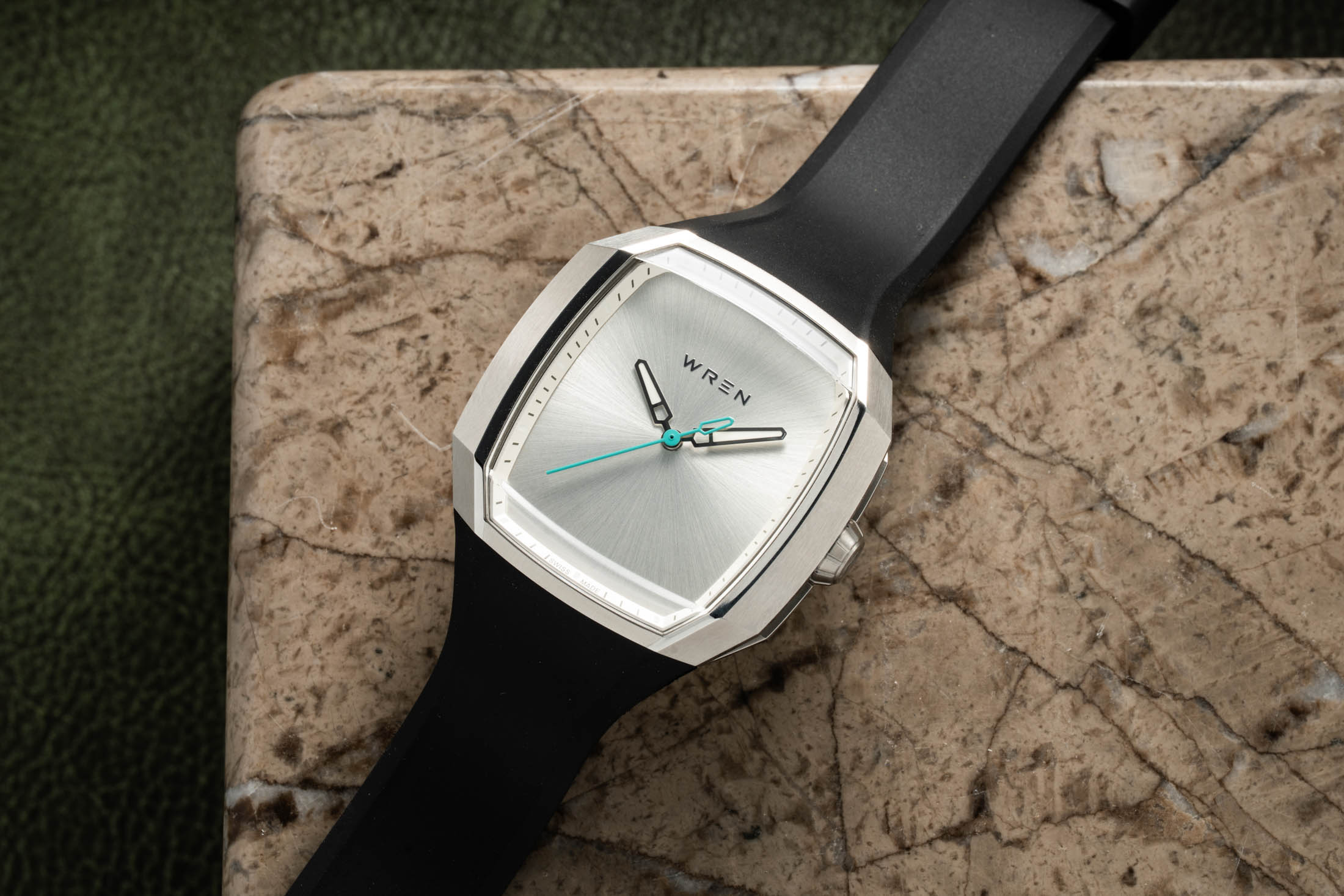
The front of the watch is dominated by a prominently faceted sapphire crystal. During the initial prototyping phase, considerable effort was dedicated not only to faceting the curved top side of the crystal so that its planes matched the harsh geometry of the case, but also to cutting the underside. The interior of the crystal is cut as a precise negative of the top surface, ensuring that viewing the dial through any of the crystal’s distinct planes remains entirely free of optical distortion.
Dial Variations and Mechanical Heart
For the inaugural launch of the Vessel, Wren is offering two distinct dial configurations. The first is a bright, luminous silvery-white option featuring a clean sunray-brushed finish. The second is an exotic option crafted from full meteorite. Sticking to a minimalist approach, the dials completely omit traditional hour indices. Instead, a minute track is printed directly onto the sloped rehaut. While this track may not serve as the most precise timing instrument given the dial’s geometry and the relatively short handset, it allows for a practical general approximation of the minutes. Both dial versions are enlivened by a vibrant splash of color courtesy of an aqua-blue center seconds hand.
Turning the watch over reveals a square exhibition caseback dominated by a large aqua-colored winding rotor that spans the entire viewable area. Strategic cutouts in the rotor’s design reveal the mechanical beating heart beneath: the reliable Sellita SW300-1 automatic caliber. Operating at a frequency of 28,800 vibrations per hour, the movement delivers a dependable power reserve of 56 hours.
Availability, Pricing, and Strategic Implications
Both versions of the new Wren Vessel are produced as strict limited editions, with each reference limited to a production run of 150 pieces. The watches open for pre-sale on Wren’s official website, with initial customer deliveries scheduled to commence in the first quarter of 2027.
The stainless steel sunray dial variant is priced at $2,900, while the meteorite dial iteration commands a price of $3,400. Both versions ship outfitted on the steel bracelet, with the rubber strap available as an optional add-on. Given the level of bespoke engineering and deliberate design execution required for this project, the pricing represents a fair and moderate upward step from the baseline prices of Wren’s earlier dive watches.
Evaluating the two options reveals interesting stylistic trade-offs. While a meteorite dial often serves as an immediate focal point for collectors, the broader watch market is arguably approaching the twilight of the meteorite dial trend. Consequently, the plainer sunray-brushed steel dial emerges as a particularly alluring choice in the metal. The color and texture of the sunray brushing are executed with exceptional care. Moreover, the clean negative space of the brushed dial better accentuates the novel, complex lines of the Vessel’s case, resulting in an aesthetic that feels more abstract, cohesive, and visually compelling.
While the previous Wren Diver designs relied on universally palatable, classically inspired aesthetics, the Vessel delivers a vastly different experience. It is a deeply specific vision that will undoubtedly prove polarizing among watch collectors. However, that unwavering specificity is precisely what matters. It brings forth an intriguing new design that successfully propels the independent brand well outside of its traditional dive watch comfort zone.