




In Guadalajara, Mexico, a recurring challenge faces educators and students alike: while high schools often house deeply motivated teachers and remarkably talented youth with a passion for science, technology, engineering, and mathematics, they frequently lack the necessary infrastructure. Advanced tools, particularly dedicated robotics laboratories, remain out of reach for many classrooms. This stark resource shortfall severely limits the practical opportunities available to students, restricting their ability to engage in hands-on learning with cutting-edge technological applications that are rapidly defining the modern industrial landscape.
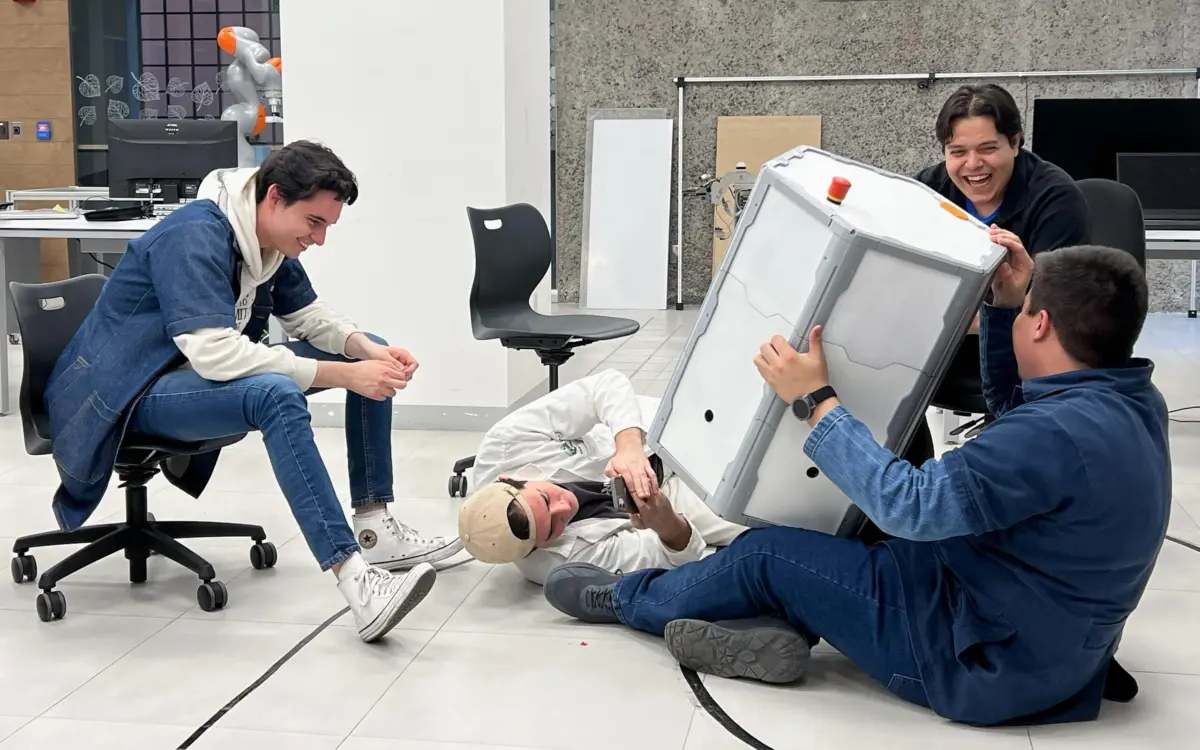
A dedicated team from ITESO, Universidad Jesuita de Guadalajara, is actively working to dismantle these systemic barriers. Operating through the EPICS in IEEE initiative, a multidisciplinary group comprising 15 engineering students, faculty advisors, and volunteers from the IEEE Guadalajara Section has successfully developed RoboMeshA. This innovative, portable, and self-contained educational platform is specifically designed to bypass the traditional limitations of school infrastructure, seamlessly bringing advanced robotics and artificial intelligence experiences directly into ordinary classrooms.
The EPICS program itself is administered by IEEE Educational Activities and receives vital funding from the IEEE Robotics and Automation Society, supporting community-focused engineering projects worldwide that bridge educational divides.
A Mobile Laboratory Transforming the Classroom Experience
Rather than requiring a host school to invest heavily in building a dedicated computer laboratory, purchasing expensive workstations, or installing complex and restrictive software packages, RoboMeshA functions as an all-in-one mobile learning network. It transforms any standard classroom into a high-tech experimentation space within minutes.
"RoboMeshA brings robotics and AI to students who don’t have access to specialized facilities or preinstalled software," explains team member Fernando Vidal Luna, an IEEE student member and a mechatronics engineering major at ITESO.
The accessibility of the platform is one of its most defining characteristics. Students can connect directly to the system using a standard, user-friendly web browser from virtually any device. Once connected, they can interact with the robot manually or leverage its various control modes to observe its movement in real time, watching how the machine successfully detects and navigates around physical obstacles in its environment.
Faculty advisor Jorge A. Lizarraga notes that the platform represents a synthesis of numerous complex engineering disciplines. "The project combines mechanical design, embedded systems, control engineering, computer vision, and AI into a single robotic system that functions as a mobile learning laboratory," Lizarraga says.
The development team observed early on that young students possess a profound interest in technology, programming, and robotics, yet they rarely get the opportunity to work with systems that successfully integrate mechanics, electronics, software, and control into a cohesive unit. RoboMeshA bridges this gap by offering a transparent look at how disparate fields intersect.
"RoboMeshA allows students to see how all these disciplines work together in a tangible and understandable way," says team member José S. González, who is also studying mechatronics engineering at the university.
Building upon their initial success, the team has already constructed two fully functional units and is actively developing a sophisticated modular coupling framework. This framework is designed to significantly expand the system’s overall capabilities for both advanced research and dynamic classroom demonstrations. By employing a structured system design approach that connects independent software components while carefully minimizing internal dependencies, the engineering team has successfully enabled up to four RobotMeshA units to operate together simultaneously in a coordinated fashion.
Overcoming Complex Design Challenges
Bringing the RoboMeshA platform from a conceptual blueprint into a physical, classroom-ready reality was far from straightforward, and the student-led team encountered numerous significant hurdles along the way. Balancing structural integrity, electrical safety, and user accessibility required meticulous iteration and exhaustive testing.
"One key challenge involved the robot’s structural design," Luna notes, reflecting on the physical engineering demands of the project. "It wasn’t only about making a chassis where all the components fit and the design had sufficient stability, rigidity, and weight distribution. It was also about ensuring that the electronics were protected while still being accessible for maintenance, testing, and modifications."
Equally demanding was the necessity of creating a piece of technology that could be operated intuitively by high school students possessing wildly varying degrees of prior technical experience.
"When students realize the technology they develop can inspire others and improve lives, engineering becomes far more meaningful," observes project lead Luis Fernando Luque-Vega, an IEEE member.
To ensure the platform met real-world pedagogical needs, the team established vital institutional partnerships with local educational institutions, specifically collaborating with the CETI Colomos and Prepa ITESO high schools. These partnerships allowed the developers to test, evaluate, and validate the platform directly within active classroom settings under real educational conditions.
"We wanted the first interactions with the robot to be simple and intuitive," González explains, detailing the user-experience philosophy that guided the software and network architecture. "Such that students could simply power the robot, connect to its network, and begin interacting with it, rather than having to deal with software installation, extensive configuration, or troubleshooting."
Engineering with Meaningful Social Impact
For many of the undergraduate participants, the project was undertaken as part of ITESO’s applied professional projects program. This hands-on academic framework provided the students with invaluable, real-world training in complex project management, rigorous system integration methodologies, and user-centered design principles that cannot be fully replicated in a traditional lecture hall.
The team’s academic rigor and practical innovation were recognized in May when they presented a formal research paper and a comprehensive project poster at the Engineering Congress of the Jesuit University System, sharing their methodologies and findings with academic peers and industry professionals.
"Seeing a design move from a digital model to a physical system was invaluable," González reflects. "Working with students from different backgrounds taught us to listen to end users and design for their actual needs."
Looking toward the broader future of the initiative, project lead Luis Fernando Luque-Vega articulates a vision that extends far beyond the borders of Guadalajara. He hopes the venture will serve as a replicable blueprint for engineering education on a national and international scale.
"I hope RoboMeshA is adopted by schools, universities, and IEEE student branches across Mexico and internationally as a model for integrating technical innovation with community engagement," Luque-Vega says.
By intentionally pairing high-level engineering talent with direct community service, initiatives like EPICS in IEEE continue to demonstrate how targeted support and collaborative ingenuity can successfully transform abstract academic concepts into tangible, real-world solutions that uplift surrounding communities.
"When students realize the technology they develop can inspire others and improve lives, engineering becomes far more meaningful," Luque-Vega concludes.
Those interested in learning more about similar service-learning opportunities and community engineering initiatives can find additional information by visiting the official EPICS website.