





The fascinating world of gemstone optics encompasses a wide array of visual phenomena, from the play-of-color in opals to the asterism found in star rubies. Among the most ethereal and captivating of these optical properties is adularescence, a phenomenon widely recognized by gemologists, collectors, and jewelry historians as the distinctive "moonstone effect."
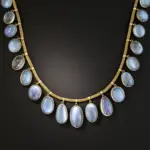
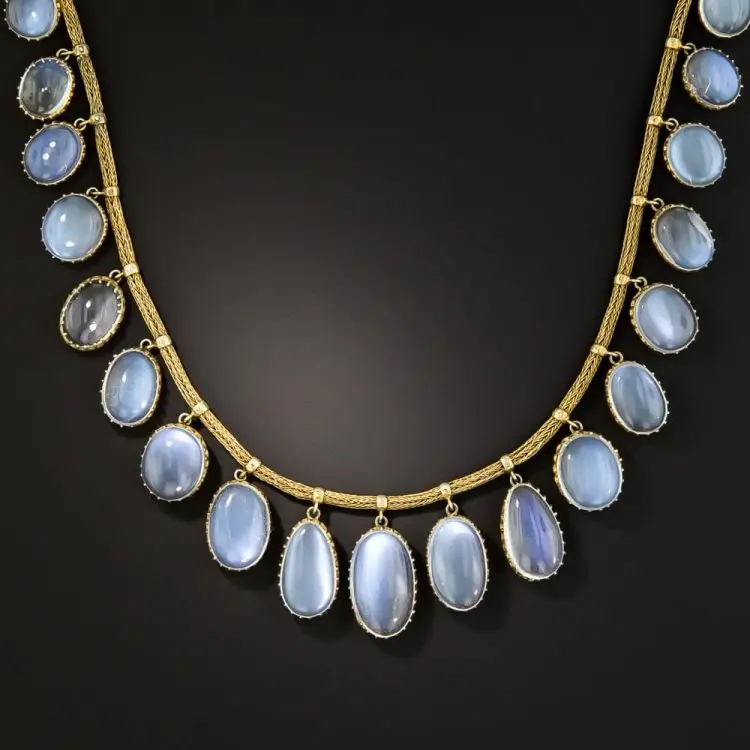
At its core, adularescence describes the unique optical behavior found in specific types of feldspar, most notably orthoclase. When these stones are shaped and polished into smooth cabochons rather than faceted gems, they display a remarkable visual characteristic: a floating, billowy light that shimmers in shades of blue or white across the surface as the stone is turned in the light. This luminous quality has enchanted admirers of fine jewelry for centuries, particularly during periods like the Victorian era, when delicate fringe necklaces and ornate bohemian pieces showcased the glowing mineral to its fullest advantage.
While casual observers and jewelry enthusiasts generally refer to the trait as the moonstone effect, professionals within the scientific and mineralogical communities know the phenomenon by a more technical term: schiller. This terminology places adularescence within a broader category of optical effects caused by light interacting with microscopic structural features inside a mineral rather than resting merely on its external surface.
To understand how adularescence occurs, one must look closely at the internal composition of the feldspar minerals that display it. Feldspars represent a group of rock-forming tectosilicate minerals that make up a significant portion of the Earth’s crust. Within this broad mineral family, orthoclase and related species can undergo specific geological cooling processes that cause microscopic exsolution—a separation of components into distinct lamellae or alternating layers of different feldspar compositions, specifically sodium-rich albite and potassium-rich orthoclase.
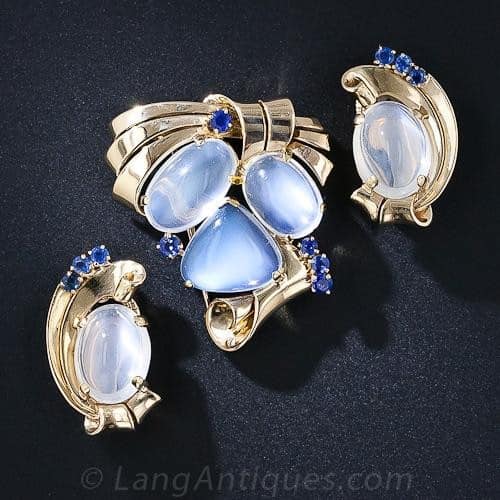
As light enters the polished cabochon, it encounters these microscopic alternating layers. Instead of passing straight through or reflecting uniformly off the top, the light is scattered in multiple directions by the lamellae. This phenomenon, known scientifically as light scattering or interference, produces the soft, billowy glow that appears to hover just beneath the surface of the stone. Because the scattering effect is wavelength-dependent, shorter wavelengths of light—namely blue—are often scattered more effectively than longer wavelengths, yielding the characteristic bluish sheen that makes high-quality moonstones so desirable in the world of antique and contemporary jewelry design.
The appreciation of this optical effect has a rich history deeply intertwined with the evolution of lapidary arts and jewelry manufacturing. Historically, artisans recognized that cutting these minerals required a precise orientation. To maximize the floating light effect, lapidaries must cut the cabochon so that the base of the stone runs parallel to the internal structural layers. If a cutter miscalculates this alignment, the adularescent glow can appear weak, skewed, or entirely absent, rendering the stone ordinary despite its chemical composition.
Throughout jewelry history, this luminous property found exceptional expression in distinctive designs. During the Victorian era, master jewelers frequently incorporated moonstones into elaborate pieces, such as cascading fringe necklaces, brooches, and rings. In these historical pieces, the soft, milky blue adularescence provided a gentle contrast to yellow gold, silver, and surrounding gemstones like diamonds or seed pearls. The shifting, otherworldly glow gave the impression of captured moonlight, inspiring numerous myths and cultural legends across different civilizations regarding the origin of the stone.
In contemporary gemological and mineralogical contexts, the study of adularescence continues to provide insights into the geological conditions under which feldspars form and cool. Mineralogists examine the scale and spacing of the lamellae to determine the thermal history of the host rock, as the thickness of these microscopic layers directly influences the intensity and color of the schiller effect observed by the naked eye. Whether viewed through the lens of historical jewelry craftsmanship or strict mineralogical science, the phenomenon remains one of nature’s most subtle and enduring optical displays.