





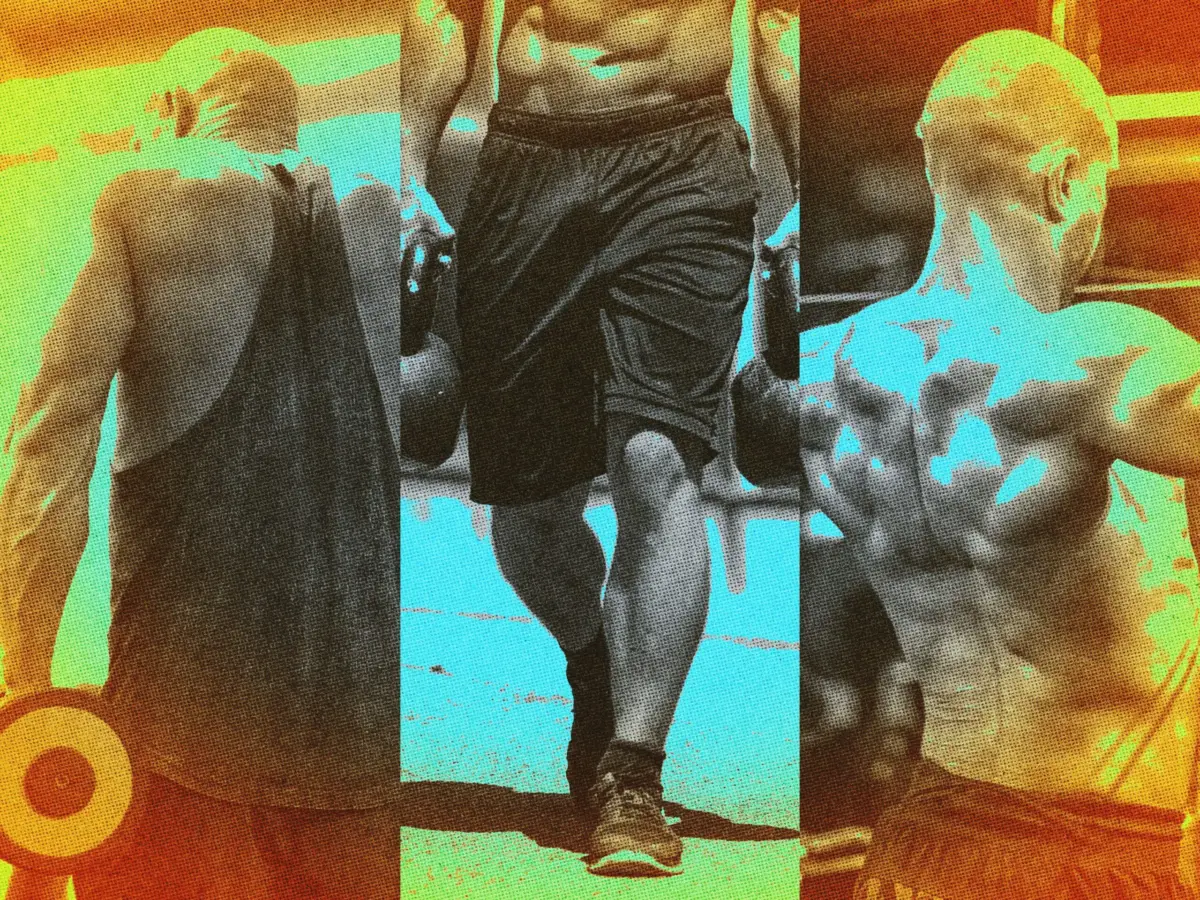
Ask a typical gym-goer to locate their trapezius muscle—often shortened to "traps" in strength training terminology—and they will almost certainly point to the visible ridges of muscle sitting directly between the base of the neck and the top of the shoulders. While those prominent mounds do represent a portion of the structure, fitness professionals emphasize that focusing solely on that small section misses the vast majority of the muscle’s anatomy.
According to exercise specialists, the trapezius is a expansive, diamond-shaped muscle group that spans from the lower margins of the skull and the sides of the neck, out across the shoulders, and extends down to a distinct point in the middle of the back. Taken in its entirety, the trapezius accounts for roughly one-third of the visible muscle mass on the human back. Despite its significant coverage area, it remains one of the most frequently misunderstood and under-trained muscle groups in conventional exercise regimens.
Luke Carlson, the founder and chief executive officer of Discover Strength, notes that the true scope of the trapezius is often overlooked by average lifters. Carlson points out that because the traps inhabit a functional gray zone between routine shoulder exercises and traditional back workouts, they regularly end up omitted from both training days. When individuals set out to construct lean muscle tissue, their primary focus typically gravitates toward the chest, the upper back lats, the biceps, and the triceps. In the process, the trapezius is bypassed, leaving a substantial volume of muscle tissue under-stimulated.
However, fitness experts stress that prioritizing trapezius development offers benefits that extend far beyond simply adding muscle mass. Dedicated trap exercises can play a vital role in injury prevention both inside and outside the weight room, support key joint mechanics during complex lifts, and combat the physical strain associated with modern lifestyle habits, such as prolonged phone and computer use.
Why You Should Train Your Traps
From an aesthetic standpoint, developing the trapezius provides a uniquely visible contribution to a well-rounded physique. Unlike many major muscle groups of the posterior chain, which remain hidden from view when standing directly in front of a mirror, the upper portion of the trapezius is immediately noticeable. Carlson highlights that this visibility makes the traps a prime aesthetic focal point regardless of attire, whether an individual is wearing a casual T-shirt, a tank top, or a tailored dress shirt. Pop culture and athletic culture alike frequently showcase well-developed traps as a defining feature of a strong physique, exemplified by actors like Dwayne Johnson preparing for roles such as The Smashing Machine.
Yet, the physical appearance of built-up shoulders and upper back is only a surface-level benefit. Personal trainers emphasize that the primary real-world advantage of trapezius development lies in postural restoration and structural balance. In an era dominated by sedentary desk work and handheld technology, many individuals suffer from forward head posture and rounding shoulders, a condition frequently referred to as "tech neck" or medically recognized as kyphosis, which involves an exaggerated forward curvature of the upper spinal column.
Carlson explains that the trapezius muscles are responsible for pulling the head and neck back into proper anatomical alignment. By strengthening the entire trapezius network, lifters can counteract the continuous forward tilt induced by staring at screens, establishing a healthier, more upright posture for daily life.
In addition to day-to-day postural support, direct trap training delivers substantial performance benefits across a broad range of strength exercises. Antony Brown, a personal training leader at Life Time in Lake Zurich, Illinois, emphasizes that a strong trapezius serves as an essential stabilizer for the shoulder girdle.
According to Brown, the trapezius plays a critical role in maintaining joint integrity during heavy pressing movements. During exercises such as the flat bench press or the standing overhead press, the ability to firmly lock the shoulder blades back and down establishes a stable foundation. When the shoulder joint is properly anchored by a strong trapezius, force can be transmitted more efficiently, resulting in stronger pressing mechanics, improved lifted loads, and a reduced risk of shoulder impingement or secondary strain.
Three Trainer-Approved Exercises for Building Bigger Traps
To effectively target all areas of the trapezius, personal trainers recommend a balanced routine that addresses the upper, middle, and lower fibers of the muscle complex.
The Shrug
The traditional shrug remains the quintessential movement for isolating the upper section of the trapezius—the prominent portion visible from the front in mirrors and photographs. Carlson notes that when looking directly at an individual’s neck and shoulders, the upper traps define the silhouette. Executing shrugs is the most direct and efficient method for building mass in this specific region.
One of the primary advantages of the shrug is its universal accessibility. The movement can be performed in a commercial gym setting using a barbell, a trap bar, or a set of heavy dumbbells or kettlebells. However, the exercise is equally adaptable for home workouts. In the absence of specialized fitness equipment, individuals can utilize household items such as weighted backpacks or heavy grocery bags, provided the weight is distributed evenly between both hands.
To perform the movement correctly, the lifter stands upright while holding the chosen resistance at their sides with arms extended. The core focus is to elevate the shoulder girdle directly toward the ears in a vertical plane, squeezing the upper traps tightly at the top of the range of motion before smoothly lowering the weight back to the starting position.
A common pitfall in trap training, particularly with the shrug, involves overloading the weight at the expense of proper execution. Carlson observes that many lifters attempt to use excessively heavy weight, which significantly restricts the shoulder girdle’s vertical elevation. To achieve maximum muscle engagement, Carlson advises starting with a lighter, manageable resistance and focusing on achieving the maximum possible range of motion at the top of every repetition.
Scapula Retraction
While the upper traps handle vertical elevation, the middle and lower fibers of the trapezius muscle group require horizontal pulling forces to be fully engaged. Strengthening these lower sections is essential for stabilizing the scapulae and reinforcing long-term postural health.
To target these deeper fibers, fitness professionals recommend scapula retractions. Though the exercise name may sound overly technical to non-experts, the setup relies on equipment common to almost any fitness facility. The movement is typically performed on a seated cable row station or a chest-supported machine row, such as those manufactured by brands like Hammer Strength or Matrix.
Unlike a standard seated row—where the lifter bends their elbows to pull a weight handle all the way to their torso—the scapula retraction isolates movement exclusively to the shoulder blades. The user assumes a seated position facing the cable or machine handles, keeping their arms and elbows completely locked straight throughout the duration of the set. The sole movement comes from drawing the shoulder blades backward toward each other, squeezing the mid-back, and then allowing the weight to pull the shoulder blades forward into a full stretch.
Carlson emphasizes that the movement is subtle but highly effective. The key to correct execution lies in maintaining a completely stationary torso. If the torso sways forward or backward during the movement, momentum takes over, lessening the engagement of the targeted muscle fibers. Proper form requires keeping the torso completely still so that only the shoulder blades expand forward and retract backward.
The Farmer’s Carry
To complete a well-rounded trapezius routine, personal trainers frequently incorporate loaded carries, such as the farmer’s carry, which challenge the traps through prolonged isometric tension and stretched positions.
The inclusion of loaded carries is supported by contemporary exercise science. Brown points to research demonstrating that exposing a muscle to heavy loading while in a stretched position is exceptionally beneficial for triggering muscle hypertrophy. This approach is backed by a 2025 systematic review published in the journal Sports Medicine and Health Science, which found that resistance training performed at longer muscle lengths significantly enhances longitudinal muscle growth in humans.
Brown notes that carrying heavy weight with fully extended arms subjects the trapezius to a constant, weighted stretch. This mechanism explains why competitive powerlifters and strongman athletes—who regularly perform heavy carries and static holds—tend to develop exceptionally large trapezius muscles naturally over time.
Like the shrug, the farmer’s carry requires minimal complex setup. It can be performed using dumbbells, kettlebells, or specialized carry handles. To execute the exercise properly, the lifter picks up a pair of heavy weights, stands fully upright with a tall chest, and maintains a controlled walking pace over a set distance or time duration.
According to Brown, technique remains paramount during loaded carries. Lifters should resist the urge to slouch or let the heavy weights pull their upper body forward. By actively keeping the chest elevated, the spine neutral, and the shoulders packed down, the trapezius muscles are forced to sustain high levels of tension under load, providing a powerful stimulus for upper back strength and structural durability.