





Smart strip lights have firmly transitioned from novelty dorm room decor into versatile tools for home improvement, offering both vibrant pops of color and practical task lighting for spaces across the house. Whether homeowners are looking to create a memorable ambiance for entertaining or remote workers are searching for a cost-effective way to brighten a dull home office, these flexible illumination systems continue to find new applications. Following extensive, multi-year evaluations of the smart home market by technology reviewers, a clear picture has emerged regarding which strip lights deliver the best combination of brightness, ease of use, ecosystem compatibility, and value.
The appeal of smart light strips lies largely in their straightforward installation process. Most models utilize a peel-and-stick adhesive backing that allows users to quickly mount them onto clean, fixed surfaces such as baseboards, around doorframes, or underneath kitchen cabinets. However, testers issue a notable word of caution regarding this hardware: the factory adhesive is often strong enough to strip paint from walls. For renters living in apartments or dormitories, experts recommend opting for non-permanent mounting solutions, such as painter’s tape or Command Hooks, while advising tenants to review their housing contracts first.
Beyond mounting, versatility is a primary selling point. Most tested models can be trimmed with a standard pair of scissors to fit precise dimensions, though cut pieces generally cannot be reused. Certain models support extension kits or daisy-chaining, while others allow users to synchronize multiple strips simultaneously by linking them through companion apps or third-party platforms like Amazon Alexa, Apple Home, or Google Home. Once installed, connection to a smartphone opens up capabilities for voice-controlled color shifts, automated daily schedules, and custom lighting displays tailored for parties or holidays. Industry experts also emphasize that strip lights differ fundamentally from traditional rope lights, which encase LED bulbs within flexible plastic tubes; strip lights are generally brighter, easier to install, and boast a wider selection of available options on the market.
Testing Criteria and Methodology
Selecting the right smart strip light involves looking beyond basic illumination. Reviewers have spent years researching the category by analyzing trusted publications, community discussions on Reddit, video reviews, and user feedback. When narrowing down choices for formal testing, evaluators focused on brightness, color accuracy, ease of installation, software reliability, and smart-home ecosystem integration.
Laboratory and real-world testing procedures involved setting up each strip and evaluating scheduling tools, color transitions, and special effects using an iPhone and an Android device. Testers measured the raw light output of each strand using a light meter and integrated the hardware with various smart speakers, including Amazon Echo, Google Home, and Apple HomePod units, to verify ecosystem compatibility. Long-term evaluations also take into account how well the adhesive backing holds up over extended periods of use.
Top Pick: Govee Strip Light 2 Pro
Emerging as the top recommendation in recent testing, the Govee Strip Light 2 Pro stands out as the brightest option evaluated, making it an exceptional choice for task lighting in kitchens, over workshops, or above office desks. Despite its high maximum output, the system can be easily dimmed for subtle accent lighting. It is available in multiple sizes that can be cut or extended as needed.
The 2 Pro achieves its superior brightness through a higher density of LEDs, packing 60 LEDs per meter compared to the 30 or fewer found on typical competing models. This density results in better color saturation and crisp production of both standard and warm-white hues. Furthermore, an updated internal processor ensures that special effects—ranging from holiday themes to dynamic lighting scenes—transition smoothly. The companion app features an extensive library of presets and an experimental AI feature that allows users to issue natural language prompts, such as requesting calming blue tones for relaxation.
In terms of ecosystem support, the Govee 2 Pro integrates seamlessly with Amazon Alexa, Google Home, and Matter, meaning it also bridges cleanly into Apple Home environments. Manual controls are robust, featuring a physical control box that includes power toggles, brightness adjustments, and a button to cycle through preset scenes. While the app is feature-rich, testers noted that its dense interface can present a slight learning curve for beginners, and the system lacks support for Apple Home’s native Adaptive Lighting feature.
Runner-Up: TP-Link Tapo Smart Wi-Fi Light Strip L930-5
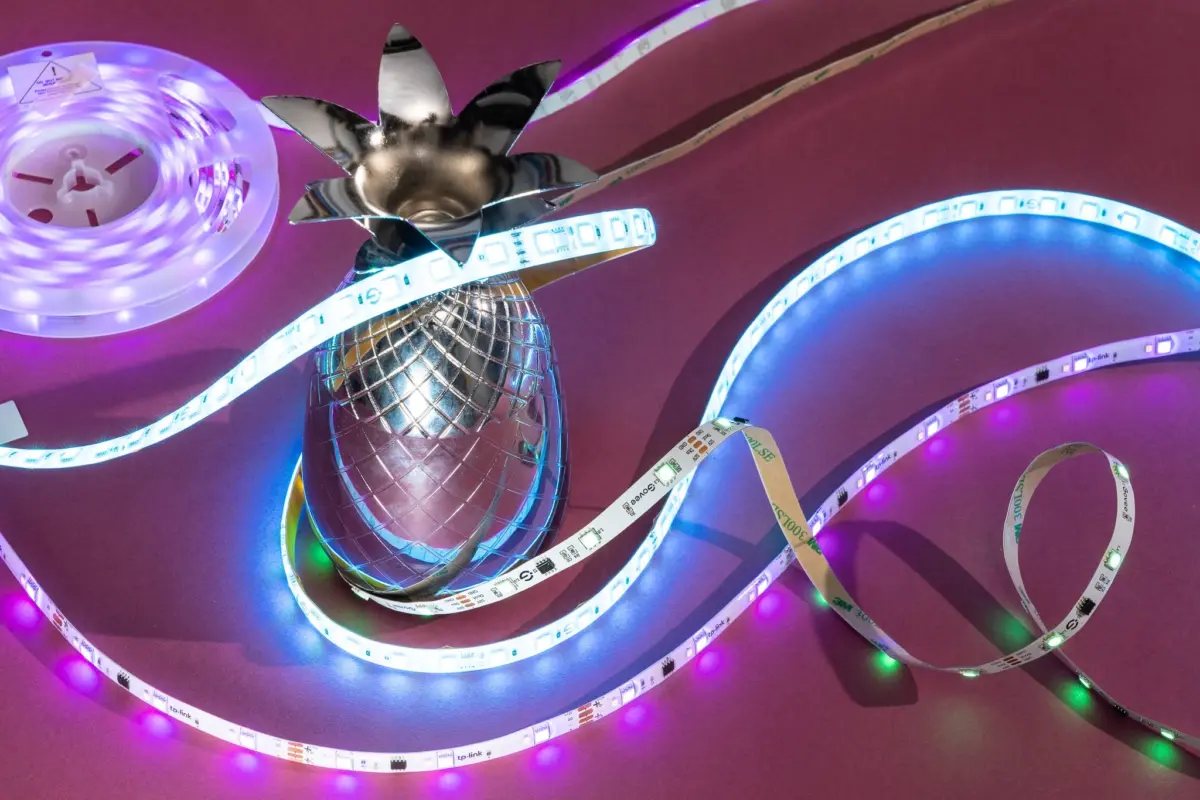
For buyers seeking a balance of affordability, reliable performance, and straightforward setup, the TP-Link Tapo Smart Wi-Fi Light Strip L930-5 serves as a strong runner-up. While it does not match the raw brightness of the Govee top pick, the Tapo strip produces accurate colors, features a solid selection of preset lighting effects, and relies on a mobile application that is notably straightforward to navigate.
The Tapo app grants quick access to color customization, music synchronization features, scheduling tools, and a specialized Away Mode that randomly cycles lights on and off to simulate occupancy when residents are away. Additionally, the Tapo model distinguishes itself by providing real-time energy-consumption tracking within the app, allowing users to monitor exact power usage over time. Hardware controls include a physical button on the attached controller for manual power toggles and effect cycling.
Addressing recent industry context regarding the brand, TP-Link has faced broader national security scrutiny concerning network hardware manufactured abroad. However, company representatives have clarified that U.S. operations are managed through a separate domestic headquarters, cloud data is hosted securely on Amazon Web Services infrastructure, and the vast majority of its U.S.-bound consumer products are manufactured in Vietnam. Like the top pick, the Tapo strip supports major smart ecosystems but omits Apple’s Adaptive Lighting capability, and its length options are more limited due to the discontinuation of longer 33-foot kits.
Budget Pick: WiZ Smart RGBIC LED Light Strip
Consumers hesitant to make a significant financial commitment to smart lighting can look to the WiZ Smart RGBIC LED Light Strip as an accessible entry point. Priced significantly lower than premium competitors, this model provides basic controls, reliable color accuracy, and standard special effects across multiple length options.
While the WiZ strip is not as bright as its higher-end counterparts—partly due to a lower LED density and a design that mixes colors rather than utilizing dedicated white LEDs—it delivers consistent performance without unnecessary complexity. One notable hardware advantage is its physical cable connector, which utilizes a secure, pinch-to-release locking mechanism that prevents the power cord from accidentally detaching during manual adjustments. The strip also avoids the polyurethane coating degradation seen in some competing models, maintaining a clean appearance over years of use.
Alternative Options and Market Competition
Beyond the primary picks, several other products cater to specific user preferences. The LIFX Everyday Smart Lightstrip offers an affordable pathway for Apple ecosystem users interested in Apple Home’s Adaptive Lighting feature, which automatically adjusts color temperatures to mirror natural sunlight throughout the day. While its colors are softer and more muted than the Govee or Tapo models, its subtle output suits environments where intense saturation is undesirable.
Meanwhile, users invested in the Philips Hue ecosystem or those dealing with unreliable Wi-Fi environments can consider the Philips Hue Essential Strip Light or Philips Hue Solo Light Strip. These models leverage Zigbee and Bluetooth protocols for more robust connectivity, though utilizing advanced Zigbee features typically requires a dedicated Hue Bridge hub or a compatible smart speaker with built-in mesh networking support. As manufacturers continue to refine brightness, software intelligence, and ecosystem interoperability, smart strip lights remain an adaptable method for personalizing home environments.