


As part of each Maison&Objet, the twice-annual design show held on the outskirts of Paris, a carefully selected group of Rising Talent from a single country presents their work as an immersive show within the show. For international visitors—including buyers, journalists, architects, and interior designers—this dedicated showcase offers a focused, intimate look at emerging design talent amidst the fair’s broader, often overwhelming commercial presentations.
This year, the international spotlight was firmly cast on South Africa. Seven visionary designers and dynamic studios brought together the nation’s distinctive, multifaceted mix of indigenous craft, profound cultural heritage, and cutting-edge contemporary design. Representing creative hubs such as Johannesburg, Cape Town, Durban, and beyond, the cohort presented an arresting array of furniture, rugs, lighting, and decorative objects. Each piece was meticulously shaped by a blend of architectural rigor, personal and family history, deep-seated curiosity, and, in some instances, environmental activism.
7 Rising Talent Award Winners at Maison&Objet 2026
These seven standout designers and studios offer a compelling glimpse into what is actively emerging from South Africa’s thriving, highly diverse design scene right now.
Oageng Manana & Tshegofatso Ramothibe of Meetlo Studio
Johannesburg
Meetlo Studio takes familiar, everyday objects—such as a wine rack or a server—and reimagines them into evocative new forms deeply rooted in South African culture and tradition.
"We try to express our work through our African narrative and our cultural customs," Oageng Manana explains. "Our name means ‘customs and traditions.’ So our inspiration is drawn from how our indigenous people used to do things, and also the environment that is around us."

One striking example of this philosophy is the Abadimu server, whose name translates to "for the ancestors." Manana notes that his ancestors serve as an ongoing source of wisdom and inspiration, though practical function remains central to the studio’s work, even when a piece incorporates elaborate, hand-carved details or unexpected structural forms.
Everything, down to the intricate carving, is executed entirely in-house, granting the studio greater autonomy over how their conceptual ideas take physical shape. "We can control the narrative and have that uniqueness to it," he says. "We can translate our story exactly as we want to envision it."
Ashleigh Lloyd of Studio Lloyd
Cape Town

For Maison&Objet 2026, Studio Lloyd introduced a fresh line of smaller, more residential-focused pieces. Ashleigh Lloyd is otherwise widely recognized for large-scale, high-impact commissions tailored for high-end hospitality spaces, including luxury lodges and resorts. Her signature sculptural seating and lighting fixtures are constructed from resilient materials like aluminum, stainless steel, and synthetic rope that is UV-protected, weather-resistant, and built to withstand the elements. Now, she is broadening her commercial horizons toward the residential market through limited-edition table lamps and pendant lights.
Lloyd is a firm believer in supporting and empowering women, sharing specialized knowledge, and cultivating a strong sense of community throughout her creative process. Her designs frequently employ a crochet-based technique, a medium historically dismissed or categorized as "women’s work," utilizing it to transform industrial rope into fluid, sculptural forms.
"Crochet, through its natural flexibility, tactile quality, and almost meditative rhythm, offers a deeply human counterpoint to the rigidity of architectural lighting," Lloyd reflects.

Simphiwe Mlambo
Cape Town
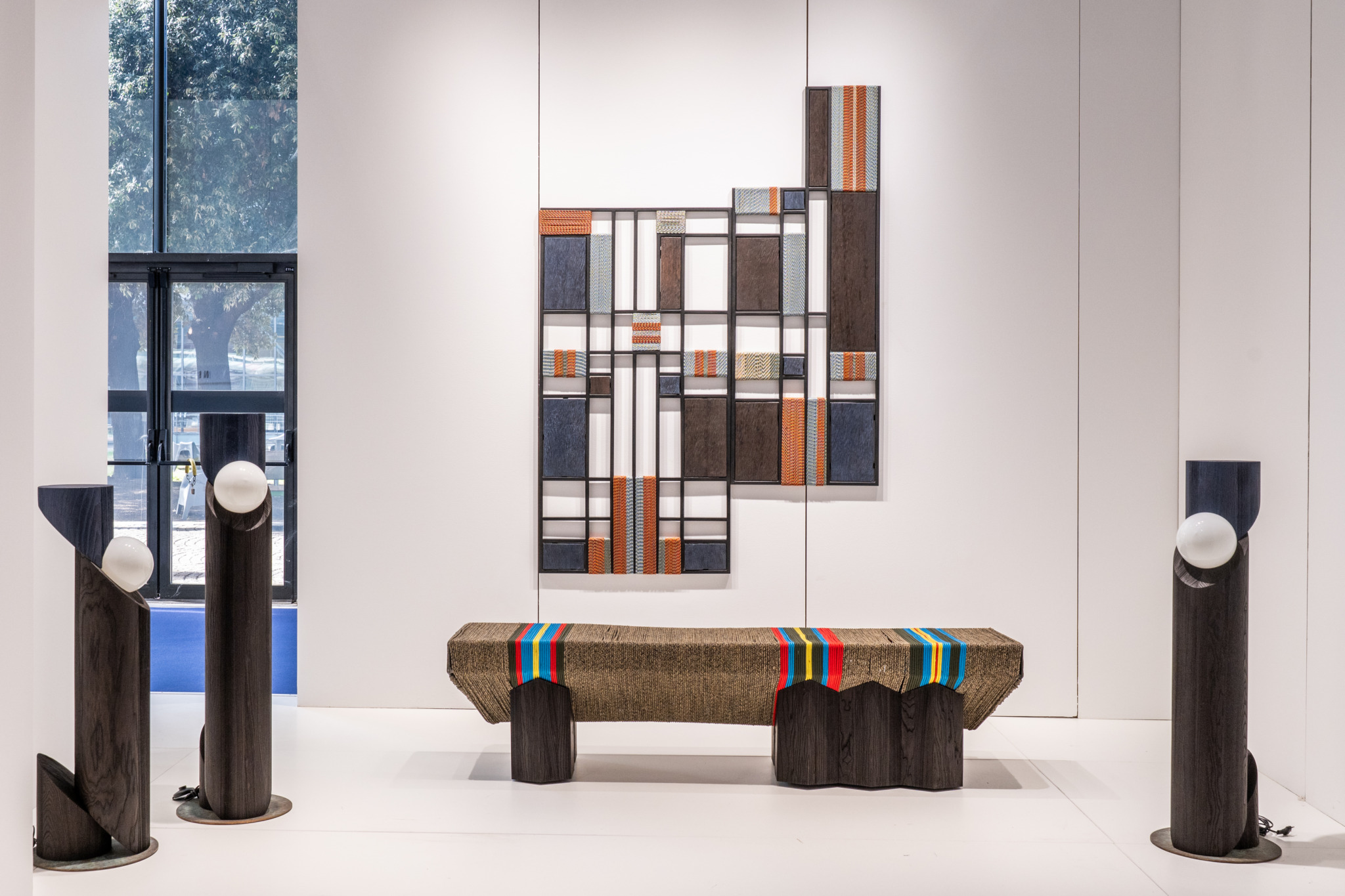
An interior design graduate of the Durban University of Technology, Simphiwe Mlambo has worked across residential, commercial, and hospitality projects since founding his independent studio in 2019. A Durban native with deep family ties to the regional construction industry, Mlambo considers his lived experiences central to an overarching design approach that balances rigorous conceptual thinking with hands-on technical knowledge.
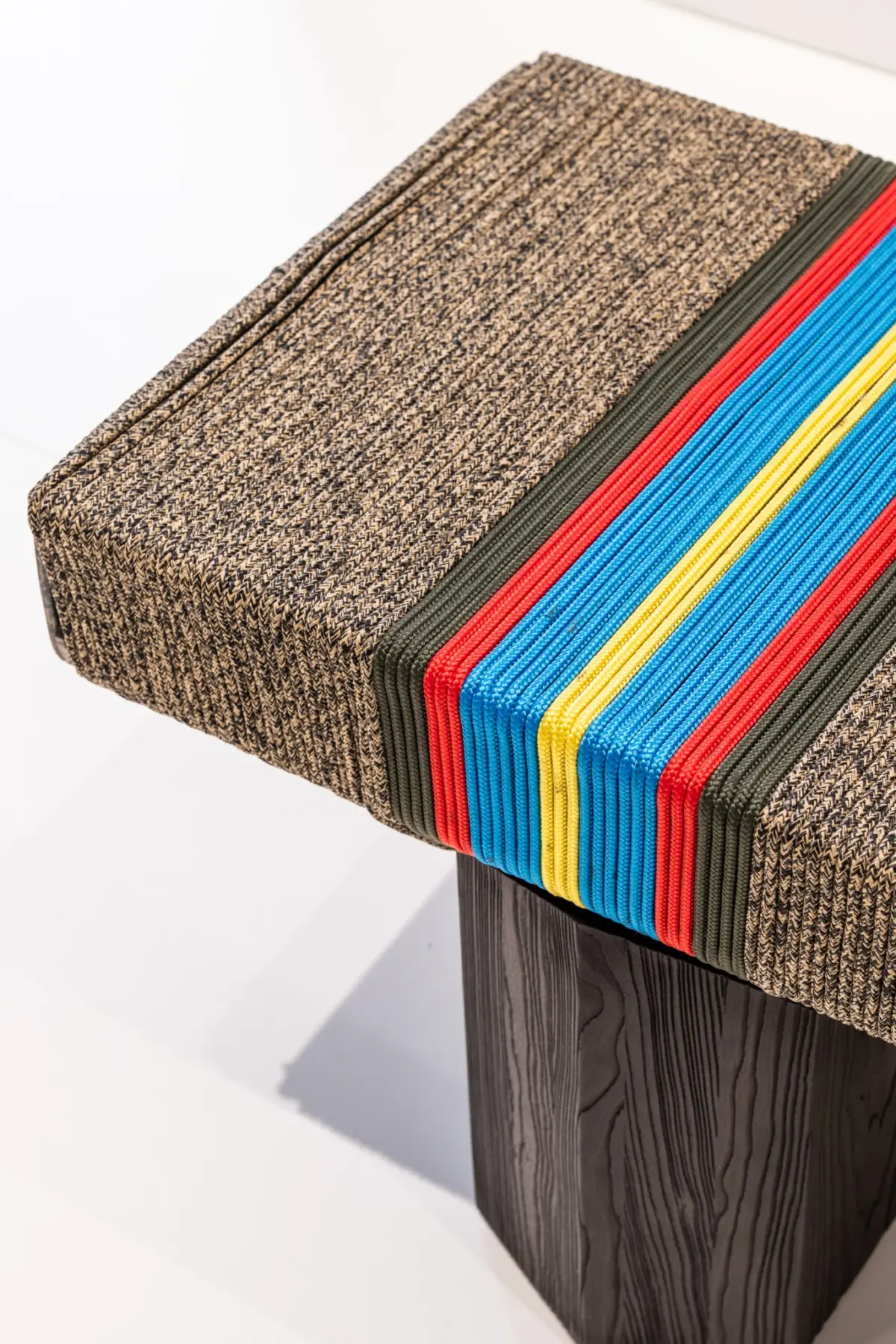
The collection he showcased at Maison drew profound inspiration from the traditional grass mats crafted by his grandmother. A sculptural bench within the installation evokes her loom, while accompanying wall panels directly reference the mats themselves, and lighting fixtures subtly recall the quality of light she utilized while weaving.

"The whole idea is to take personal experiences and traditional techniques and translate them into a modern context," Mlambo explains. That methodology extends directly to the collection’s largely traditional color palette, which he thoughtfully adapted to resonate with a contemporary international audience. "But it still has that texture," he adds. "It still has that African-ness. It still has that feeling of home for me, of course."
Tanisha Neill of NISH
Cape Town
Tanisha Neill originally trained and worked as a dancer, a foundational background that ultimately informs her unique relationship to spatial volume, rhythm, and perspective through her studio, NISH.

"My material definitely drives my design, and understanding the capabilities and sometimes its restrictions is where the beauty of creation and my ideas come from," she explains.
For a new floor rug that can equally double as a statement wall hanging, Neill collaborated closely with a collage artist who constructs compositions by tearing and layering imagery pulled from vintage magazines. The final form was not predetermined; Neill initially suspected the design might manifest as a textile piece, but upon seeing the finished collage, she instantly recognized it belonged as a rug. Hand-tufted in luxurious wool and silk, the resulting piece utilizes varying pile heights to meticulously recreate the collage’s distinct sense of depth and layering, allowing a dramatic mountain landscape and delicate bird imagery to emerge across its tactile surface.
Neill describes her willingness to let the raw material influence the final outcome as a vital component of her creative process: "You see the prototype, then you get it back, and you have to be open to adapting, to letting the piece kind of bring itself to life."

Martin Tallie & Zani Alberts of DEFT Studios
Port Elizabeth (Eastern Cape)
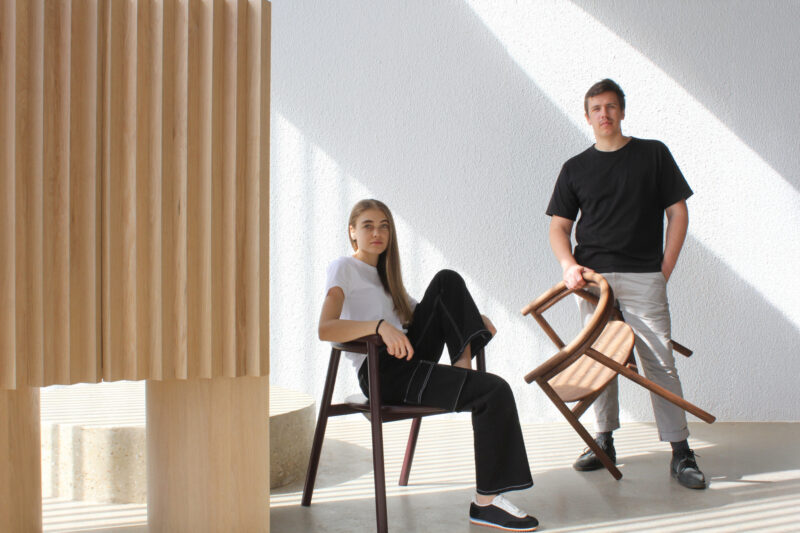
Like many creative professionals globally, Martin Tallie and Zani Alberts, the creative duo behind DEFT Studios, underwent a significant pivot during the COVID-19 pandemic, transitioning from traditional architecture careers into furniture design.
"A lot of our influences were stolen from architecture, and we were self-taught in woodworking," Tallie explains. "Our unique vantage point is that we didn’t have a mentor teaching his ways onto us."

That distinct architectural lineage is clearly visible in the studio’s ongoing fascination with clean, simple forms and pure geometries, even as the fabrication process remains deeply intricate, seamlessly combining traditional craft with contemporary techniques. The Étagère brune et claire, prominently displayed at Maison&Objet, exemplifies their unwavering desire to create singular, heirloom-quality pieces with lasting value. Tallie and Alberts produce every piece entirely in-house with a compact, dedicated team, retaining strict quality control over both the material execution and the conceptual evolution of the work.
"We love working with our hands," Tallie says. "We are designers, but we are definitely makers."
Karlien van Rooyen
Cape Town

Armed with an academic background in neuroscience and a personal passion for free diving, Karlien van Rooyen creates sculptural objects directly inspired by human anatomy and the organic forms she encounters underwater.
"Some of them look like lungs or neurons from the brain, but they also look like mushrooms or coral at the same time," van Rooyen explains.
Each of her ceramic objects is meticulously hand-built from stoneware clay, expertly glazed, and fired, while her distinctive wooden works are realized in close collaboration with a skilled woodworker. Van Rooyen initiates her process with a two-dimensional sketch, which is subsequently translated into three dimensions and carved out of African teak—a dense hardwood known for bleeding a vibrant red hue when freshly cut.
"Multiple pieces of this hardwood get fused together, and then the large chunks are carved away," she notes. "It looks almost like a brutalist monument."
Siyanda Mbele of Pinda Interior Design
Durban
An initial academic background in engineering, followed by formal training in design, led Siyanda Mbele to establish Pinda Interior Design. He derived the studio’s name from the isiZulu word phinda, meaning "again," which serves as a conceptual reference to the repetition, rhythm, and symmetry at the core of his creative ethos. His work draws heavily from South African Nguni, Zulu, and Ndebele cultural traditions, with indigenous patterns directly informing the physical architecture of each piece, and vice versa.

This symbiotic relationship is vividly demonstrated in the wall hanging and rug combination Mbele exhibited at Maison&Objet, which utilizes a precise geometric pattern of diamonds and triangles drawn directly from traditional Zulu visual language.
Elaborating on the cultural significance of this imagery, Mbele explains: "The triangle is masculine; the diamond is feminine. When married, the symbols will be stacked. The shapes are made into beaded bracelets, and a woman will give one to a suitor she is interested in. He will wear the bracelet to prove he accepts and wants to spend his life with her."
The 2026 Rising Talent Awards jury comprised Alan Hayward and Garreth Van Niekerk, co-artistic directors of Decorex Africa and 100% Design Africa; interior architect, design researcher, and academic Juliet Kavishe; acclaimed furniture and lighting designer Thabisa Mjo; and interior designer Donald Nxumalo, who previously served as creative director of Design Joburg in 2020. This landmark South African edition of the Rising Talent Awards was brought to fruition through a dynamic new international collaboration between Maison&Objet and Decorex Africa.