




Right now, art enthusiasts and collectors alike can indulge in a well-deserved treat while actively supporting contemporary artists and the specialized galleries that champion their work. Art Jewelry Forum has unveiled the second part of its September 2026 On Offer series, continuing a bi-monthly tradition that connects an extensive international network of galleries with collectors searching for extraordinary, hand-selected pieces. Designed to tempt and inspire, the featured selection spans the globe, offering statement pieces, wearable sculptures, and intimate adornments that highlight the diverse currents shaping contemporary art jewelry today. Interested buyers are encouraged to contact the participating galleries directly to inquire about availability and acquisition.
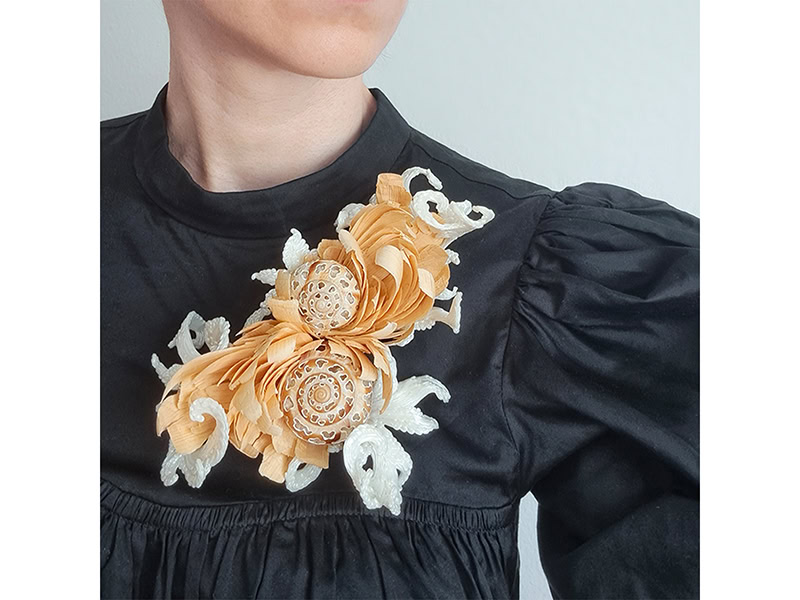
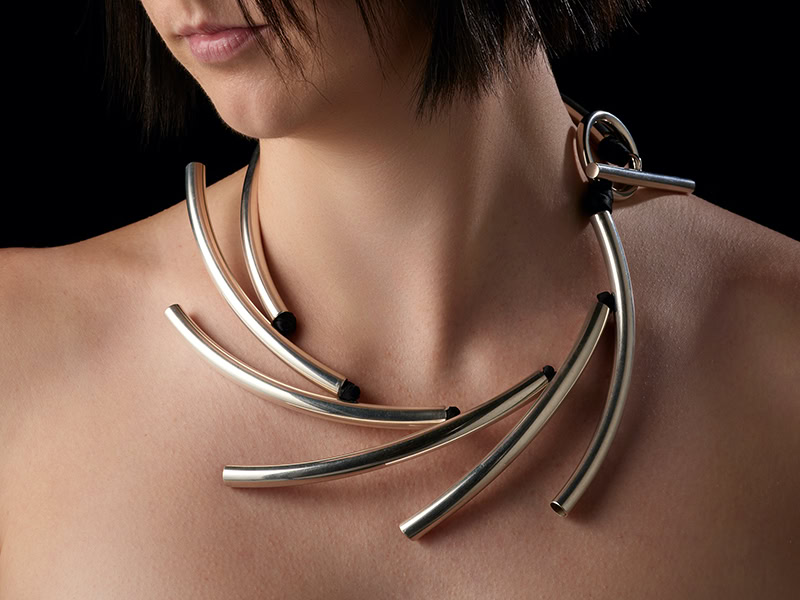
Among the standout works in this international showcase is a striking neckpiece by artist Linda van Niekerk, presented by Zu design in Adelaide, Australia. Priced at AU$1,750 and photographed by Peter Whyte Photography, van Niekerk’s Silver Cloud Burst (2025) is crafted from sterling silver and silk, measuring 19 inches long with an 8-millimeter chenier diameter. The piece belongs to the artist’s Clouds series, which draws direct inspiration from the vast, cinematic skies of Tasmania. Van Niekerk’s work captures not only the physical configurations of cloud formations but also their constantly shifting, evolving nature, translating meteorological phenomena into fluid wearable art. Inquiries for this piece can be directed to Jane at Zu design.
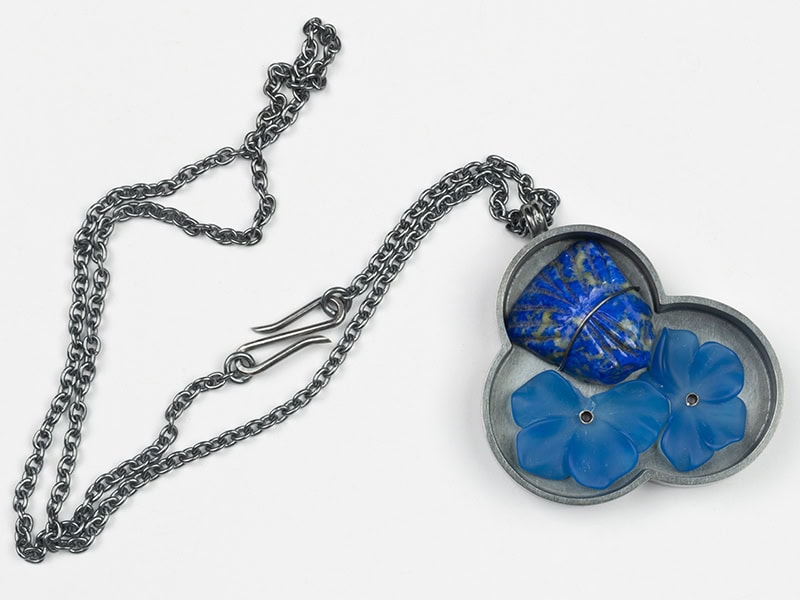
From Lisbon, Portugal, Galeria Tereza Seabra presents recent work by Catarina Silva, featured in the artist’s solo exhibition Jardin d’agrément, which forms part of the third Lisbon Jewellery Biennial program. Silva’s untitled pendant, created in 2026 from oxidized silver, lapis lazuli, and tinted agate, measures 2 x 2 x ⅜ inches with a 9-inch-long chain and is priced at €750 plus shipping. Photographed by Pedro Tropa, the brooch emerges from an exhibition concept that imagines a lush, utopian garden inspired by paradise and mythical gardens across various cultures. In this envisioned space, humans, animals, and plants coexist harmoniously beyond traditional hierarchies, forming a shared ecology of reciprocity and wonder. Silva utilizes jewelry as a living constellation of symbols—including apples, unicorns, flowers, birds, and Marian imagery—to evoke knowledge, fertility, care, and transformation, positioning the snake at the heart of the narrative as a guardian of wisdom and the continuous cycle of life.
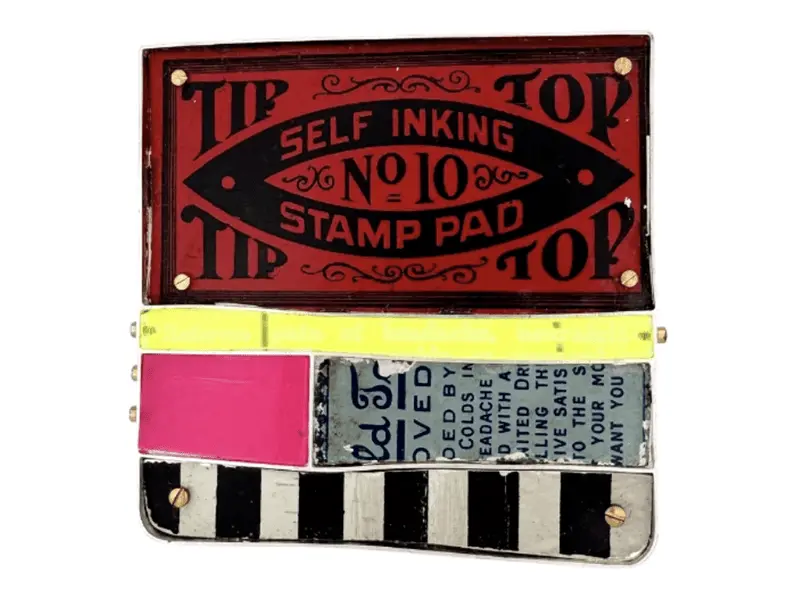
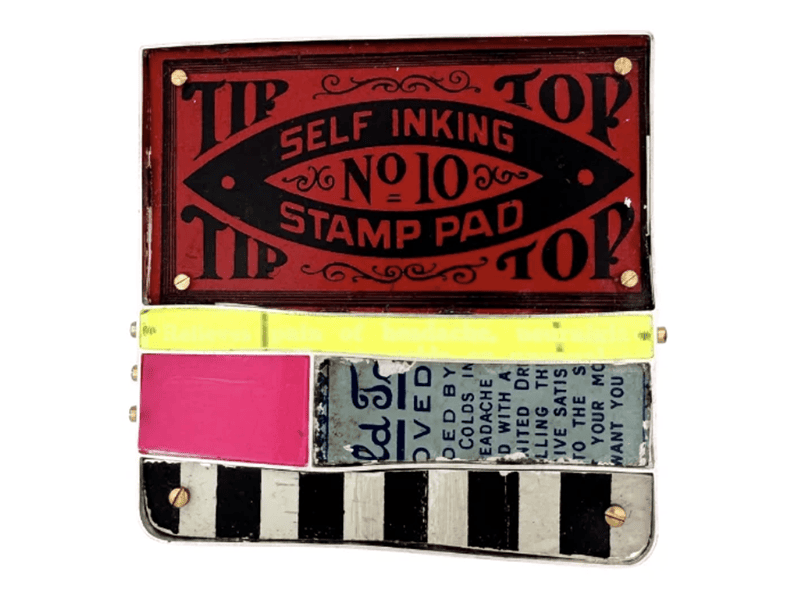
Pushing the boundaries of traditional material worth, Heidi Lowe Gallery in Lewes, Delaware, showcases the work of artist Carin Jones. Priced at US$350 and captured by photographer Kassadi Williams, Jones’s brooch On a Whim Tattoo (2026) measures 2 ½ x 2 ¼ inches and incorporates vintage tin, sterling silver, acrylic, and signature brass and stainless steel bolts. Jones focuses heavily on historical specimens, frequently utilizing vintage tins and found objects in place of conventional gemstones. By setting these everyday materials within finely crafted precious metals, the artist challenges long-held notions of value, luxury, and grandeur, prompting viewers to reconsider the relationship between material worth and intrinsic artistic merit.
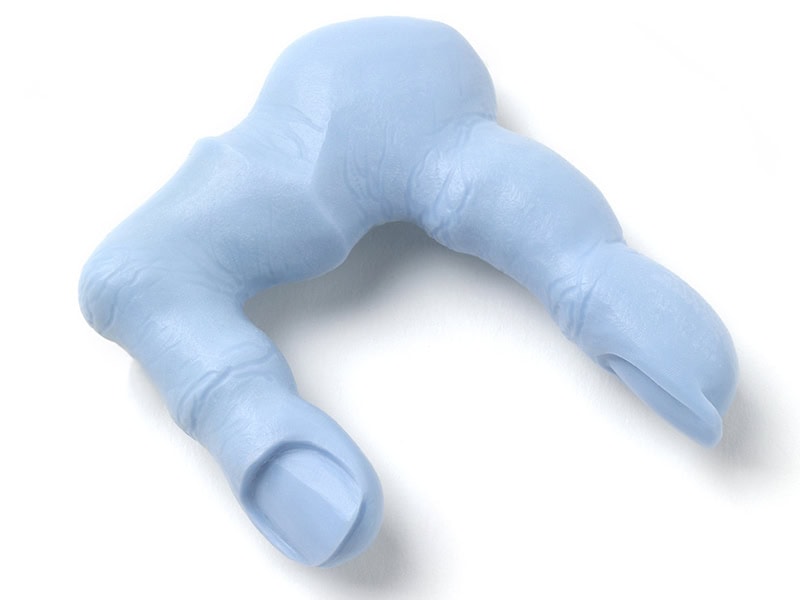
In Umeå, Sweden, Four Gallery presents a provocative new brooch by Alexander Blank titled Bones & All (2025). Priced at €460 excluding VAT and photographed by Mirei Takeuchi, the piece is crafted from Corian and silver, measuring 2 ⅜ x 2 x ½ inches. Blank’s work tackles the multifaceted role of human hands—tools that cook, build, communicate, heal, and increasingly interact with digital interfaces. Posing a speculative evolutionary question about what might happen if hands chose to break free from the brain’s commands to create an independent reality, Blank’s latest series offers a glimpse of an alternate future where hands and fingers achieve autonomy.
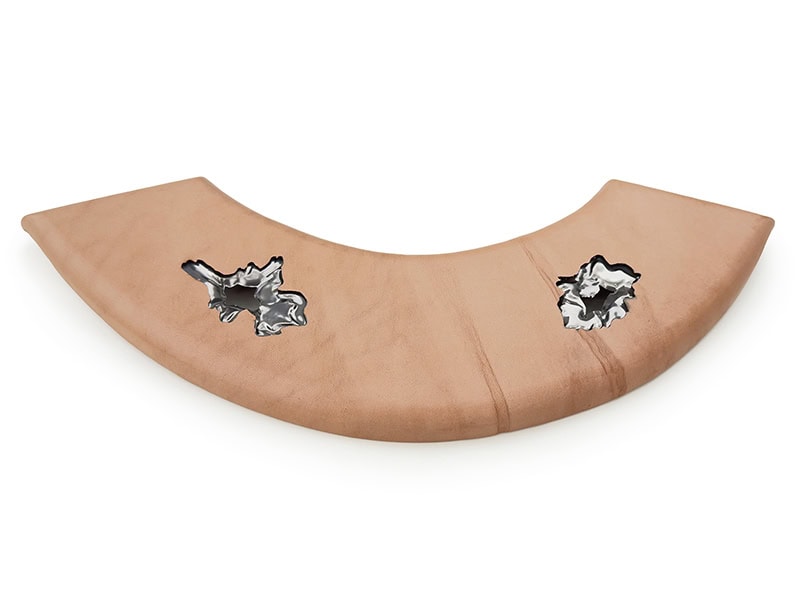
Addressing contemporary anxieties surrounding security and bodily trauma, In the Gallery at Brooklyn Metal Works in Brooklyn, New York, presents a large-scale brooch by Kerianne Quick. Titled .223 Remington (Oh Well), the 2026 piece is crafted from titanium, vegetable-tanned leather, and cotton, measuring 6 ½ x 17 x 1 inches with a retail price of US$1,750. Quick’s Oh Well collection draws heavily from historical and contemporary forms of body armor, incorporating elements of bibs, utility wear, aprons, and tactical vests. By integrating titanium "wound" inserts informed by slow-motion projectile testing and forensic images of high-caliber bullet wounds, the artist transforms stark evidence of bodily trauma into objects of adornment, interrogating the concepts of manufactured protection and false security.
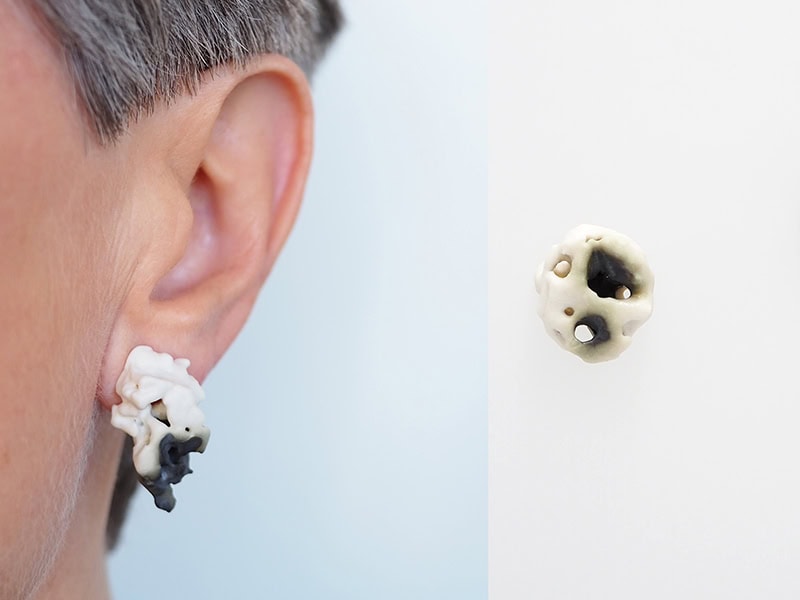
London’s Objects Beautiful highlights the work of Gitte Nygaard, widely recognized as one of the most important European art jewelers working today. Priced at £270 GBP excluding tax, Nygaard’s untitled ear stud is crafted from a combination of silver, bronze, sponge, and porcelain. The work explores porosity as both a physical form and a deeper conceptual meaning, acting as a permeable, changeable imprint of relationships in constant transformation. Through materials that absorb, resist, and release, Nygaard uses porosity as a method of both making and thinking, echoing the fragile, ongoing creation of the world itself.
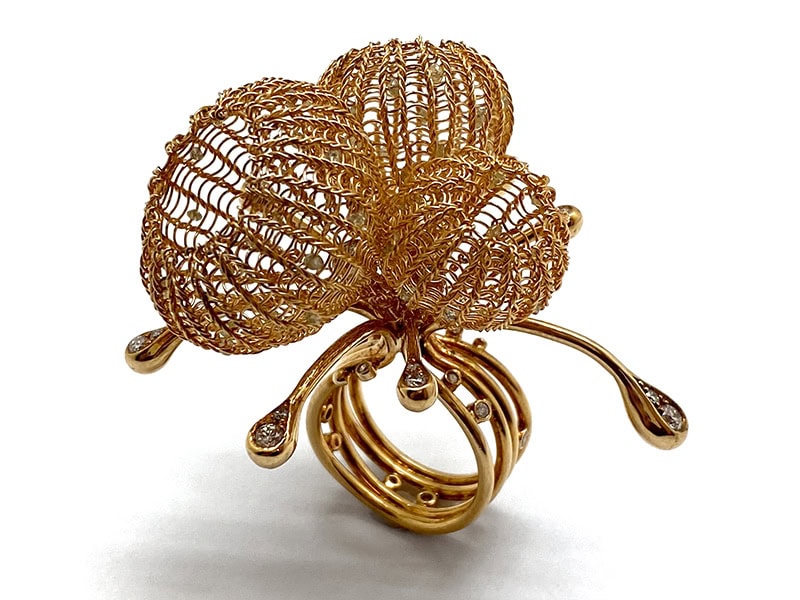
Pistachios Contemporary Art Jewelry in Chicago, Illinois, brings a high-end statement piece to the showcase with a ring by Sowon Joo. Priced at US$16,795 and photographed by Pistachios, the ring is meticulously crafted from solid 18-karat gold that has been intricately crocheted by the artist and subsequently adorned with diamonds. Joo’s overarching artistic practice centers on the universal rites of passage experienced by all living creatures—birth, death, and the developmental growth occurring between them—using natural metaphors to articulate these profound transitions.
Galeria Reverso in Lisbon, Portugal, presents a delicate brooch by Géisine Hackenberg from her Still-lives Collection. Titled Precious Fluids #1 (2012) and priced at €940, the brooch is fashioned from silver-plated glass and red brass. Hackenberg describes the collection as a contemporary interpretation of 17th- and 18th-century Dutch still-life paintings, which traditionally depicted everyday objects holding significant economic and emotional value. By cutting vintage glassware and rearranging the fragments into new compositions, the artist translates three-dimensional domestic objects into precious jewelry, effectively transforming the wearer’s body into a canvas while paying homage to the history of European glass manufacture.
Shifting toward the themes of zero-waste and historical preservation, the Wearable Art Museum features the work of artist Marty Ornish. Titled Fringe Benefits, the collar is drawn from the On the Fringe collection and is constructed from a 100-year-old historical cotton quilt, batting, letterpress ink, and fringe, measuring 24 x 20 x 22 inches with a retail price of $1,200. Ornish, widely known for her politically charged and thought-provoking fabric sculptures, repurposes textile waste into wearable art, aligning with her ongoing studio mantras that nothing is truly new and waste can be re-contextualized into powerful cultural statements.
Fingers Gallery in Auckland, New Zealand, presents Aaron Brown’s 9-karat yellow gold ring, Huia (2025). Priced at NZ$2,370 and photographed by Michael Couper, the piece reflects Brown’s fearless curiosity and upbringing in a creative, entrepreneurial household. Celebrating the natural heritage of Aotearoa, Brown translates indigenous flora and fauna into refined wearable art, balancing technical carving challenges with cultural resonance to capture the distinct personalities of his subjects.
In Baltimore, Maryland, the Baltimore Jewelry Center highlights Cindy Cheng’s sterling silver single earring, Best Bud (2022), priced at US$150. Cheng, an accomplished sculptor and educator with an extensive background in fine arts and institutional residencies, brings her rigorous sculptural training to her studio jewelry practice.
Galerie Noel Guyomarc’h in Montreal, Canada, features Carina Shoshtary’s brooch Suspended Gravity (2026), priced at €3,000. Measuring 7 ⅞ x 4 ¾ x 2 ⅜ inches, the piece incorporates snail houses, hinoki splints gifted by mask maker Hideta Kitazawa, Japanese anemone seeds, PLA, silver, stainless steel, and lacquer. Shoshtary’s Forms of Holding series integrates delicate natural elements, binding and protecting them through the innovative use of a 3D pen.
Platina in Stockholm, Sweden, presents Ameli Dévé’s brooch Braid (2024), priced at US$550. Crafted from pure fine silver and measuring 7 ⅞ x ¾ x ⅜ inches, the piece utilizes the inherent softness of fine silver to push the metal to its absolute structural limits. Dévé, who completed a three-year apprenticeship making traditional Tibetan jewelry before pursuing formal studies across Europe and New Zealand, reinterprets familiar universal symbols like the braid to challenge classical crafting techniques.
Rounding out the September showcase, Gravers Lane Gallery in Philadelphia, Pennsylvania, highlights Teresa Shields’s Green Pod Necklace (2021). Priced at US$5,800 and crafted from felted wool and wool roving with a hidden magnetic clasp, the necklace measures 6 x 25 ½ x 1 inches. Inspired loosely by maple seeds rather than strict botanical replication, Shields utilizes techniques learned during a Penland intensive to reverse-engineer wool shrinkage, manually shaping each individual pod to create a repeating organic collar where no two elements are identical.
Art Jewelry Forum noted that the opinions expressed within the showcase do not necessarily reflect those of the organization. Readers and collectors interested in these or other works can explore the full network of gallery supporters through Art Jewelry Forum’s official directory.