






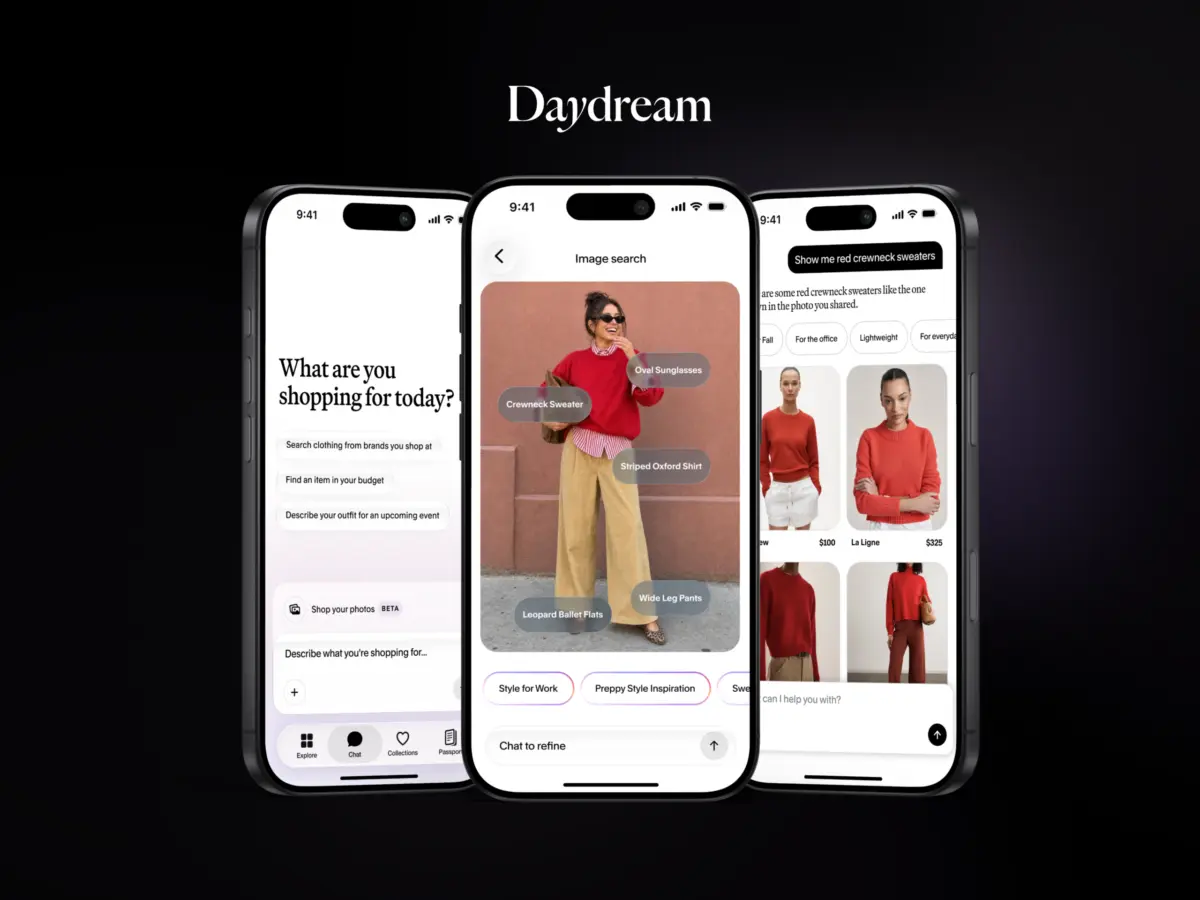
Daydream, the AI-powered fashion discovery platform, is expanding its capabilities with two major features designed to make outfit discovery and retail searching more seamless for iPhone users. Announced on Monday, the new additions allow users to transform saved outfit photos into instantly shoppable results and search for clothing and accessories via Siri without ever needing to open the Daydream application.
Built using Apple’s newly rolled-out iOS 27 developer tools, the features bridge the gap between casual digital inspiration and actual e-commerce. To take advantage of the integration, users will need an iPhone running iOS 27 with Siri AI enabled, alongside the Daydream app, which is available as a free download on iOS devices.
The first of the two features leverages Apple’s advanced image-context capabilities. It empowers users to shop directly from photographs already saved within their native iOS Photos application. When a user views an outfit image, Daydream analyzes the visual content, breaks it down into individual pieces, and automatically surfaces shoppable matches and similar styles drawn from its extensive product catalog, which currently spans roughly 3 million products.
This functionality effectively turns everyday visual curation into a frictionless shopping experience. For instance, a screenshot of a stylish outfit discovered while scrolling through Instagram or Pinterest can serve as the immediate starting point for a targeted shopping search. Daydream parses the image to isolate relevant items—such as a chunky knit sweater, tailored trousers, footwear, or distinct accessories—and pairs them with exact matches available through its retail partners. If the precise item featured in the photograph is still commercially available, the app routes the user straight to the retailer selling it. If the item has sold out or is no longer in production, Daydream intelligently suggests similar alternatives that capture the same aesthetic.

Furthermore, the technology goes beyond basic visual matching by accommodating natural language adjustments to what appears in an image. According to Julie Bornstein, co-founder and CEO of Daydream, the platform can comprehend nuanced style requests based on visual inputs, allowing a user to see variations on a theme by simply stating a preference, such as wanting a specific sweater photographed in a different color.
The second core feature introduced by Daydream is a Siri-powered natural-language search function. This integration allows users to issue requests via voice or text directly through Apple’s virtual assistant, bypassing the need to launch the Daydream app manually. By utilizing conversational prompts, users can orchestrate targeted fashion searches entirely hands-free. A typical interaction might involve asking Siri to search Daydream for a specific piece of clothing tailored to an upcoming professional event, after which the app delivers customized results.
Bornstein notes that this personalized experience becomes even more refined if users have previously configured Daydream’s "Style Passport." This feature prompts users to input specific personal details, including clothing sizes, preferred brands, general aesthetic preferences, and budget constraints, ensuring that the automated recommendations align closely with individual tastes.
With these latest developments, Daydream joins an increasingly competitive field of AI-driven shopping tools aimed at revolutionizing product discovery. Major tech conglomerates like Google and Amazon have introduced their own AI-based shopping initiatives, while specialized startups such as Onton and Alta are also vying for space in the burgeoning fashion tech ecosystem. However, Bornstein maintains that Daydream’s dedicated focus on fashion gives it a distinct advantage over generalized search technologies.

Most visual search tools lack specialized fashion category expertise, which often results in inaccurate product matches, links to unreliable or non-credible brands, or dead ends that direct users to non-shoppable images, according to Bornstein. By combining deep retail partnerships with advanced contextual AI, Daydream aims to solve these persistent frustrations for digital shoppers.
The launch forms a crucial part of Daydream’s broader strategic vision for AI-powered retail. Rather than viewing the new iOS integrations as isolated tools, the company sees them as incremental milestones toward developing a comprehensive, cross-platform shopping agent. The long-term ambition is to create an intelligent assistant that understands a consumer’s unique style profile well enough to operate fluidly across every digital surface in their daily life, rather than being confined to a single application.
Looking ahead, Bornstein indicates that users can anticipate deeper integrations with on-device intelligence and further expansions into the everyday moments where consumers naturally discover items they wish to purchase.
Launched last year, the Daydream app has steadily scaled its user base, currently touting more than 1.5 million active shoppers. The platform aggregates products from more than 325 retailers and 10,000 brands, featuring a diverse lineup of established labels and luxury houses such as Anthropologie, Dolce & Gabbana, Uniqlo, J.Crew, Reformation, Gucci, and Nordstrom.