





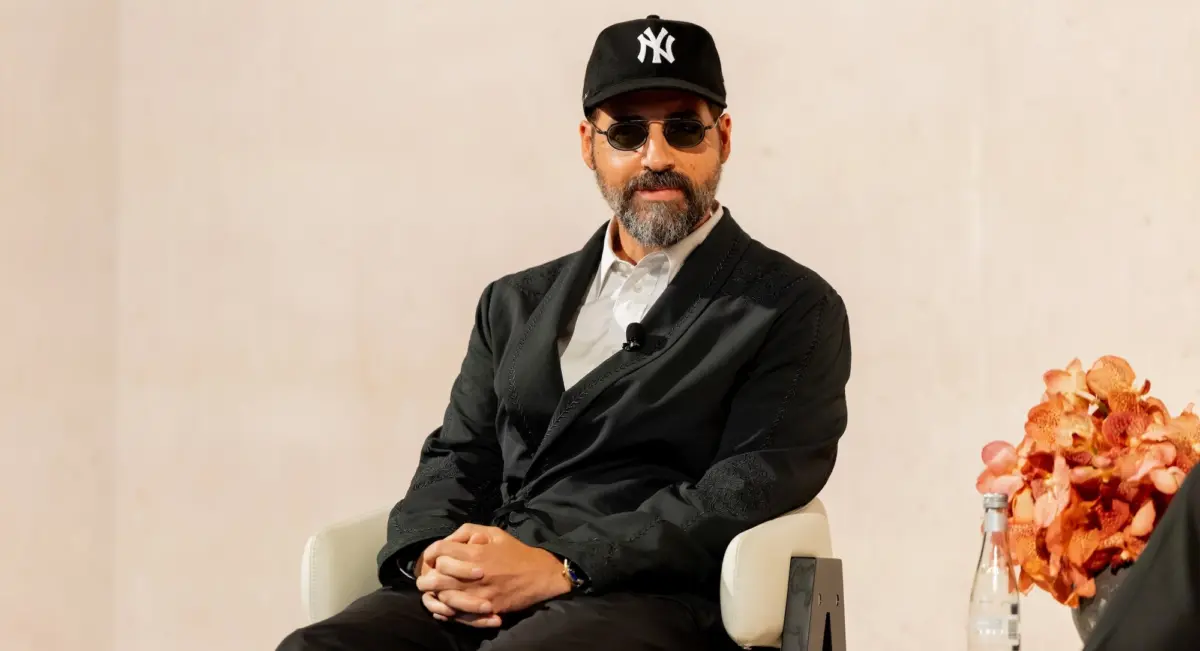
After taking a rare and reflective moment to look back during Kith’s 15th-anniversary celebrations in September, founder, chief executive officer, and creative director Ronnie Fieg quickly pivoted back to his famously relentless operational pace. For Fieg, resting on laurels is simply not part of the equation, and the months following the milestone have proven just how aggressive his long-term agenda truly is.
Kith’s expansive growth trajectory has maintained a breakneck speed across multiple fronts. In mid-October, the brand revealed its third major collaboration with legendary Italian fashion house Giorgio Armani, showcased during a high-profile, mega-scale fashion presentation set against the dramatic backdrop of the Moroccan desert—a monumental undertaking that Fieg revealed was two years in the making. Just two weeks after that desert spectacle, Kith opened its second Canadian storefront, marking the brand’s 22nd permanent retail location worldwide, in the heart of Vancouver.
While that kind of rapid-fire expansion might cause hesitation for other fashion and retail brands—particularly amid a challenging global economy marked by consumer caution—Fieg approaches the market with a distinct philosophy. He firmly believes that Kith possesses two crucial, differentiating qualities as it enters new territories: a sharp, uncompromising point of view and a deep sense of value.
Redefining Value and Consumer Connection
Speaking candidly during a fireside chat with Michael Atmore, editor-in-chief of WWD and chief brand officer of Fairchild Media at the WWD Apparel and Retail CEO Summit, Fieg elaborated on what value truly means to his enterprise.
“When you speak about value, it’s not only in the product. It’s about how [consumers] value your brand within incorporating it into their daily life,” Fieg told the audience. “We’re focused on how they’re wearing the product, how they feel when they speak about the product: all that matters a lot.”
Fieg’s innate understanding of the retail landscape is deeply rooted in his formative years. Long before building Kith into a global streetwear and luxury powerhouse, he honed his skills on the ground.
“I come from a buying background when I was at David Z, so I’m a merchandiser and a buyer by trade. I still think like the consumer, and that’s the most important part of my business,” he explained.
That consumer-first mentality will continue to drive even greater physical expansion in the near future. Fieg revealed that shoppers and brand loyalists will have significantly more opportunities to physically interact with the Kith world as the brand pushes into 2027. The company is officially slated to expand into San Francisco and Washington, D.C., bringing both traditional retail stores and dedicated Ronnie’s restaurant concepts to each city. Additionally, the Miami Beach flagship location—which originally opened back in 2016 as Kith’s very first brick-and-mortar storefront outside of New York City—is scheduled to undergo a comprehensive revamp.
For Fieg, modern retail is no longer just about transacting sales; it is about architectural storytelling and community building. He actively seeks to construct physical spaces that consumers view as true lifestyle destinations, places where they are encouraged to linger, socialize, and spend an entire day hanging out rather than simply walking in and out.
Balancing Data with Intuition
When it comes to deciding where and when to expand, data certainly plays a supporting role in Kith’s corporate strategy, but Fieg insists it is only part of the equation. He points to the recent Vancouver launch as a prime example. While web sales figures originating from the region had been strong, digital metrics alone were not nearly enough to fully justify a sprawling 7,000-square-foot flagship space, nor did they prepare Fieg or his team for the massive turnout of 3,000 enthusiastic fans who lined up on opening day.
Entering the market involved a calculated risk, but establishing a physical presence on both Canadian coasts was a vital milestone for the founder’s overarching vision.
“As long as I have the energy that I have, I’m going to continue to push the limits because that’s the DNA of what we’ve done,” Fieg said. “We’ve broken through so many barriers of what people consider to be unexpected from us. The swings are much larger, the investments are much larger.”
This appetite for high-stakes, unexpected ventures is precisely what birthed the aforementioned fashion show in Morocco. It also explains the rationale behind the opening of Kith Ivy, a members-only wellness and padel club located in Manhattan’s West Village. Developed in partnership with an elite roster of collaborators including Giorgio Armani, Wilson Sporting Goods, Erewhon, and Cafe Mogador, the luxury lifestyle hub represents a complete departure from traditional apparel retail.
The creative genesis for Kith Ivy struck Fieg during a winter sojourn in Miami, his wife’s hometown. During the trip, he picked up padel, the rapidly growing racket sport. As he spent time on the courts, he observed other players stepping out in casual vintage T-shirts and standard basketball shorts. The observation sparked an immediate creative reaction, inspiring him to pull together a mood board aimed at elevating and shaping the entire identity of the sport—influencing not only what players wear on the court, but the architectural environments where the sport is played.
The Evolution of Luxury
As Kith continues to conquer uncharted territory, Fieg’s overarching mission remains steadfast: to ensure every single brand experience feels genuinely special and singular. In an era where consumers are bombarded with choices, he believes the definition of luxury has undergone a fundamental transformation.
“People have reset what they want out of luxury,” Fieg noted. “If it’s already available to me in so many points of distribution, then I feel like I already owned it, had it, wore it and threw it out by then. Luxury brands used to be focused on the scarcity model, where if you go to a shop in the city, it might have been the highlight of your day regardless of if you bought something. That’s what I’m trying to accomplish with what I consider to be the new luxury.”
Yet, even as he architects this new standard of experiential luxury, Fieg admits to harboring deeper industry-wide concerns. He worries that the relentless acceleration of digital media is eroding the foundational capacity for deep appreciation. Specifically, he fears that shortening attention spans and the constant consumption of fleeting 10-second clips are actively eradicating true consumer curiosity.
“My kids now are getting so much information thrown at them,” Fieg reflected, voicing a broader anxiety about cultural consumption habits. “I’m worried that people won’t be able to get as passionate as they’ve been in the past about something that they love. I don’t even know if they could start loving it in the first place.”