



In 1988, the landscape of contemporary fashion experienced a seismic shift. Miuccia Prada presented her debut women’s ready-to-wear collection, forever transforming the identity of her family’s legacy brand. In Vienna, Helmut Lang was well on his way to cementing his status as an independent visionary, showcasing his progressive men’s and women’s collections on the rigorous Paris Fashion Week calendar. Meanwhile, Raf Simons was a 20-year-old student in Belgium, deeply immersed in the study of industrial and furniture design, years before he would famously pivot to altering the DNA of menswear.
Why anchor a deep dive into the contemporary vintage market specifically to the year 1988? Because that pivotal year marks the birth of Maël Larcher—born Lee Young-Kyoon—and Xiaoyu Jiang. It is also the evocative moniker the husband-and-wife duo has chosen for their newly established archive showroom in Paris. Tucked away high above the bustling streets of the French capital, the space serves as a meticulously curated sanctuary stocked with rare, historically significant pieces from the very designers who defined that era and the decades that followed.
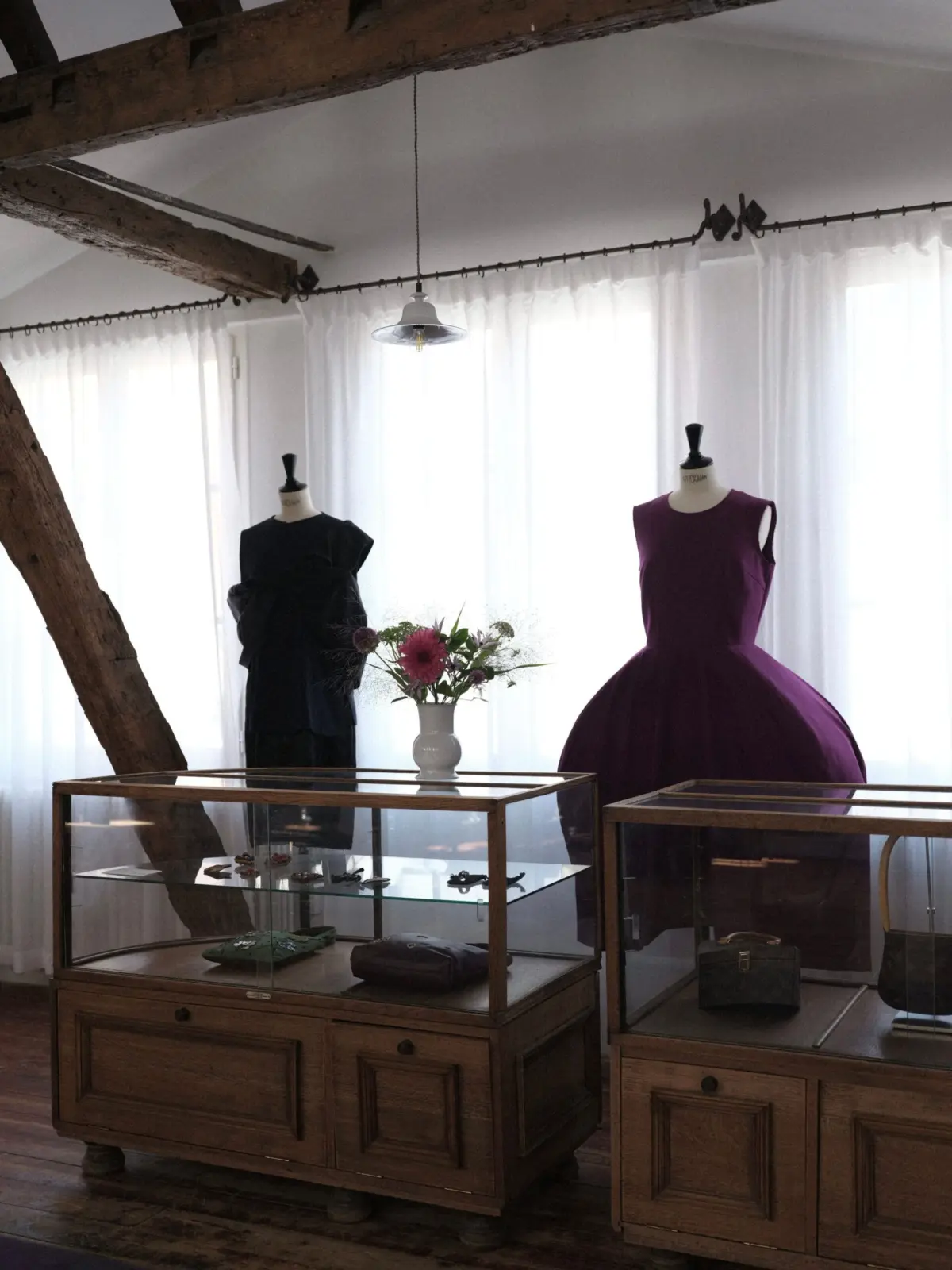
Since mid-June, the couple has been quietly welcoming a discerning clientele—operating strictly by appointment only—into a serene, light-filled loft space high above the Quai des Grands Augustins. Situated just a few hundred feet from the historic towers of Notre Dame, the showroom offers a stark, peaceful contrast to the chaotic energy typically associated with the city’s high-end retail hubs.

While Paris certainly abounds with commercial showrooms and premium resale boutiques, Larcher and Jiang’s focused concept and hyper-niche selection have quickly cultivated a devoted following among the fashion cognoscenti. At the heart of their enterprise is an inventory of roughly 2,000 pieces, functioning as an eclectic yet cohesive hybrid of high-end avant-garde designer artifacts and rugged American vintage. These items are made available for both rental and purchase, serving as a physical library for designers, stylists, and collectors alike.
Certain crown jewels in the collection are held with such reverence that the owners are simply unprepared to part with them. Among these are several early Helmut Lang pieces—such as dense, structured wool jackets featuring traditional Tyrolean embellishments—that are so singular in their craftsmanship they remain non-negotiable fixtures of the archive. Elsewhere in the loft, a striking Phoebe Philo-era Yves Klein Blue body-print dress from Celine’s spring 2017 collection hangs prominently from the wall, treated less like inventory and more like a piece of fine art. For Larcher, one of the oldest and most emotionally resonant possessions in his personal orbit is a pair of Malcolm McLaren trousers featuring a low-slung band and buckle, a cherished gift handed down to him by designer Kim Jones.
The curation goes far beyond their personal holy trinity of Prada, Lang, and Simons. A visit to the showroom reveals an early Christophe Lemaire workwear jacket; Comme des Garçons Homme Plus Bermuda shorts completely covered in micro-green sequins; and a Jil Sander navy knit cardigan, hailing from the Simons era, distinguished by a delicate ribbed border. There is also a highly recognizable Louis Vuitton bag born from the iconic collaboration with Rei Kawakubo, celebrated for its geometric cutouts.
This sophisticated eye extends equally to their American vintage holdings, which encompass durable workwear brands dating all the way back to the 1930s, such as Sweet-Orr. Alongside these historical artifacts sit cult names from the 1950s and 1960s, including Russell, Flagg, Champion, and Mayo Spruce. For those with a specific eye for mid-century casualwear, the archives yield pristine crewneck sweatshirts featuring vintage Peanuts graphics, complete with flawless flat-lock seams.

As a menswear designer by trade, Larcher possesses an encyclopedic understanding of garment construction that allows him to analyze these pieces down to their most granular details. His pedigree includes a decade spent within the studios of Dior Homme. He spent two formative years interning under Kris Van Assche, followed by an eight-year tenure as a designer in Kim Jones’s studio, before eventually making the transition to work on the inaugural season for Jonathan Anderson. Growing up in Reims, France, Larcher studied at ESMOD, widely recognized as the world’s oldest fashion school. It was there that he crossed paths with Jiang. Before moving to Paris to pursue studies in marketing, Jiang had spent her formative years growing up in a traditional Chinese family, where she had never really been exposed to or drawn toward the fashion industry. Once immersed in the Parisian environment, however, she recalls her perspective opening up with palpable zeal.
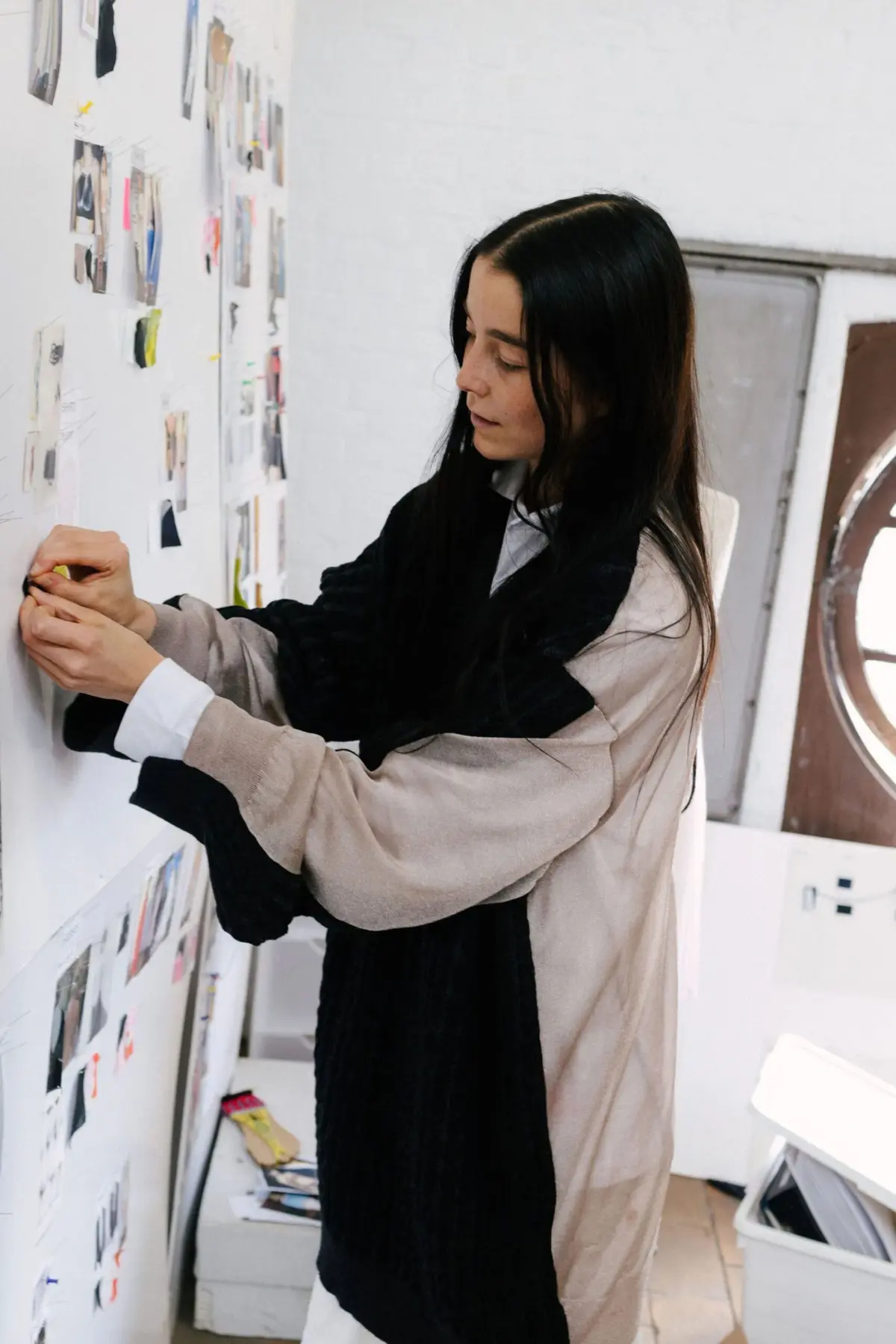
According to Larcher, the entire enterprise began organically, born out of their personal archives and the clothing they wore on a daily basis. Together, they developed shared obsessions—the compulsion to track down a particular garment, sometimes hunting it across multiple colorways. They actively sought out pieces that inspired them personally, operating on the theory that these items might similarly ignite the imaginations of contemporary designers looking for mood board material, innovative fabric treatments, or complex embroidery techniques.
Gradually, a circle of friends, stylists, and fellow designers began borrowing items from Larcher’s personal collection. Eventually, this casual sharing evolved into a formal rental model. The couple seriously began conceptualizing the venture as a legitimate business, realizing that securing a physical space would allow them to build a cohesive narrative around the clothes. The resulting model functions much like a literary library, where designers and creatives pull pieces on loan to study them up close.
The items take on new life depending on who is examining them. Larcher notes that the exact same garment can spark entirely different forms of interest depending on the observer. Some clients are drawn primarily to the innovative fabric composition, while others focus entirely on the color palette. Jiang echoes this sentiment, observing how different clients interact with the exact same pieces in surprising ways. Some try on a garment purely to evaluate its architectural silhouette, while others obsess over the minute details of the buttons.

On occasion, though the couple remains deliberately discreet regarding the particulars, they have noticed a distinct phenomenon: pieces rented from their archive appear to quietly inform new designs hitting the runway, predominantly within the realm of menswear. Far from viewing this as an infringement, they consider it an honor to serve as a resource for the industry’s top creative minds.
When asked about their ongoing acquisitions, the couple is clear about what they are hunting for. They remain on a perpetual quest for more pieces from Lang’s Austrian years—particularly anything featuring intricate embroidery—alongside a continuous influx of Raf Simons designs. Over the years, they have meticulously cultivated a trusted network of online collectors and specialized vendors in Japan. Because the market for archival fashion carries a persistent risk of counterfeits, they strongly prefer acquiring items from established sources they know personally.
They firmly believe that their commitment to storytelling will continue to set them apart in a crowded vintage market. Initially, they hesitated over whether to liquidate their inventory of Miu Miu menswear, fearing it might dilute their focus, before realizing they possessed enough material to establish a clear, consistent through-line. Today, a 1990s Miu Miu leather jacket is proudly featured on their Instagram feed, styled effortlessly alongside a fringed top and green corduroy pants designed by Simons—originating from his spring 1997 "Teenage Summer Camp" and 2000 "Summa Cum Laude" collections, respectively.
Inside the showroom, the organizational rigor matches the curatorial depth. Every item is meticulously tagged, with rental pieces distinctly demarcated by subtle cedarwood flowers hung at the neck of the hanger. The experience is designed to be multi-sensory; as ambient music by composer Max Richter wafts softly through the two wood-beamed rooms, the editorialized perspective of the founders becomes immediately apparent. Crisp, direct photography by Mathieu Rainaud captures unconventional pairings, such as a Helmut Lang blazer from the fall 1980 "Wien" collection styled alongside a Raf Simons scuba suit from the fall 2004 "Waves" collection.

Jiang describes their overarching aesthetic as inherently grown-up, while Larcher points out that many of the pieces lean toward an outdoorsy sensibility, reflecting their personal lives and passions. It is about nature, mountains, and the outdoors, he explains, noting that the evolving collection mirrors their own personal growth.
The couple, who married in December 2019 just before the pandemic transformed global commerce, acknowledges that their emotional attachment to the clothes has shifted over time. Larcher reflects that their presence in the showroom today is the direct result of having held onto things for years, transitioning into a phase where letting go of items that no longer represent who they are feels like a natural progression of life.
Looking ahead, the couple plans to ease their strict appointment-only protocol during upcoming Fashion Week events. They intend to display their archival garments alongside vintage furniture curated by Habiter, a specialty store based in Shanghai. The collaboration aligns with their ongoing mission to partner with like-minded curators and collectors who operate as specialists within their respective fields.
As for whether their legendary idols are aware of the space, Larcher suspects that Helmut Lang likely knows they exist. Jiang, wearing a black velvet Raf Simons dress from the spring 2021 collection adorned with message pins around the neck, admits she would be ecstatic if Miuccia Prada herself ever decided to pay a visit. After all, their shared connection to the foundational year of 1988 feels to them like an unmistakable sign.