





There is an unmistakable auditory signature that accompanies a truly great shoe: the subtle, metallic jingle of brass hardware followed by the authoritative clop of a leather sole hitting the pavement. That sound belongs to the horsebit loafer, a footwear silhouette that has spent decades galloping across dress codes, effortlessly elevating tailored suits, relaxed denim, and everything in between.
Among the vast universe of men’s slip-on footwear, the horsebit loafer—or ‘bit loafer for short—occupies a unique position. It sits at the precise intersection of understated sophistication and measured flashiness. Where penny loafers offer collegiate charm and tassel loafers lean traditional, bit loafers deliver an agile sense of flair. They possess the rare ability to anchor a conservative double-breasted suit during business hours and anchor a pair of casual shorts on the weekend without missing a beat.
To understand why this specific shoe continues to dominate modern wardrobes, one must look at both its rich history and the craftsmanship that separates an ordinary pair from a footwear grail.
The Origin of an Icon: How the Bit Loafer Was Born
To be clear: despite the name, horses never wore bit loafers. The term stems entirely from equestrian hardware that inspired the shoe’s defining ornament.
In 1953, Aldo Gucci, the eldest son of founder Guccio Gucci, sought to create a slip-on shoe that combined European refinement with casual versatility. Drawing inspiration from the equestrian world—a staple aesthetic of high-society leisure—Aldo placed a miniature metal snaffle bit, consisting of a rounded double ring and bar, across the vamp of a streamlined leather loafer.
The design was an immediate sensation. By adding a metallic accent to a soft leather shoe, Gucci transformed practical footwear into a clear status symbol. Over the subsequent decades, the shoe found its way into the wardrobes of Hollywood icons like Clark Gable and Fred Astaire, European captains of industry, and eventually Wall Street power players, who affectionately dubbed them "deal sleds." The design proved so influential to 20th-century fashion that it earned a spot in the permanent collection at The Metropolitan Museum of Art in New York.
Today, while the original design remains the benchmark, shoe manufacturers worldwide have created their own interpretations of the classic silhouette.
The Best Horsebit Loafers for Every Budget and Style
Navigating the market requires balancing leather quality, sole construction, hardware finishing, and price point. Based on editorial testing and detailed physical evaluations, the following models represent the absolute finest horsebit loafers available today.
The Benchmark: Gucci Horsebit 1953 Loafer
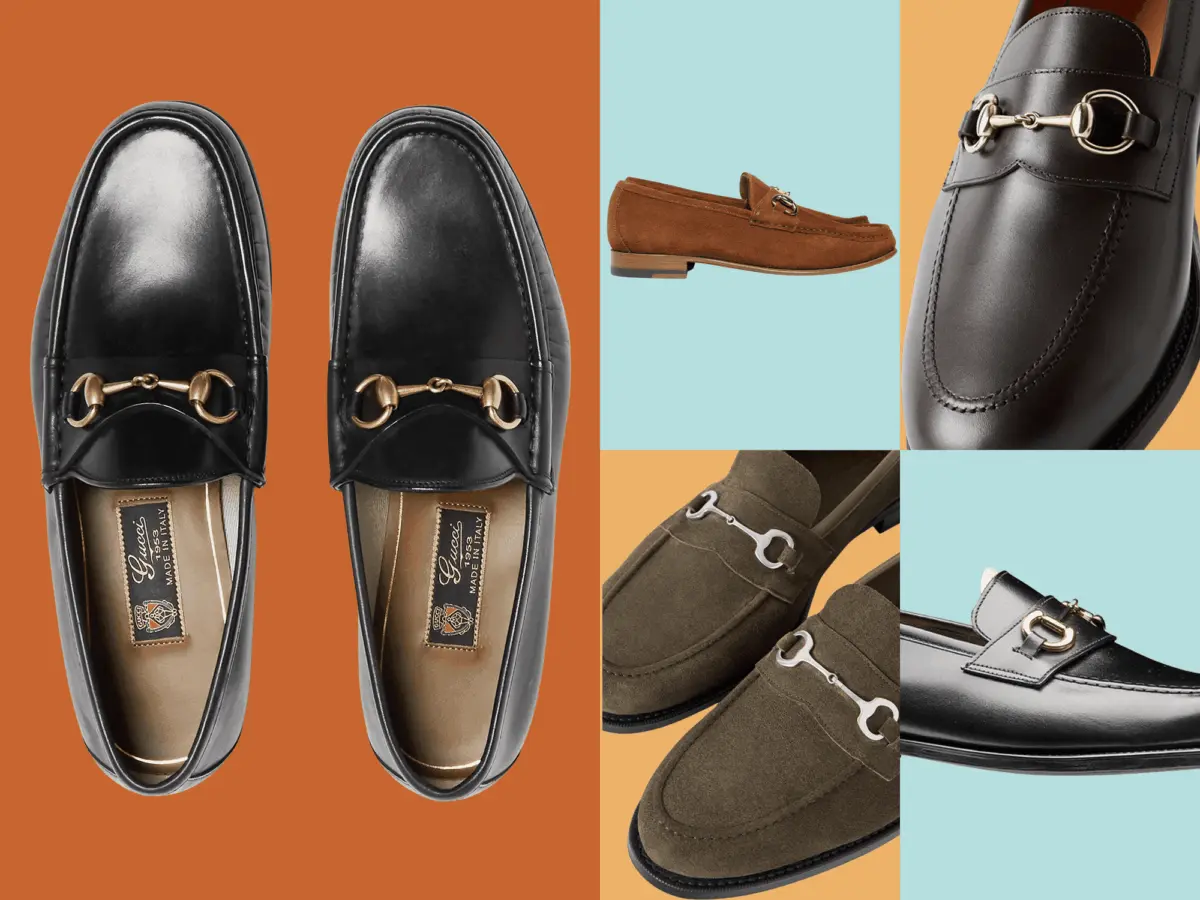
When most people picture a bit loafer, they are imagining the Gucci 1953. Having celebrated its 70th anniversary in 2023, this shoe remains the indisputable grail of the category.
Made in Gucci’s Italian ateliers, the 1953 loafer is crafted from exceptionally supple calfskin leather that molds to the wearer’s foot over time. The craftsmanship is apparent in every detail: meticulously handsewn uppers, finely beveled sole edges that eliminate sharp corners, and concealed stitching channels along the outsole that shield the thread from wear. The entire piece is crowned with Gucci’s signature brass horsebit hardware.
In terms of wearability, the leather upper requires virtually zero break-in period, offering immediate comfort right out of the box. The shoe hugs the foot naturally without severe heel rubbing. However, potential buyers should note that the traditional leather sole is relatively thin and prone to wearing down faster than heavier dress shoes. Because Gucci does not offer in-house resoling services, a popular recommendation from footwear cobblers is to apply a thin protective rubber half-sole immediately after purchase to improve longevity and traction.
The Heritage Entry: G.H. Bass Lincoln Bit Weejuns Loafer
For those exploring the silhouette for the first time, G.H. Bass provides an authentic entry point with deep historical roots. While the brand is world-renowned for introducing the penny loafer to American menswear, its take on the horsebit loafer brings that same Ivy League sensibility to a bit-adorned shoe.
The Lincoln Bit Weejun utilizes classic moccasin-style construction featuring a handsewn toe, full leather lining, and a leather insole. The polished leather upper is structured and durable, though it requires a standard break-in period compared to softer Italian leathers.
Fit notes suggest that the shoe tends to run somewhat narrow, making it important for buyers to consider width options. Nevertheless, as a traditional leather-soled shoe priced accessibly, it remains one of the best values on the market.
The Sleek Contender: Morjas The Horsebit Leather Loafer
Spanish shoemaker Morjas has built a dedicated following by producing refined classics with modern proportions. Their bit loafer features a slightly sleeker, narrower profile, making it a natural companion for tailored trousers and suits.
Handmade in Spain, Morjas loafers are offered in both smooth full-grain leathers and rich suedes. The brand pays close attention to silhouette, ensuring the toe shape strikes a balance between sharp and rounded. While the sturdy leather outsoles take a few wears to soften up, the overall construction rivals shoes at much higher price points. Buyers should note that sizing can run slightly large, making customer service consultation worthwhile before ordering.
The Refined Workhorse: Meermin 514578 Black Calf Horsebit Loafer
Mallorca-based Meermin has earned a reputation in men’s footwear for delivering exceptional structural quality relative to price. Their horsebit loafer is no exception, bringing a contemporary, formal edge to the style.
Meermin discards the traditional "beefroll" stitching—the folded leather accents on the sides of the vamp—in favor of a clean, unadorned side profile. Built with a robust Goodyear welt construction and vegetable-tanned leather insoles, these shoes are fully resoleable and built for years of heavy use.
To enhance comfort, the upper is unlined, allowing the calfskin to flex naturally around the foot. The combination of Goodyear durability and unlined softness makes it an exceptional daily option for formal work environments.
The American Classic: Rancourt & Co. Horsebit Loafer
In Lewiston, Maine, Rancourt & Co. continues the state’s legacy of American handsewn footwear. Their horsebit loafer pairs European hardware aesthetics with rugged New England craftsmanship.
Rancourt constructs its loafers using hand-burnished calfskin leather, genuine moccasin hand-stitching, and nickel-plated brass bits imported from Japan. Furthermore, the leather soles are oil-treated during production, rendering them significantly more water-resistant and durable against wet pavement than standard leather outsoles. The result is a substantial, highly durable shoe capable of handling daily wear in unpredictable weather.
More Exceptional Horsebit Loafers Worth Considering
Beyond the primary picks, several other makers offer distinct takes on the horsebit design, catering to niche tastes in materials, silhouette, and construction:
- Edward Green Putney Suede Loafer: Positioned at the apex of British shoemaking, Edward Green offers an olive suede bit loafer that trades flashy polish for ultra-luxurious texture and unmatched hand-finishing.
- Gucci Webbing-Trimmed Suede Loafer: A soft, casual variant from the original maker featuring Gucci’s iconic house web stripe and a flexible heel designed for relaxed, slipper-like wear.
- Yuketen Moc Ischia Suede Loafer: Designed with prominent 1970s flair, Yuketen features an oversized bit ornament on hand-dyed Italian suede, built around a comfortable moccasin last.
- George Cleverley Colony Loafer: Crafted by one of London’s legendary shoemakers, this pair features a distinct almond-toe last, hand-rolled leather aprons, and deep-grained suede.
- Crockett & Jones Finchley 2: A classic Northampton-made option that introduces traditional British weight, deep black calfskin, and Goodyear-welted longevity to the bit loafer shape.
- Beckett Simonon Beaumont Loafer: Operating on a direct-to-consumer, made-to-order model to eliminate inventory waste, this Colombian-made loafer offers full-grain leather construction at an approachable price point.
How to Style the Horsebit Loafer
Part of the horsebit loafer’s enduring popularity is its sheer versatility. Because the metallic bit bridges the gap between jewelry and footwear, it harmonizes well with both formal accessories and casual wardrobe staples.
- The Casual Riviera Look: Pair tan or brown suede bit loafers with dark indigo jeans or crisp white denim. Top with a knit piqué polo shirt for a look that feels elevated yet relaxed.
- The Modern Tailored Look: Match black calfskin bit loafers with a charcoal or navy wool suit. By omitting a tie and adding a clean white dress shirt or fine-gauge turtleneck, the loafers serve as the tailored outfit’s primary focal point.
- Layered Outerwear: During transitional seasons, bit loafers complement structured outerwear such as trench coats or double-breasted overcoats, balancing the weight of heavier fabrics with clean ankles.
Evaluation and Testing Methodology
Selecting the finest horsebit loafers involves evaluating products across three core parameters: material quality, fit and comfort, and value relative to price.
When assessing footwear, primary weight is given to upper leather grading (full-grain calfskin versus corrected grain), interior lining materials, and sole construction methods (such as Goodyear welted, Blake stitched, or true moccasin handsewing). Long-term ownership factors—such as whether a cobbler can easily resole the shoe—are also weighed heavily.
Through a blend of direct wearing tests, brand heritage analysis, and detailed inspection of finishing details, this selection represents the most reliable, stylish, and well-crafted bit loafers available today.