





The holiday season represents the ultimate make-or-break period for retail giants, dictating annual balance sheets and setting the tone for the coming fiscal year. For long-standing big-box rivals Target and Walmart, however, the upcoming months carry an even heavier burden. This holiday season will serve as a definitive test of ongoing efforts by both companies to refine and redefine their respective brand images as they wage an aggressive battle for the hearts and wallets of increasingly price-sensitive consumers.
Walmart has spent the past year and a half aggressively building out its "Who Knew?" marketing platform. The strategic concept is designed to fundamentally shift consumer perceptions by highlighting a surprisingly on-trend merchandise assortment alongside deep, competitive deals that many shoppers might not traditionally associate with the discount giant. For the holidays, this overarching concept comes to life through a high-profile creative riff on "The Muppet Christmas Carol." The campaign stars actor Walton Goggins as Ebenezer Scrooge alongside an iconic cast of Muppets, including Kermit the Frog and Miss Piggy, blending nostalgic holiday warmth with commercial ambition.
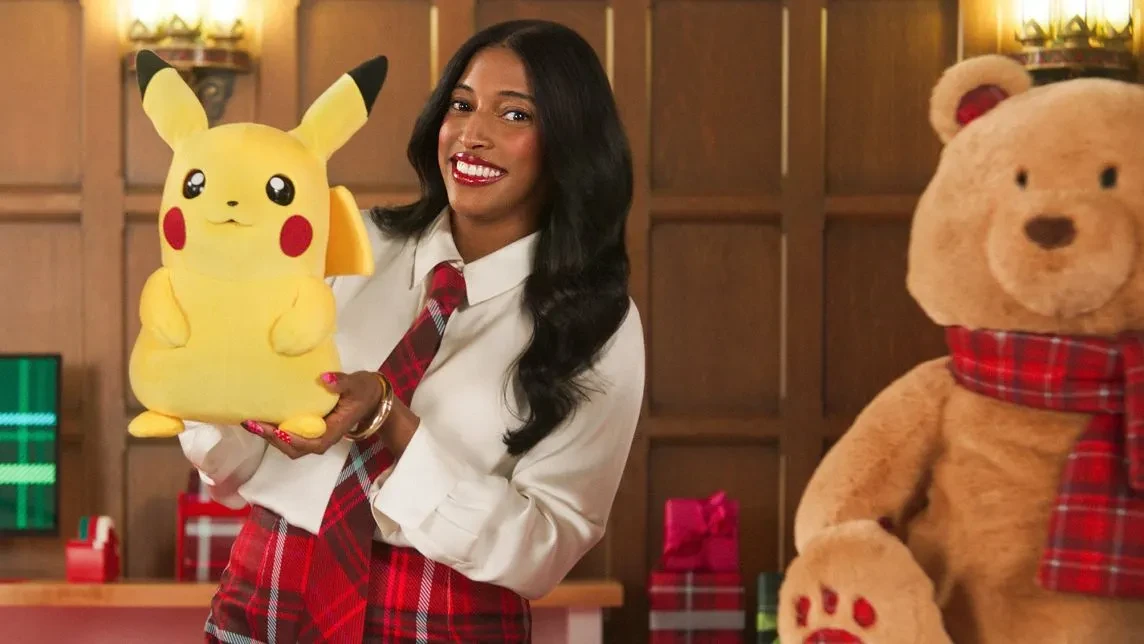
Target, meanwhile, is working furiously to sustain the momentum of a broader turnaround strategy aimed at recapturing its classic "Tar-zhay" magic. That distinct, cheap-but-chic allure was noticeably diluted during the bumpy post-pandemic years, when the brand found itself bogged down in culture wars backlash, inventory challenges, and lackluster store presentations that frustrated loyal customers. Performance has been on a promising upswing through the first part of 2026 following a significant CEO transition, but retail analysts note that the holidays will act as the true proving ground for the retailer’s recovery. Target’s holiday campaign is anchored around a tongue-in-cheek "gifting academy," designed to help customers navigate the stress of finding the ideal present for diverse personalities in their lives, with the fictional institution led by a wise-cracking expert played by actress D’Arcy Carden.
Industry experts observe that these competing campaigns reflect two distinct strategic maneuvers in a crowded and tense marketplace. Taylre Stumpf, a retail consultant at Kantar who specializes in Target and mass channel retailers, points out the fundamental divergence in their approaches. For Target, she notes, the objective is to reassert what makes them uniquely different from competitors. Walmart’s strategy, on the other hand, leans heavily into nostalgia and a broader consumer reappraisal, communicating a message that tells shoppers they may think they know the brand, but need to look at it differently now.
Heated Rivalry
Despite their different points of emphasis, the two holiday campaigns share striking similarities. Chief among them is a heavy reliance on narrative-driven storytelling that utilizes colorful characters and imaginative fictional settings to tout core retail features, such as an expanded product assortment and speedy delivery services. In previous years, both retailers tended to adopt a more fragmented approach to their holiday marketing efforts, rushing to capitalize on specific seasonal milestones like Black Friday and Cyber Monday with a rotating series of disjointed promotions.
Adopting a single, cohesive narrative across the entire season provides a much greater sense of brand consistency for consumers who are increasingly bombarded with advertisements. Furthermore, it serves as an effective way to stand out in a retail category that has overskewed toward a frantic focus on steep discounts and aggressive promotions amid persistent economic pressures and inflation fatigue.
Rather than simply shouting about low prices, both companies are prioritizing a compelling storyline built around trust and curated gift-giving solutions. Walmart’s "Who Knew?" platform is part of a broader evolution in the retailer’s long-term strategy as it successfully wins over higher-income shoppers and radically revamps key merchandising segments, particularly apparel. As part of "A Who Knew Carol," Miss Piggy takes center stage to promote trendy fashion items for the holiday season alongside digital content creators, as outlined previously by Walmart Chief Marketing Officer William White.
The cumulative effect of these changes is that Walmart, both in its polished visual presentation and its shifting product focus, looks remarkably like Target. This evolution adds an entirely new and intense dimension to the rivalry between the two big-box giants. The mass channel, dominated by Target and Walmart, finds itself fighting fiercely for the exact same high-income yet financially cautious shopper. Because consumers now view basic value and competitive pricing as mere table stakes in the current economic climate, both retailers are forced to get increasingly creative in how they connect on a personal level with individual shoppers.

The sheer scale of the competition highlights the distinct positions of each company. Walmart operates over 4,600 brick-and-mortar stores across the United States, a footprint more than double the size of Target’s physical presence. Walmart’s financial performance remains robust, with revenue growing 5.9% year over year to reach $187.9 billion during the second quarter, while U.S. comparable sales climbed 2.6% for the period. Target posted strong numbers as well, reporting a 5.3% year-over-year increase in net sales to $26.5 billion in the second quarter, driven by a 3.8% jump in comparable sales and a 3.6% increase in store traffic. Buoyed by these results, Target raised its full-year financial guidance following its earnings report in August.
Even so, market analysts acknowledge that Walmart has maintained considerable pressure on its smaller rival. Stumpf notes that Walmart has successfully capitalized on Target’s period of underperformance over the last several years, executing its strategic plays with precision.
Finding an Advantage
While Target operates on a smaller physical scale than Walmart, it maintains distinct competitive advantages in areas such as personalized marketing and product curation, competencies it must aggressively leverage to win the crucial fourth-quarter sales window. Target excels at seamlessly translating popular online trends into a cohesive in-store presence and remains deeply attuned to the specific cultural tastes of millennial shoppers. The "Holiday Academy of Giftology" campaign directly illustrates this capability, organizing products across different departments and assigning specialized "faculty members" to solve tricky gifting dilemmas, such as finding items for people who notoriously claim they do not want anything.
Target Chief Brand Officer Michelle Mesenburg explained during an October holiday preview event for the press that the campaign uses the creative construct of education and curriculum to invent fresh ways to solve universal holiday gifting frustrations.
However, macroeconomic stresses mean consumers may be notably more selective with their holiday spending this year. Overall industry outlooks remain mixed heading into the peak shopping weeks. While consumer surveys from Deloitte suggest that spending on retail goods will remain relatively robust, data from Kantar ShopperScape shared by Stumpf indicates that roughly 16% of shoppers are actively planning to reduce their holiday budgets compared to previous years.
Given these financial headwinds, Target faces distinct strategic limitations against its massive competitor. Target recognizes that it cannot realistically attempt to outprice Walmart. Consequently, with Walmart already adopting elements of Target’s playbook by utilizing narrative-driven storytelling and lifestyle marketing, Target’s primary remaining differentiators are deep personalization and sophisticated curation for its core customer base.
Another critical advantage for Target lies in its unified omnichannel execution. The visual motifs and educational themes of its academy-themed advertisements are carefully reflected across both physical retail storefronts and digital platforms. Earlier this year, Target completely overhauled its influencer and creator programs to build a more comprehensive digital ecosystem. Its holiday marketing plans actively leverage Club Target, an initiative aimed at smaller and mid-sized content creators on platforms like TikTok, alongside an exclusive, high-profile partnership with LTK centered on major industry influencers.
Industry observers note that Target stands out as one of the few major retailers successfully blending a unified shopping experience by harmonizing its strategy across multiple tiers of creators, providing a distinct edge as the holiday shopping season reaches its peak.