






For many active adults, the physical resilience of youth can feel almost infinite—until the precise moment it is not. For nearly three decades, maintaining an aggressive athletic regimen without major physical setbacks seemed entirely manageable. From primary school club matches to competing as a winger on a local 30+ "seniors" soccer team, competitive sports remained a constant fixture of daily life. As a health journalist and fitness enthusiast, the commitment extended to a vast array of grueling physical challenges, including marathons, trail races, triathlons, 24-hour relay events, mud runs, obstacle courses, and Hyrox competitions.
Throughout those decades of high-impact activity, athletic injuries were virtually nonexistent. The lone exception was a torn meniscus—the undignified outcome of an overly ambitious basketball dunk on a lowered rim during a promotional event, performed while wearing jeans. Outside of that isolated surgical procedure to remove frayed connective tissue from the knee, physical health remained uncompromised, and performance was reliable.
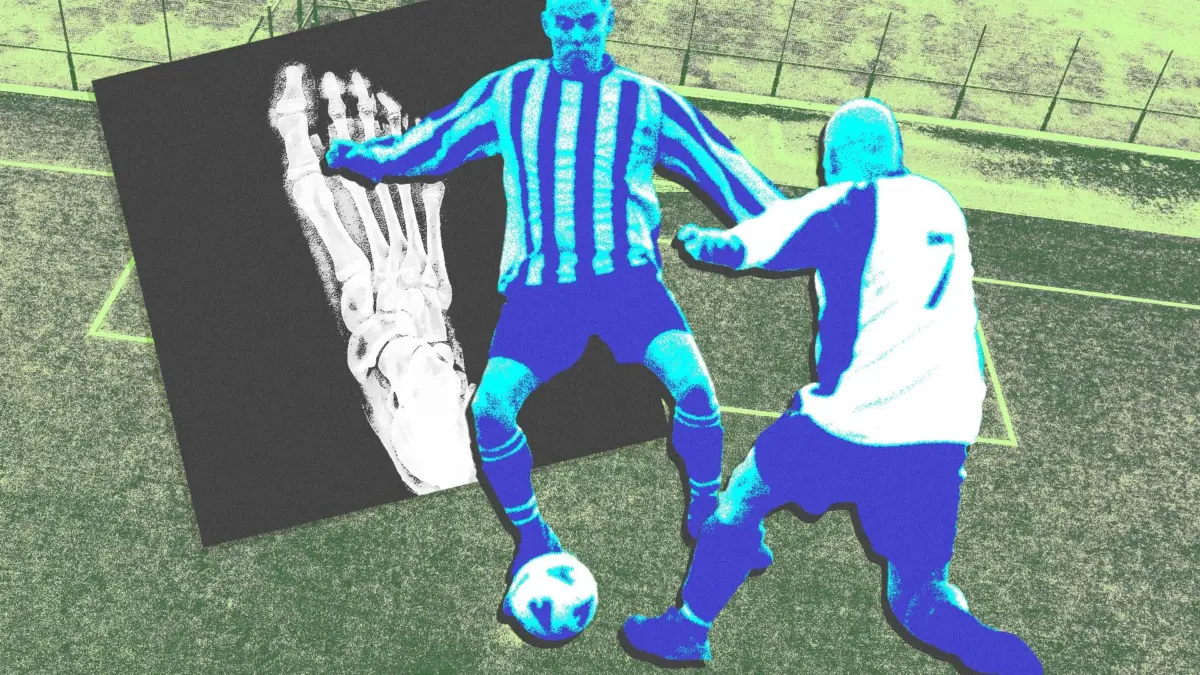
That long-standing durability began to shift unexpectedly around the age of 35. Without an obvious change in routine, physical breakdowns began happening in rapid succession. The initial warning sign was a stress fracture in the foot, discovered unexpectedly one evening in bed without any memory of a specific acute trauma. That injury required three months in a walking boot.
Shortly after recovering, a routine game of pick-up soccer resulted in a torn hamstring during a sprint trajectory that had been executed thousands of times before. Misinterpreting the injury as a simple muscle pull and choosing to play through the discomfort exacerbated the damage, resulting in a six-month rehabilitation period. That setback was quickly followed by a strained calf muscle sustained during a low-intensity run club session, which subsequently led into an extended bout of debilitating shin splints.
Within a span of roughly two years, an unrelenting cycle of overlapping soft-tissue injuries took hold. The experience proved frustrating and demoralizing, particularly because the foundational lifestyle variables remained completely static. Activity levels, dietary habits, nutritional supplementation, and sleep schedules were identical to those maintained during years of injury-free performance.
While the physical toll of aging is frequently discussed in casual or humorous terms, experiencing the sudden decline of bodily resilience firsthand presents an existential challenge for dedicated exercisers. Seeking practical perspective, a query was posed to a veteran amateur soccer team’s group chat, asking how midlife athletes handle and prevent recurring injuries.
The responses highlighted a shared reality among veteran players. Kevin, 40, offered a blunt assessment: "There’s no avoiding, mate. Just managing."
Chris, 35, who frequently struggles with recurring issues in his quadratus lumborum (QL) muscle, noted a shift toward low-impact mobility work. "Funnily enough, I’ve actually started doing yoga, which has been great for mobility and stretching out my lower back," Chris shared. He admitted initial hesitation, noting that adopting the discipline meant overcoming the mental hurdle of following an exercise routine similar to his mother’s. He emphasized that an essential part of aging as an athlete involves accepting that body maintenance often requires adopting practices previously associated with an entirely different generation.
Brian, who recently turned 42, highlighted the necessity of consistent movement over time. He recalled advice received as a 20-year-old watching his late-30s manager run laps before team practice: "If you stop moving at my age, you won’t be able to start again." Brian noted that maintaining continuous activity remains vital, adding that getting older brings a distinct cognitive advantage. Athletes in their 30s and 40s understand their bodies far better than they did in their early 20s and are much more likely to listen to early warning signals.
From a physiological standpoint, the increase in midlife injuries is a universal reality affecting both amateur recreationists and elite competitors alike. Dr. Brian Forsythe, a sports medicine surgeon and associate professor at Rush University Medical Center, notes that aging inherently brings a higher incidence of soft-tissue damage. As muscles naturally lose elasticity and structural strength over time, athletes across all skill levels begin encountering similar physical limitations. Forsythe, who serves as the head orthopedic officer for Major League Soccer’s Chicago Fire FC and president of the Professional Soccer Physicians Society, emphasizes that extending athletic longevity requires athletes to take active ownership of their conditioning and lifestyle choices.
According to Forsythe, athletes must evaluate how their current habits compare to their late teens or early twenties. Factors such as alcohol consumption can significantly impair muscle recovery and inhibit protein synthesis. Additionally, carrying excess body weight places massive mechanical stress on structural joints. Because weight-bearing forces across the knee joint can amplify up to six times total body weight during movement, extra weight directly increases joint loading and rotational torque, dramatically raising injury risk.
While the biological clock cannot be paused, medical experts emphasize that targeted adjustments can successfully protect aging connective tissue, allowing athletes to remain active for decades longer.
5 ways to avoid getting injured
Spend less time sitting
Establishing baseline physical conditioning throughout the week is essential for preventing acute injuries during high-intensity weekend activities. Dr. Brian Forsythe notes that general daily conditioning prevents the shock that occurs when an otherwise sedentary body is suddenly subjected to intense weekend exertion.
Dr. Alex McDonald, a sports medicine physician, highlights that a major cause of midlife injury is the sharp contrast between sedentary weekday schedules and the heavy physical demands placed on the body during weekend sports. Echoing this perspective, Dr. James B. Chen, an orthopedic surgeon at DISC Sports and Spine Center, points out that for many active adults, the single greatest risk factor for injury is not numerical age itself, but rather an inconsistent schedule that creates sudden spikes in physical load.
Get your weight under control
Maintaining an optimal body weight is one of the most effective strategies for protecting aging joints and soft tissues. Dr. Forsythe explains that during an athlete’s teens and twenties, body weight typically remains close to their Ideal Body Weight (IBW)—the weight range at which the human frame operates most efficiently without elevated injury risk.
As body weight increases, force distributions across the joints expand exponentially. When an individual carries extra weight, routine movements like descending or ascending stairs can manifest as sharp pain in the front of the knee due to magnified compressive forces. Managing weight effectively reduces excessive joint friction and mitigates high rotational torque during lateral movements.
Train the way you play
While steady-state cardiovascular exercise like linear jogging provides endurance benefits, it does not adequately prepare the musculoskeletal system for the dynamic movements required in multi-directional sports. To build true injury resilience, training routines must mirror the specific physical demands of the chosen activity.
Dr. Forsythe emphasizes that sports require rapid changes of direction, abrupt acceleration, sudden deceleration, pivoting, and twisting. To prepare connective tissue for these stress points, athletes should reintroduce agility drills, cone drills, and dynamic movement patterns similar to the sports training of their youth, scaled appropriately for their current conditioning level.
Never skip the warm-up
A thorough warm-up routine prior to intense activity is an essential preventive measure. Professional athletes regularly dedicate 30 to 45 minutes to pre-match warm-ups to prepare their muscular and nervous systems for peak stress.
For soccer players and multi-directional athletes, standardized warm-up protocols offer proven structural protection. Dr. McDonald highlights the FIFA 11+ program, a free, 20-minute injury prevention routine developed by sports medicine specialists. The regimen incorporates running drills alongside specific strength, balance, and landing exercises, including Nordic hamstring curls and single-leg stability work. Research indicates that executing the routine two to four times weekly can reduce sports injuries by approximately one-third.
However, expert guidance cautions against aggressive static stretching directly before competition. Dr. Forsythe warns that excessive static stretching immediately prior to high-intensity movement can temporarily destabilize muscle-tendon units, increasing susceptibility to acute strains. Warm-ups should focus on dynamic range of motion, leaving targeted flexibility work for post-activity recovery sessions.
Give yourself time to recover and heal
Returning to play before an injury has fully healed represents one of the most frequent causes of long-term disability in veteran athletes. Dr. Chen observes that minor sprains and strains are frequently compounded when individuals resume sport-specific activities prematurely, leading directly to aggravated tissue damage or secondary compensatory injuries elsewhere in the kinetic chain.
Managing fatigue and respecting recovery timelines becomes increasingly critical with age. While an individual may maintain high cardiovascular fitness, aging muscles and dense connective tissues require extended time to repair between intense sessions. Dr. McDonald underscores the necessity of respecting systemic fatigue, advising athletes to structure adequate rest days into their weekly training programs to allow tissues to adapt and rebuild effectively.