






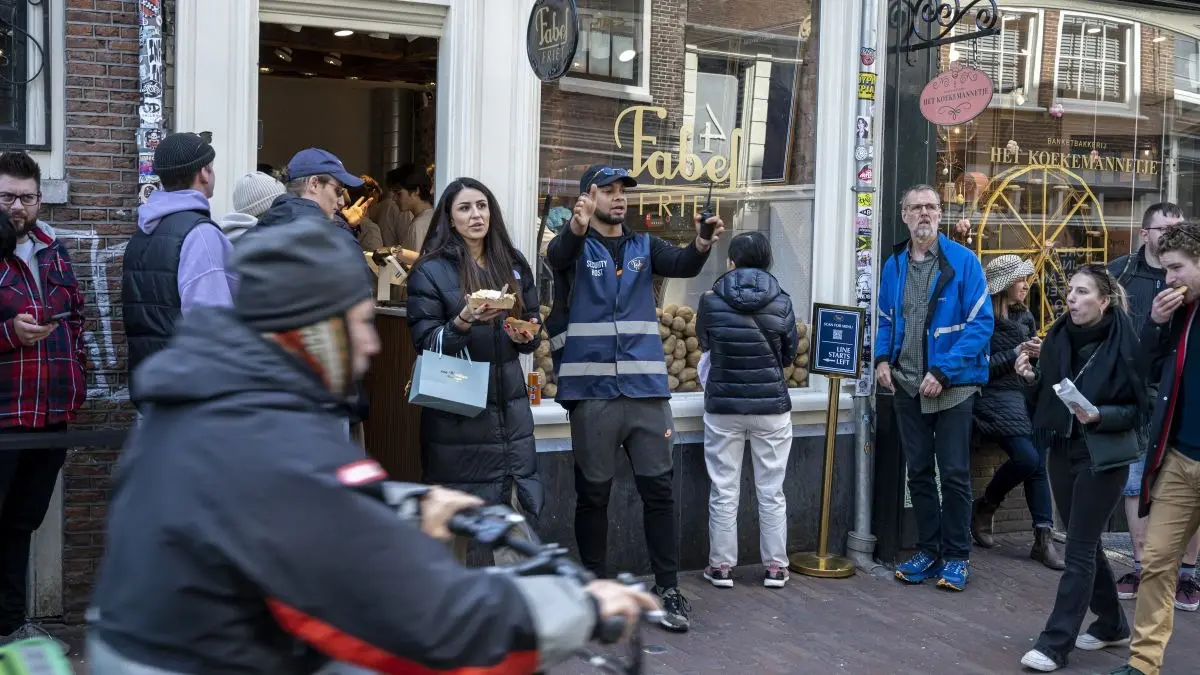
October 2, 2026 — Living next door to a social media sensation comes with a heavy price tag, according to new academic research that sheds light on the collateral damage of modern tourism in Amsterdam. Homes located in the immediate vicinity of Fabel Friet, an immensely popular chip shop whose TikTok-fuelled queues have transformed a quiet canal-district street into an unlikely global tourist attraction, sell for significantly less than comparable properties situated just a few streets away, a study from TU Delft has revealed.
The timing of the research, which was reported locally by Amsterdam broadcaster AT5, coincides with a tense legal showdown playing out in court. This week, a coalition of frustrated local residents, the Amsterdam city council, and representatives for the viral French fry establishment found themselves facing off before a judge to battle over the persistent crowds, public nuisance, and regulatory failures that have plagued the neighborhood for years.
The academic study, conducted by PhD researcher Rosa van der Drift, provides empirical weight to the complaints long voiced by locals. By meticulously comparing the sales prices of 6,233 residential properties across Amsterdam between the years 2015 and 2023—while carefully controlling for crucial variables such as total floor space, property size, and overall structural condition—the researcher uncovered a striking valuation gap. Homes situated within a 500-metre radius of Fabel Friet sold, on average, for 4.88% less than comparable properties elsewhere in the city, translating to a stark financial deficit of approximately €41,000 per home.
When narrowing the scope closer to the source of the frenzy, the economic impact becomes even more pronounced. For homes located within a 70-metre radius of the chip shop, the price discrepancy widens dramatically to an 11.4% reduction in market value. While the research establishes a clear spatial correlation between proximity to the viral snack bar and depressed housing values, the study does not formally establish direct causation, leaving open the broader conversation about urban livability, neighborhood externalities, and the shifting dynamics of inner-city real estate in the age of viral media.
The courtroom battle unfolding this week, however, is not a direct civil suit against the business itself, but rather a legal challenge brought by local residents against the Amsterdam city council. The core argument presented by the neighborhood coalition centers on municipal accountability. Residents contend that the city council failed to properly weigh and protect their fundamental interests as local taxpayers and inhabitants when it originally granted Fabel Friet its operating licence. Consequently, the plaintiffs are urging the court to either completely withdraw the establishment’s operating permit or, at a minimum, mandate significantly stricter operational conditions to curb the chaos outside their front doors.
The tension between the shop’s unprecedented commercial success and the daily reality of neighborhood life has been escalating for years. In 2024, the conflict reached an early legal flashpoint when a judge suspended a municipal rule that had attempted to limit the sprawling outdoor queue to a maximum of 10 people—a restriction that the owners of Fabel Friet successfully argued was entirely unworkable given the sheer volume of international foot traffic driven by social media algorithms.
During Tuesday’s court proceedings, the human toll of the viral phenomenon was laid bare. One resident painted a grim picture for the judge, testifying that crowds of tourists eating chips could be found loitering directly outside residential doorways "every day, from 11 in the morning until 9 in the evening," as reported by AT5. The legal counsel representing the residents emphasized the daily hazards of the situation, warning the court that a serious accident on the heavily congested, narrow bridge adjacent to the shop was not a matter of if, but when.
In their defense, the owners of Fabel Friet pushed back against the portrait of unchecked chaos, detailing the extensive logistical measures they have voluntarily implemented to manage the daily rush. Representatives for the business told the court that they employ dedicated crowd managers whose sole responsibility is to keep the winding queues safe and orderly. Furthermore, they noted that the surrounding street is professionally cleaned four times a day at the shop’s expense, and that overall crowd sizes have dropped by roughly 23% since the owners expanded and opened additional branches elsewhere in the city.
In a bizarre testament to the lengths to which the business has gone to mitigate the fallout of its own success, the owners revealed that they even hired a falconer for a period, bringing a live bird of prey to the location three times a week in an effort to scare away aggressive seagulls scavenging for dropped food. That unconventional tactic was ultimately abandoned, however, after local residents began photographing the falcon and submitting the images as formal evidence of ongoing public nuisance.
A representative speaking on behalf of Amsterdam Mayor Femke Halsema acknowledged during the hearing that the initial operating licence granted to the business had proven inadequate for handling the unprecedented scale of the TikTok-driven crowds. However, the municipal representative noted that stricter, more comprehensive conditions had been formally integrated into the shop’s current licence approximately six months ago. "It is complicated," the representative told the court, according to AT5’s coverage. "You are so successful, is that not allowed?"
As the hearings concluded, the presiding judge urged both the resident plaintiffs and the municipal authorities to seek common ground, gently reminding the neighborhood group of the traditional Dutch adage that a good neighbour is better than a distant friend. The judge announced that she will deliver her official ruling within the next six weeks. Crucially, that upcoming legal decision will focus strictly on the validity and management of the older, contested licence, as formal objections and appeals regarding the newer, tightened operating permit have yet to be fully adjudicated through the legal system.