




It has been a remarkably fast-paced period across the United States. In the span of just a few weeks, the national conversation shifted rapidly from intense preparations for the midterm elections to analyzing the political shifts in Congress, and finally to managing anxieties over the potential cooling of the artificial intelligence boom.
Yet, amid the constant churn of political developments and macroeconomic headlines, everyday commerce continued at a steady clip. When the chief executive officers of several core fashion and apparel brands stepped up to deliver their latest quarterly earnings reports to Wall Street analysts, the burning topics of conversation were not politics or technology bubbles. Instead, the focus pivoted sharply toward the fundamental economic realities driving consumer behavior today: affordability, personal financial health, and the broader retail outlook heading into the critical holiday shopping season.
While macroeconomic uncertainty remains a fixture of the current financial landscape, industry leaders are increasingly adopting a pragmatic approach. Rather than fretting over unpredictable global events, top executives are doubling down on what they can directly control—brand elevation, product innovation, disciplined expense management, and strategic long-term execution.
According to financial analysts tracking the sector, the performance across the American retail market highlights a distinct bifurcation between consumer segments. Laurent Vasilescu, an analyst at BNP Paribas, noted that the current environment is creating clear winners and losers among fashion brands.
“For the U.S., there’s clearly winners and losers and you can see that in the performance,” Vasilescu observed. He pointed out that higher-end consumers appear to be weathering economic pressures remarkably well, keeping the domestic market on a relatively strong footing. As anecdotal evidence of this resilience, market observers frequently point to major credit card issuers like American Express, which have recently reported healthy transaction volumes and robust financial numbers.
This resilience was clearly reflected in the recent financial disclosures of several industry heavyweights, even as executive teams acknowledged the discerning nature of today’s shoppers.
At Ralph Lauren Corp., leadership delivered another strong quarterly performance characterized by a "beat and raise" second quarter. Total sales for the iconic American brand increased by 9 percent, reaching $2.2 billion. Despite this impressive top-line growth, however, newly expressed caution regarding the business climate in Europe briefly caused some jitters among investors.
Even so, Ralph Lauren’s executive leadership remains steadfastly focused on internal execution rather than short-term macroeconomic volatility. Patrice Louvet, the chief executive officer of Ralph Lauren, emphasized this philosophy during the company’s earnings call with analysts.
“Regardless of the macro, we’re running our play,” Louvet told analysts. He elaborated that the company is maintaining a disciplined focus on the long horizon to ensure the brand continues to grow sustainably. “We’ve got an eye on the long term because we want to make sure we’re continuing to build this brand in the right way for long-term success. Because we have both the diversity of growth drivers and the flexibility to pivot and take advantage of clear opportunities for Ralph Lauren in the marketplace, that’s where our confidence comes moving forward.”
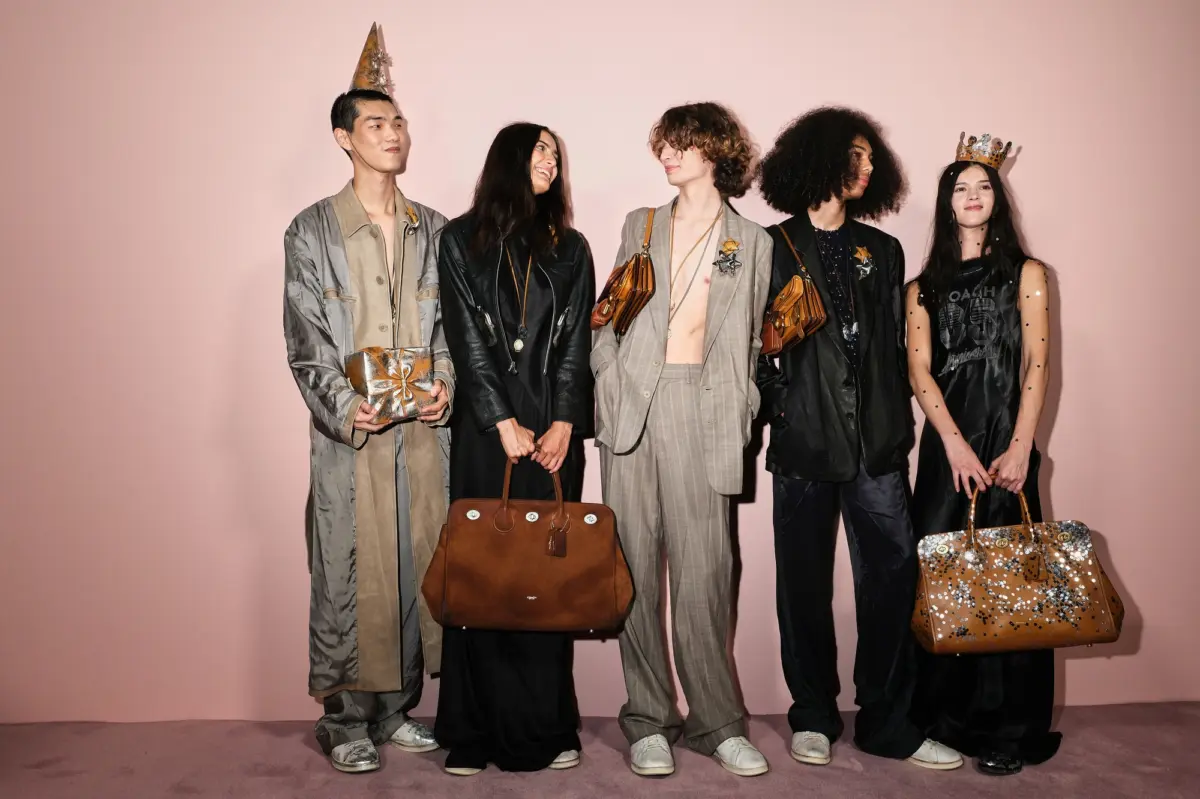
A similarly confident sentiment echoed through Coach parent Tapestry Inc., where fiscal first-quarter sales climbed 12 percent to $1.9 billion. Joanne Crevoiserat, the chief executive officer of Tapestry, addressed the mindset of the modern American shopper and the company’s strategic positioning heading into the busiest retail months of the year.
“In the U.S., while we see a discerning consumer, they’re choosing our category and our brand, and our value proposition has never been stronger,” Crevoiserat stated. She noted that current industry forecasts for the holiday season in the United States point toward mid-single-digit growth, creating a generally constructive backdrop for retailers. For Coach specifically, leadership is projecting mid-single-digit growth expectations for both the upcoming quarter and the full fiscal year across North America. “We’re ready to compete and win,” she added.
Both Ralph Lauren and Tapestry have spent more than a decade validating their long-term growth models. By systematically trimming messy distribution channels, elevating the prestige of their brand portfolios, and reallocating capital toward targeted marketing efforts, each company has successfully pushed its stock market valuation past the $20 billion threshold.
As these two industry leaders pave the way forward, the broader question for the retail sector is whether other players can successfully replicate their playbook. Companies such as Michael Kors parent Capri Holdings and sportswear giant Under Armour Inc. are currently in the midst of navigating their own strategic transformations to capture lost ground.
John Idol, the chief executive officer of Capri Holdings, expressed optimism about the opportunities available for brands willing to refine their positioning. On a call with analysts, Idol pointed out that current struggles among certain European luxury houses have opened a strategic window for competitors.
“We know there’s market share to be regained and taken,” Idol said. “The industry and, in particular, some of the other luxury European luxury brands, are having a bit of a struggle right now. And we actually think this is a super time for us to be able to resonate with consumers who are being a bit more choiceful. We can see that with some other brands around the world who are enjoying the fruits of that success.”
Capri Holdings is currently working to engineer a turnaround as it navigates a softer patch. Quarterly sales for the company fell 5.5 percent to $809 million, leaving Wall Street analysts watching closely for signs of a definitive rebound.
Meanwhile, athletic apparel maker Under Armour remains deep within a comprehensive operational reset. The company reported a 7 percent decline in quarterly sales, bringing total revenue to $1.2 billion as management prioritizes long-term brand health over short-term volume gains.
Kevin Plank, the founder and chief executive officer of Under Armour, emphasized that the company’s immediate priority is establishing a solid foundation for sustainable future growth.
“Our focus at Under Armour is to build a stronger brand through compelling products and more consistent execution,” Plank explained. He stressed that leadership remains fully dedicated to revenue quality and profitability. This involves directing company resources toward innovative product development, compelling and aspirational storytelling, and elite operational execution, all while strictly maintaining internal expense discipline.
As fashion retailers prepare for the remainder of the fiscal year, a central dilemma remains regarding pricing strategies and promotional cadence. Blake Anderson, an equity research analyst at Jefferies, described the situation as "the million-dollar question" for the apparel and footwear sectors over the long term.
According to Anderson, retail companies have largely communicated that while some promotional activity will be utilized to protect or grow market share, leadership teams are generally exercising restraint. Brands are purposefully avoiding aggressive price cuts or margin-eroding discounting simply for the sake of driving volume.
“I think that companies have generally said that there will be some promotion and that they want to still maintain or grow market share, but they’re not going to reduce prices or discount just for the sake of growing,” Anderson said.
He further highlighted the compounding pressures of the past year, noting that the retail sector has operated within a distinctly inflationary environment driven in part by tariff adjustments and the pass-through of higher supply chain costs. The ongoing uncertainty centers on the true extent of pricing power across different brands and whether those higher price points can remain sticky and sustainable moving into the future.
“We’ve been in more of an inflationary environment for apparel and footwear this past year,” Anderson noted, explaining that while passing through price increases has been necessary, the critical test lies ahead. “Part of that is due to price increases due to tariffs and passing through. But the question is always going to be, How much pricing power do these brands have and is it sticky? Does it sustain? There’s a lot of question, does this continue into next year or do we see lower pricing as we have to lap the higher pricing from this year? It really will depend on the brand and the company and really the momentum they have and the investments they’re making.”