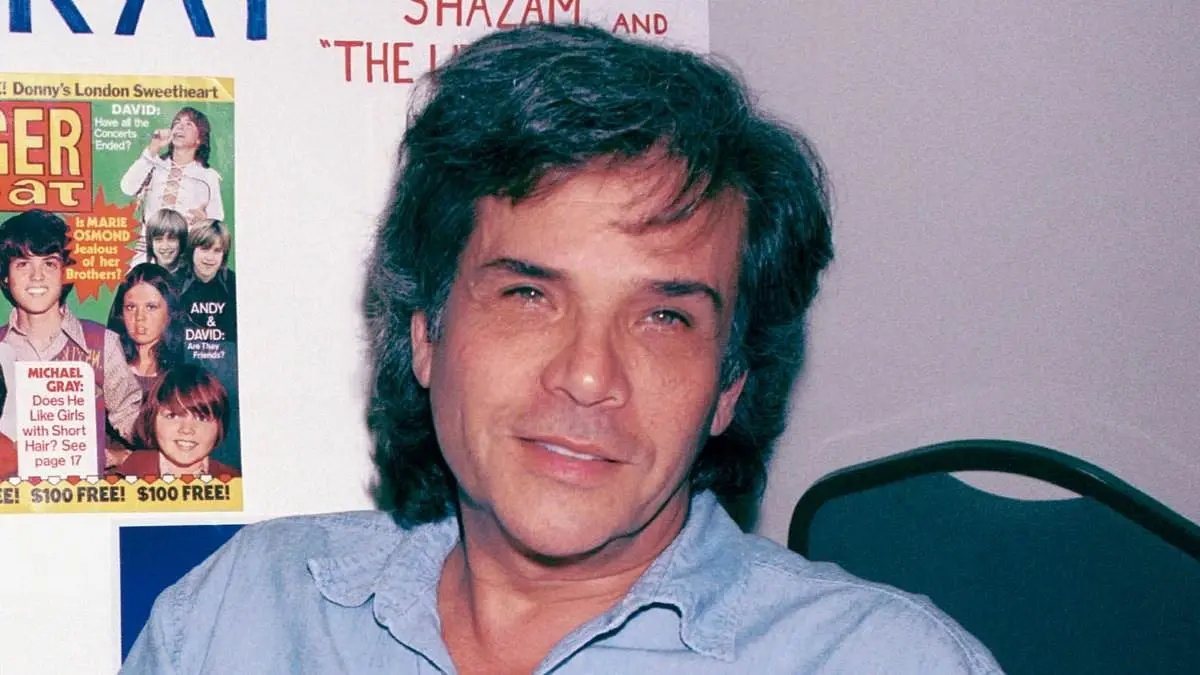
For children growing up in the mid-1970s, Gray was the face of adventure. Across 28 episodes of the popular CBS series, which aired from 1974 to 1976 and was based on the classic DC comic characters, Gray brought the iconic young hero Billy Batson to life. The show’s unforgettable premise followed a traveling teenager who, upon uttering the magical phrase "Shazam!", was transformed into the powerful adult superhero Captain Marvel. During the course of the series, the role of Captain Marvel was portrayed by actors Jackson Bostwick and later John Davey, while Gray anchored the human emotional core of the narrative as the earnest young hero seeking to help others while learning valuable life lessons along the way.
Reflecting on his time with the series during a 2012 appearance at a Comic-Con panel, Gray candidly discussed how unexpected his journey into the superhero genre had been. He admitted that he was entirely unfamiliar with the comic book character or his rich backstory when he was first cast, meaning he had to become a quick study to prepare for the fast-paced production schedule.
"I didn’t know the character or the story when I was initially cast, so I had to be a quick study," Gray shared during the retrospective panel, which was also highlighted by Comic Book Resources. "So it was fun and exhausting, challenging and thrilling, all at once."
He further emphasized the cultural significance of the program during an era when the television landscape was undergoing a major transformation. "It didn’t matter that it was on Saturday morning or prime time—though the fact that it was one of the first few live-action shows on Saturday morning was exciting."
Gray often recalled the rigorous and fast-paced nature of producing television in the 1970s. Speaking to Comic Book Resources about his casting process and the behind-the-scenes realities of the production, he noted that the audition itself was a blur, though his meetings with studio executives quickly set the wheels in motion. The series was efficiently shot within a short radius from the studio in the Los Angeles Valley, utilizing veteran crews who had previously worked on classic television staples like Lassie.
"Lots of guys from the crew worked on the Lassie series. It was good, quality stuff for what it was back then," Gray explained. "We did an episode in two-and-a-half days, shooting from sunrise to sunset."
Though the grueling production schedule pushed the young cast and crew to their limits, Gray embraced the unique cultural phenomenon of becoming a recognized teen idol. He acknowledged that while the rapid ascent to fame came with distinct pressures, the overall experience remained deeply rewarding.
"Before I took the role, I was told by a few people in the biz it wasn’t a good idea—that I’ll be typecast. But a job’s a job, so I took it. It truly was a thrilling show to work on and ended way too soon as far as I’m concerned," he reflected.
Born on September 2, 1951, Gray was raised in sunny Miami Beach, Florida, before ultimately making the pivotal decision to relocate to Southern California to pursue a professional career in the performing arts. Determined to hone his craft, he studied at the prestigious Pasadena Playhouse, immersing himself in classical training and theater arts. His striking looks and youthful charm soon caught the attention of publishers, landing him on the covers of popular teen-oriented pop-culture magazines of the era, such as Tiger Beat. This significant exposure proved instrumental in opening doors within the industry, eventually paving the way for his career-defining audition for Shazam!.
Before donning the mantle of Billy Batson, Gray established a steady working career in Hollywood. He made guest appearances on a wide array of popular television programs throughout the late 1960s and early 1970s, including medical drama Marcus Welby, M.D., the sitcom The Flying Nun, and the educational drama series Room 222. His television presence expanded when he landed his first recurring television role as Ronnie on the NBC series The Little People.
In 1973, Gray cemented his status as a ubiquitous face of 1970s television by making a memorable guest appearance on The Brady Bunch as the boyfriend of Marcia Brady, played by Maureen McCormick. His cinematic credits also included performances in feature films such as Run, Simon, Run, Beyond the Valley of the Dolls, and Myra Breckinridge.
Following the conclusion of Shazam!, Gray chose to step away from the relentless pace of mainstream television acting for a period, pivoting toward diverse professional pursuits. According to reports from Variety, he engaged in theater education to share his passion for the performing arts with younger generations, worked in men’s fashion, and successfully managed a floral company alongside his wife, Stacy Benon Gray.
Despite his hiatus from major Hollywood productions, Gray never truly lost his connection to the entertainment community or the fans who grew up watching him. In later years, he warmly embraced his status as a nostalgic pop-culture figure, regularly appearing at Comic-Cons and fan conventions across the country. He delighted in meeting admirers, signing memorabilia, and sharing cherished anecdotes from his days on the Shazam! set.
His enduring affection for the character and the franchise came full circle when he made a special cameo appearance in the 2023 DC superhero feature film Shazam! Fury of the Gods, which starred Zachary Levi, Asher Angel, and Rachel Zegler. The cameo served as a heartwarming tribute to the original television series, thrilling longtime fans who recognized the actor who had originated the live-action role nearly five decades prior.
Colleagues and friends remember Gray not only for his contributions to television history, but for his boundless warmth, generosity, and irrepressible good humor. John Davey, who shared the screen with Gray as Captain Marvel during the original run of Shazam!, paid a heartfelt tribute to his former co-star, describing him as "just a loving, sweet guy with a great sense of humor."
Davey added, "He loved acting, loved doing the show and, in recent years, loved appearing at Comic-Cons. He really enjoyed meeting and chatting with the fans. Mike was a wonderful man—I don’t think he ever stopped smiling."
In his later years, Gray continued to intermittently take on creative projects, making an appearance on the animated spy comedy series Archer on FX and contributing to all four films in the superhero parody franchise Surge of Power. His final screen appearance came in the 2024 film Surge of Power: Where There’s Smoke.
Michael Gray is survived by his devoted wife, Stacy Benon Gray; his stepchildren, Ryan Cooper and Laurel Cooper; and his son-in-law, Lee Barker. He leaves behind a legacy defined by joy, nostalgia, and the enduring magic of Saturday morning television.