





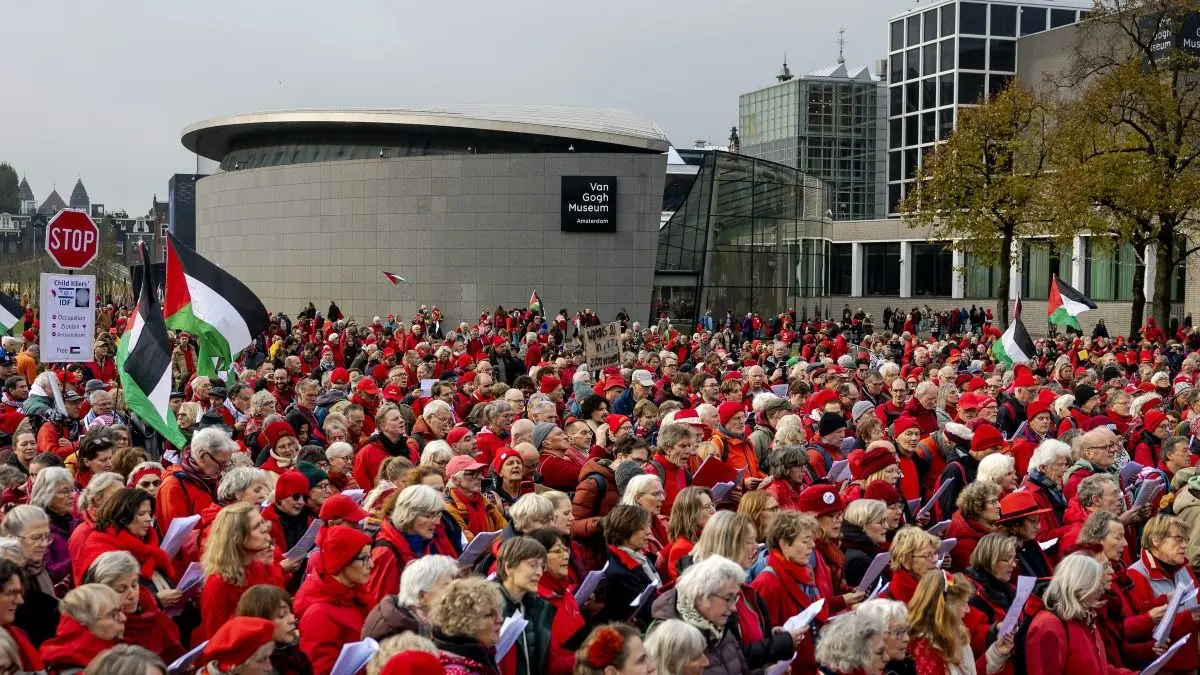
The demonstration was spearheaded by The Rights Forum in collaboration with 13 other prominent civil society and humanitarian organizations, including Amnesty International, PAX, and Oxfam Novib. The coalition of groups organized the mass mobilization to pressure the Dutch government into enacting concrete punitive measures, specifically calling for an immediate halt to all purchases of Israeli weapons and the imposition of comprehensive bilateral sanctions in response to alleged war crimes.
The massive influx of people necessitated substantial logistical adjustments across Amsterdam. Public transportation authorities deployed extra infrastructure to manage the unprecedented crowds, featuring increased metro frequencies and longer Dutch Railways (NS) train formations heading into the capital. Meanwhile, local trams and buses operating in the vicinity of the Museumplein were subjected to route diversions. The protest officially commenced at the Museumplein at 1:00 PM with a series of opening speeches, which then transitioned into a sprawling march through Amsterdam Zuid and Oud-West, running from 1:45 PM until 4:00 PM.
Sunday’s turnout continues a trend of exceptionally large public demonstrations under the "Red Line" banner across the Netherlands. Previous iterations of the rally have consistently drawn six-figure crowds, signaling sustained public engagement with the issue. Organizers estimated that turnout reached over 100,000 in The Hague in May 2025, rose to 150,000 in the administrative capital the following month in June 2025, and peaked at a staggering 250,000 protesters in Amsterdam in October of that same year.
However, the lead-up to the latest demonstration was marked by notable political friction and public controversy. Prime Minister Rob Jetten found himself under scrutiny regarding his stance on the movement. Jetten, who had previously participated in an earlier Red Line protest during his tenure as the leader of the D66 party, addressed his absence from Sunday’s event during his weekly press conference on Friday. He stated that it would be inappropriate for him to attend the march now that he holds the office of prime minister, walking a fine line between his past political activism and his current governmental responsibilities.
Further compounding the controversial atmosphere surrounding the march, several slated speakers faced sharp criticism and accusations regarding alleged ties to Hamas and other armed Palestinian groups. Among those drawing scrutiny were Omar Barghouti, the co-founder of the Boycott, Divestment, Sanctions (BDS) movement, and Medhat Alamawi of the Palestinian Community Netherlands, an activist who is also actively involved with the regional activist group Utrecht4Palestine.
These criticisms were robustly dismissed by organizers. Edwin van ’t Pad, a spokesperson for The Rights Forum, pushed back against the allegations in a statement to the news site de Kanttekening, framing the backlash as politically motivated. "Even if we had put the pope on stage, the right would have accused us of antisemitism and Hamas sympathies," van ’t Pad remarked.
The large-scale domestic mobilization in Amsterdam also unfolds against a tense international backdrop, coinciding with mounting geopolitical pressure on the International Criminal Court (ICC) based in The Hague. The court has faced severe pushback from the United States, particularly from the Trump administration. In July, U.S. Secretary of State Marco Rubio publicly vowed to "dismantle the ICC, brick by brick, if necessary," a threat issued partly in retaliation against the judicial body’s ongoing investigations into high-ranking Israeli officials.