






The Target red bullseye offers near-instant brand recognition for millions of consumers across the country. No matter which location a shopper enters, they generally know what to expect from the big-box retailer, from the layout of the aisles to the steady reliability of everyday goods. That is not quite the case, however, at the company’s high-profile New York City location in Soho. Less than a year after reimagining its busy first floor, Target has unveiled a completely redesigned lower level crafted by the creative agency Something Special Studios, introducing a retail environment that actively encourages exploration, discovery, and a renewed sense of playful engagement.
Situated prominently at the corner of Broadway and Houston Street, the Target Soho branch was initially conceived as a strategic “living lab” where the national brand could test bold new ideas for the future of physical retail, according to Gigi Guerra, Target’s Vice President of Marketing for Creative Curation. Since opening its doors ten months ago, the location has continuously offered a more curated, design-led shopping experience tailored to the fast-paced, style-conscious local demographic. The debut of the newly redesigned lower level extends that innovative design philosophy directly into everyday categories, encompassing home goods, wellness products, toys, and a vibrant selection of food and beverage offerings.
“We’re rethinking each of these categories as destinations,” Guerra explains, emphasizing the company’s ambition of making everyday shopping significantly more intuitive, engaging, and full of unexpected discoveries for the modern consumer.
To bring this ambitious vision to life, Target enlisted the expertise of New York- and Los Angeles-based Something Special Studios. The design team focused heavily on the nuanced character of the neighborhood and the psychology of urban shopping habits to shape the physical space.
“We started with the idea of making the everyday feel worth discovering,” says Michael Goldberg, founder of Something Special Studios. “Soho is a neighborhood defined by its historic character and constant reinvention, and we wanted the Lower Level to reflect that energy while staying true to Target’s playful, optimistic point of view.”
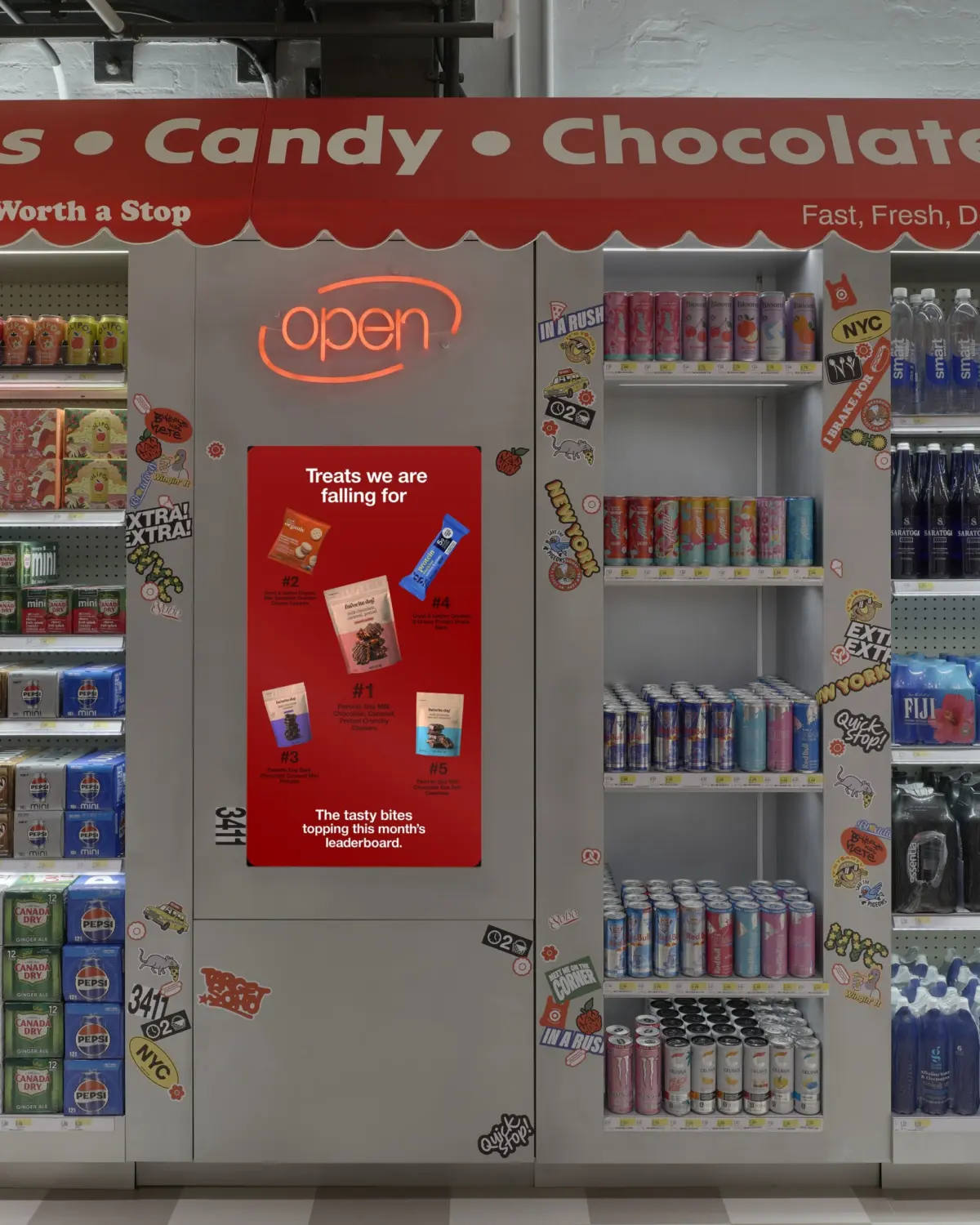
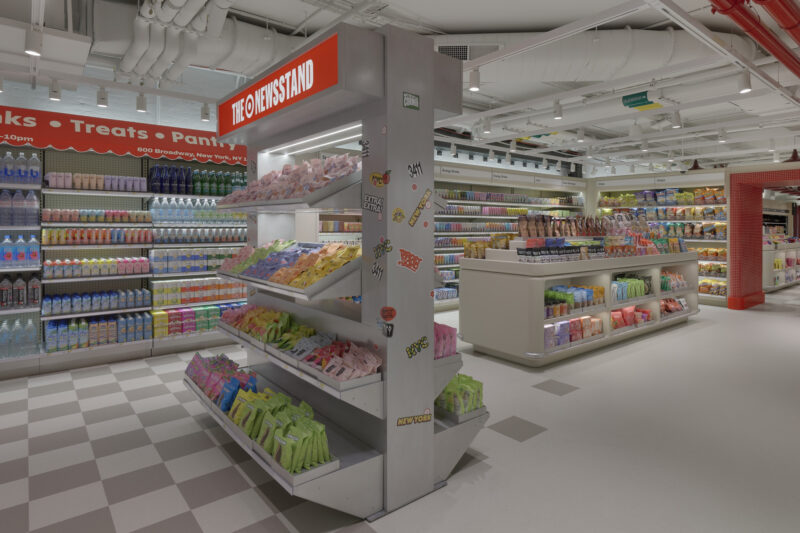
To achieve this balance, the designers drew direct inspiration from familiar New York spaces, such as the ubiquitous local bodega and the compact layout of a typical city apartment. Rather than recreating these environments literally or relying on cheap pastiche, the studio reinterpreted these elements to serve as distinct, highly stylized shopping destinations within the store. For instance, an area dubbed the Bullseye Loft utilizes domestic vignettes to creatively showcase home products in a setting that feels personal and lived-in, while another zone, known as The Snack Bar, subtly recalls a classic New York streetscape complete with corner-store aesthetics and stylized newsstands.
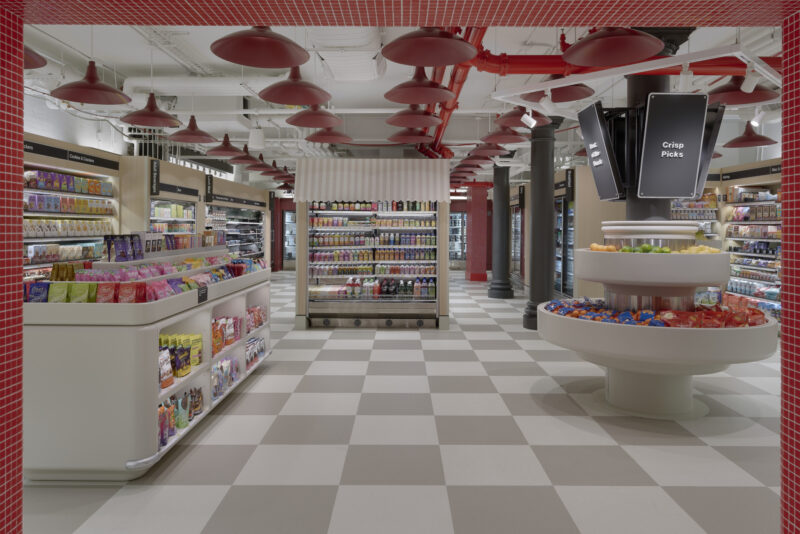
The architectural challenge also required responding directly to the strict constraints of the existing cast-iron commercial building that houses the store. The historical structure’s rigid column grid, lightwell, escalators, and other permanent architectural features heavily influenced the overall floor plan. Rather than fighting these inherent limitations, the design team embraced them, turning the existing row of structural columns into a central avenue that efficiently organizes the entire lower floor.
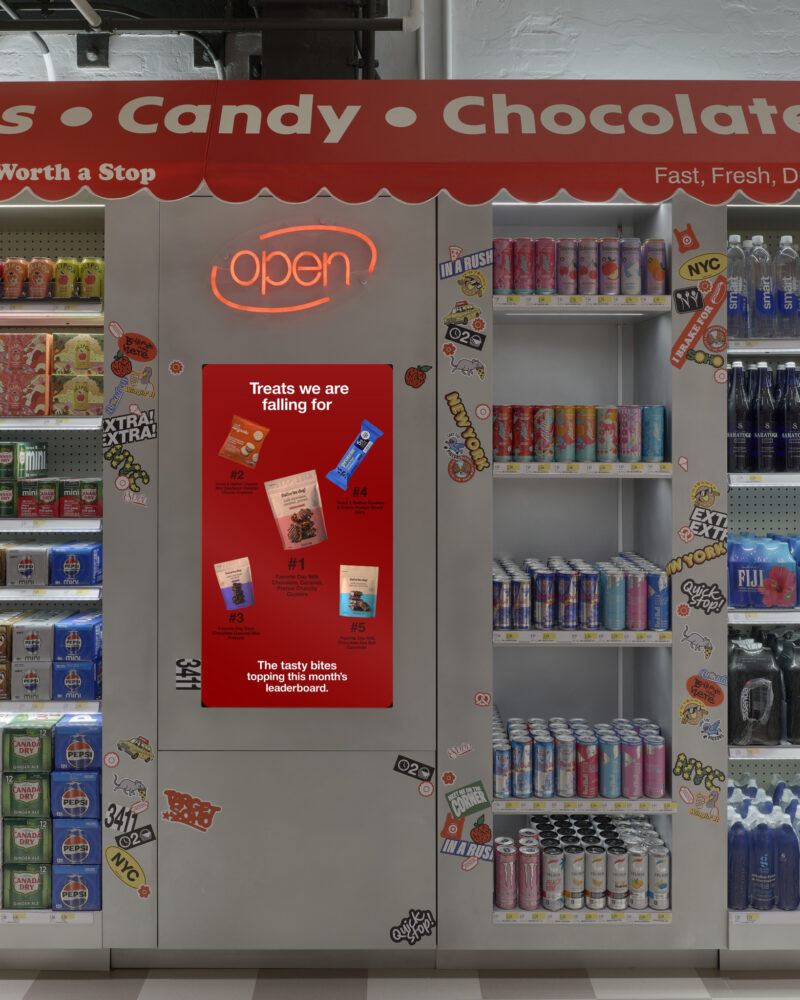
Despite featuring multiple distinct destinations with their own unique atmospheric identities, the layout was meticulously planned to remain easy to navigate and shop efficiently.
“We approached the floor as a journey that guests can experience at their own pace,” Goldberg says. “The central avenue provides a clear organizing spine, with wider pathways and intuitive sightlines connecting a series of curated destinations.”

Although the various zones possess distinct visual and functional identities, the designers avoided hard boundaries or aggressive partitions between them. Instead, a thoughtful combination of subtle lighting, material shifts, and architectural thresholds helps distinguish the individual areas without fragmenting the overall space.
“Ultimately, every decision needed to balance function with delight, giving people a reason to slow down and explore while ensuring the store remains easy to navigate,” Goldberg adds.

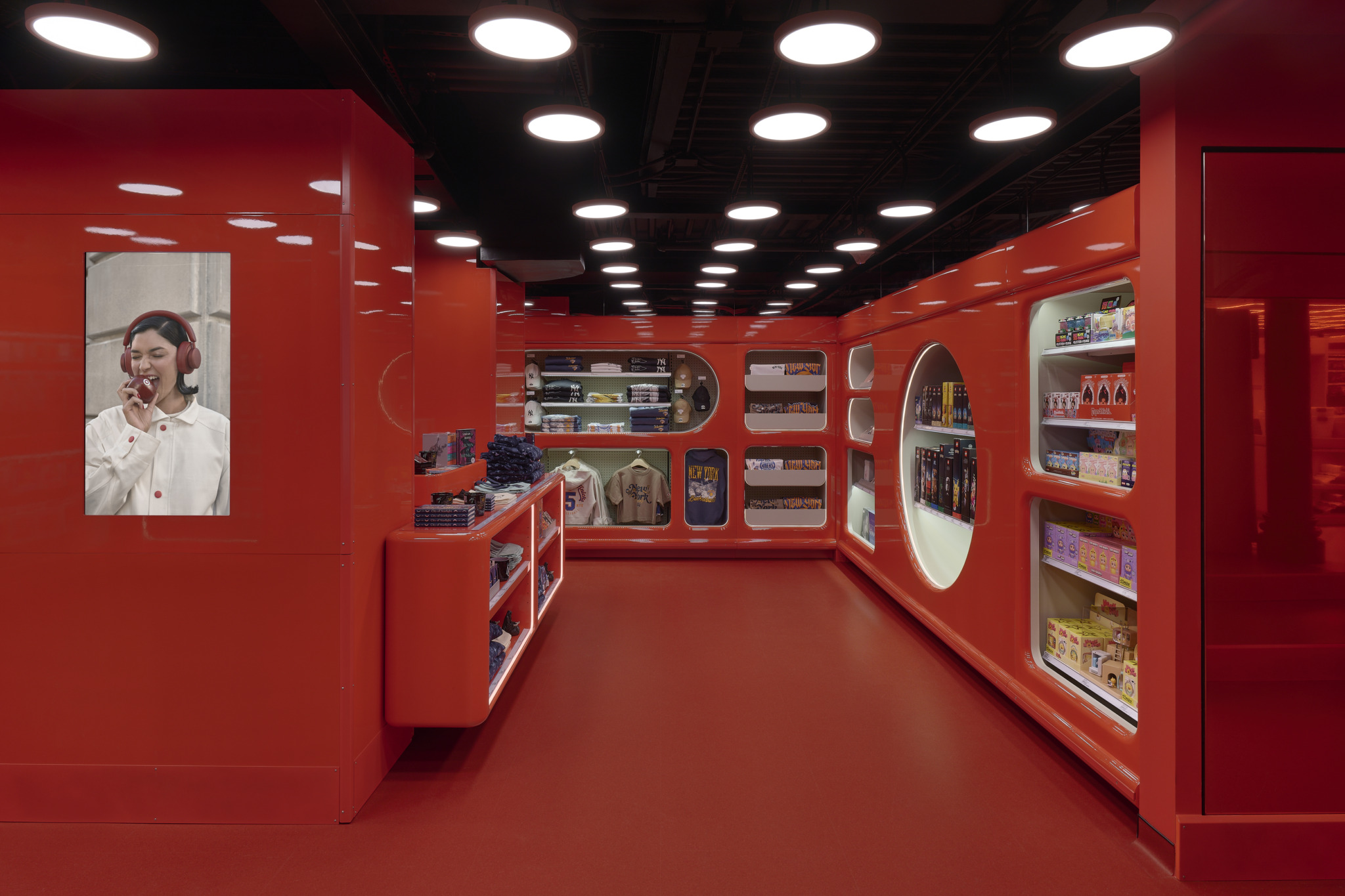
To elevate the material palette and give the retail space a more polished, contemporary character, Something Special Studios incorporated an array of tactile finishes. Brushed and orbital-finished aluminum, tinted mirrors, glossy lacquer, fabric awnings, and integrated custom lighting were deployed strategically throughout the floor. Meanwhile, the application of natural wood introduces a much-needed sense of warmth and visual contrast against the cooler industrial surfaces.
“The mix is durable and functional, but still tactile and expressive,” Goldberg notes.

While Target Red remains a foundational part of the Soho store’s core identity, it is joined by Cherry Stain Red, a custom color specifically developed for this location. Goldberg explains that this new shade is part of a broader, carefully curated palette of warm neutrals designed to complement the space.
“Together, these tones establish a cohesive visual identity while allowing the Lower Level to develop its own character,” he says. “The palette creates continuity with the floor above, while warmer materials, reflective surfaces, and tactile finishes give the Lower Level a more metropolitan feel.”

The experimentation happening at the Soho location is already beginning to influence the broader retail chain. Beyond the lower Manhattan store, Cherry Stain Red is slated to be introduced across the country for Target’s upcoming Beauty Studio concept, serving as a prime example of how the location functions as an effective testing ground for the national retailer.
“[The Soho location] serves as a test-and-learn platform where we can experiment, learn, and evolve,” Guerra says. “We’re creating more intentional environments that give everyday categories a stronger point of view.”

This agile approach allows specialized destinations within the store, such as Balance Mart for wellness products and Explorers’ Lab for toys and entertainment, to seamlessly showcase trending brands, new retail collaborations, and rotating seasonal products. Yet, despite the more immersive and atmospheric environment, the store must still function practically as a reliable neighborhood resource for everyday essentials. As Goldberg points out, local shoppers should still feel empowered to come in, find what they need quickly, and leave, or alternatively, take their time lingering and exploring the curated zones.
“The completed Target Soho store reflects our belief that great design is about more than how a space looks—it’s about how people experience it,” Guerra concludes. “Every element is designed to make everyday shopping feel a little more unexpected and inspiring.”