






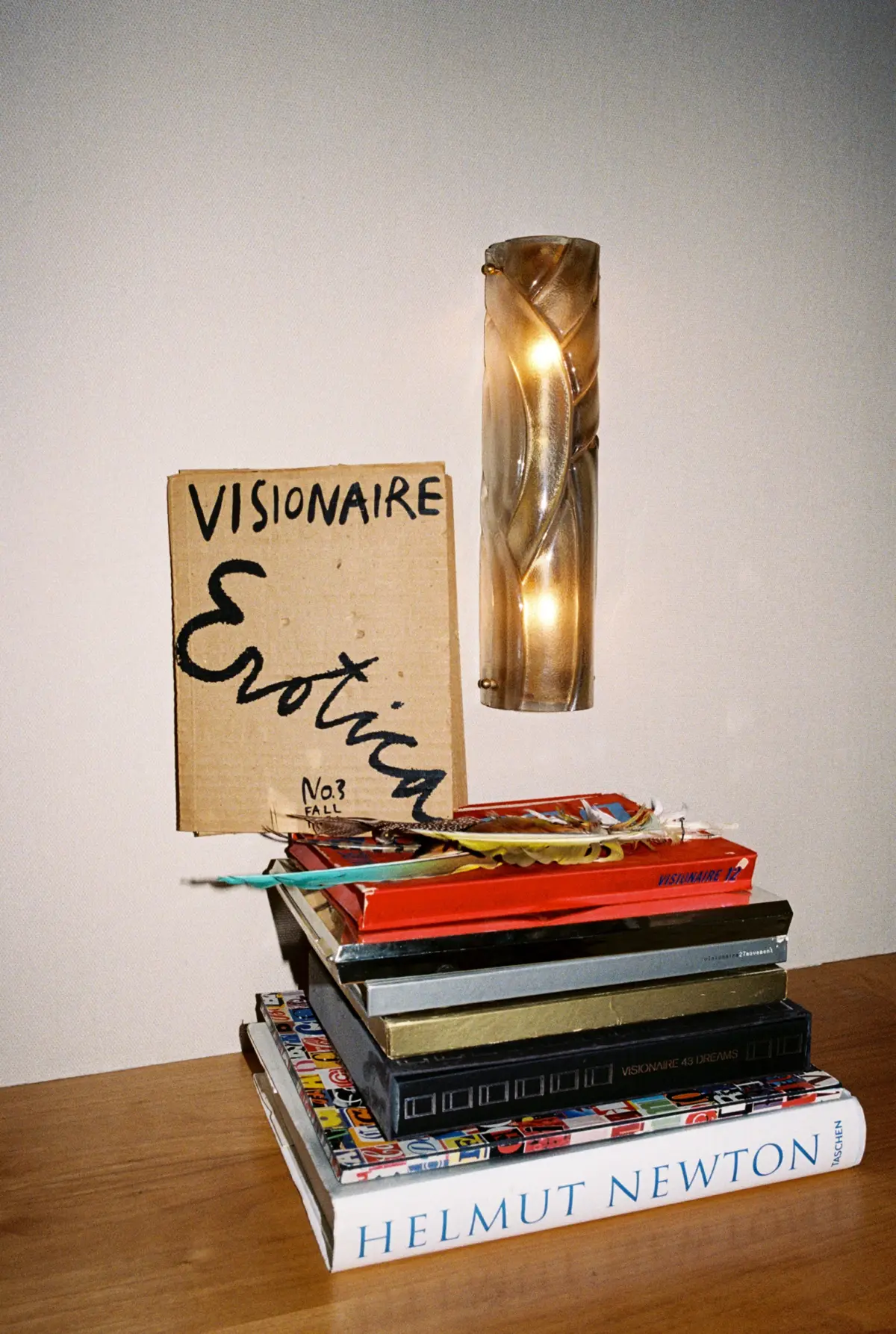
To categorize Adir Abergel simply as a celebrity hairstylist is to miss the broader picture of who he is as a visual artist. Trained first as a classical dancer before shifting his focus to hair, Abergel views aesthetics, beauty, and human expression through a deeply creative lens. His Los Angeles home serves as a physical extension of that artistic worldview—a funky, art-filled oasis layered with bohemian touches that reflect a life dedicated to curation without pretense. For Abergel, high price tags do not dictate taste, and luxury is found just as easily in a vintage flea market find as it is in a designer piece.
As the creative director of the haircare brand Virtue Labs, Abergel has spent decades shaping the tresses of some of the world’s most recognizable cultural figures. His impressive roster includes A-list talent such as Jennifer Garner, Kristen Stewart, Nicole Kidman, Anne Hathaway, and the late Tina Turner. Whether he is crafting effortless beach waves or complex sculptural updos for the red carpet, his goal remains rooted in making his clients look and feel completely authentic to themselves. Behind the scenes, however, his life is defined by grueling hours, deep relationships, and a wardrobe that tells the story of an uncompromisingly maximalist worker.
Reflecting on his personal style, Abergel describes it succinctly in three words: "Eccentric, easy, maximalist." His daily outfit formula completely bypasses brand loyalty or status symbols. Spending upward of 90 to 100 hours a week working with his hands—lifting equipment, traveling, and moving constantly on set—demands a wardrobe that prioritizes utility alongside self-expression. He cares just as little about whether an item costs fifty cents or five thousand dollars, as long as it allows him the physical freedom to do his job.
This practical yet distinctive approach to dress has evolved over the decades. Having been featured in a closet profile more than a decade ago, Abergel notes that his style has naturally matured alongside his body as he approaches the age of 50. While vintage shopping used to yield effortless results in his younger years, the realities of aging mean he now leans toward thoughtfully tailored silhouettes, carefully chosen fabrics, and pieces that balance relaxed comfort with structure. Despite his appreciation for beautiful items, he remains entirely unattached to material possessions. He notes that he could comfortably live in Hawaii with a basic t-shirt, underwear, and a cheap pair of flip-flops and still find happiness. What truly anchors him are honesty, deep relationships, art, integrity, and mastering his craft.
Among his expansive collection of statement jackets, bold accessories, and vibrant jewelry, personal sentiment trumps commercial value. One of the most cherished items in his possession is a simple necklace belonging to his mother, who passed away earlier in the year. Wearing it allows him to feel her continued presence around him. His mother also serves as his foundational style icon, remembering her as effortlessly cool with a casual, undone aesthetic reminiscent of Shelley Duvall in The Shining. He fondly recalls moments from his childhood when she would spontaneously dye her red hair at a gas station after picking up box dye at a local supermarket, embodying a fierce and unapologetic individuality.
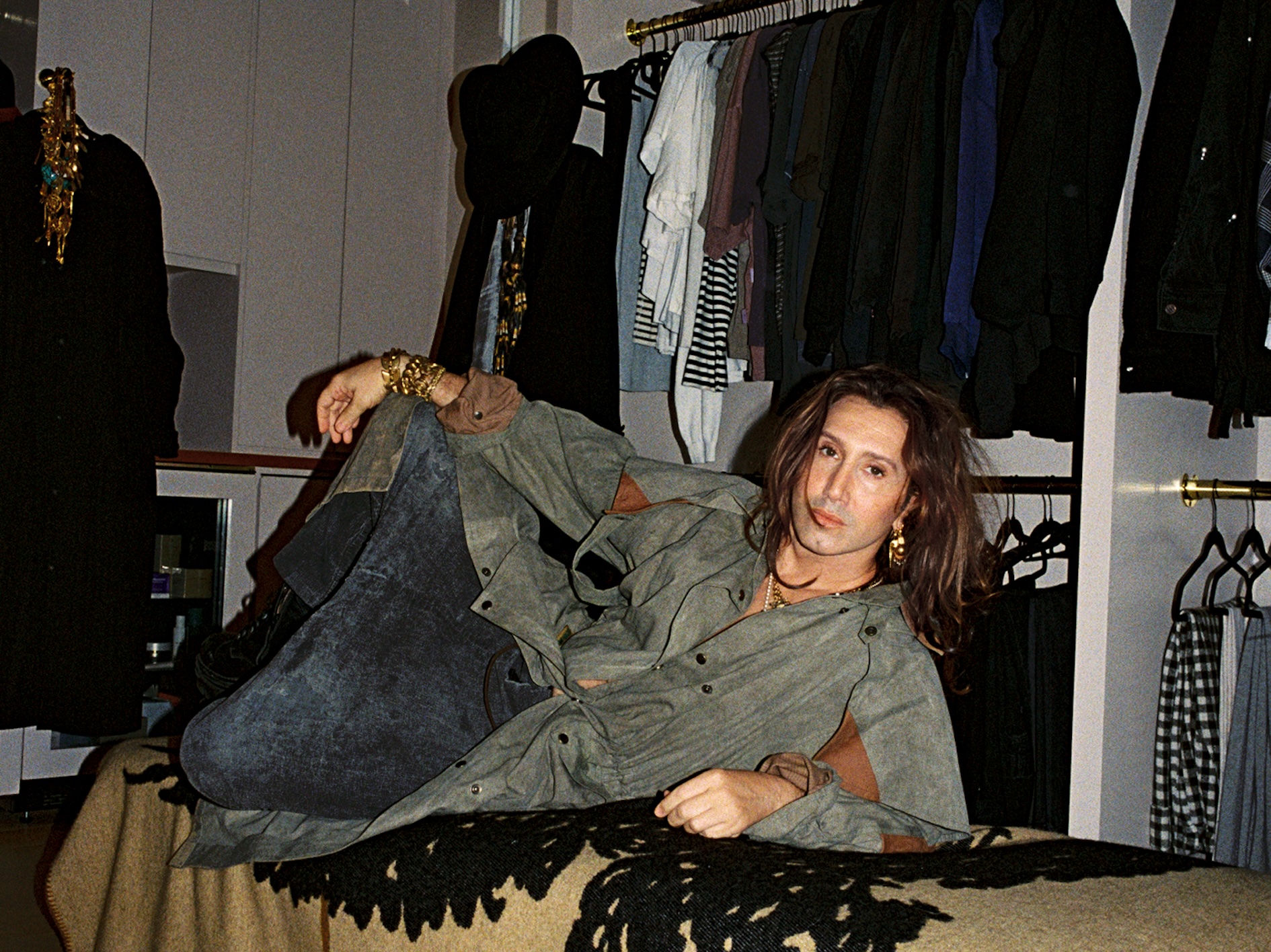
That appreciation for history and unique handiwork heavily influences where and how he shops. He frequently scours a massive flea market in Paris, browses online auction sites for rare pieces, and champions the simple, delicious fabrics of London-based designer Studio Nicholson. His travels have yielded treasures far beyond clothing, including a cherished, two-hundred-year-old piece of Japanese indigo fabric that he uses for his professional setup. Handcrafted with obvious love, the textile has traveled more than a million and a half miles around the globe alongside him.
Abergel’s background in classical ballet—which he studied intensively until an injury redirected his path at age fifteen—continues to shape how he perceives clothing. Dance instills an acute awareness of body structure, posture, and movement. To Abergel, garments drape and interact with the body in specific ways, almost as if the clothing is dancing with the wearer and dictating physical movement.
While he collects visual references from diverse eras—such as a pencil drawing from the 1970s that might subliminally influence his aesthetic perspective—his shopping habits are entirely intuitive. Pieces must speak to him organically rather than being hunted down based on magazine spreads. This instinctive approach translates directly to his philosophy on hair, where the ultimate objective is always the celebration of individuality rather than adherence to strict trends.
That shared commitment to authenticity is what connects him so deeply with the talent he collaborates with. Working alongside Kristen Stewart, whom he regards as one of the most fearless humans in terms of self-expression, has reinforced his belief in rejecting societal conformity to find personal truth. Similarly, his long-standing professional relationship with Jennifer Garner is marked by genuine warmth and laughter. He fondly recounts behind-the-scenes moments on commercial sets where Garner playfully offered her own paycheck if he could successfully memorize her lines—a challenge he ultimately lost, much to his lighthearted dismay.
As Abergel looks outward at the broader cultural landscape, his greatest source of inspiration is humanity itself. Navigating a world often fractured by political division, economic disparity, and judgment, he finds hope in the collective spirit of the people he meets across the globe. By celebrating individual beauty and rejecting the constant need for outside approval, Abergel continues to champion the idea that everyone possesses a distinct thumbprint—and that true style begins with the courage to embrace it.