





A new generation of cultural exhibitions is rapidly adapting the traditional museum model to match the ways modern audiences consume media, raising fundamental questions about what happens to authentic artwork and institutional integrity along the way. Across major cities worldwide, a shift is taking place in how public spaces present culture, moving away from static preservation and toward dynamic, highly shareable environments.
A Different Kind of Museum
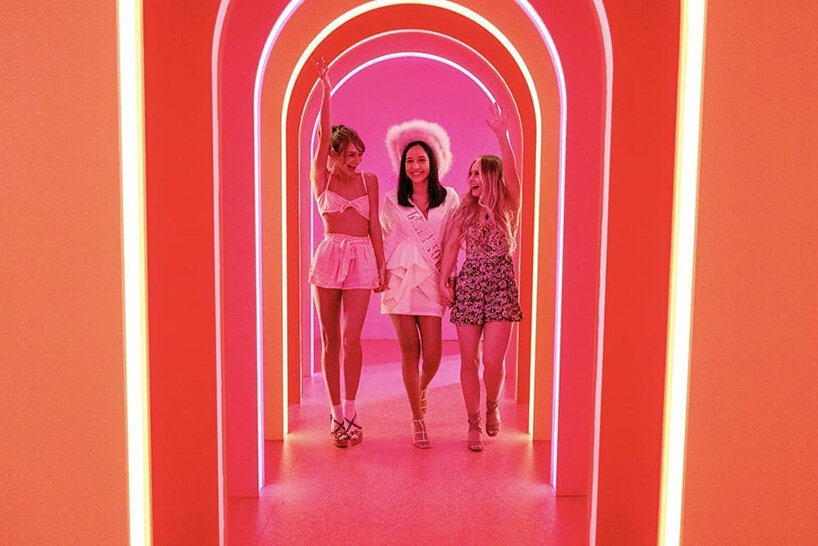
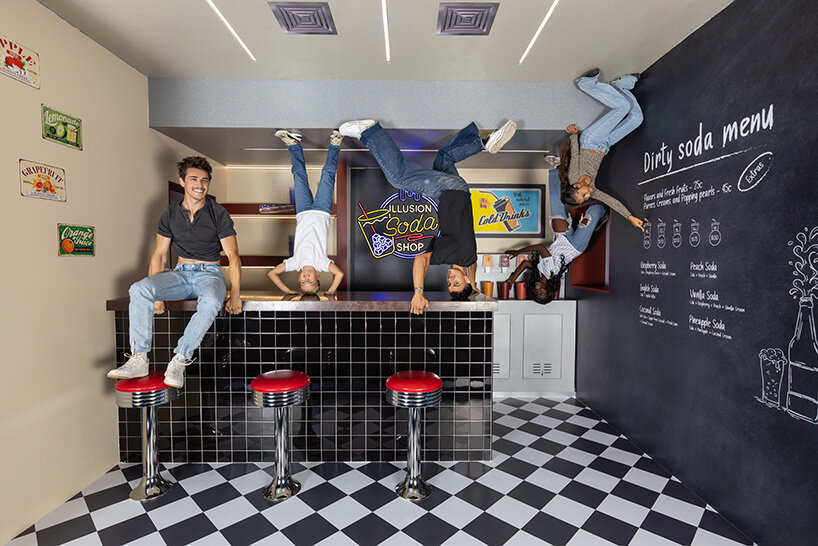
Walk into a contemporary attraction like a Museum of Illusions or a Museum of Ice Cream, and the atmosphere feels closer to an adult playground than the quiet, contemplative spaces most people grew up visiting. Visitors move fluidly through optical illusions, kaleidoscopic mirrors, oversized props, and brightly colored installations, carefully seeking the right position, the correct physical gesture, or the optimal moment to record a video.
These spaces are intentionally engineered for active participation, and their visual outputs are explicitly designed to travel across digital networks. While the word “museum” lends these commercial attractions a veneer of institutional authority, the core experience is largely built around play, social interaction, and the distinct pleasure of being photographed inside an unusual, whimsical environment.
There is nothing inherently wrong with this shift. People have always gravitated toward cultural spaces to have fun, spend time together, and experience something outside the boundaries of their everyday surroundings. Furthermore, a well-designed interactive installation can be deeply memorable precisely because it asks visitors to engage with it physically.
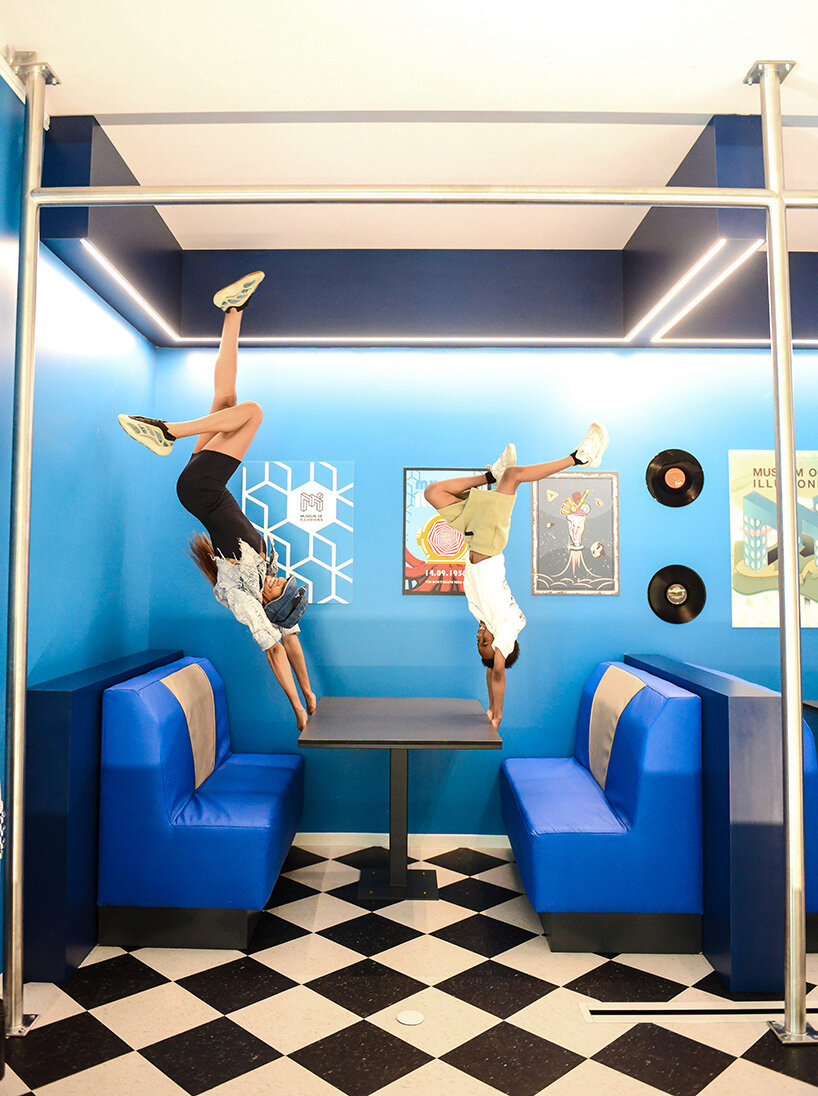
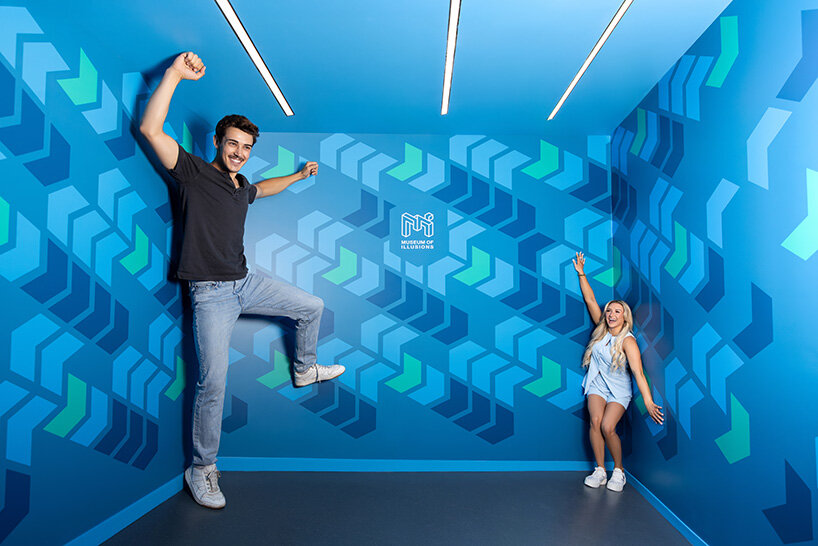
However, it is worth examining what kind of experience these places are offering—particularly when the museum format is co-opted primarily for entertainment and the photograph becomes the primary currency for communicating what happens inside. The Museum of Illusions serves as a useful case study because the visitor’s physical body is essential to activating many of its optical effects. Perspective, scale, and mirrors create visual situations that only become complete when a human subject enters the frame.
Meanwhile, the photograph records an illusion that can often be difficult to comprehend from an empty installation view. The entire experience is therefore meticulously designed around a triangular exchange between physical space, the human body, and the camera lens. You enter the illusion, you perform within it, you photograph it, and that image immediately becomes part of the digital narrative that reaches the next potential visitor.
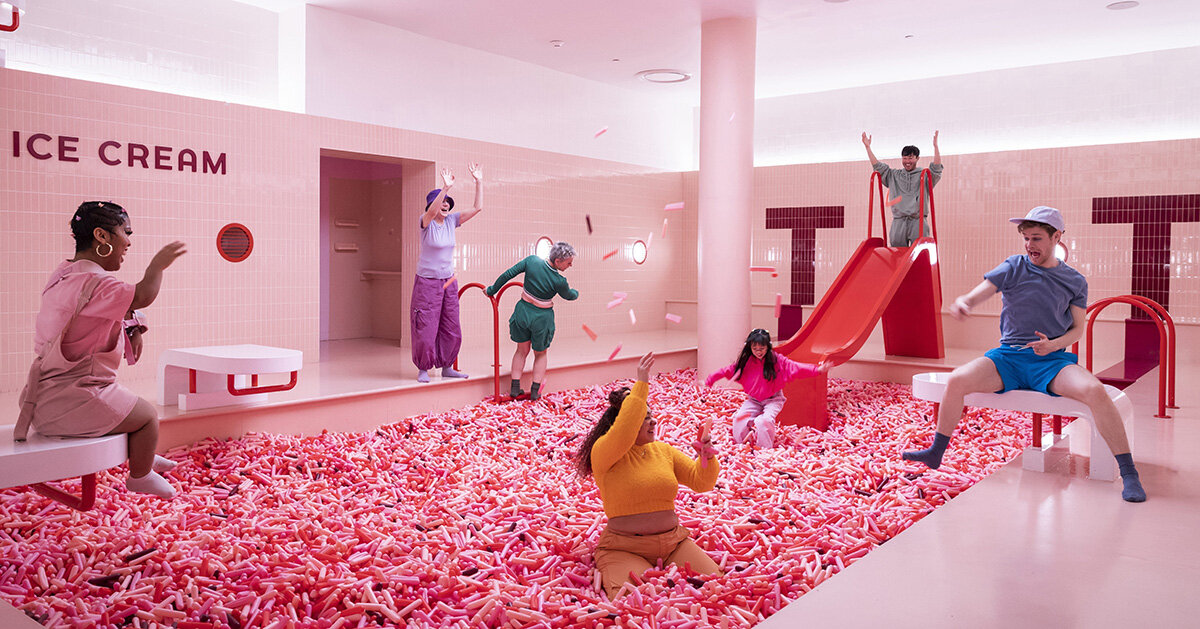
The Museum of Ice Cream operates through an entirely different visual language, utilizing bold color palettes, playful environments, and participatory installations to curate a sequence of sensory experiences that are exceptionally easy to capture and share online. These venues have cemented their place within a broader category of attractions that expertly borrow the spatial language and cultural authority of traditional museums while operating almost entirely through participation, spectacle, and entertainment.
Their surging popularity is fascinating because it suggests that the museum has become a powerful cultural format even when there is no permanent collection or historical artifact at its center. This distinction matters deeply because the word “museum” carries heavy expectations. It traditionally suggests rigorous collections, preservation, academic research, public education, and intimate encounters with objects that possess a tangible history stretching far beyond the duration of a single visit.
Places built entirely around optical tricks or themed commercial environments offer a very different kind of value—one rooted in social experience, play, spectacle, and the opportunity to curate digital representations of oneself inside a stylized space. While that experience can be enjoyable and expertly crafted, it often leaves very little to investigate once the initial illusion has been understood and the smartphone photograph has been successfully captured and uploaded.
The Rise of Immersive Exhibitions
Of course, there are many interactive art installations where the dynamic is quite different. An artwork can be highly photogenic while simultaneously giving visitors profound concepts to ponder, whether through unusual material choices, pressing social questions, sharp environmental propositions, or physical experiences that fundamentally alter how individuals perceive and navigate spatial architecture.
In those instances, the photograph is merely one fleeting trace of a much larger, more complex encounter. The captured image may circulate widely across social media platforms, but there remains another substantive layer of meaning that stays with the visitor long after they have left the building.
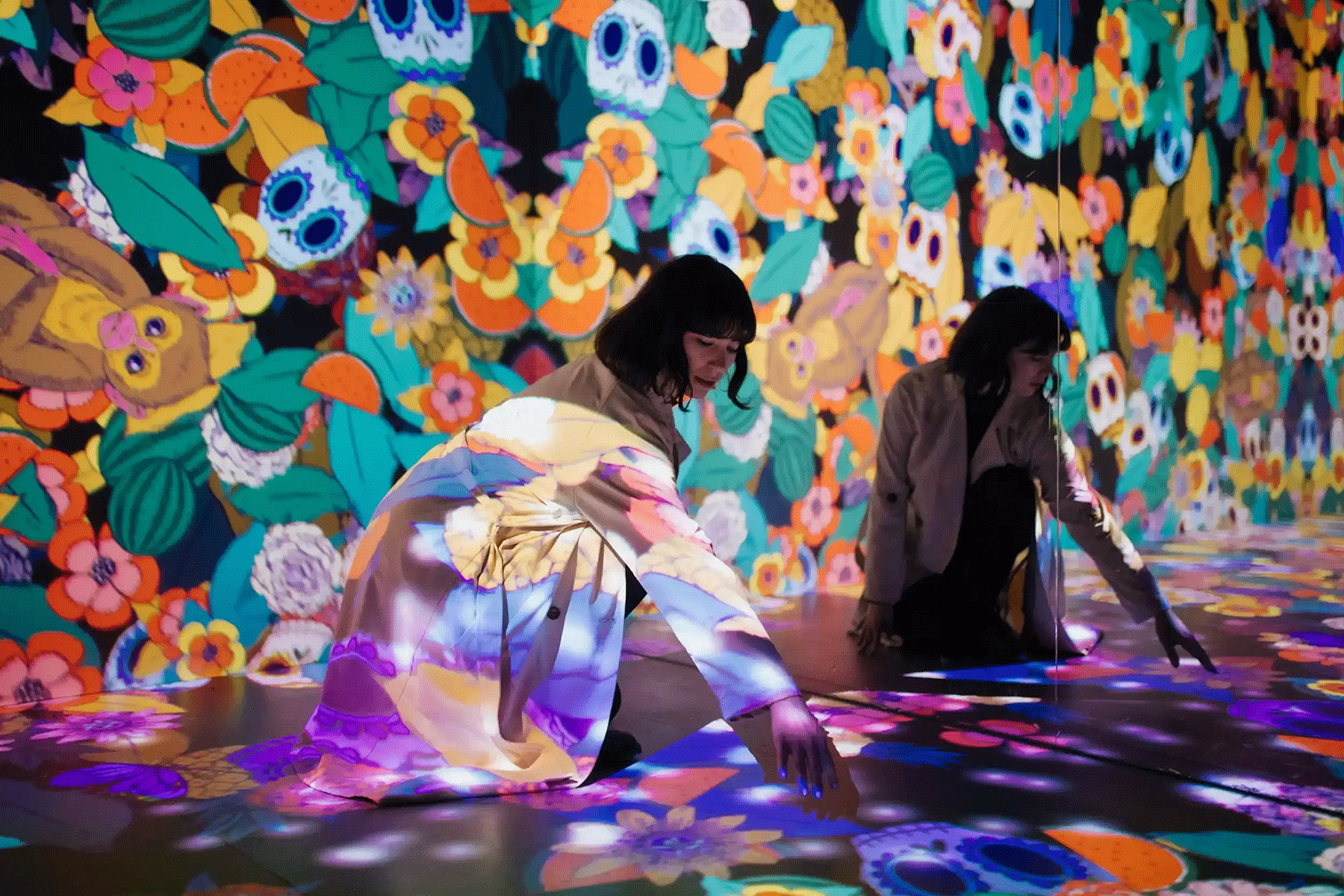
This critical distinction becomes glaringly apparent with the current wave of blockbuster immersive exhibitions built around historical masters. In cities around the globe, touring digital experiences have taken iconic works by legendary painters such as Vincent van Gogh, Claude Monet, and Frida Kahlo, transforming them into massive, large-scale projected environments. These exhibitions completely surround visitors with moving digital images, synchronized musical scores, and dynamic animations.
Paintings that the average person already instantly recognizes from art history textbooks, computer screens, and commercial reproductions are suddenly enlarged until they assume architectural proportions, inviting the visitor to step directly inside the imagery. The practical appeal of this approach is obvious. A host city does not need to own a multi-million-dollar collection of authentic Van Gogh or Monet paintings to host a commercially viable exhibition based on their artistic legacy.
Furthermore, visitors who might never have the financial means or opportunity to travel to major international art institutions can encounter a facsimile of an artist’s visual language much closer to home. The temporary and touring nature of these blockbuster exhibitions also makes them remarkably easy to distribute logistically, with the exact same basic format moving seamlessly from one metropolitan center to the next.
This digital format feels immediately familiar to contemporary audiences for another fundamental reason. Most people already encounter fine art primarily through glowing screens, where digital images can be effortlessly enlarged, cropped, animated, and accompanied by customized soundscapes. Immersive exhibitions simply take this everyday mode of looking and expand it to a staggering architectural scale.
A traditional painting effectively becomes a digital screen, that screen expands to become the entire room, and the visitor steps directly inside an environment constructed from imagery they may have already viewed hundreds of times online. That deep-seated familiarity is a core component of the commercial attraction.
Visitors face virtually no cognitive barrier in recognizing Vincent van Gogh’s The Starry Night, Claude Monet’s Water Lilies, or Frida Kahlo’s most frequently reproduced self-portraits. The immersive exhibition capitalizes instantly on this pre-existing cultural recognition, bypassing the need for visitors to spend time learning how to look at or contextualize a difficult work of art before the experience begins. The paintings are already universally familiar, and the exhibition successfully translates that familiarity into kinetic movement, heavy atmosphere, and immersive scale.
What Happens to the Original
This radical technological transformation changes the visitor experience in ways that can be genuinely engaging and emotionally resonant. A projected painting transitions from a static object viewed from a respectful distance into an all-encompassing physical environment.
The combination of enveloping sound, fluid movement, and shifting imagery can produce a visceral emotional response that a traditionally displayed painting might not instantly provoke for every casual museumgoer. For someone encountering a historically significant artist for the very first time, this type of spectacle can even serve as an accessible entry point, sparking a genuine curiosity to discover more about the artist’s actual life and career afterward.
At the same time, something vital is inevitably lost in the translation. When The Starry Night is converted into a rolling, animated projection cast across a massive drywall surface, the tangible, physical qualities of the original painting vanish entirely. The distinct impasto brushstrokes, the physical thickness of the oil paint, the tactile texture of the woven canvas, and the subtle variations in color that only become visible to someone standing mere inches away from an authentic masterpiece are no longer accessible. The actual physical dimensions of the painting are erased, taking with them the intimate scale that Van Gogh carefully chose when he originally applied paint to canvas.
An authentic painting also possesses its own unique sense of chronological time. It remains entirely still, leaving the viewer to decide where to cast their gaze, which fine details to notice, and how long to remain standing quietly in front of the frame. An immersive digital projection, by contrast, dictates the experience entirely.
When the night sky physically swirls, intricate details appear and disappear on cue, lighting shifts dramatically across the room, and curated music guides the emotional cadence, the traditional relationship between viewer and artwork is completely upended. While this format can certainly be absorbing, it forces the viewer to experience art through passive movement and atmospheric manipulation rather than the quiet, contemplative act of looking at a physical object.
This dynamic makes the distinction between an original work of art and its digital interpretation remarkably easy for the public to overlook. After spending half an hour surrounded by towering, animated projections of Van Gogh’s oeuvre, it is entirely understandable why a visitor might walk away feeling as though they have truly experienced Van Gogh, even though they have merely encountered high-resolution digital projections—a fundamentally different phenomenon from standing before the actual paintings. The experience itself is certainly real, but it is an engineered experience built around the artwork, utilizing an entirely different medium and set of technological tools to shape human perception.
How the Experience Is Shared
The modern touring exhibition model also fits seamlessly into the mechanics of how contemporary cultural experiences circulate online. A photograph of a visitor standing beneath a colossal projection of The Starry Night neatly communicates three things at once: a universally recognized painting that provides immediate cultural validation, a human figure that gives the massive room a sense of scale, and an architectural space designed for pure spectacle.
That exact image functions simultaneously as a personal souvenir for the attendee and as a digital invitation to anyone encountering the exhibition for the first time through a smartphone screen. This underlying economic and social logic directly influences the physical design of the exhibition space itself.
Entire rooms are strategically arranged around specific viewing axes, installations are engineered to depend on where a visitor stands for maximum visual impact, and interactive moments are explicitly conceived with the final photograph or video in mind. Consequently, the contemporary visitor navigates the physical space while simultaneously acting as the producer of its most widely distributed marketing material.
Standing inside a projected rendering of The Starry Night can undoubtedly be a striking visual event, but it remains a fundamentally different encounter from standing quietly in front of Van Gogh’s actual painting. What the audience gains is total immersion; what is sacrificed is the specific material reality and historical authenticity of the work itself.
The exact same contradiction emerges in commercial venues that borrow the word “museum” for experiences built entirely around play, optical tricks, and social participation. A Museum of Illusions can be appreciated and understood entirely on its own terms, just as an immersive digital exhibition can offer a compelling pathway into an artist’s creative world.
Yet, when vastly different cultural experiences are all presented under the broad umbrella of a museum, the conceptual distinctions between them become increasingly blurred. An immersive digital exhibition, an interactive optical installation, and a playful commercial attraction can all generate memorable moments for the public, but they achieve those reactions for fundamentally different reasons.