





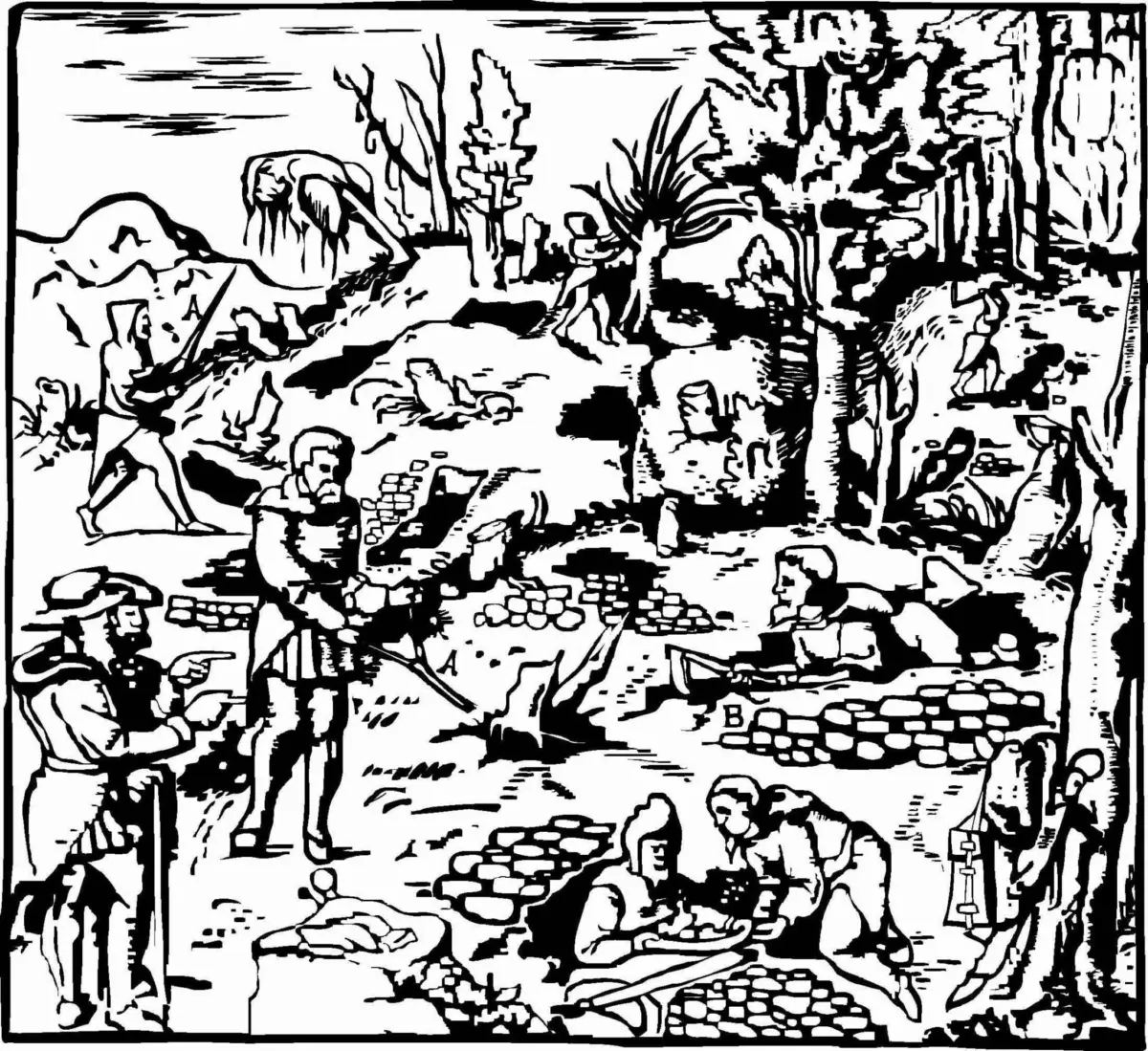
For centuries, precious stones were viewed primarily through the lenses of wealth, decoration, barter, and magic. In the earliest written records of human history, gemstones rarely took center stage; instead, they played an auxiliary role, mentioned as symbols of power or objects of adoration. It was not until the philosophical revolution of ancient Greece that the physical world and its constituent parts became recognized as subjects worthy of systematic study and documentation.
Through the philosophical divisions established by Aristotle, the natural world was categorized into fundamental elements: earth, water, air, fire, and ether. This framework allowed scholars to finally classify gemstones, record their properties, and catalogue the vast body of legends and folklore surrounding them. As scientific understanding progressed, the dual disciplines of mineralogy and gemology were born, evolving from a mix of ancient superstition and observation into precise modern sciences.
Origins
The foundational journey of gem literature began in antiquity. Theophrastus, a student of Plato and the successor to Aristotle as the head of the Peripatetic school of philosophy, authored Peri Lithon (Of Stones), the first known treatise dedicated entirely to gems. While only a fragment of this original work survives, its unique blend of Aristotelian physics and metaphysics served as the source for centuries of subsequent lore.
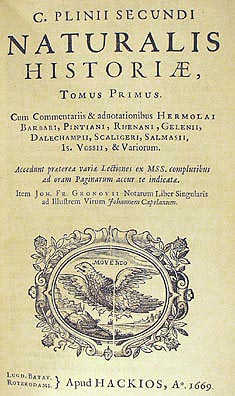
Centuries later, the Roman author and historian Gaius Plinius Secundus—widely known as Pliny the Elder—compiled the monumental thirty-seven-volume Naturalis Historia (Natural History) in 77 A.D. Drawing from an estimated two thousand sources, Pliny’s encyclopedic work embraced astronomy, geography, meteorology, fine arts, and human relations, ultimately standing as a vital chronicle of first-century life.
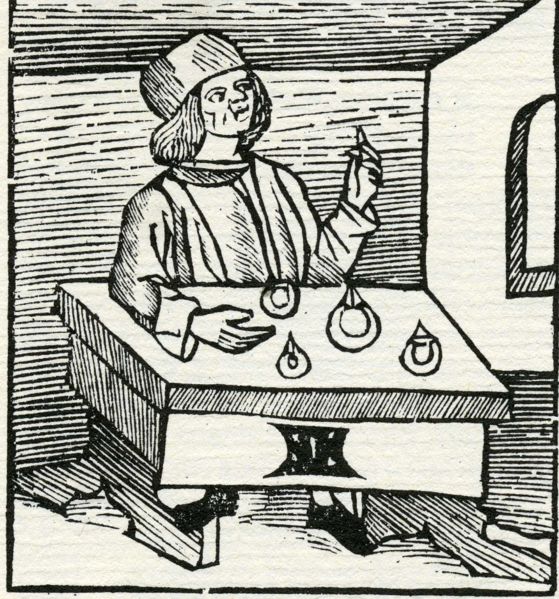
Much of Pliny’s information on gemstones, however, relied on second-hand accounts and lost oral traditions rather than direct observation. Stones were frequently grouped together based simply on color, mining locations, or mythical attributes. For instance, Pliny classified nearly all green stones under the Latin term smaragdus, grouping emeralds, green sapphires, turquoise, malachite, jasper, and even glass into a single broad category. Despite these generalized groupings, he also made groundbreaking observations, such as recognizing the fundamental connection between beryls and emeralds. Over two hundred and fifty editions of his classic work have since been published in multiple languages, cementing his profound influence on medieval European thought.
Christian Lapidaries
As Christianity spread across Europe, scholars began harmonizing traditional beliefs about gemstones with Biblical texts. Saint Epiphanius, Bishop of Constantia in Cyprus, penned the first treatise addressing the gemstones mentioned in Scripture, setting a precedent for future Christian lapidaries. His work provided early interpretations regarding the composition and significance of the twelve stones found on the Breastplate of Aaron and the foundations of the New Jerusalem.
Even as the Church banned pagan practices, deep-rooted beliefs in the supernatural powers of precious stones persisted among the populace. By centering scholarly focus on Biblical lists of gems, medieval writers successfully legitimized this enduring fascination.
This trend reached a high-water mark with Marbod, the eleventh-century Bishop of Rennes, whose poetic work Libellus de lapidibus (Lapidaire en Vers) became the most widely quoted and influential lapidary of the Middle Ages. Consisting of hundreds of hexameters detailing various stones, Marbod’s work heavily emphasized magical and medical properties inherited from earlier writers like Solinus and Isidore of Seville.
Simultaneously, prominent thinkers sought to bridge faith and reason. Albertus Magnus, a 13th-century Dominican friar and teacher, made significant strides in organizing mineralogy in his treatise De Mineralibus, attempting to explain mineral formation and coloration while retaining traditional mystical elements. Around the same time, King Alfonso X of Castile and Leon pioneered the study of astromineralogy, linking gemstones directly to celestial bodies and the zodiac in heavily illustrated texts that influenced European thought for centuries.
Introduction of the Scientific Method
The dawn of the 16th century marked a pivotal shift toward empirical observation. Camillus Leonardus, an Italian physician, published Speculum Lapidum in 1502, applying more rigorous standards to physical properties such as hardness, specific gravity, and color.
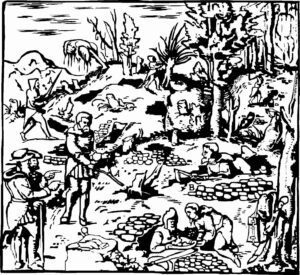
Shortly thereafter, Georgius Agricola, widely celebrated as the father of mineralogy, published De Natura Fossilium in 1546. Agricola provided remarkably accurate descriptions derived from first-hand study, incorporating scratch tests for hardness and precise accounts of physical flaws that hold up remarkably well under modern standards.
His work was complemented by Conrad Gesner’s 1565 compilation De Omne Rerum Fossilium, which featured the first known woodcut illustrations of crystals, fossils, and cut gems in a mineralogical text. However, Gesner’s writings also reinforced traditional misnomers—such as calling tourmaline "Brazilian emerald"—a nomenclature that stubbornly persisted within the commercial jewelry trade.
Anselmus Boëtius de Boodt, physician to Emperor Rudolph II, introduced a five-tier hardness scale and speculated on atomic mineral structures in his 1609 work Gemmarum et Lapidum Historia. De Boodt displayed a distinct skepticism toward the supposed magical and medicinal virtues of gems, elevating the scientific rigor of the field.
The publication of Ulyssis Aldrovandi’s Musaeum Metallicum in 1648 marked the formal introduction of the term geologia (geology) and symbolized a permanent fracture in the discipline: the romantic lore of gemstones separated definitively from the empirical science of mineralogy.
Modern Gemology
By the 18th century, mineralogy and geology were fully adopted as empirical sciences, driven by specialized tools and meticulous experimentation. Gemology itself, however, remained closely tethered to the retail jewelry industry, where the romance and folklore of precious stones continued to drive commerce.
This dynamic shifted in the late nineteenth and early twentieth centuries through the efforts of Dr. George Frederick Kunz. Serving as a gemological expert for Tiffany & Co. and curating collections for the American Museum of Natural History, Kunz balanced technical mineralogy with popular compilations of ancient gemstone lore, such as The Curious Lore of Precious Stones.
Professionalism in the trade reached new heights in 1931 when Robert M. Shipley founded the Gemological Institute of America, followed by the American Gem Society in 1934. These institutions established standardized educational frameworks, consumer protections, and ongoing scientific research through publications like Gems and Gemology.
Today, after more than two millennia of inquiry, the complementary paths of science and mysticism continue to intersect. While modern physics, chemistry, and mineralogy have unlocked the precise atomic structures of the earth’s treasures, the enduring human fascination with the beauty, history, and perceived energies of gemstones remains as vibrant as ever.