





In the intricate lexicon of decorative arts, design history, and heraldry, terminology often carries centuries of linguistic evolution and cultural symbolism. Among the many terms used by historians, curators, and antique jewelry experts to describe the precise arrangement of motifs is the word "addorsed." Derived from the French word adosse, which translates to lean, the term describes a specific composition in which two animals, human figures, symbols, or inanimate objects are placed back to back.
While the concept may appear simple at first glance, its visual impact and historical resonance are profound. The addorsed motif has served as a cornerstone of artistic expression for generations, crossing the boundaries between medieval heraldry, architectural ornamentation, and high-end antique jewelry manufacturing. To fully understand how this technique functions in decorative arts, experts often point to its dual life: first, as a powerful statement of symmetry and heraldic authority, and second, as a clever device for makers’ marks, signatures, and cryptographic trademarks utilized by legendary master jewelers.
The origins of the addorsed arrangement are deeply rooted in the traditions of heraldry, the formal system of visual identification that flourished during the Middle Ages. In heraldic design, animals, mythical creatures, and inanimate objects were frequently arranged in strict geometric and symmetrical relationships to communicate lineage, allegiance, power, or virtue. When lions, lambs, eagles, or other beasts were placed back to back, the design achieved a distinct visual balance that drew the viewer’s eye outward from a central axis while maintaining a cohesive, unified composition.
Beyond its aesthetic appeal in coats of arms and stone carvings, the addorsed concept found a uniquely intimate and sophisticated application in the world of fine jewelry. As jewelry manufacturing evolved from local artisanal guilds into renowned international houses during the nineteenth century, makers sought increasingly refined ways to sign their work, protect their intellectual property, and leave a permanent mark of authenticity on precious metals and gemstones. This necessity gave rise to sophisticated maker’s marks and trademarks that relied on mirrored lettering, monogrammatic symmetry, and addorsed letterforms.
One of the most historically significant and celebrated examples of the addorsed motif being utilized in jewelry signatures can be found in the work of the legendary nineteenth-century Italian archaeological revivalist firm, Castellani. Operating primarily out of Rome, the Castellani family revolutionized the jewelry world by resurrecting ancient Etruscan, Roman, and Greek metallurgical techniques, such as granulation and filigree, creating pieces that were simultaneously ancient in inspiration and thoroughly modern in execution.
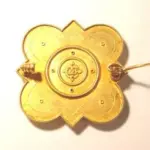
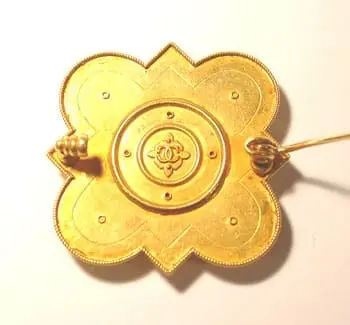
To sign their masterworks, the Castellani firm famously employed a distinctive maker’s mark featuring back-to-back, or addorsed, letter C’s. Dating back to approximately 1880, this iconic hallmark became a hallmark of quality and authenticity, identifying pieces crafted by one of the most influential jewelry houses of the Victorian era. The choice of addorsed letters for a signature was not merely decorative; it provided a balanced monogram that could be subtly stamped onto the reverse of a brooch, the interior of a ring, or the clasp of a necklace without disrupting the overall artistic integrity of the piece.
Historians and antique jewelry authorities, such as those at Wartski—the renowned London-based firm specializing in Fabergé, antique jewelry, and works of art—frequently encounter and document these rare Castellani marks. Such hallmarks serve as crucial historical documents, allowing modern curators, collectors, and historians to authenticate pieces, trace their provenance, and understand the intricate business and artistic practices of nineteenth-century master jewelers. The addorsed C’s mark remains an enduring symbol of the Castellani legacy, bridging the gap between ancient heraldic traditions and the personal branding of master artisans.
The enduring relevance of the addorsed motif highlights the continuity of design principles across centuries. Whether observed in the stone carvings of a medieval cathedral, the painted parchment of a royal coat of arms, or the microscopic hallmark stamped into the gold of an 1880s Castellani archaeological revival brooch, the arrangement of elements back to back continues to offer a masterclass in balance, symmetry, and identity. Through the careful study of such terms and historical artifacts, contemporary scholars and admirers of antique jewelry continue to decode the rich visual language left behind by the master craftsmen of the past.