



Independent bookstores across the United States are proving that a specialized focus can be a powerful retail strategy, transforming niche interests—from romance and science fiction to theater and underground zines—into vibrant commercial opportunities.
This resurgence comes at a time when the broader independent bookstore market is experiencing significant growth. According to the American Booksellers Association, more than 600 new independent bookstores opened across the country last year, marking an 87% increase year over year. Industry advocates point to a growing consumer desire for alternatives to digital algorithms, massive multi-billion-dollar investment companies, and homogeneous neighborhoods.
In its latest annual report, the association highlighted that these physical spaces offer authentic shopping experiences that align with customer values, placing a heavy emphasis on community and human connection. But beyond general neighborhood appeal, diving deep into specific subject matters is providing independent retailers with a distinct edge against big-box competitors and e-commerce giants.
Joel Goldstein, president of Mr. Checkout Distributors, noted in emailed comments that small stores can no longer win solely on selection or price. While a general independent bookstore is forced to compete directly with Amazon on every single title, a specialized shop focusing on romance, horror, or another distinct genre only has to compete on a single shelf—allowing it to go deeper into that category than anyone else. Specializing, Goldstein explained, is precisely how a small store turns its physical limitations into a distinct advantage.
One urban market that exemplifies this rise in genre-based independent bookselling is Chicago. According to data from Placer.ai, the city stands out as a top market for avid readers, having recorded an 11% increase in bookstore visits year over year. In August, Chicago hosted its largest Independent Bookstore Day on record, with more than 80 locations participating across the metropolitan area.
The success of these specialized retailers points to broader shifts in consumer behavior, particularly regarding the physical in-store experience, community building, and the cultural influence of digital platforms.
The In-Store Experience
Consumers across the United States are increasingly searching for what sociologists and retail analysts call "third spaces"—places to belong and socialize outside of their homes and workplaces. According to a report from AlixPartners, these spaces frequently take the form of coffee shops, bars, and specialized retail stores.
Over recent years, shoppers have developed a growing sense of personal involvement in the retail environment, largely driven by operational participation. Retailers have effectively trained consumers as para-store associates through technologies such as buy-online-pick-up-in-store options, interactive product request screens, inventory search engines, scan-and-go technology, and self-checkout stations.
While these tools have fundamentally altered retail expectations, they have also shifted consumer priorities back toward foundational retail basics: easy access, stock availability, clean and navigable stores, and the presence of knowledgeable staff who can offer immediate assistance. Conversely, consumers are increasingly tuning out experimental tech advancements like virtual try-ons and excessive in-store digital interfaces.
Independent bookstores are uniquely positioned to excel in the exact areas shoppers now prioritize. Genre shops are personal, typically well-organized, run lean due to modest square footage, and are deliberately curated by owners with a deep passion for the material.
Morgann Book, co-founder of media and production company Bookish Media, host of the "Off The Shelf" podcast, author of the "Well Read" newsletter, and a romance novel adaptation developer, emphasized the comforting nature of these environments during an interview with Retail Dive. Genre-focused bookstores allow visitors to walk in knowing they will feel at home and comforted, she noted.
Book pointed out that the staff working in these specialized shops are often devoted fans of the genre themselves. Whether a customer is looking for a specific trope set in a particular historical era with a precise page count, a genre-focused bookseller can navigate those nuances with ease.
Shoppers today actively seek recommendations from real people who have read the books firsthand, rather than relying strictly on automated suggestions. As Goldstein observed, an algorithm simply tells a buyer what has sold well in the past, whereas a shop owner immersed in the genre can tell a customer what is actually good.
Community, Connection, and the Influence of BookTok
Genre-based bookstores are deeply embedded within their local neighborhoods. Many function as community hubs by hosting author readings and signings, serving as gathering spaces for board game nights, housing information about local community resources, featuring artwork by neighborhood creators, and hosting themed movie and music nights.
Elizabeth Lafontaine, director of research at Placer.ai, noted in emailed comments that bookstores have experienced a resurgence in consumer interest as people look to increase their active participation in hobbies and social activities. In-person and digital book clubs are on the rise, and shoppers are actively seeking more meaningful connections with those around them.
According to Goldstein, communities first organize their demand online, and physical bookstores naturally follow to serve that established audience. The rise of BookTok—a specialized literary corner of TikTok where creators discuss books, provide reviews, share reading trends, and record emotional reactions—has played a massive role in developing these genre-based communities.
Book described BookTok as a tremendous driver of modern reading habits, shaping what people choose to read, buy, and avoid. Platforms like TikTok, Instagram, and Discord have collectively elevated the prominence of specific literary genres, dismantling long-standing cultural biases.
Marty Bauer, e-commerce and retail expert at Omnisend, noted in emailed comments that historically, specific genre enthusiasts—particularly fans of horror, romance, or fantasy—were often looked down upon and dismissed as readers of less-than-serious literature. Today, however, consumers are actively pushing back against that literary snobbery, embracing their favorite genres guilt-free.
Subcultures have increasingly become intertwined with personal identity, and genre-specific bookstores provide physical sanctuaries that validate those identities, Bauer explained, adding that these locations function just as much as spaces to socialize as they do places to purchase books.
For certain demographics, such as romance novel enthusiasts, these shops can even serve as destinations for group pilgrimages and social outings. Book highlighted that these spaces allow women to visit with friends, enjoy the atmosphere, and engage with experiential elements like themed photo mirrors, catering directly to the desires of younger generations looking for shared, tangible experiences.
Chicago’s diverse neighborhoods, combined with a deeply passionate reader base, provide an ideal ecosystem for these genre-based retail destinations. A journey through several of the city’s specialized shops illustrates how a literary niche can successfully anchor a thriving brick-and-mortar business.
A Chicago Genre-Based Book Crawl
The Understudy, located in the Andersonville neighborhood, serves as a welcoming home for actors, playwrights, and theater enthusiasts. The shop features an inventory of over 3,500 plays, technical theater manuals, fiction, and books centered on creativity, wellness, and social justice. Alongside its literary selection, the store operates an on-site cafe serving coffee, a wide variety of teas, and seasonal specialty drinks, alongside branded merchandise featuring the store’s signature owl logo. The Understudy also hosts a dynamic calendar of community events, including live concerts, writer meetups, play readings, and drag performances.
In the Wicker Park neighborhood, Quimby’s caters to fans of the independent zine culture. Tracing its origins back to the 1930s and surging in popularity during the 1970s with the widespread availability of copy machines, the zine art form relies on a do-it-yourself ethos, featuring independently published works with hand-drawn illustrations and distinctive typography. Quimby’s embraces the unusual, the aberrant, the saucy, and the lowbrow, stocking small-press zines, independent books, literary magazines, journals, chapbooks, and alternative comics. The store regularly hosts community events, art exhibits, discussion groups, and film screenings, while also offering print and design services under the name Quimby’s Ink.
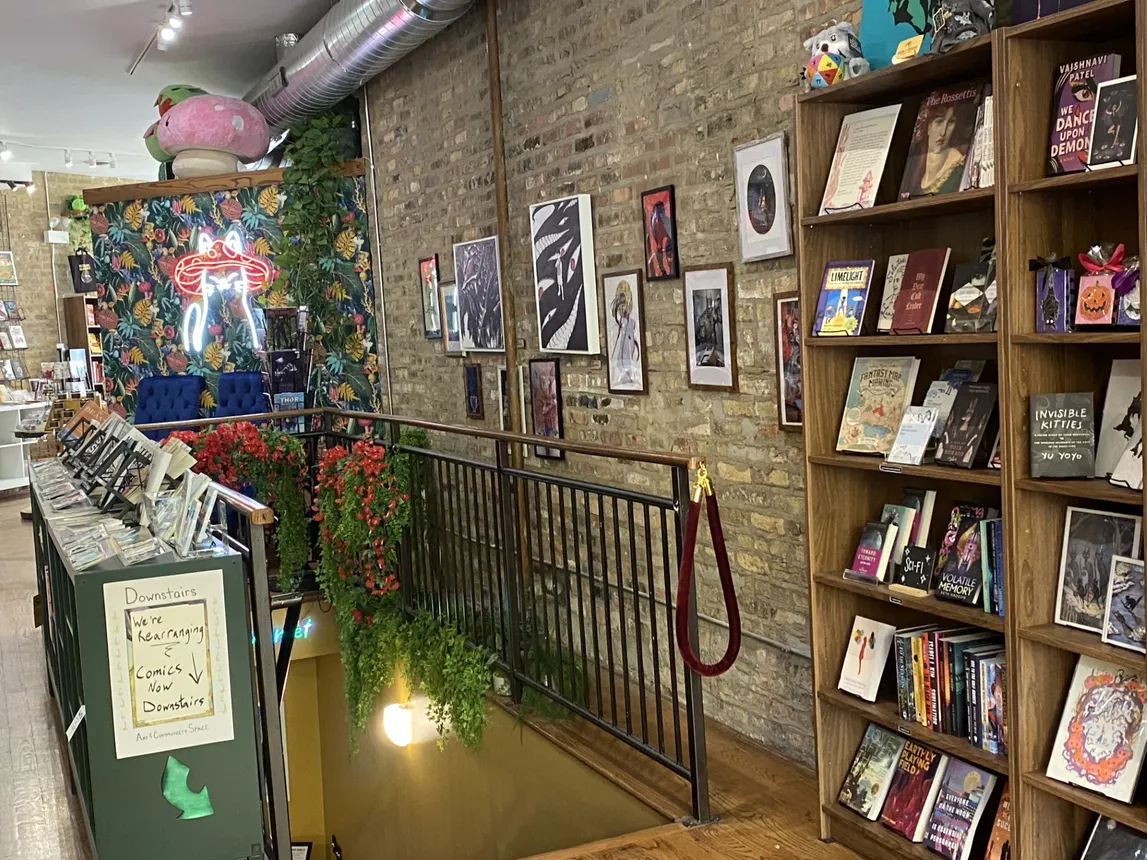
The two-level Goblin Market in Lakeview offers an extensive selection of manga, graphic novels, comics, science fiction, fantasy, horror, and LGBTQ+ literature. In addition to its literary collection, the store carries board games, collectible card games, and gaming accessories. Designed as a community-driven space celebrating storytelling and diversity, the lower level features a comfortable seating area equipped with couches and tables for open gaming. It also maintains a mutual aid shelf stocked with essential items such as whistles, hand warmers, pregnancy test strips, COVID-19 tests, toothbrushes, sanitary products, and pet food, encouraging visitors to take what they need or leave new, sealed items for others.
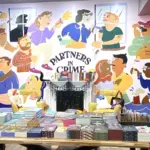
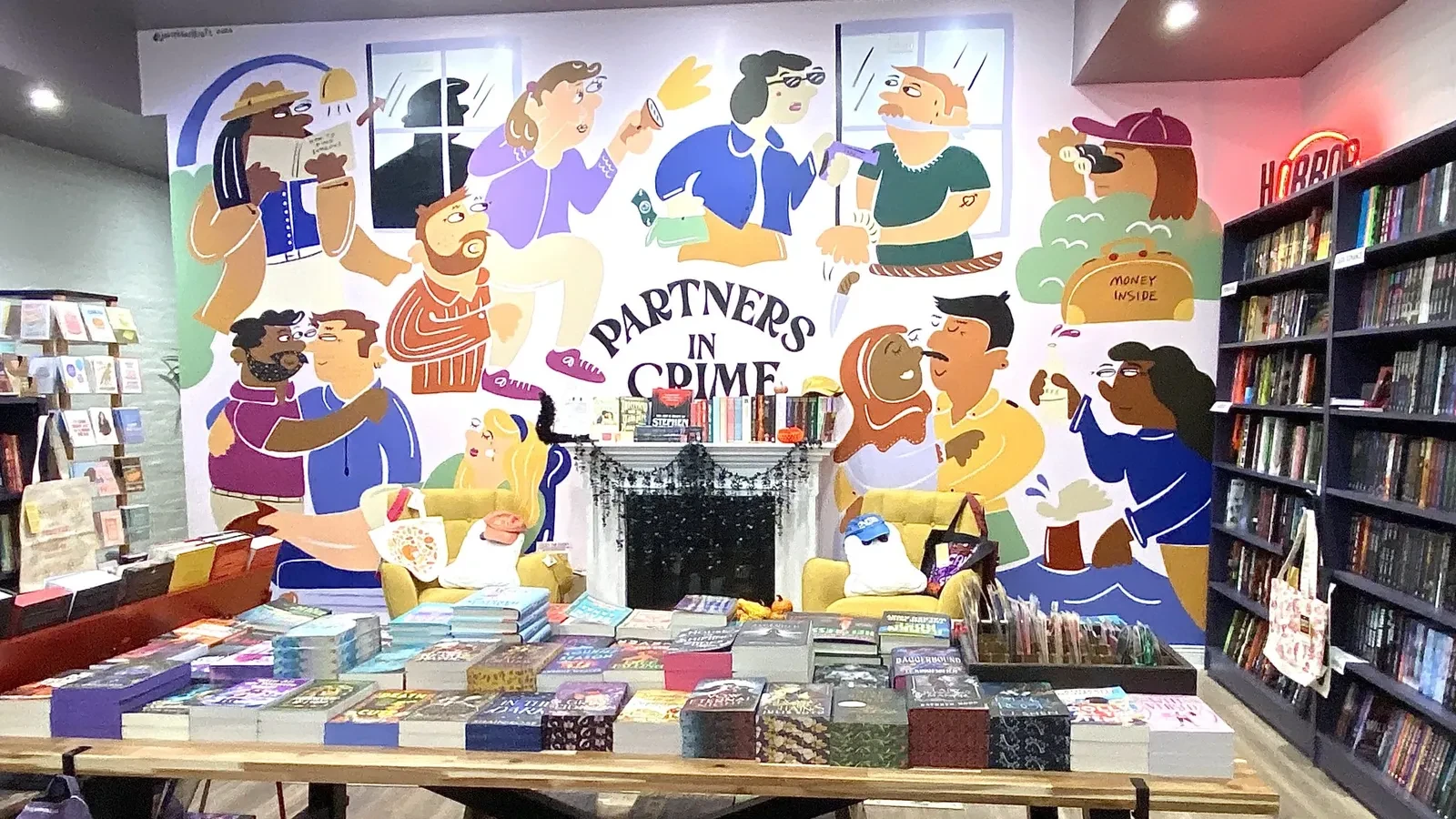
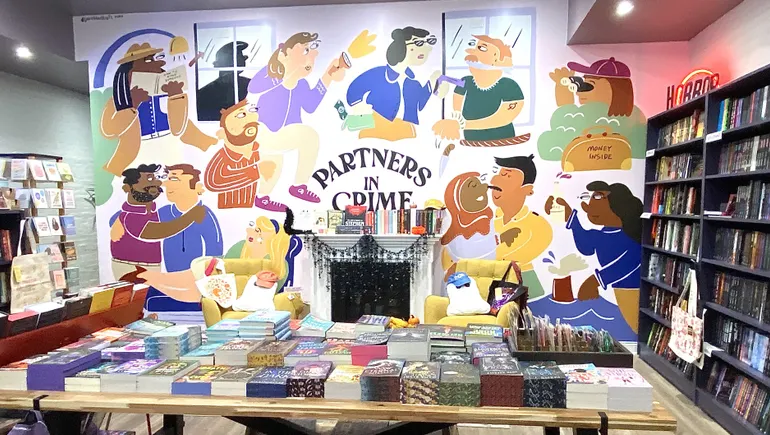
Partners in Crime, which opened this year near Irving Park, caters specifically to fans of romance and mysteries. The interior features a decorative cozy fireplace, a vibrant wall mural, and a dedicated children’s section. The shop highlights the subtle nuances within its chosen genres, organizing titles into specialized categories such as dark romance, sports romance, paranormal romance, vintage mystery, true crime, and mystery thrillers, alongside a selection of gift items like themed magnets, candles, stickers, and postcards.
Bucket O’Blood, situated in the Avondale neighborhood, focuses heavily on horror, science fiction, and fantasy. The shop sells a mix of new and used books, horror films, and new vinyl records with a strong emphasis on heavy metal, hardcore, and punk music. In addition to retail sales, the store frequently hosts listening parties, film screenings, and author events. After operating in its current space for 11 years, the store announced plans to explore a new storefront following the expiration of its lease.
Finally, AlleyCat Comics in Andersonville demonstrates how hidden literary gems can be discovered in unexpected urban corners. Tucked away behind a narrow alleyway off North Clark Street, the shop offers a broad selection of comic books, manga, games, Warhammer figurines, and collectible pins, alongside a dedicated back room featuring metaphysical products, tarot cards, and witchy supplies.