





The fashion stakes for Halloween are remarkably high, and with each passing year, the pressure to deliver a truly memorable look only intensifies. While mainstream costume shops rely on mass-produced tropes and predictable pop culture references, a much more imaginative and specialized path is frequently overlooked by the casual holiday celebrant: translating your absolute favorite runway looks into wearable art. From legendary moments like Chanel’s gravity-defying rocket-launch tweeds to the ingenious, transformable frocks of Hussein Chalayan, the autumn holiday serves as the ultimate excuse for fashion enthusiasts to let their meticulous do-it-yourself recreations run wild. For those with a deep appreciation for design history, Halloween is not merely a night for frights; it is a live-action archive where iconic fashion moments are brought back to life through clever engineering and resourcefulness.

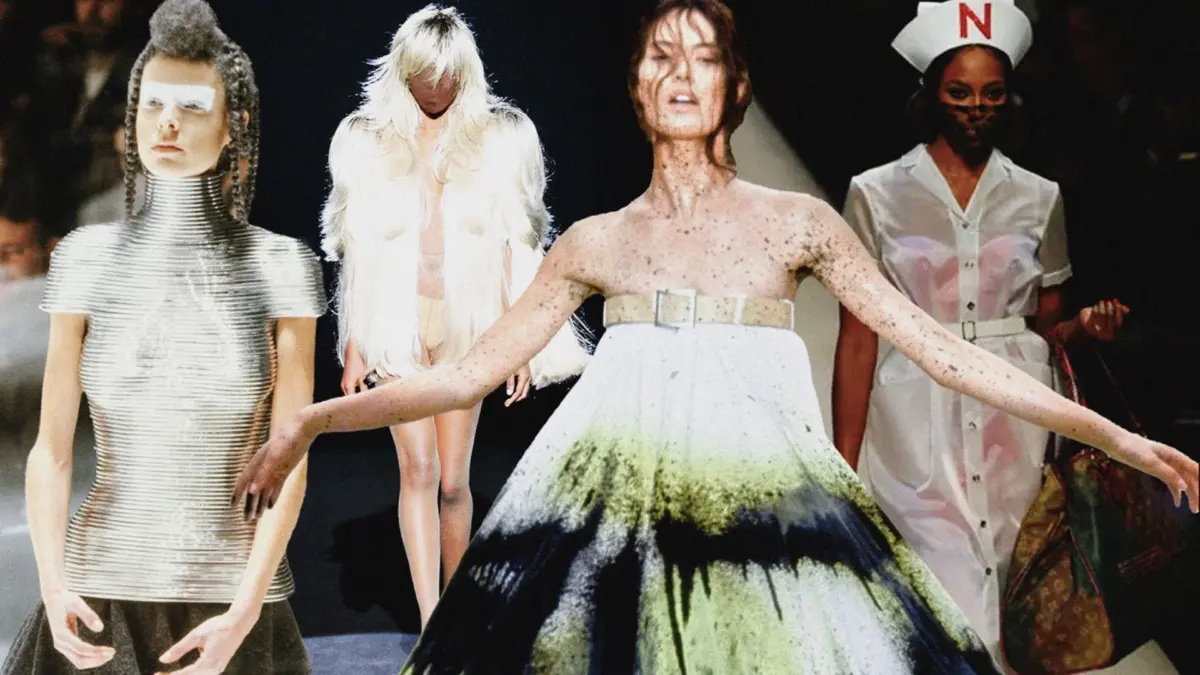
Among the community of fashion-literate DIYers, certain iconic runway moments have achieved legendary status for being both culturally resonant and remarkably accessible. A perennial favorite among low-lift options is the unforgettable finale of Alexander McQueen’s spring 1999 presentation, where supermodel Shalom Harlow spun slowly on a wooden platform while being aggressively spray-painted by two industrial robot arms. Recreating the look requires little more than a white bed sheet, a simple tan belt, and a canister of green and black spray paint, instantly transforming the wearer into a living piece of performance art. The appeal of such a reference lies in its instant legibility to fashion insiders, paired with the low barrier to entry. Other enthusiasts look to equally striking styling choices from recent decades, such as the sexy, lace-masked nurses from Marc Jacobs’s spring 2008 collection for Louis Vuitton, proving that high-fashion humor and drama can be successfully captured at home with minimal expenditure.

Yet, not everyone in the creative community is interested in taking the easy route. Over the course of a recent week, ceramicist and content creator Naomi Vizcaino set her sights on a much more formidable challenge: attempting to meticulously recreate McQueen’s intricate fall 1999 coiled aluminum corset. The original masterwork was crafted by visionary jeweler Shaun Leane, whose avant-garde metalwork recently returned to the spotlight on the runway during Sean McGirr’s spring swansong for the label. For Vizcaino, the daunting project was a labor of love rooted in a desire to interact with fashion history on a physical level. Explaining her attraction to the piece, she notes that while she will always return to the brilliant work of Leane, this particular year demanded an attempt at something she would otherwise never have the opportunity to wear in her daily life.

The construction process required a blend of traditional amateur tailoring and inventive hardware store resourcefulness. Vizcaino began with one of the most basic and reliable projects known to home sewers: a custom duct tape dress form designed to match her precise measurements. To this rigid foundation, she applied rounds of irrigation tubing sourced directly from a local hardware store, adhering them with hot glue to replicate the mesmerizing, architectural coils of the original garment. Demonstrating considerable ingenuity, she installed a zipper using additional layers of glue rather than risking damage to her sewing machine’s mechanism by running adhesive through the needle. Finally, she spray-painted the entire constructed bodice in a gleaming metallic silver finish. It is an upstart, improvisational energy that Alexander McQueen, who frequently championed unorthodox materials and rebellious craftsmanship, would likely have deeply appreciated.

This resourceful spirit is echoed across the creative industries by professionals who regularly blend their day jobs with high-fashion fandom. Set designer Laura Hughes once tackled Maison Margiela’s notorious spring 2009 wig dress, constructing the complex garment by sewing a series of inexpensive synthetic hairpieces onto a standard jacket, paired simply with drugstore tights and a pair of classic heels. Hughes explains that her objective was to curate something highly niche—a reference that true fashion historians and insiders would immediately recognize and appreciate, yet one that would remain visually striking and arresting even to those entirely unfamiliar with the original source material. The execution was aided by the fortunate coincidence that Hughes already naturally possessed blonde hair, sparing her the expense of sourcing yet another wig. Ever the committed stylist, she even completed the ensemble with a matching, delightfully absurd hairy Halloween candy bag.

Naturally, the most ideal option for achieving an authentic runway look is to bypass the DIY route entirely and go straight to the source by raiding an archive. Power stylist Karla Welch recently executed this strategy for a villain-themed birthday celebration hosted by fellow stylist Erica Cloud. Welch selected a rare red Prada ensemble from the spring 2009 ready-to-wear collection—a legendary combination featuring a crinkled bra top, matching shrug, and skirt—and paired it with whimsical devil horns to create a literal interpretation of the iconic cinematic title The Devil Wears Prada. Though the gathering was a birthday soirée rather than an official Halloween party, the conceptual crossover was unmistakable. Welch notes that she originally purchased the designer set well over a decade ago from Sielian Vintage, making the costume a relatively spontaneous triumph. Getting the horns delivered via app from a local costume shop completed the look, proving that it is remarkably easy to look iconic when channeling the devil and your wardrobe conveniently happens to be stocked with vintage Prada.

The runways remain an inexhaustible goldmine for Halloween inspiration among those in the know. Other memorable fashion-forward costumes spotted by creators like Vizcaino and Hughes include clever homages to Margiela’s spring 2006 clear packing-tape-and-flower top, as well as a daring couple who dressed up to replicate Rick Owens’s notoriously sculptural spring 2016 human backpack garments. As the holiday approaches each year, the boundaries between high art, runway spectacle, and festive dress-up continue to blur, driven by an imaginative community of designers, stylists, and creators who are always just a trip to the hardware store and a bit of industrial adhesive away from wearing museum-worthy fashion history.