






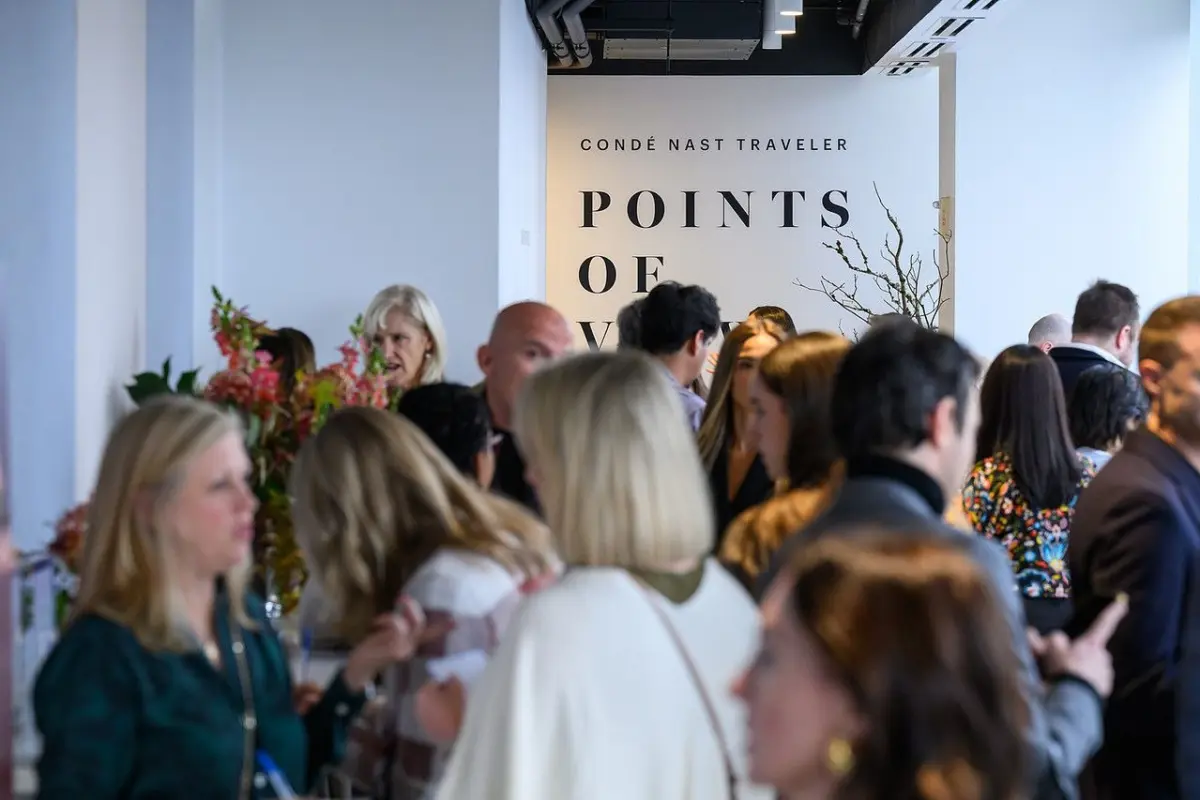
When global travel publication Conde Nast Traveler convened its 2026 Points of View Summit, the planning team was intentional about carving out dedicated space to hear directly from the industry’s behind-the-scenes architects. These are the specialized travel experts who work tirelessly to curate ambitious, deeply personal, and multifaceted itineraries across the globe. Spliced between compelling panel discussions covering subjects like Lowcountry heritage, shifting summer travel trends, and the evolving appeal of all-inclusive properties, specialized breakout sessions offered a platform for extended, in-depth dialogues between Traveler editors and premier travel designers.
From exploring culinary traditions inspired by the rich Gullah culture of Hilton Head Island to examining the changing demographics of multigenerational travel and the mindset of a new guard of ultra-luxury globetrotters, the summit provided a clear inside scoop on where modern travelers are heading and how they plan to get there.
What’s new in the world of culinary travel?
Drawing inspiration from Hilton Head Island’s tapestry of deep-rooted culinary traditions, senior features editor Megan Spurrell and editorial assistant Skyli Alvarez led a packed discussion examining the modern pursuit of travel through taste. The conversation touched upon everything from a rising traveler interest in foraging over traditional cooking classes to the enduring contrast between big-name celebrity chefs and hard-to-find local gems. Crucially, the session mapped out the specific global hotspots that deserve a prominent place on contemporary food maps.
Across the board, the assembled specialists agreed that modern travelers intensely yearn for "authentic" food moments. However, defining authenticity—and actually tracking it down in an increasingly homogenized global landscape—can often prove tricky.
To Omolola Campbell, a sixth-generation Gullah descendant and the executive producer of the Gullah short documentary The Spirit We Move With, true authenticity is fundamentally about who provides the experience. "Taking a cooking class is much different than getting it from a local chef who can tell stories about why a dish means so much to this locality," she noted during the session.
Campbell explained how many traditional dishes from South Carolina’s Gullah community prominently feature okra because its seeds were historically sown into the hair of West Africans brought to the American South through the horrors of the slave trade. Over generations, the resilient plant has evolved to represent profound cultural endurance. According to Campbell, it is precisely that integral historical context that infuses a meal with soul. "That’s how you differentiate the person who really knows why they’re cooking what they’re cooking," she concluded.

What does multigenerational travel look like today?
When the conversation shifted toward the dynamics of multigenerational travel, specialists noted a fascinating generational shift: the grandchildren are increasingly choosing the destinations, while the grandparents are footing the bill. Industry experts observed that older generations view these trips as a meaningful way to leave a lasting legacy among those dearest to them.
During a discussion led by global executive director of video Dana Kravis and commerce director Madison Flager, travel specialists pointed out that because people today tend to wait longer to have children, grandparents are generally older than they used to be. Travelers in their 80s and 90s are increasingly joining complex family trips, fundamentally shifting the traditional picture of grandparents in their 70s. For trip designers, this evolution means that modern itineraries must incorporate careful layers of options catering to widely varying activity and exertion levels.
Many participants in the session agreed that the most successful family trips provide a healthy balance of independent exploration and collective gathering. Designing itineraries with three distinct choices in a single day is often ideal, allowing younger family members to be out and about before the entire group reunites for mealtimes and perhaps a shared afternoon activity. Boat and yacht excursions were particularly recommended by specialists as ideal environments where families are naturally brought together, preventing younger travelers from simply wandering off and detaching from the group experience.
Ultra-luxury travel’s new guard
What qualifies as the pinnacle of luxury to one traveler may seem entirely unappealing to another. While some vacationers long for jam-packed, once-in-a-lifetime active itineraries, others seek total disconnection and the ultimate privilege of doing absolutely nothing for an entire week. Features director Rebecca Misner and commerce writer Jessica Sulima led a lively breakout session where specialists vigorously debated the shifting definition of modern luxury.
"Luxury is being able to pass on meaning to kids [and] exposing families to the broader world and its cultures," said Virgi Schiffino Kennedy, managing partner at Lux Voyage, highlighting the intangible appeal of high-end travel.
For Ruchi Harnal, founder of Harnal Travel, true luxury "is not about the resort or the villa, but the personalization of the trip."

Regarding who is actually spending money on these elaborate journeys, Thomas Robinson, managing director at Dehouche, observed that Gen Z and Millennial travelers are increasingly inclined to spend significant sums, but they demand transparency regarding where their money goes. Furthermore, specialists noted a distinct shift away from parents taking their children on luxury vacations, with travelers in their 30s and 40s increasingly treating their aging parents to milestone getaways. In Harnal’s experience, significant birthdays and anniversaries are increasingly driving clients to book bespoke trips.
The state of play for the Euro summer
The ongoing impact of overtourism, price inflation, and rising temperatures on traditional European summer vacations was tackled in a session opened by director of special projects Lale Arikoglu and commerce editor Meaghan Kenny.
"If you’re thinking of traveling to the Dolomites, consider Switzerland instead. There’s history and beautiful scenery with fewer crowds," suggested Brian Dore, owner of CIU Travel.
For those curious about hiking, other participants added that Switzerland offers abundant one-day trekking trails and "soft adventure" options, which can easily be combined with a relaxing lake or city destination over three to four days. Specialists agreed that traveling to the Alpine region offers a significant climate advantage, as higher elevations naturally translate to cooler temperatures. Slovenia was similarly highlighted as an exceptional, less-congested alternative to Italy.
To dodge the heaviest crowds, travelers were advised to consider alternative destinations such as Belgium, Denmark, or Norway, where ocean ships and river cruises are extending their seasons by opening as early as March. For families looking for enriching European escapes, specialists recommended Umbria—noting its abundant craft workshops and festivals tailored for children—as well as Austria, Ireland, and Croatia.
For travelers determined to stick with tried-and-tested European itineraries during the peak summer months, experts advised visiting as early as possible, such as in May rather than August. When planning a trip to France, advisors recommended flying directly into Paris or Nice before immediately venturing out into the French countryside or the frequently overlooked Atlantic Coast. Above all, the specialists stressed one absolute rule: always check local seasonal temperatures well in advance of departure.

The rise of Asia
As highlighted by Mei Zhang, chairman and founder of WildChina, during the broader summit panels, global demand for travel across Asia is continuing its steady upward trajectory. Global features director Erin Florio and editorial assistant Kat Chen expanded on this theme in a dedicated breakout session focusing on the specific destinations and experiences fueling this growth.
For Zulya Rajabova, president of Silk Road Treasure Tours, and her clientele, the primary draw lies in destinations possessing deeply embedded craft identities. Locations like Samarkand in Uzbekistan, boasting millennia-old design and textile traditions, help make the Asian continent remarkably varied yet distinct. Meanwhile, Marigold Wood, a travel designer at Blonde Atlas, explained that she has increasingly recommended routes through China, such as the ancient tea horse trails of Yunnan, which offer exceptional trekking and hiking opportunities. For Ethan Crowley, lead trip designer at Asia Desk Ltd., thoroughly educating travelers on how to navigate countries like Cambodia beyond their most famous landmarks remains the key to a successful journey.
A hunger for pop culture
Building on a wave of entertainment-driven tourism, associate editor Charlie Hobbs and commerce writer Jessica Chapel helmed a breakout session exploring the sporting events, major music festivals, and art fairs driving travelers across the globe—alongside the logistical hurdles required to attend them.
High-demand events are increasingly forcing bundled purchasing models. For instance, securing access to see an artist like Pink perform at the Sphere in Las Vegas requires purchasing a bundled Venetian hotel package, while attending the Ryder Cup at Adare Manor involves navigating full-house and package buyouts.
Specialists also highlighted how limited legal protections in the United States enable extreme ticket scalping for major stadium concerts, rendering domestic events increasingly unaffordable. Stephanie Malakie, founder of Empress Travel Club, pointed to a related challenge for advisors: with an overwhelming number of events and providers, travel planners find it difficult to filter through options and identify the right fit for clients.
Rather than merely acquiring a difficult ticket, specialists agreed that the primary focus should be on curating the surrounding experience or tapping into evergreen niche experiential travel. Successful examples include attending NFL games in London, following Formula 1 races in Shanghai, combining trips to Vatican City with Papal Blessings, or touring European Christmas markets. According to Zhang, "set-jetting"—traveling to prominent film and television production locations—also offers substantial cultural value while completely bypassing the logistical headaches of peak-event ticketing.

The great outdoors
The persistent cultural fascination with spending time in nature was explored in a session helmed by travel bookings commerce editor Jamie Spain and news editor Hannah Towey, which examined nature as a form of wellness. However, the specialists offered a frank reality check regarding the romanticized fantasy of total digital detoxes.
"Guests all want to have access [to Wi-Fi] for emergency reasons at a minimum… I don’t have a single guest who wants to [fully] digital detox," observed Kate Doty, a trip designer at Geographic Expeditions.
It appears modern travelers prefer to remain connected until the specific moment true disconnection is unavoidable. Lou Lagrange, a trip consultant at Luxury Travel Advisor, added that when planning national park excursions, advisors must explicitly warn clients that internet connectivity will be absent. To bridge this gap, the group noted that services such as employing professional photographers on small expedition ships can help reduce a traveler’s psychological dependency on their personal devices.
Demand for high-end glamping remains exceptionally strong as travelers seek immersive access to natural environments paired with uncompromising luxury comforts. Furthermore, when addressing the growing frequency of extreme weather events, specialists like Doty emphasized collaborative approaches rather than writing off entire regions, working with clients to safely shelve destinations for future travel dates. For Kerri Lisa, founder of Travel Studio, navigating climate unpredictability is often a matter of reframing the unique perks of off-seasons—such as viewing a destination’s rainy period as an opportunity to experience exceptionally lush, vibrant landscapes. Ultimately, specialists agreed that welcoming a degree of playful unpredictability remains an essential component of expert itinerary design.