




Last month, renowned Danish specialty coffee company La Cabra Coffee widened its New York City footprint with the debut of its flagship café at Lantern House, a striking residential development situated directly under The High Line in Chelsea. Led by founder Esben Piper, the award-winning brand brings its celebrated perspective on Scandinavian coffee culture and minimalist design to a historically rich and architecturally unique corner of Manhattan.
The opening marks the latest chapter in La Cabra’s deliberate expansion across New York City. The company first introduced its distinct flavor profile to the city in 2021 with a cozy café on Second Avenue in the East Village. That initial venture was soon followed by a café on Lafayette Street in Soho and a dedicated roastery in Bushwick, establishing a solid operational and cultural base in the five boroughs.
Reflecting on the journey, Piper recalls visiting New York for the first time 12 years ago. Wandering through the bustling grid, he found himself imagining what it might be like to open a café in the metropolis, even though the concept felt worlds away from the company’s foundational roots in Aarhus and Copenhagen.
"In New York, there is always something that makes me reconsider my own approach," Piper says. "Having lived here and built a team here, it has now become much more personal. Each new location is an opportunity to explore another side of the city and develop what we do. With the backdrop of so many cultures and great colleges, it feels like a dream to continue to grow here."
Bridging Scandinavian Roots with New York Context
When the opportunity arose to establish a flagship location inside Lantern House, Piper was immediately intrigued, despite recognizing that the building’s distinctive aesthetic might diverge from what regular patrons traditionally associate with the brand.
"The interesting question was how we could create something that belonged in this building while still feeling like us," Piper explains. "Our Scandinavian roots are still there, but we are increasingly also becoming more open to the influences we encounter through working in other cultures."
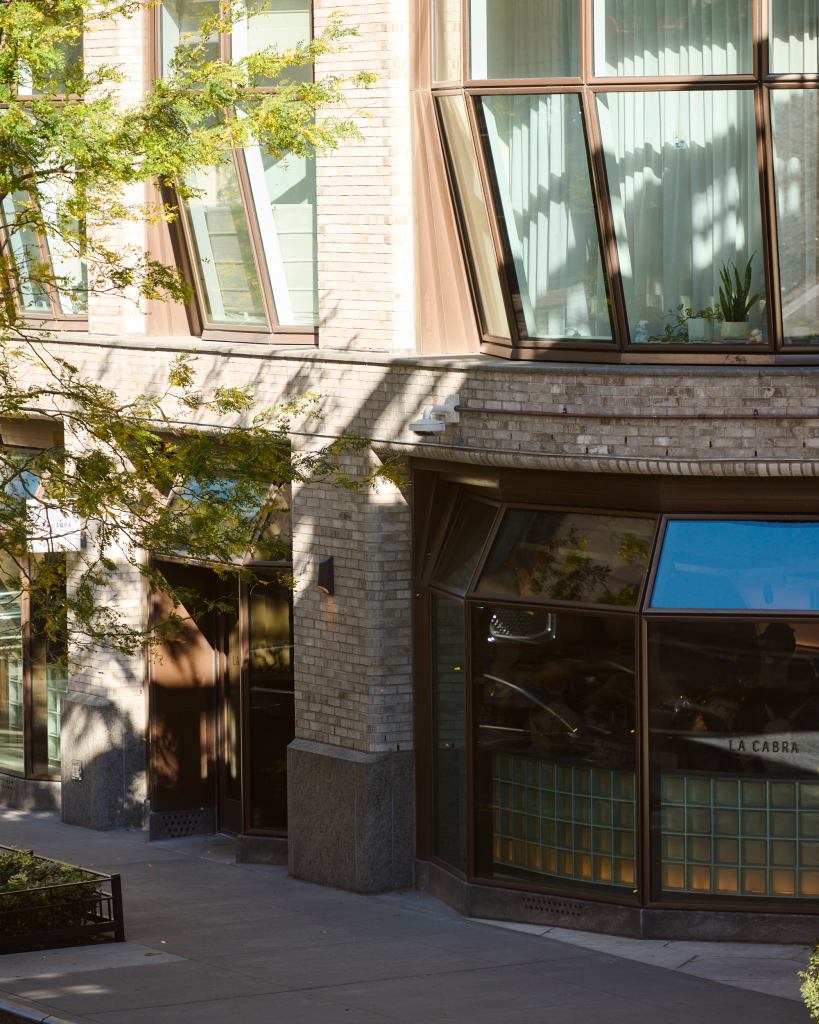
Lantern House itself commands attention along the West Side. Designed in 2021 by the celebrated Heatherwick Studio, the residential development features two distinct towers that flank The High Line. Its architectural facade is defined by expansive glass panes, vertical metal mullions, and textured brickwork that deliberately pays homage to the industrial heritage of the Chelsea neighborhood. The building’s lobby is slung dynamically between east and west, pierced by massive structural railway columns that anchor the ground-floor retail spaces.
Positioned directly beside pedestrian pathways along The High Line, the new café is uniquely positioned to introduce La Cabra to an eclectic mix of daily commuters, architecture enthusiasts, and neighborhood residents discovering the brand for the first time.
"We strive to become part of people’s everyday lives in the neighborhood," Piper notes. "Someone coming back for their morning coffee will always matter a lot to me." Now that the doors are officially open, he admits to feeling a distinct mixture of professional relief and personal excitement.
An Unexpected Architectural Vision
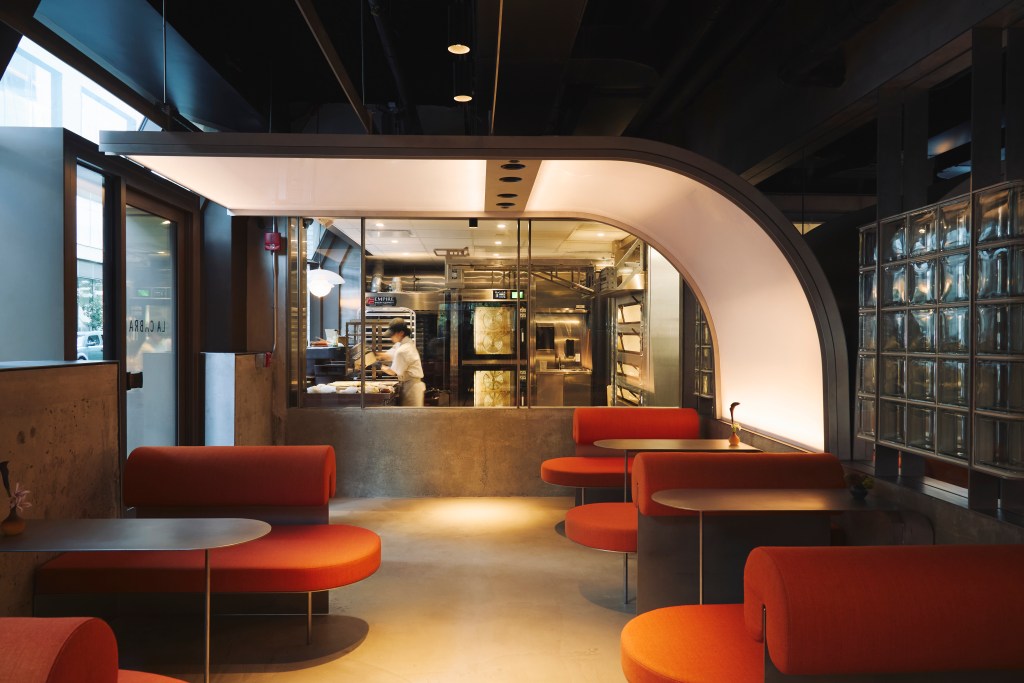
The physical reality of Lantern House heavily influenced the interior design of the café, spearheaded by La Cabra’s in-house architect, Mikkel Selmer. Because the building sits directly beneath the historic elevated railway, the visible tracks and structural infrastructure became vital references for the project.
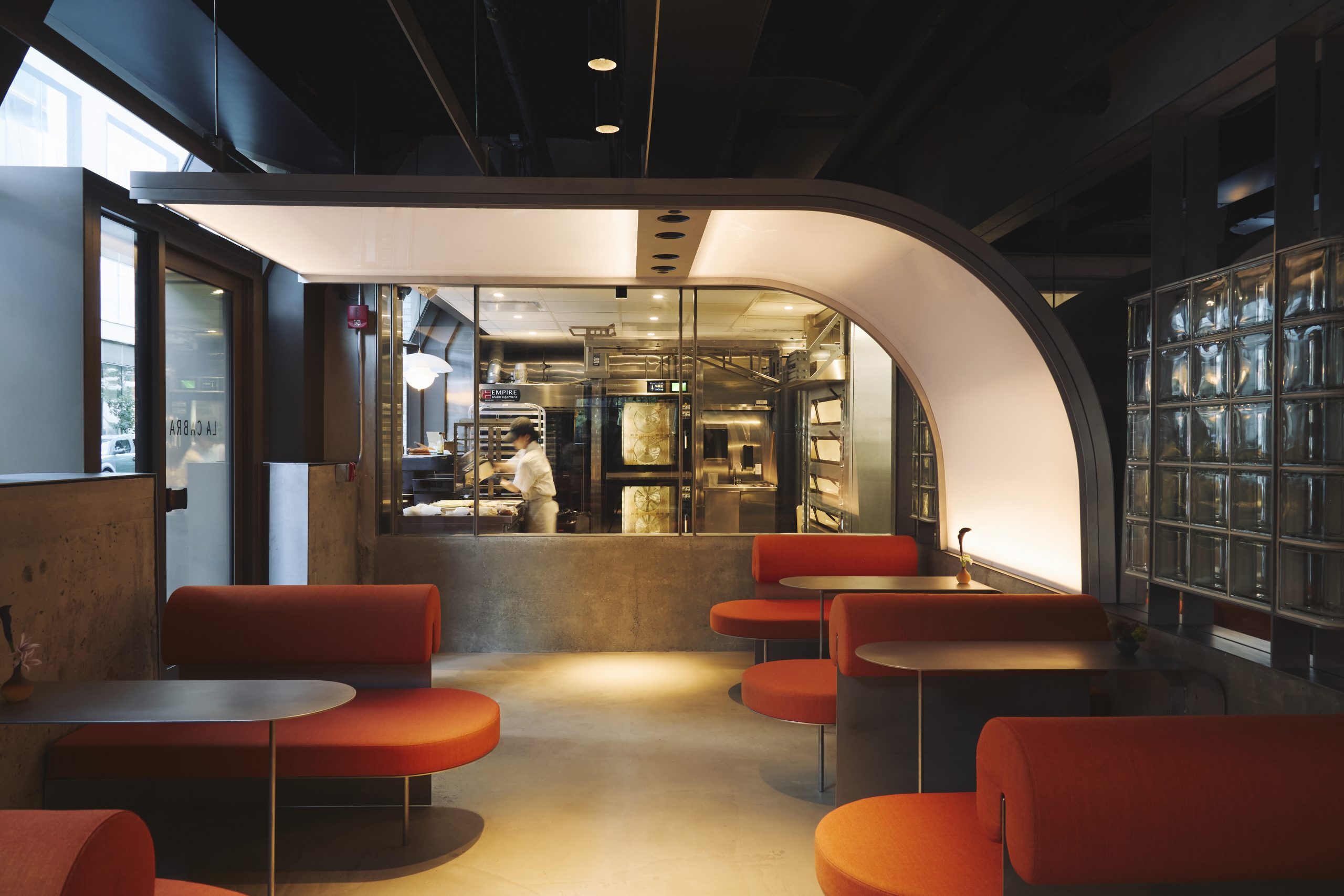
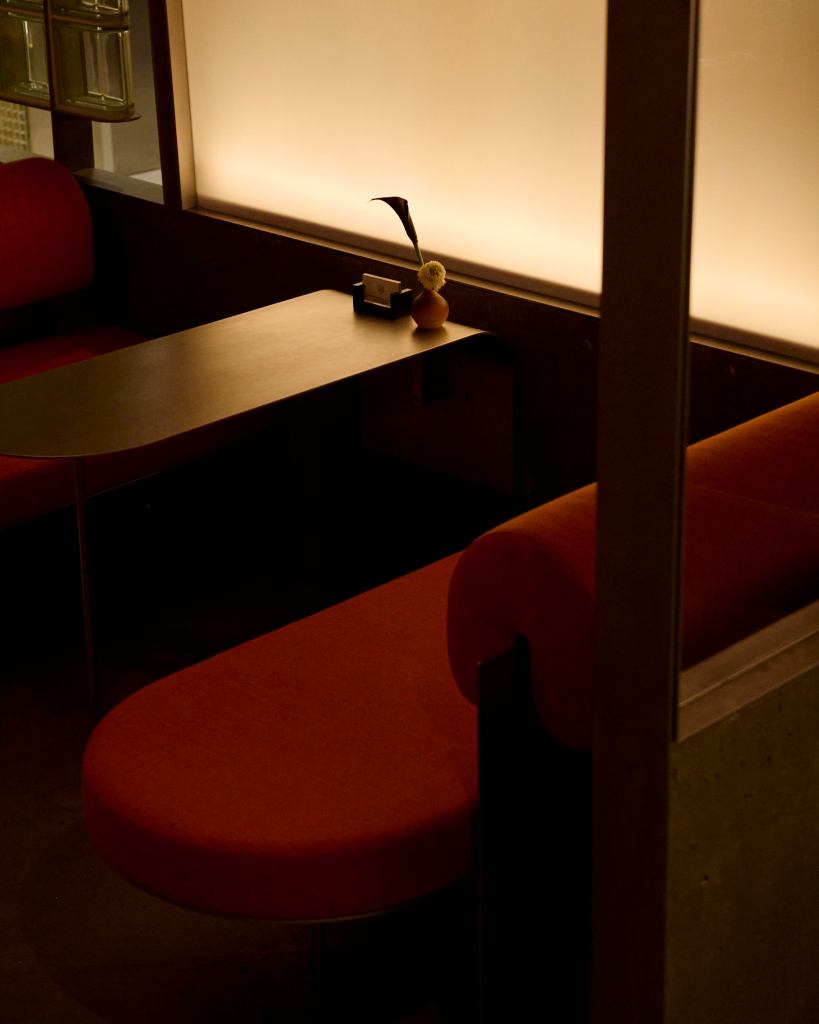
Upon walking into the café, visitors encounter a curated palette of raw materials, moving fluidly between warm wood, natural stone, metal accents, and tactile fabric upholstery. Crucially, the design team drew heavy inspiration from the textile work of renowned mid-century Danish designer Nanna Ditzel.
"I made the first sketches on a Danish IC3 train," Selmer recalls, "and somewhere in that process the train found its way into the design. You can see it in the curves, the furniture and even the upholstery, which references a textile originally designed by Nanna Ditzel for the same train."
The space also presented unusual structural quirks, including a massive concrete flood wall and complex runs of exposed ductwork. Rather than attempting to conceal these heavy industrial interventions, Selmer leaned into them, allowing the architecture to dictate the layout. The prominent flood wall now functions as an anchor for built-in furniture, effectively carving out an intimate room within a cavernous room, while the overhead pipes and ducts are integrated seamlessly into the visual composition.
Selmer notes that his design team also found inspiration during a research visit to Little Island, the imaginative floating public park on the Hudson River that was similarly brought to life by Heatherwick Studio.
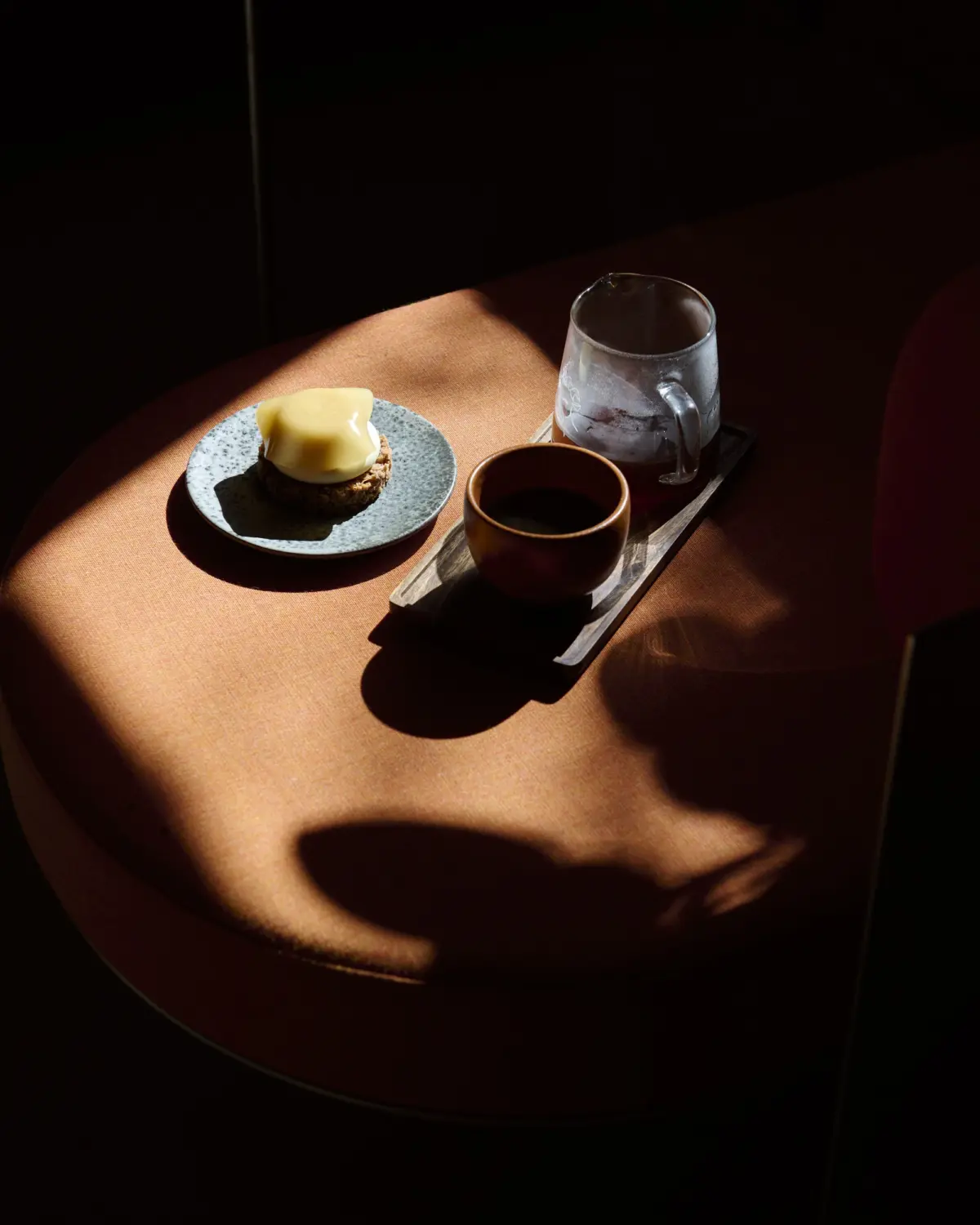
"For Lantern House, we talked about adding light to the lantern," Selmer says, emphasizing how meticulous planning shaped the emotional resonance of the guest experience. "We worked with layers of light and shadow, allowing certain elements to stand out while others almost disappear."
While La Cabra’s international portfolio—spanning Denmark, Oman, Bangkok, Madrid, and upcoming ventures in Mexico City—displays a diverse array of aesthetics, Selmer and Piper insist that every location must faithfully embody the brand’s core identity. Each project begins with a careful study of a site’s specific history, physical constraints, and neighborhood fabric.
"We work with those through our own architectural language," Selmer explains. "What remains consistent is the attention we give to the experience. Light, acoustics, materials and proportions all influence how you experience a space and ultimately, the coffee. We try to create an environment where people feel comfortable and where the architecture supports the experience rather than competing with it."
Reflecting on the final product, Selmer expresses pride in the collaborative willingness to challenge conventional café design. While Lantern House stands as their most unconventional space to date, it emerged from the exact same rigorous methodology applied across all their locations. Surveying the finished room, Selmer even notes a subtle, evocative visual parallel to the atmospheric tone of Blade Runner—a surprising stylistic association for a Scandinavian coffeehouse, but one he wholeheartedly embraces.
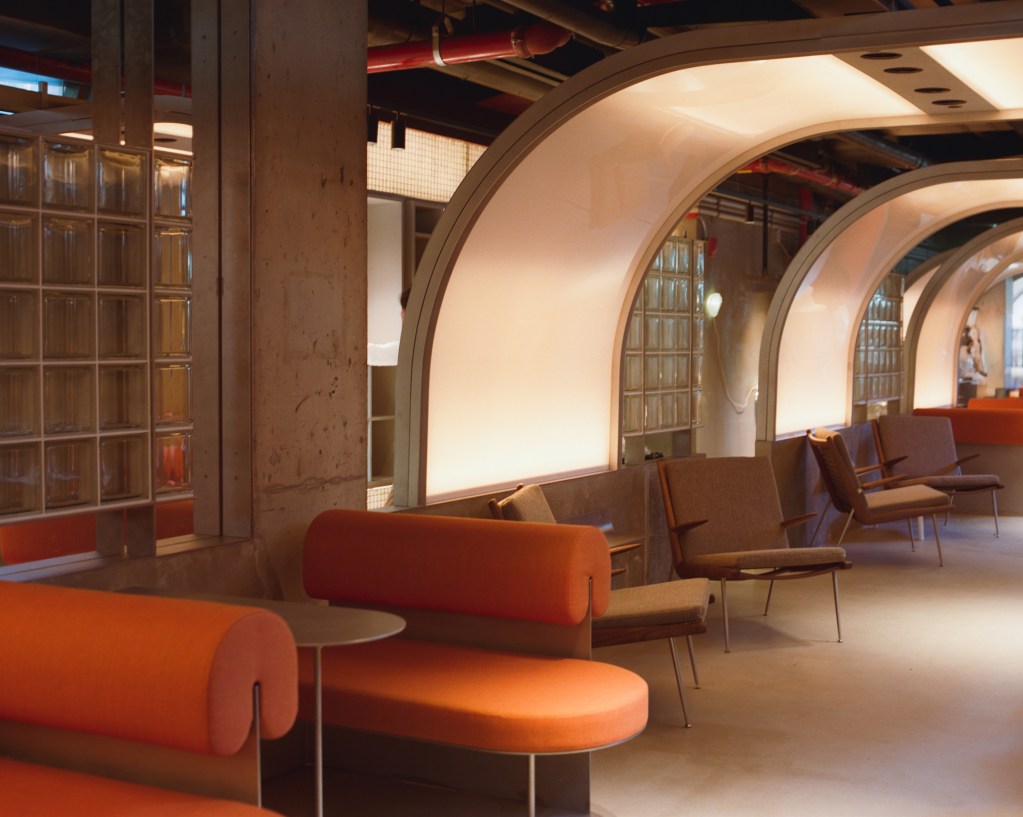
"We didn’t know exactly what the space would look like when we started," Selmer reflects. "We worked with what was there, followed the ideas that came out of it, and ended up somewhere quite unexpected."
A Menu Rooted in Craftsmanship
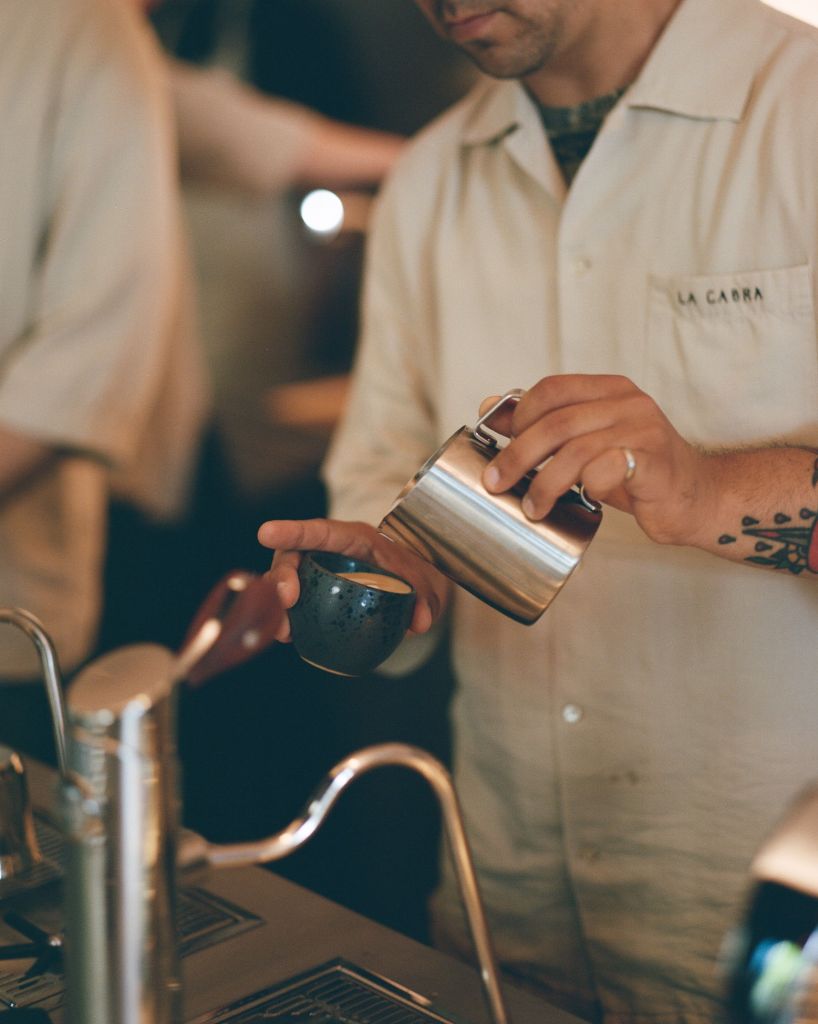
True to form, the Chelsea flagship offers La Cabra’s signature lineup of meticulously brewed pour-over coffees, precision espresso drinks, and Kettl matcha. These beverages are accompanied by a selection of house-made cardamom buns, delicate viennoiserie, and artisan sourdough bread. The coffee program continues to highlight rare, single-origin acquisitions, including washed and natural Geisha selections from producer Jose Luis Chevas in Panama, alongside rotating seasonal microlots.
For collectors and dedicated fans, the new storefront features a dedicated retail area offering an exclusive Lantern House Cup, produced in close collaboration with renowned Danish ceramic workshop K.H. Würtz.
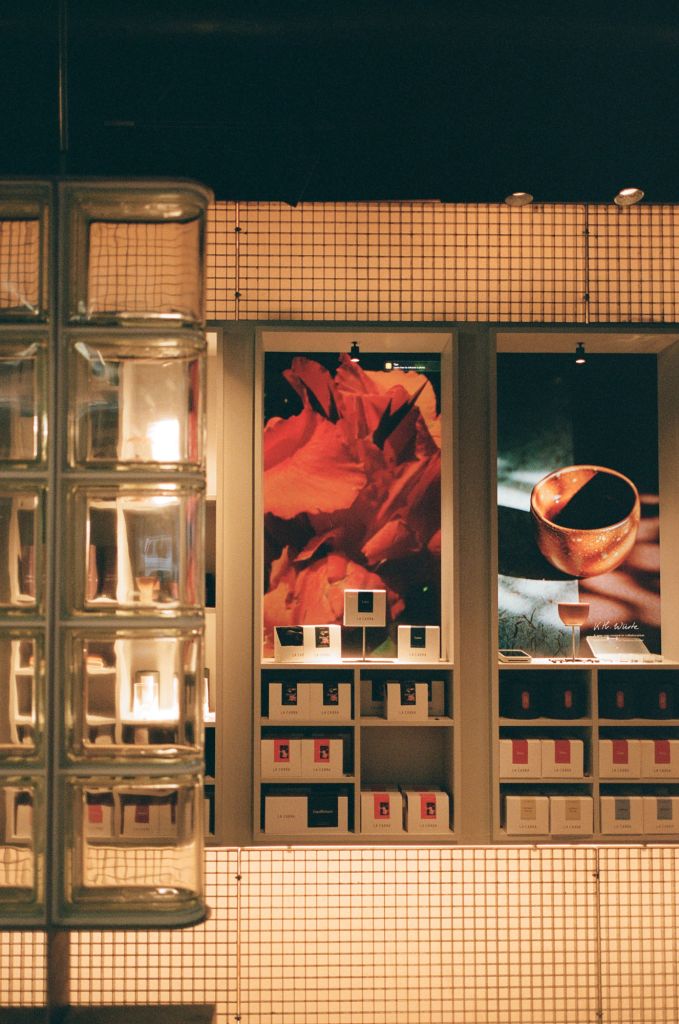
As the daily rhythm of the café settles into motion, Piper reflects on the quiet satisfaction of seeing architectural blueprints transform into a living, breathing community hub.
"There’s something very special about seeing people settle into a space you have spent so long thinking about," Piper says. "Until then, you are imagining how it might feel, which I have done a lot over the past year. Once the team is working and people are sitting together over coffee, you can finally begin to experience it. That’s usually when I can step back a little and enjoy what we’ve made."