




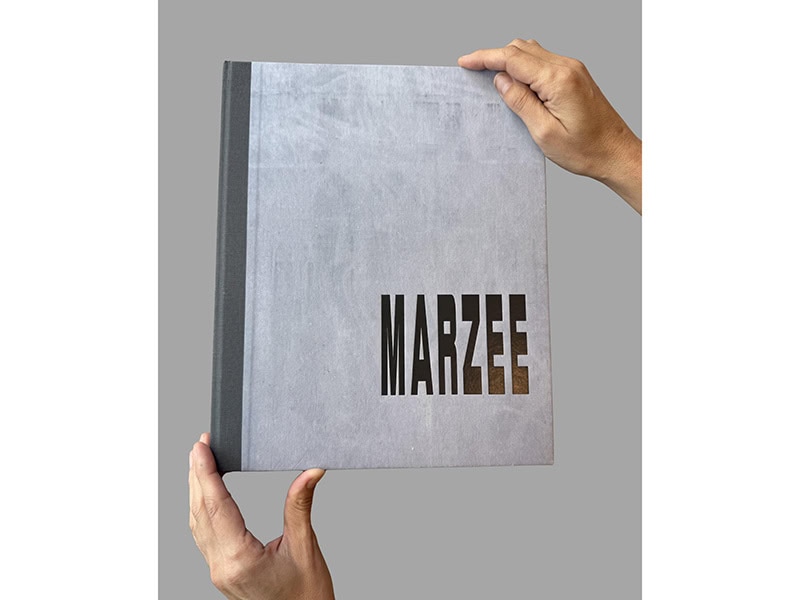
Marzee, edited by Damian Skinner and published by Arnoldsche Art Publishers in 2026, presents a sober, light-blue volume with a cloth-bound spine that functions as much more than a conventional art publication. It can be understood as a comprehensive history of contemporary jewelry, a definitive guide to navigating the field, and an ideal introduction for young enthusiasts looking to identify the discipline’s key players. For schools, it serves as a vital reference manual to keep within reach on classroom tables, showing students the historical origins of the techniques and concepts they work with today. For future gallerists, the 255-page volume offers an essential blueprint for understanding how an independent gallery is built and, above all, how it is sustained over decades.
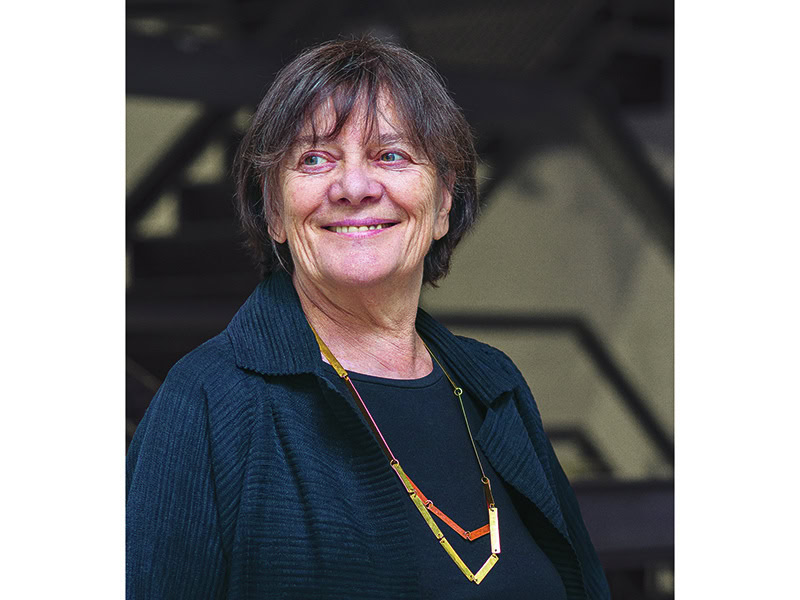
Yet, more than anything else, this book operates as the portrait of a woman—a complex biography constructed through a polyphony of voices, essays, and perspectives.
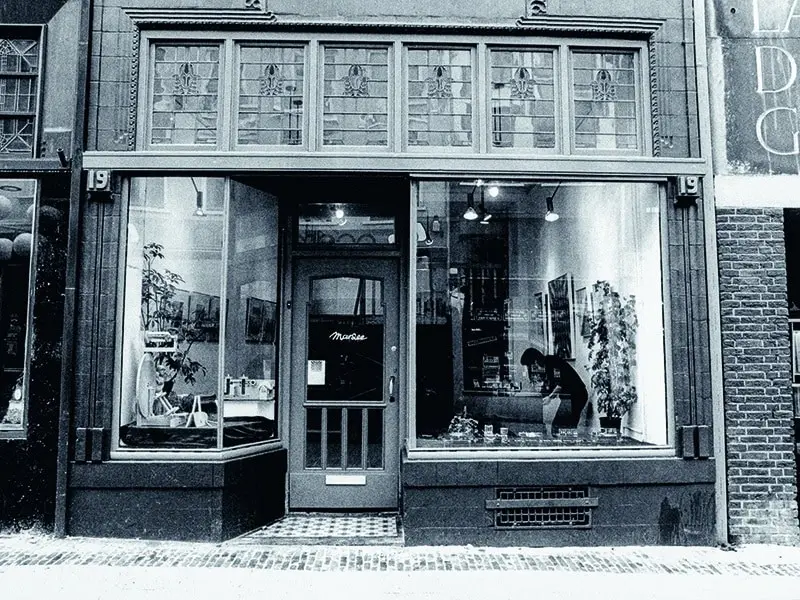
In political theory, a "state of exception" describes a space where common laws are temporarily suspended to allow a radical new order to emerge. When Galerie Marzee originally opened its doors in Nijmegen, Netherlands, in 1978, contemporary jewelry was a young, anarchic discipline. Traditional commercial norms no longer applied to the medium, and stable new ones had yet to be written. Within that vast conceptual gap, founder Marie-Josée van den Hout established an entirely autonomous territory. She deliberately chose not to follow the existing art market, choosing instead to forge her own path, actively educating collectors and dictating the rigorous criteria that would separate her distinct vision from the surrounding industry chaos.
Ultimately, Skinner’s edited volume demonstrates that the state of exception known as Marzee, alongside the extraordinary collection housed within its walls, serves as van den Hout’s definitive self-portrait. These pages act as the founding charter of a specialized territory where her uncompromising eye remains the sole authority.
The Architecture of a Shared Vision: Petra Hölscher’s Foreword
The book opens with a perceptive foreword by Petra Hölscher, who holds a key leadership position at Die Neue Sammlung in Munich. Hölscher’s text offers an intimate account, mapping her own professional trajectory through her evolving relationship with van den Hout. Their bond functions as a professional compass, defined by a warm distance—a blend of personal and professional closeness anchored entirely in mutual rigor.
This connection deepened significantly through collaborative curatorial work, particularly when Hölscher expressed institutional interest in the works of Annelies Planteijdt, an artist for whom van den Hout holds a deep, enduring devotion. When the museum’s developing interest aligned directly with the gallery’s core passions, the relationship reached a new level of mutual validation. It is a story of how long-term professional trust is built, illustrating a gallerist who masterfully balances friendship with exacting standards, making it clear that van den Hout’s priority always remains the maker and the work above all else.
The Materiality of the Collection
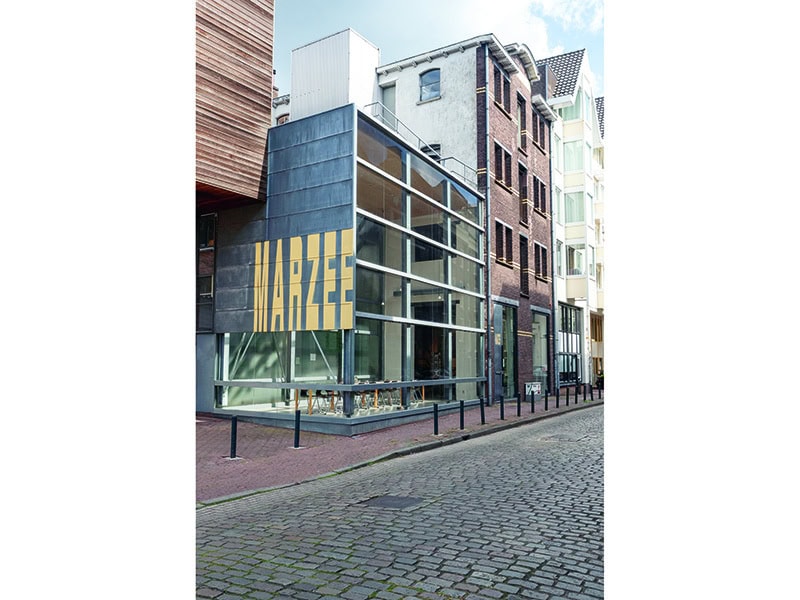
The opening pages of the book introduce readers to the physical architecture of the gallery itself—showcasing that signature Dutch blend of clean design, spatial austerity, and sheer efficiency. There is no superfluous decoration; every architectural element functions purposefully.
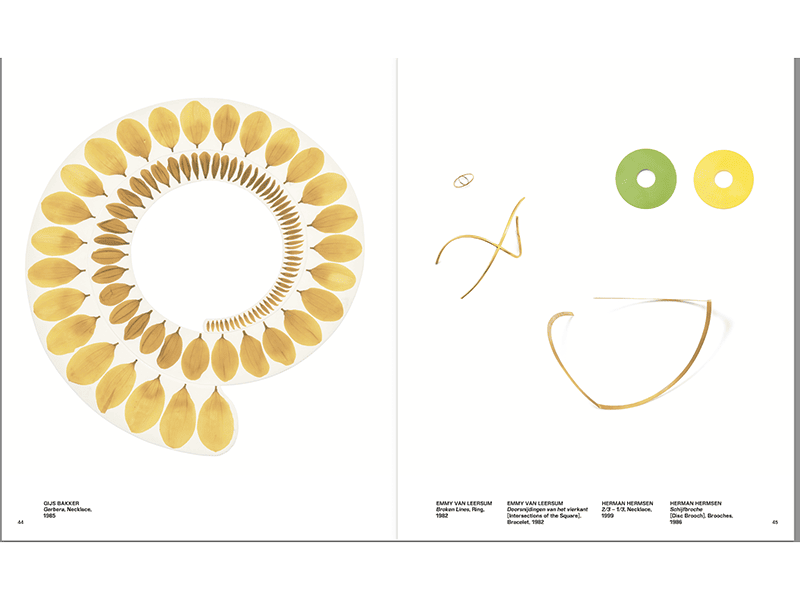
Following the foreword, the closed drawers pictured in the initial architectural photographs seem to open, revealing the first section of van den Hout’s extensive personal jewelry collection. Arnoldsche’s choice of paper stock is exact: a tactile matte finish that allows readers to feel the texture of the cellulose without falling into the trap of an overly forced or distracting texture. This specific paper finish allows the jewelry pieces to shine through their own inherent materiality, rendering their three-dimensionality nearly tangible on the page.
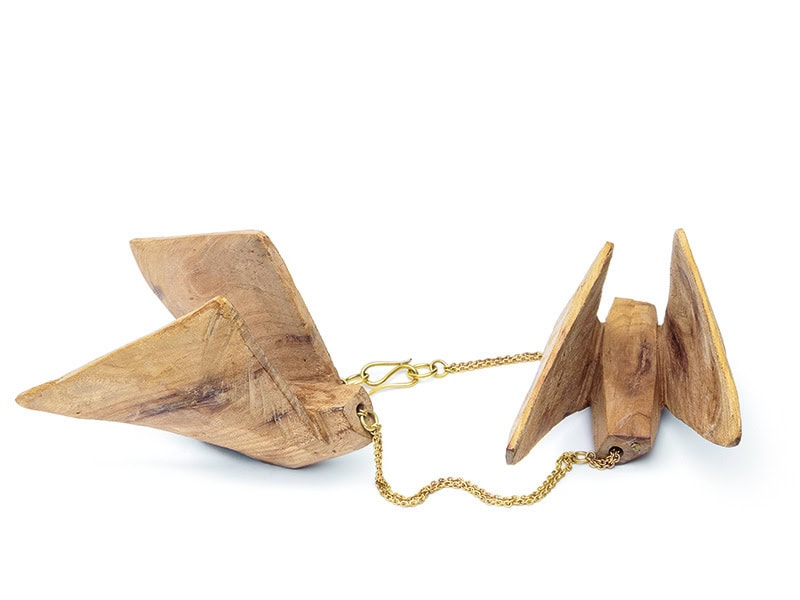
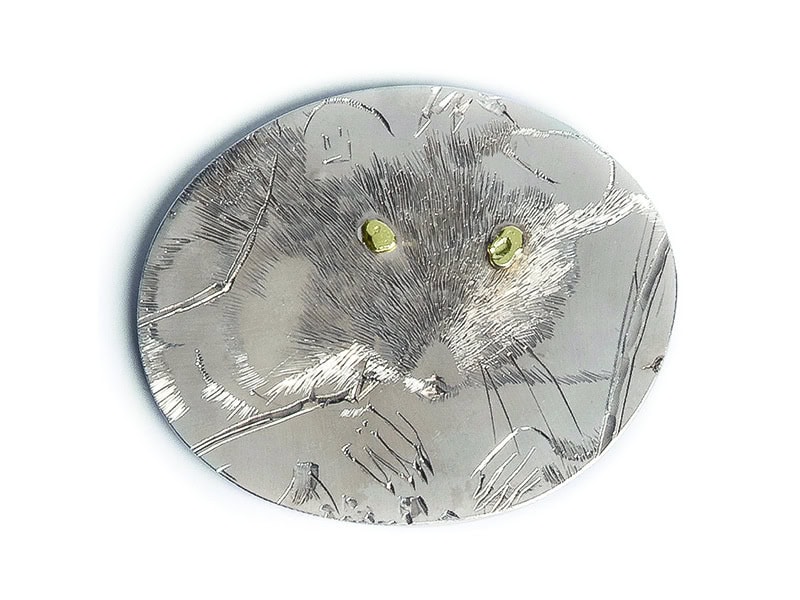
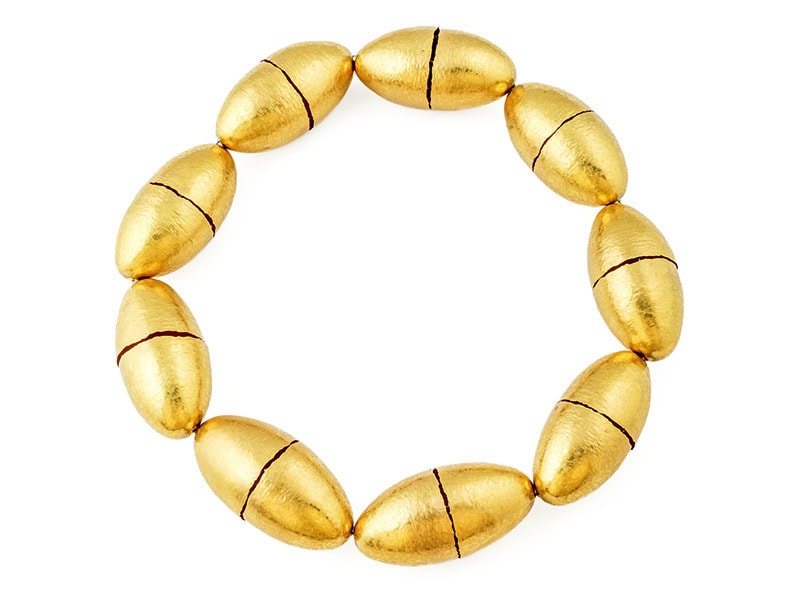
Within the volume, the artworks are organized by artist rather than strictly by chronological year, arranged side by side for purely aesthetic and conceptual reasons. They converse and coexist on the spreads just as they do within the physical gallery space. Van den Hout intrinsically understands why a piece by Dorothea Prühl should sit near one by Rudolf Kocéa; while readers may not immediately know the precise reasoning, the master eye at work within the state of Marzee makes the placement feel inevitable. Every piece is ordered through an internal logic where one artwork complements the next to form a cohesive narrative. Crucially, all the jewelry pieces are reproduced at the exact same scale—an exquisite curatorial and publishing decision. In jewelry publications, uniform scaling is deeply appreciated, allowing viewers to understand not only invisible conceptual relationships but also the direct formal connections of scale.
Susan Cummins on the Geography and Mechanics of Marzee
Following this immersive visual section, Susan Cummins—founder of Art Jewelry Forum and an experienced gallerist herself—provides essential contextual grounding. Cummins’s text performs a visual operation that mirrors the book’s overall structure while adding a distinct sense of geographical scale. She zooms in smoothly from the macro to the micro: the arrival at the local train station, the walk through the city toward the building, and finally, the journey across the three expansive floors of the gallery.
It is a compelling exercise to approach something as intimate as wearable art through a geographic lens. Ultimately, visiting Galerie Marzee has always been about the deliberate experience of traveling to a specific destination simply to exist within its walls.
Once inside the building, Cummins takes readers on a comprehensive tour, opening the storage drawers right alongside van den Hout. The experience generates genuine intellectual excitement. Both women share a deep, unspoken understanding of the treasures contained within. There is immense pleasure in viewing the full breadth of Onno Boekhoudt’s work collected by van den Hout, displayed alongside the contrasting, revolutionary output of the Padua School—two different manifestations of the same artistic revolution.
Cummins’s text is fundamental for grasping how taste is consciously constructed and for understanding van den Hout’s uncompromising demand for material integrity. For Cummins, the history of this remarkable collection is entirely inseparable from the history of its founder: her tireless way of promoting, educating, and exercising the power to discern between genuine beauty and artistic emptiness. These pages reveal a leader who leaves nothing to chance, driven by an unyielding obligation to filter out the noise of the outside world so that the gallery can remain a sanctuary of absolute clarity.
Roots, Crisis, and Independence: Flos Wildschut’s Historical Map
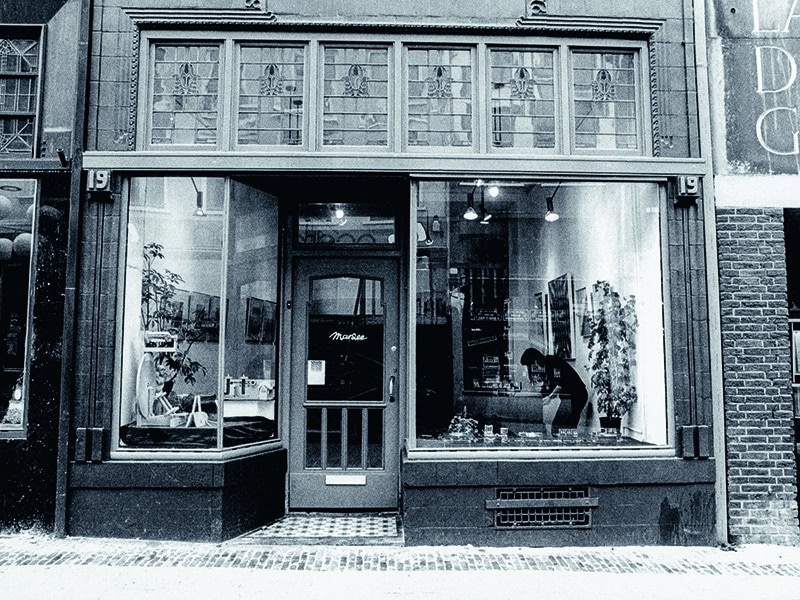
To fully understand this unique state of exception, one must examine its foundational origins. Art historian and independent curator Flos Wildschut—whose notable 2023 essay on the gallerist remains one of the most intimate accounts written about her—provides a clear map of van den Hout’s life, demonstrating that her curatorial authority is built upon a solid legacy. Born into a distinguished family of goldsmiths, she grew up understanding both the heavy weight of metalwork tradition and the distinct sounds of the workshop.
Wildschut traces a timeline where personal life and professional career are never treated as separate entities; for van den Hout, the gallery is never merely a job, but an entire way of living. Everything—personal relationships, motherhood, and the physical spaces she inhabits—is shaped by the relentless drive of the gallery.
This fierce independence was forged in moments of profound industry crisis. When faced with the potential departure or loss of her most commercially viable artists, van den Hout did not retreat or compromise; instead, she became far more ambitious. She deliberately chose the more difficult path, choosing to represent makers who did not conform to the easy rules of the mainstream commercial market.
This same unyielding firmness is clearly evident in her historic refusal to relocate the gallery to Amsterdam. While outside observers viewed Nijmegen as a distant geographical periphery, van den Hout recognized it as a vibrant center. By staying put, she successfully subverted the logic of the art world mainstream, forcing international collectors, critics, and artists to travel directly to her. She proved decisively that a singular, clear vision can transform any location into a global destination. Yet this stance is far from an act of isolation. For van den Hout, operating a gallery is an act of profound generosity—a way of sharing her discerning eye with a dedicated community while honoring a deep sense of duty toward her artists.
Exhibitions, Experiments, and Lizzie Atkins’s Closing Chapter
As the publication progresses, iconic thematic exhibitions curated by the gallery, such as Combs or Amulets, come to light. These shows reveal a shared sense of humor between van den Hout and her exhibiting artists, offering a rare opportunity to step away from the sometimes solemn seriousness often associated with conceptual jewelry. Interspersed between blocks of high-quality object photography are silver vessels—bowls, cups, and chalices—alongside archival photographs and texts documenting Marzee’s experimental side, including social events, international symposiums, and site-specific projects.
The final text in the volume is written by Lizzie Atkins, a London-based jeweler, writer, and long-standing collaborator with Galerie Marzee since 2002. Atkins covers the critical period from 1995 to 2025 in the gallery’s definitive location. Here, the city of Nijmegen gazes across the Waal River at the gallery, and within those expansive glass walls, every individual piece of jewelry seems to find its ideal method of display.
Atkins highlights two crucial institutional milestones: the Marzee Graduate Show, an annual exhibition inviting the most promising jewelry graduates from schools worldwide to present their work, and the accompanying Marzee Prize, awarded to the most outstanding emerging talent. Together, these initiatives prove that van den Hout is not merely a collector dedicated to preserving the past, but a visionary willing to take risks and heavily invest in the future. For countless young graduates entering the field, the Marzee Graduate Show remains the milestone they aspire toward—the defining event that marks the true beginning of a professional career.
A Masterclass in Belief
Ultimately, Marzee functions as a masterclass in absolute conviction. It serves as an essential tool for younger generations of makers and thinkers because it offers something exceedingly rare in the modern art world: certainty. If an individual has believed in the discipline of contemporary jewelry with such fierce dedication and uncompromising love, the book challenges readers to believe in it just as strongly themselves.
This volume is at once a self-portrait, a territory of pure clarity, and a lasting gesture of profound gratitude. To read it is to understand that Galerie Marzee is not simply a physical location situated in the Netherlands; rather, it is an enduring state of mind where the best of contemporary jewelry is always yet to come.
The opinions stated here do not necessarily express those of Art Jewelry Forum (AJF).
AJF welcomes comments on its publishing and will publish letters that engage with articles in a thoughtful and polite manner. Letters to the editor may be submitted electronically through the Art Jewelry Forum website.
© 2026 Art Jewelry Forum. All rights reserved. Content may not be reproduced in whole or in part without permission.