





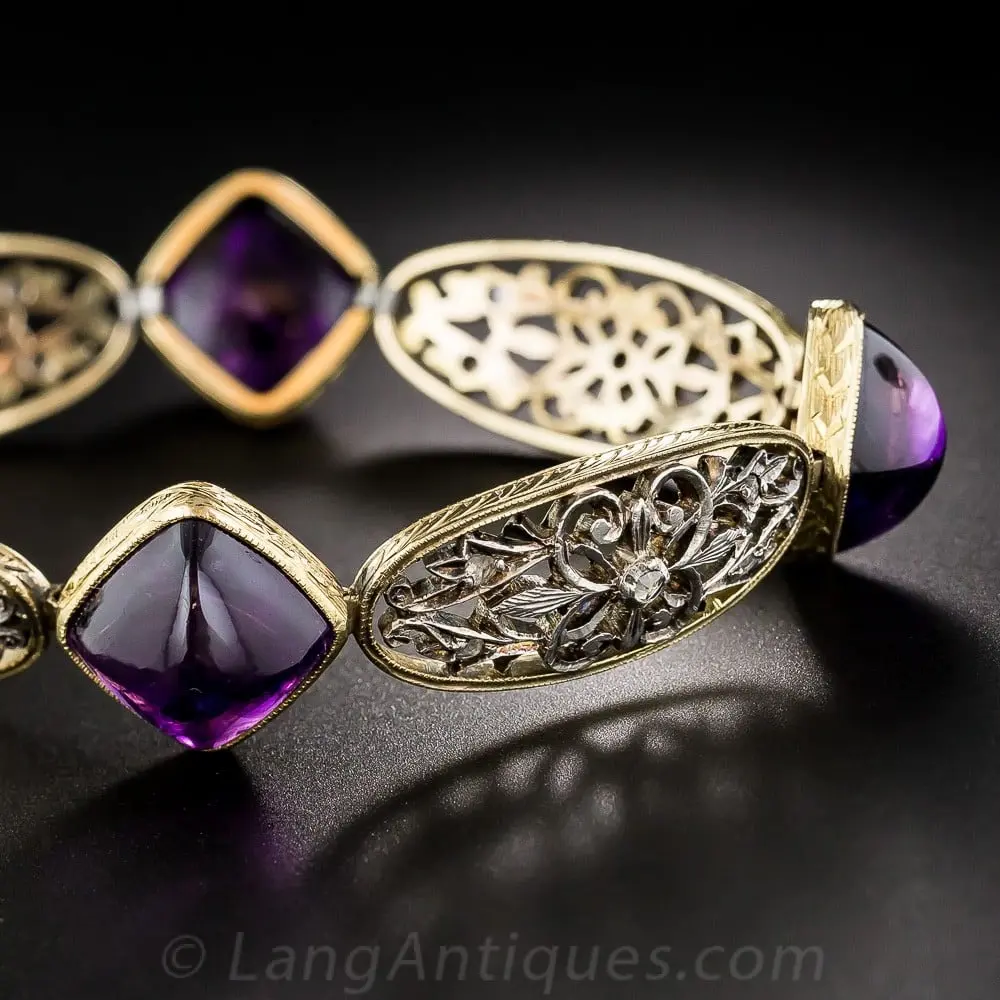
The Aesthetic Period of Victorian jewelry stands uniquely as an era of profound rebellion. Emerging as a direct reaction against the heavy-handed conventions, rigid industrial furnishings, and imitative designs of earlier decades, late 19th-century society found itself deeply disillusioned with the past. Reformers and visionaries sought an escape into a more refined, artistic taste. While William Morris fought valiantly to keep the spirit of the Middle Ages alive in defiance of the relentless Industrial Revolution, a new collective consciousness was stirring. In 1884, following Morris’s inspirational footprint, a passionate group of craftsmen established the Art Workers’ Guild. Soon after, in 1886, a coalition of visionary artists founded the Arts Exhibition Society. Together, these two influential bodies set out to captivate and woo the public with handcrafted works of authentic beauty.
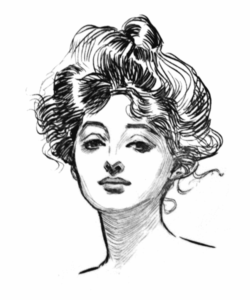
This cultural shift found a powerful visual icon in 1890 through the sketches of Charles Dana Gibson. The immortalized “Gibson Girl” portrayed women in an entirely modern light: she was fiercely independent, fun-loving, self-aware, and utterly self-assured. To achieve this contemporary coiffure, essential accessories became non-negotiable, most notably hair combs masterfully carved from tortoise shell and richly embellished with precious gemstones. Simultaneously, dramatic changes swept through women’s wardrobes as new sporting activities like bicycling and golf took the country by storm. To keep their hands free during these energetic pursuits, women relied on long chains that securely held coin purses, watches, and lorgnettes. For ladies embarking on solitary horseback rides, whistle bracelets became an absolute must-have accessory, granting them the practical ability to summon assistance from a two-mile radius.
The modern Victorian woman was rapidly expanding her horizons, stepping boldly into the business world and taking an active role in politics. In 1885, they founded the Primrose League, closely followed by the Women’s Liberal Federation in 1886, campaigning furiously to achieve the right to vote. Young women were increasingly attending college, immersing themselves in sports, and embracing leisure activities with unprecedented enthusiasm. Fashionable society craved an aura that was slightly daring or frivolous, signaling to the world that they were thoroughly modern and living in the fin de siècle.
Despite the emergence of these inventive accessories tailored for the modern lifestyle, jewelry trends shifted toward minimalism during daylight hours. Diamonds were widely perceived as an egregious breach of etiquette in the daytime. By 1890, the Jewellers’ Association grew deeply anxious that women were abandoning jewelry altogether and made a formal appeal to the Princess of Wales for assistance. While she graciously purchased a few pieces and attempted to set a public example, grand dress balls and the opera remained virtually the only occasions that brought out a true display of fine jewels.
Throughout the 19th century, international exhibitions played a crucial role in introducing the public to groundbreaking innovations in both art and industry. Marking the 400th anniversary of the discovery of America, Chicago hosted the monumental 1893 Colombian Exposition, where the undisputed star of the show was electricity. Visitors stood awestruck before fabulous, illuminated displays crafted by some of America’s premier design houses, including Tiffany and Gorham. Case after case of lightweight Victorian chains, rings, bracelets, earrings, and watches met with overwhelming public enthusiasm. The jewelry of this era was noticeably lighter and scaled down compared to earlier decades. Weighty Victorian brooches were abandoned in favor of smaller pins scattered playfully across a dress bodice, while diamond brooches were frequently pinned directly into the hair for evening galas. Furthermore, the latest Victorian hairstyles exposed the ears, making small stud earrings highly desirable.
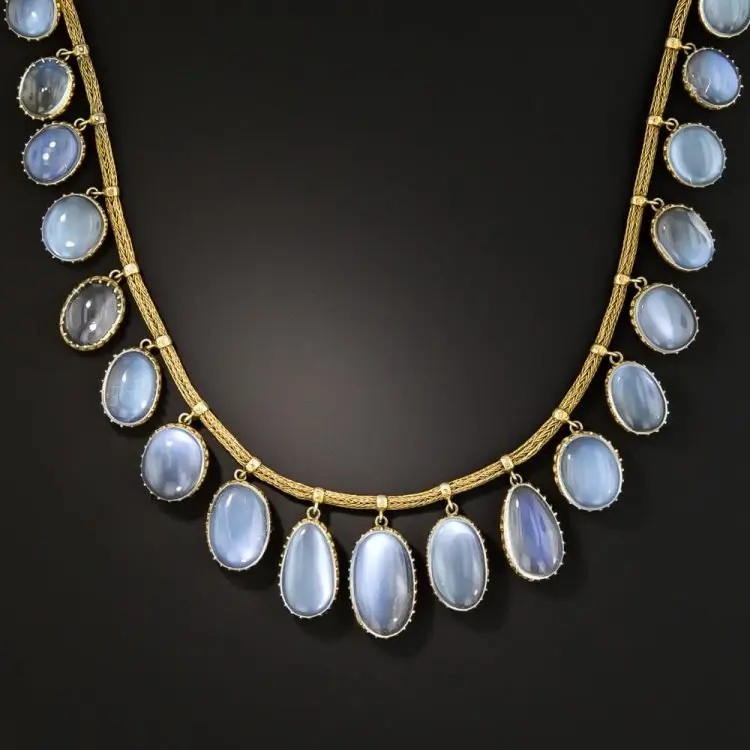
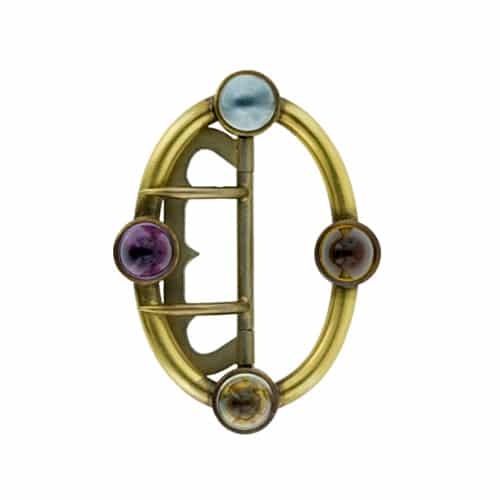
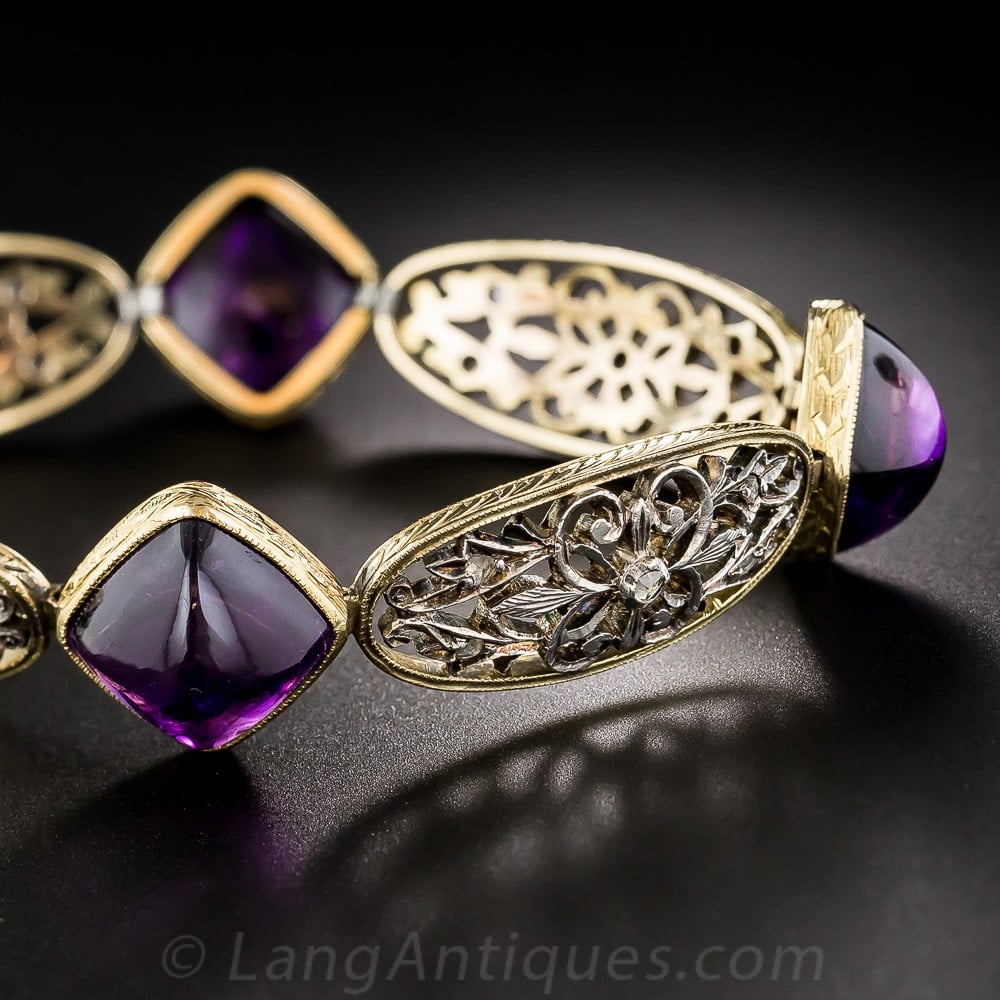
A fresh generation of jewelry designers felt utterly appalled by the blatant copying of historic pieces and the bulky, heavy-handed creations of their predecessors. Determined to break away from imitative traditions, they sought to invent an entirely new artistic vocabulary. Soft curves, organic natural shapes, and delicate coloring emerged as a natural overreaction to the heavy aesthetics of the past. Gemstones were increasingly cut en cabochon, with a marked cultural preference for amethysts, emeralds, and opals. C.R. Ashbee, a prominent leader in the Arts and Crafts movement, championed the philosophy that jewelry should be valued exclusively for its intrinsic beauty rather than its material wealth. To this end, Ashbee utilized pink topaz and amethyst set against subdued, dull silver or gray gold, inspiring a wave of contemporaries to follow his lead.
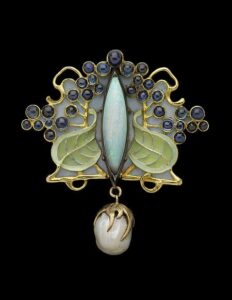
Concurrently, the revolutionary Art Nouveau style was flourishing in France. René Lalique pioneered a breathtaking aesthetic characterized by feminine profiles with cascading waves of hair, soft-colored stones, simple floral motifs, and exquisite enamels. By introducing unmatched fantasy and originality into his craft, Lalique birthed a truly unswerving, underivative style. In England, critics and tastemakers viewed his work as the ultimate culmination of the modern aesthetic jewelers had long strived to achieve, making Lalique an instant sensation among the “new” Victorians.
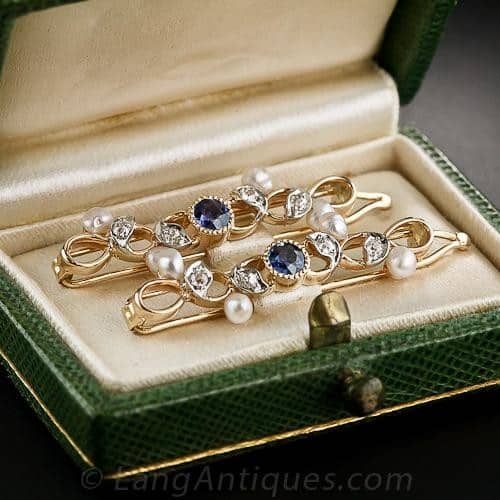
While avant-garde styles captivated the cultural elite, a more conventional type of jewelry retained immense popularity, albeit transformed into a simpler look centered around a single feature gemstone. Jewelers specialized in curating a refined selection of precious stones for their clientele. Diamonds remained the ultimate gemstone of choice for momentous occasions, with diamond rivières, majestic tiaras, and elegant bracelets set in silver-topped gold dominating the market. These pieces were crafted with an airy delicacy, minimizing the visibility of the metal as much as humanly possible. Beginning around 1854 and extending through 1932, 12K gold—frequently rendered in a bloomed style—enjoyed widespread favor. By the late 1880s, manufacturing advancements finally established platinum as a viable metal for jewelry, and it quickly ascended to become the preferred mounting for diamonds. However, when the Boer War erupted near the close of the century, cutting off the vital supply of diamonds from South Africa, alternative gemstones temporarily recaptured their former glory.

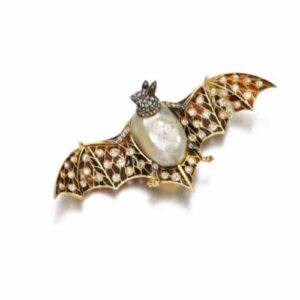
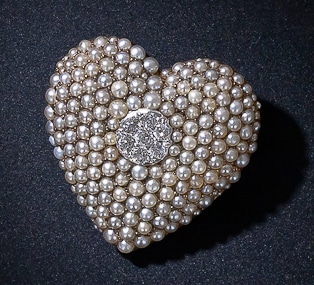
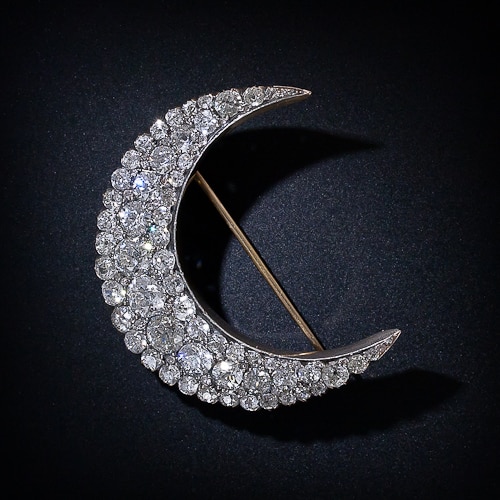
Novelty and charm remained powerful driving forces within the jewelry industry, keeping consumer interest fresh through inventive designs. The "honeymoon" brooch—delicately shaped as a tiny bee perched upon a crescent moon—became an instant classic. Whimsical novelties also flooded the market, ranging from diamond-encrusted chickens and jeweled lizards to frogs and wise owls. Accessories like the lace pin, consisting of a short bar or safety pin adorned with a dainty motif, along with classic bar brooches and delicate pendant necklaces, captured the public imagination. These pieces were frequently decorated with shamrocks, dimensional stars, knots, and, above all, hearts. Some jewels were so diminutive they appeared almost invisible, yet their sheer novelty rendered them irresistibly charming.
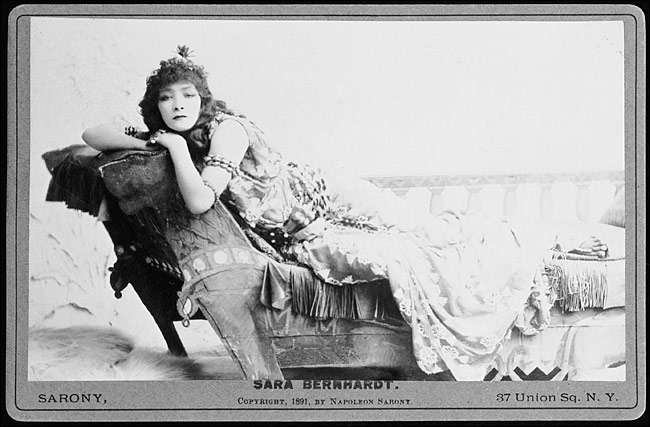
The evolution of these aesthetic tastes was heavily influenced by cultural icons and global trends of the era. When Sarah Bernhardt starred in Cléopâtre in 1891, she famously wore Egyptian-motif jewelry featuring turquoise set in silver. Her immense popularity meant that wherever she led, the public eagerly followed, sparking a nationwide revival of Egyptian-styled ornaments. Similarly, traditional Indian jewelry surged in popularity following its eye-catching exhibition in 1886. Rather than copying these foreign styles as they had previously done with Greek and Etruscan antiquities, English jewelers embraced the completely handmade nature, asymmetry, and lack of sterile precision, finding deep appeal in something so refreshingly authentic. Adding to this eclectic mix was an up-cycled jewelry trend between 1885 and 1889, wherein hand-pierced escapement covers—originally crafted between the 16th and 18th centuries to protect a watch’s balance wheel—were cleverly repurposed into unique earrings, bracelets, and pendants.
The broader Royal Family continued to exert an undeniable influence over global fashion trends. The distinctive dog-collar-style necklaces and cascading ropes of pearls famously worn by the Princess of Wales were emulated across the globe. Following the passing of Queen Victoria in 1901, King Edward VII and Queen Alexandra cemented their roles as the definitive arbiters of style, seamlessly carrying their trendsetting vision into the dawn of a brand-new era in jewelry and fashion.