






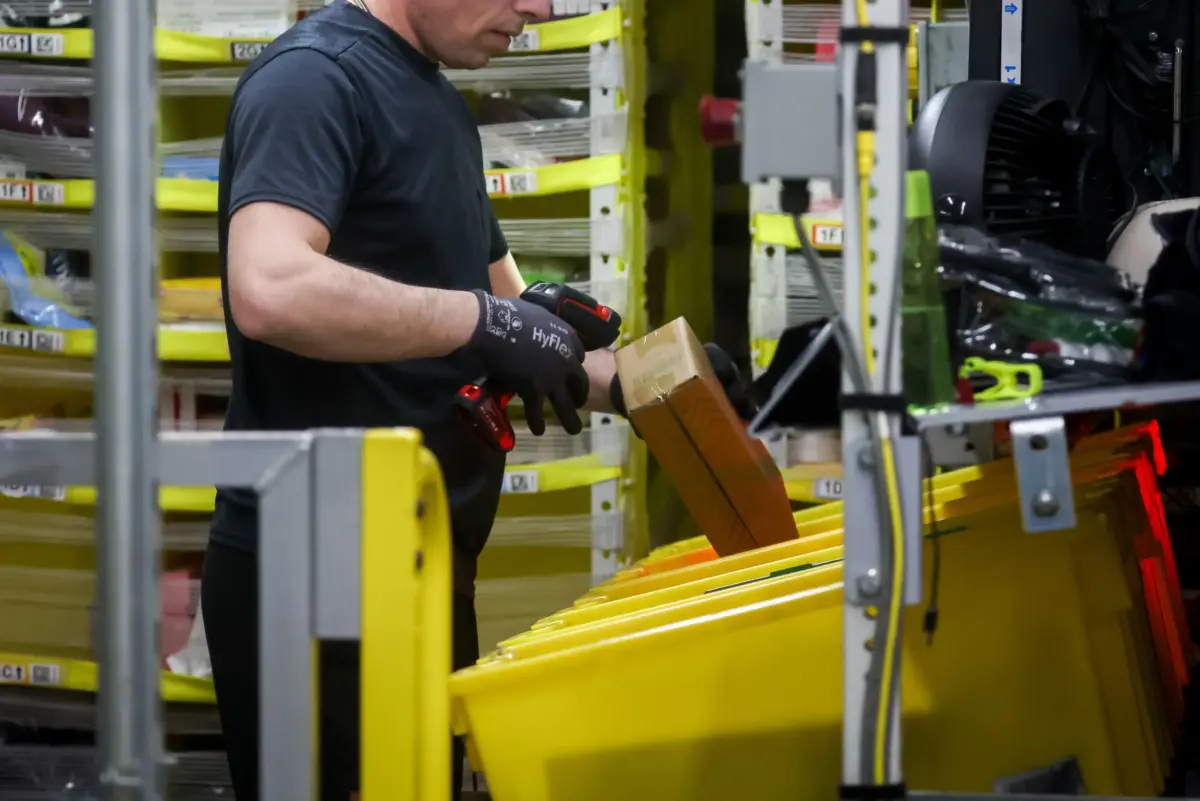
SEATTLE — In a significant move affecting hundreds of thousands of frontline workers across the United States, Amazon announced on September 16, 2026, that it is raising the minimum starting pay for its core operations employees. The adjustment brings baseline hourly wages for delivery drivers, fulfillment center personnel, and sorting facility workers to $20 per hour, while lifting average hourly pay across these essential roles to nearly $24 per hour.
According to details shared by the company, this latest compensation adjustment represents a direct increase of $1 per hour for eligible employees currently working within Amazon’s vast logistics and distribution network. The company’s leadership emphasized that the financial investment required to implement these raises totals more than $1.5 billion. To put that figure into perspective within the broader corporate landscape, the investment amounts to approximately 0.06% of Amazon’s staggering $2.68 trillion market capitalization.
The announcement was detailed in a public blog post authored by Udit Madan, Amazon’s Senior Vice President of U.S. Operations. In the post, Madan underscored the company’s commitment to supporting its hourly workforce not just through base pay, but through a comprehensive package of perks designed to enhance overall financial wellness and daily living standards.
“When you add in the value of our industry-leading benefits, average total compensation comes to more than $32 per hour,” Madan wrote in the post, highlighting how the retail and technology giant calculates the cumulative worth of its employment offerings.
Beyond the baseline wage increases, Amazon’s newly unveiled compensation package introduces several fresh perks geared toward financial inclusion and everyday cost savings. Among the most notable additions is the introduction of a low-cost banking system designated as Day 1 Financial. Through this initiative, eligible employees will gain access to specialized financial services alongside membership in the First Tech Federal Credit Union. Company leadership hopes these tools will help frontline workers better manage their earnings, build savings, and navigate everyday banking needs with reduced fee burdens.

The updated benefits package also extends into retail discounts, focusing heavily on Whole Foods Market, the premium grocery chain that Amazon acquired in 2017. Under the new policy, eligible employees will receive a 20% discount on purchases made in-store at any Whole Foods location. Additionally, for workers who prefer the convenience of home delivery or curbside pickup, Amazon is offering a 10% discount on Whole Foods groceries ordered online through its platform.
These new retail and financial perks join an existing suite of employee benefits that Amazon frequently highlights in its recruitment and retention efforts. The company already provides its hourly core operations workforce with free Amazon Prime memberships, comprehensive healthcare coverage, and prepaid education programs such as Career Choice, which fully funds tuition for eligible employees seeking college degrees or vocational certifications.
Despite the substantial financial injection and the addition of new perks, the announcement has met with mixed reactions from the very workforce it aims to impact. On internet forums and digital communities dedicated to warehouse operations—such as the popular Amazon fulfillment center employee subreddit—workers responded to the news with a mixture of cautious acknowledgment and skepticism.
Discussion among employees quickly homed in on the newly introduced Whole Foods discount, with many pointing out the historically high price point of goods sold at the premium supermarket chain. Weighing in on the utility of the perk, one warehouse worker commented online, “So it would make it cost almost the same as a regular store, then? Hahaha,” capturing a sentiment shared by several peers who questioned whether the discount would meaningfully offset the cost-of-living pressures faced by frontline staff.
The debate among employees highlights the ongoing complexities surrounding compensation and corporate benefits in the modern retail and logistics sectors. While labor advocates and corporate executives often point to aggregate figures—such as Amazon’s highlighted total compensation figure of more than $32 per hour when benefits are included—frontline workers frequently emphasize take-home pay and immediate purchasing power as the primary metrics of financial well-being.
Nevertheless, the decision by one of the world’s largest private employers to lift its minimum starting pay to $20 per hour sets a prominent benchmark for the broader warehousing, delivery, and retail industries. As Amazon continues to scale its logistics infrastructure and adapt to evolving labor market dynamics, the company’s latest investment underscores the ongoing competition to attract and retain hourly talent in an increasingly tight labor environment.