A site that once supplied the raw stone for the historic Acropolis of Lindos on the Greek island of Rhodes has been transformed into a striking contemporary resort. Set upon a secluded private peninsula, Amoh, a Luxury Collection Resort, draws deeply from its surrounding coastal landscape, where ancient stone extraction, modern architecture, and traditional Greek craftsmanship seamlessly intertwine.
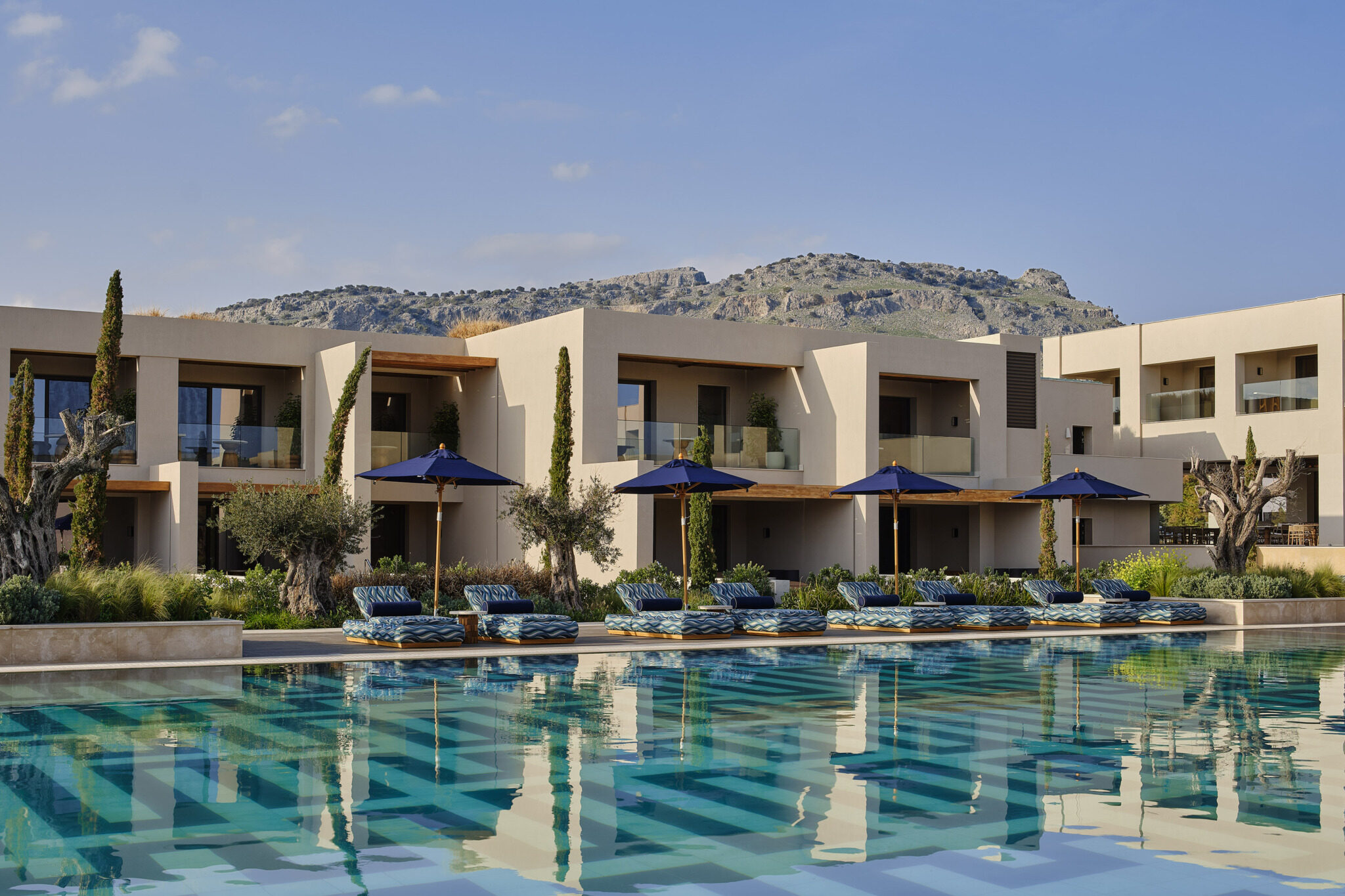
With interior architecture masterminded by the London-based design practice Studio Lost, the hotel channels the island’s rugged coastal topography through a restrained, highly sophisticated Mediterranean design language. Clean architectural lines, flat roofs, and recessed openings create a low-rise silhouette that allows the property to sit comfortably and unobtrusively within its dramatic natural surroundings. Organized in thoughtful, village-like clusters, the resort’s 197 rooms and suites bring an intimate, human scale to a property that spans a historically significant landscape.
The site’s rich quarrying history informs virtually every aspect of the resort’s material palette. Monumental carvings, monolithic structural columns, highly polished vanities, and custom marble furniture pieces all serve as direct references to the land’s legacy of stone extraction and artisanal craftsmanship. According to Studio Lost founder Constantina Tsoutsikou, the prominent use of stone evokes a profound sense of permanence and timelessness, telling the story of Ancient Greek heritage and traditional craftsmanship in a way that few other materials possibly could.

Further strengthening the property’s connection to local heritage, the design incorporates authentic Rhodian pebble mosaics, a labor-intensive technique deeply native to the region. One of the island’s very few remaining master craftsmen was brought in to hand-lay the intricate flooring, drawing upon a traditional practice historically reserved for the most distinguished local courtyards. Individual pebbles were painstakingly selected for their specific shape and color before being arranged into elaborate, flowing patterns that guide guests through the interior spaces.
To introduce warmth and counterbalance the monumental stone elements, the design team utilized dark-stained timber alongside sophisticated wallcoverings provided by French design house Casamance. A continuous herringbone pattern extends seamlessly from the indoor spaces out to the exterior terraces, reinforcing a harmonious spatial connection between the interior architecture and the open-air environment. Large-format limestone tiles supplied by Atlas Concorde further establish and anchor the resort’s comprehensive stone-led material palette.

For Tsoutsikou, the bespoke timber joinery serves a dual purpose, functioning not only as practical architectural elements but also as an essential component of the resort’s overarching design vocabulary. The timber introduces much-needed visual warmth and textural contrast against the more substantial, cool-toned stone features found throughout the public areas and private accommodations.
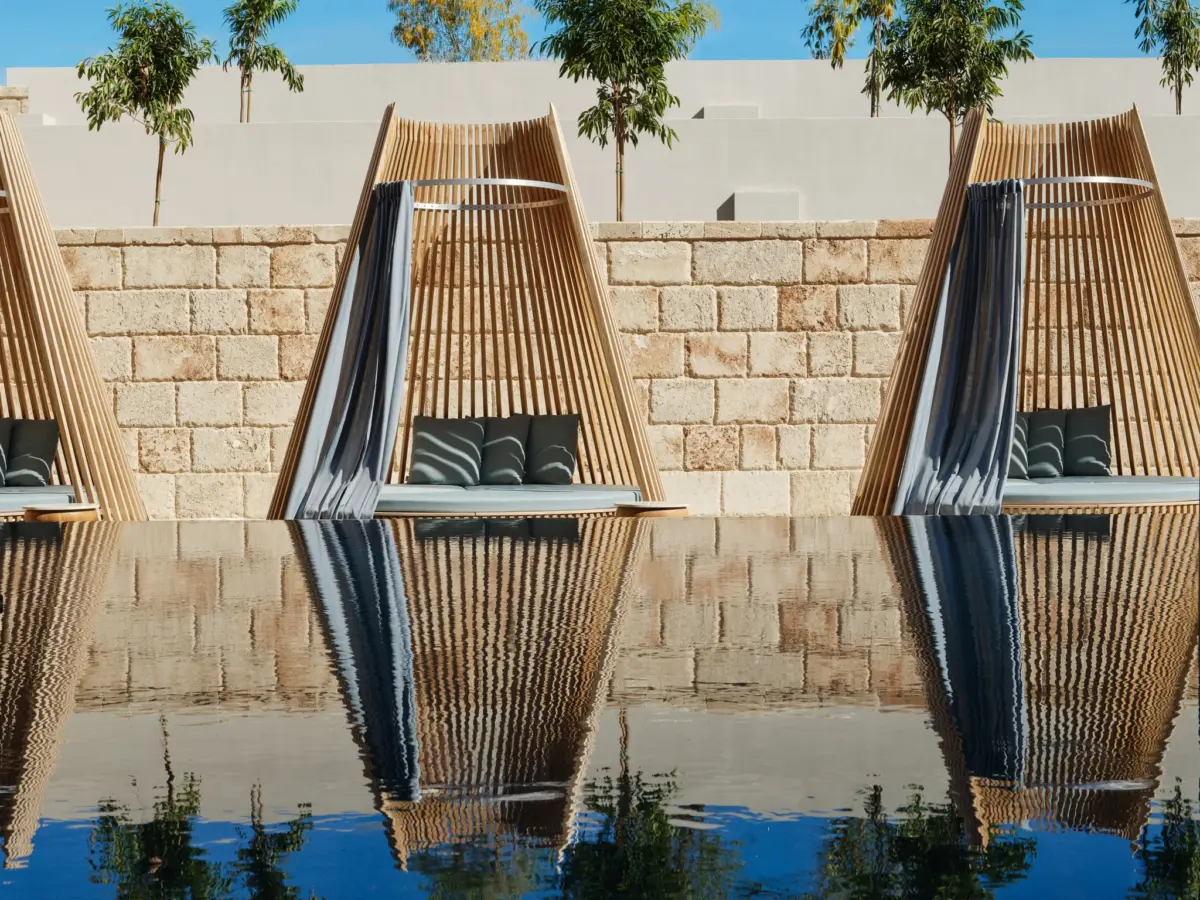
Explaining the philosophy behind these details, Tsoutsikou notes that the woodwork connects traditional craftsmanship directly to a tangible sense of place. From intricately detailed VIP pergolas to sculptural privacy screens and custom latticework, the joinery establishes a fresh benchmark for contemporary Greek hospitality design, proving that modern luxury can successfully honor historical techniques.

Drawing direct inspiration from the vivid, shifting tones of the Aegean Sea, Studio Lost incorporated rich dark blues and deep emerald greens throughout the interior spaces. These saturated hues are carefully balanced by weathered earth tones and refined bronze accents, while honeyed stone finishes and oxidized metal elements pay direct homage to the naturally weathered surfaces of the adjacent historic quarry.
In the resort’s tranquil spa, a quieter, more restorative atmosphere is established through the use of soft pastel tones and warm natural oak. Encompassing seven dedicated treatment rooms, a comprehensive wet lounge, an ice fountain, a traditional steam room, and a dark timber sauna, the wellness facility introduces delicate shades of green that complement the broader resort-wide material palette without overwhelming the senses.

At the heart of the property, a light-filled pavilion anchors the main pool area, which functions as the primary social hub for guests. The central bar features intricate timber lattice screens that reinterpret classical Greek geometric patterns, creating a striking visual focal point that is framed by private cabanas and expansive, uninterrupted views of the open water.
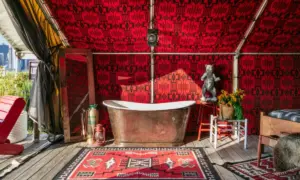
The resort’s culinary program is distributed across four distinct restaurants, each interpreting the overarching design language through a unique lens. An open-air restaurant featuring canvas canopies and colorful terrazzo dining tables successfully evokes the adventurous spirit of early 20th-century archaeological expeditions. At Glaze, the industrial ceramic-firing process directly inspires an open kitchen layout that puts the entire food preparation process playfully on display for diners. Meanwhile, a soaring architectural atrium defines Lithos, where rugged stone-clad walls and custom suspended timber screens introduce intimate texture and scale to the dining experience.

Throughout all interior spaces, oversized artwork and handcrafted objects appear in abundance, adding a personal and human dimension to the resort’s monumental stone architecture. Rather than relying on familiar, well-worn Mediterranean clichés, the design team chose to celebrate the genuine richness and diversity of authentic Greek craftsmanship. The resulting property draws meaningfully on the island’s storied history without attempting to artificially recreate it, allowing traditional materials and age-old techniques to find entirely new expression within a sophisticated contemporary setting.