






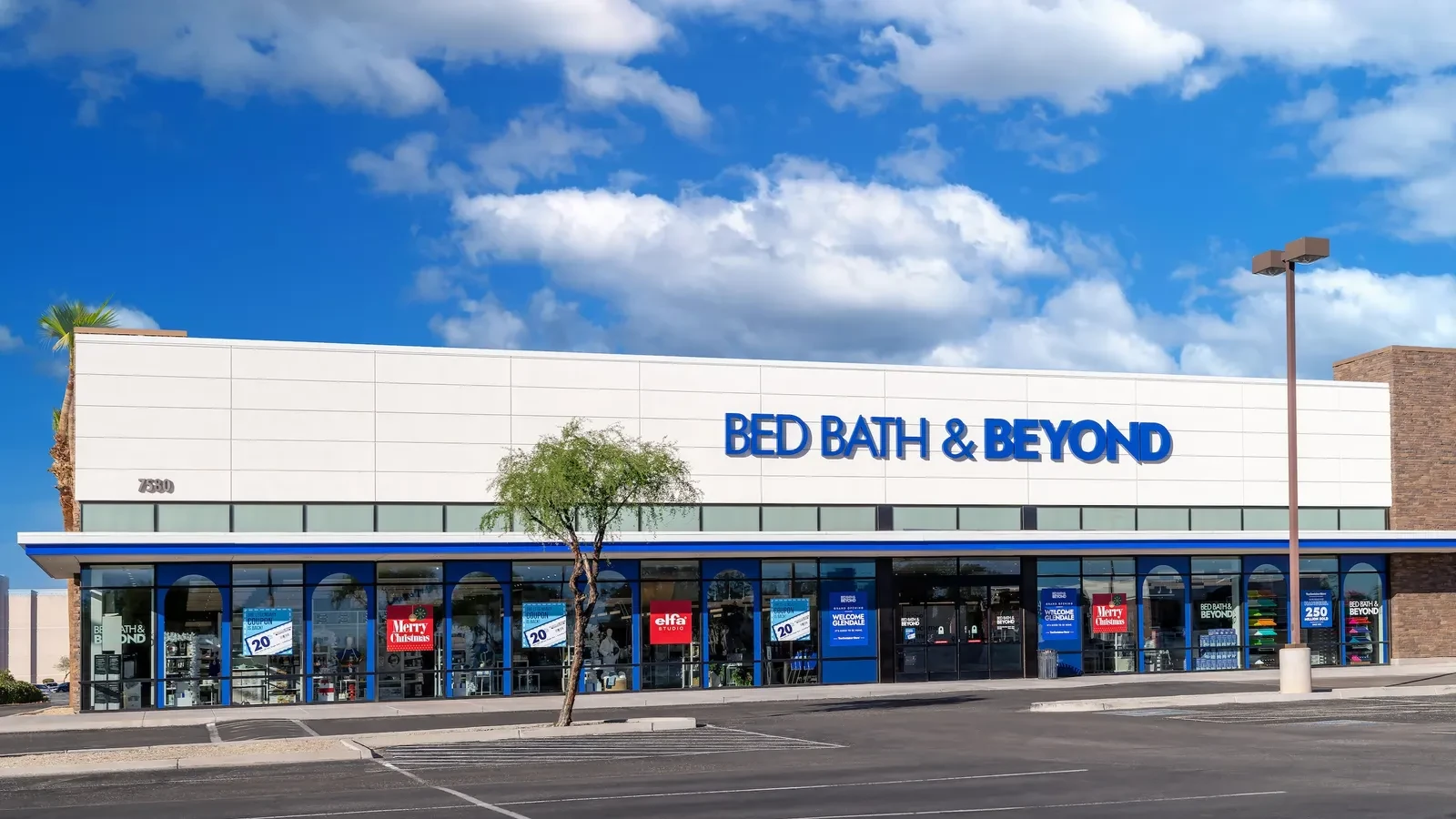
A defining chapter of Bed Bath & Beyond’s retail history is officially making its long-awaited return.
The parent company, now operating under the name Neighborhood Intelligence, is opening a brand-new, 19,000-square-foot stand-alone Bed Bath & Beyond store in Glendale, Arizona. Scheduled to open its doors on Saturday, the new retail location is designed to be deliberately reminiscent of the classic Bed Bath & Beyond stores that once anchored shopping centers across the United States before the brand’s high-profile financial collapse and subsequent chapter 11 bankruptcy filing in 2023.
Shoppers walking into the new Glendale storefront will encounter many of the familiar mainstays that cemented the brand in American consumer culture. These include the traditional towel wall, expansive bedding displays, and, most notably, the return of the famous coupons that defined generations of home-goods shopping.
"We’re bringing back the things customers have always loved, from the iconic shopping experience to the brands, products, and value they remember, while introducing new ways to help customers make the most of every room in their home," Neighborhood Intelligence President Amy Sullivan said in a statement regarding the grand opening.
The launch of the Glendale storefront marks a significant milestone in a broader, highly ambitious turnaround effort by Neighborhood Intelligence. Over the past several quarters, the corporate parent has aggressively restructured its retail operations, a strategy that has included high-profile corporate acquisitions such as home decor retailer Kirkland’s and organization specialist The Container Store.
Earlier this year, Bed Bath & Beyond debuted a co-branded store concept alongside The Container Store. That hybrid retail experiment combined key elements from both brands, bringing together specialized organizational products, professional design services, and a much broader assortment of everyday home goods under one roof.
However, the company’s aggressive consolidation and expansion strategy has also required a painful pruning of underperforming real estate. During an earnings call with analysts on Thursday, Neighborhood Intelligence CEO Marcus Lemonis revealed that the company will have closed a total of 11 Container Store locations by the end of the year. Furthermore, the company is actively in the process of shutting down 39 Kirkland’s locations.
According to Lemonis, those specific retail outposts were generating negative four-wall profits, and many of them featured commercial leases that were set to expire in January. In a notable twist of corporate resourcefulness, the very Arizona store location opening its doors this weekend is taking over a former Container Store space that had previously been classified as four-wall negative.
Neighborhood Intelligence is now shifting its strategic focus inward. Recent deals involving Fathom Holdings and F9 Brands were called off in recent months, and Lemonis confirmed to analysts that the parent company is no longer pursuing any additional corporate acquisitions.
"We believe there’s significant opportunity with the businesses we already own, and our priority is to make them work better together and to grow organically and to improve profitability," Lemonis told analysts during the Thursday earnings call.
This evolving focus was clearly reflected in the company’s third-quarter earnings report, also released on Thursday. Neighborhood Intelligence reported that total revenue surged by 98% to reach $509 million. The vast majority of that top-line growth was driven by its recent acquisitions, which collectively contributed $229 million to the company’s total revenue. When those recent acquisitions are stripped out of the financial calculations, the company’s organic revenue increased by approximately 9%. Meanwhile, the company’s gross margin hovered at around 34%.
The company’s e-commerce operations proved to be a notable bright spot during the third-quarter period. Online sales climbed by 9%, marking the strongest e-commerce growth the company has experienced in 19 quarters. That digital momentum was primarily powered by an impressive 75% growth rate at Overstock.com.
At the same time, the standalone Bed Bath & Beyond banner demonstrated steady operational progress. The legacy banner grew its revenue by $23 million compared to the same period a year ago, fueled by a 1.5% increase in total order volume alongside a robust 7.4% jump in average order value.
Despite macroeconomic headwinds and persistent consumer concerns regarding housing affordability, executive leadership expressed confidence in the ongoing resilience of the home-retail sector.
"What gives me confidence is that we’re not relying on a housing recovery to make this business work," Lemonis said. "Consumers are dealing with affordability challenges and historically low housing turnover, but they continue to spend on maintaining, organizing, and improving their homes. Our brands are positioned to serve those needs today, with additional opportunity as housing activity improves."
Even with top-line revenue gains, the company’s bottom-line losses expanded during the quarter. Neighborhood Intelligence reported that its operating loss widened to $62 million, up from roughly $12.5 million in the year-ago period. Total net loss also increased, climbing to over $26 million compared to a net loss of $4.5 million during the same quarter last year.
Looking ahead, management remains optimistic about near-term performance. Neighborhood Intelligence is projecting sequential fourth-quarter revenue growth of 5% compared to the third quarter, a forecast that already accounts for ongoing store closures.
For the full year 2027, consolidated revenue is anticipated to land between $2 billion and $2.1 billion, with gross margins expected to range from 33% to 34%. Over the long term, Lemonis envisions the company’s gross margin stabilizing closer to 37%.
"If you look at the margin improvement that our company has experienced over the last, call it, eight quarters, we know how to generate margin, we know how to eliminate those unprofitable SKUs, those unprofitable vendors and how to properly calibrate assortment and sourcing," Lemonis said. He specifically pointed to the global sourcing team that joined the corporate fold as part of the Kirkland’s acquisition as a critical asset for future margin expansion.
Reflecting on the past, Lemonis did not shy away from critiquing the strategic missteps made by the original Bed Bath & Beyond leadership team prior to the company’s 2023 bankruptcy filing. Among the primary errors, he noted, was the previous management’s decision to distance the retailer from major national brand partners such as Shark, Cuisinart, and Laura Ashley.
In contrast, Lemonis argued that The Container Store possesses the "perfect balance" of stocking trusted name-brand products that build consumer confidence, while simultaneously maintaining pricing flexibility through direct global sourcing. This capability, he explained, allows the company to break traditional price elasticity curves to generate consumer demand while securing the profit margins necessary to achieve a 37% gross margin target.
However, this ongoing retail recalibration has not been without friction. As part of its inventory adjustments, The Container Store has officially severed ties with at least one of its long-standing partners. The Home Edit, a popular home organizational company and lifestyle brand, announced on Thursday that its signature product lines will be completely removed from the retailer. The brand had originally launched an exclusive collection within The Container Store back in 2019.
"We’ve been partners for a really long time, and we’re pretty surprised," said Clea Shearer and Joanna Teplin, co-founders of The Home Edit, in a video posted to the brand’s official Instagram account on Thursday. "You might have noticed that The Container Store, slash Bed Bath & Beyond, is going through some changes, and it appears to us that they’re working out what their identity is. And it doesn’t include us."
While Shearer and Teplin noted in their video that the lifestyle brand would be moving "very shortly to some pretty exciting retailers," they did not disclose specific details regarding future retail partnerships.
When contacted by Retail Dive for comment regarding the announcement, Neighborhood Intelligence President Amy Sullivan asserted that The Home Edit’s public characterization of the split was "not fully accurate."
"When we acquired The Container Store, a one-year agreement was in place that expires in December of 2026," Sullivan explained via email. "We are not signing a new agreement because the rate of sale of the product doesn’t support a reorder, but we do still have the product in our stores today and will continue to sell through the remaining assortment and honor the relationship with The Home Edit."
Moving forward, The Container Store has been actively introducing fresh inventory across multiple core categories, including products for the bathroom, bedroom, and kitchen. According to Sullivan, the retailer is executing a simultaneous "recalibrating and revitalization of their legacy storage and org department."
"Making our stores more productive is only part of the opportunity. We also need to improve the economics behind the products we sell," Sullivan said. "Through Kirkland’s, we acquired product development and global sourcing capabilities, including direct factory relationships. Those capabilities allow us to complement national brands with differentiated products, improve product costs, and strengthen margins. We expect meaningful benefits from new sourcing and assortment programs beginning in the middle to latter part of 2027."