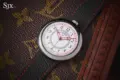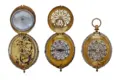





Breguet has unveiled its latest high-watchmaking statement with the introduction of the Classique Souscription 2026, a sophisticated platinum follow-up to what proved to be the brand’s most celebrated release during its milestone 250th-anniversary year. Referencing the exact same historical 1797 pocket watch that inspired its predecessor in Breguet gold, this new single-handed timepiece remains deeply faithful to its foundational source material. From its aesthetic presentation to its internal architecture, the watch features a movement layout that would be instantly familiar to Abraham-Louis Breguet, the legendary founder of the maison.
Initial thoughts
In the contemporary landscape of high horology, it is common practice for independent watchmakers to launch their independent ventures by adopting a limited-edition souscription series, a funding model historically utilized to secure upfront capital. However, Breguet’s modern Souscription series pays homage to the very originator of the trend, right down to the minimalist, single-handed dial configuration. Last year’s debut model was widely hailed as a resounding success by both seasoned collectors and prominent watch critics, meaning it comes as little surprise that the historic brand would quickly expand upon the winning formula.
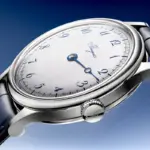
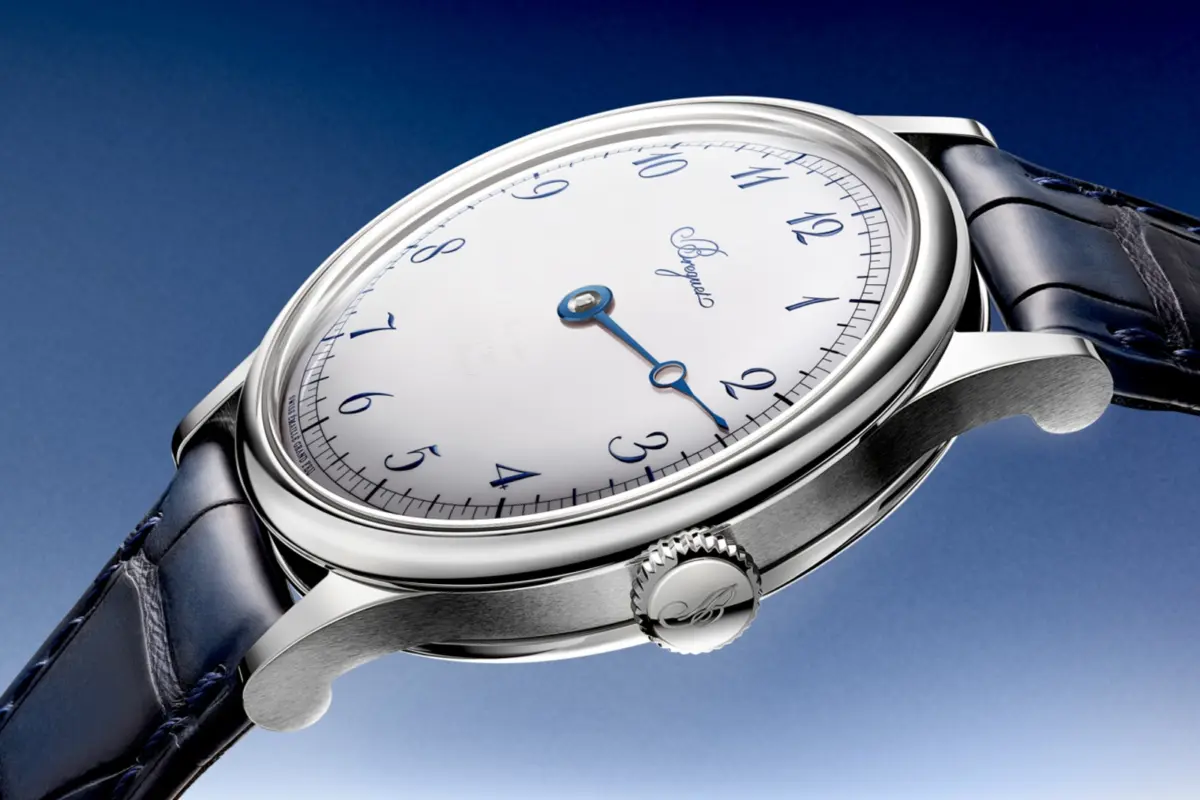
Enthusiasts did not have to wait long for the follow-up. Breguet has just debuted the Souscription in a platinum case, accented by navy blue—rather than black—petite feu enamel printing laid across a pristine grand feu enamel dial. The introduction of the brighter precious metal case, combined with this cooler color palette, delivers a distinctly more contemporary visual feel. By contrast, the initial Breguet gold iteration carried a heavier historical weight, feeling very much like an artifact anchored in the 18th century.

Aside from the case material and the dial’s color accents, the new timepiece retains the architecture of its predecessor, celebrating both the timeless styling and the pioneering movement design developed by Breguet himself. In the view of many horological historians and collectors, this specific classical architecture was a crucial element missing from the brand’s 20th-century output. It was not until the 2005 launch of the Tradition 7027 that Breguet truly moved away from efficient modern industrial constructions, pivoting instead toward movements that more authentically represent the calibres responsible for building its founder’s towering historical reputation.
Priced at US$76,600, the platinum Souscription carries a roughly 20% premium over the equivalent model crafted in Breguet gold. This price adjustment likely reflects anticipated market demand for white precious metals, even though the raw material cost of platinum itself remains lower than gold. While the price increase is undeniably steep, the watch nonetheless remains remarkably competitive within today’s high-end watchmaking market, where collectors are frequently willing to pay a premium for exceptional historical pedigree and finishing.
One-handed watchmaking
The Souscription relies on a single hand to indicate both the hours and the minutes, a design choice that naturally commands more visual attention than a conventional multi-hand display. The heat-blued steel hour hand is remarkably long, stretching nearly to the entire radius of the dial. Furthermore, it is gently curved to follow the domed contour of the dial surface, a meticulous detail designed to virtually eliminate parallax error. For a single hand tasked with simultaneously tracking hours and minutes with legibility, this engineering consideration is vital.

Fortunately, reading the time is far more intuitive than one might initially assume. The minutes scale is carefully calibrated in clear five-minute increments, making it surprisingly straightforward to tell time with a high degree of precision. Accompanying this scale are the namesake Breguet numerals, rendered in dark blue petite feu enamel, which exhibit a grace, slenderness, and delicacy that remains exceedingly rare in modern watchmaking.
A subtle yet deeply meaningful detail can be found just above the six o’clock position, where Breguet’s secret signature is delicately engraved using an antique pantograph. Notably, this exact pantograph was owned and used by master watchmaker George Daniels for many years, adding a direct lineage of independent watchmaking history to the piece. This engraving mirrors the freehand-engraved unique movement number inscribed on the main plate, imparting the kind of intimate human touch that normally drives collectors to seek out independent workshops rather than historic houses.
Much of the dial’s exceptional legibility stems from its carefully considered proportions. The platinum case measures 40 mm in diameter, while the expansive dial layout and comparatively slim, highly polished bezel emphasize its visual footprint. Yet, this expansive layout is precisely what makes the pocket-watch-inspired design successful. If the watch were built in a smaller diameter, the crucial minute scale would likely become too cramped and difficult to read accurately. Meanwhile, the 10.8 mm case height feels entirely appropriate for the overall size and aesthetic design, giving the timepiece the wrist presence of a miniaturized pocket watch. This impression is further enhanced by the smooth, uninterrupted lines of the case flanks.

Breguet architecture
The modern reemergence of Breguet, guided by Daniel Roth during the 1970s and 1980s, successfully reestablished the brand’s historic design language by adapting it for the smaller dimensions of the wristwatch. However, practical manufacturing constraints of that era meant those early watches were frequently powered by relatively conventional Frédéric Piguet and Lemania calibres, which were constructed in accordance with standard 20th-century design principles. Several of these historical calibres remain part of the modern catalog, most notably the caliber 502, which stands as a heavily upgraded modern iteration of the Frédéric Piguet caliber 71.
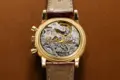
In stark contrast, the caliber VS00 movement that drives the Souscription reaches much further back into history for its inspiration, drawing directly from a layout that Abraham-Louis Breguet originally developed for his own original Souscription pocket watches. This is not the first time this distinctive architecture has been deployed by the brand; a related calibre has successfully underpinned the Avant-Garde and Tradition collections for more than two decades. However, the Souscription marks the first time this historic architecture has been inverted and fully integrated beneath a traditional dial.
Beyond its historical inspiration, the movement offers an abundance of visual and mechanical details to admire. The finely frosted main plate and finger bridges are direct visual recalls of the gilded finishes that Abraham-Louis Breguet applied to his own creations centuries ago. Meanwhile, the incorporation of a pare-chute-style shock protector and a traditional overcoil hairspring serve as living proof of the founder’s enduring technical genius.

Key facts and price
Breguet Classique Souscription 2026
Ref. 2026PT/28/9W6
Diameter: 40 mm
Height: 10.8 mm
Material: Platinum
Crystal: Sapphire
Water resistance: 30 m
Movement: VS00
Functions: Hours
Winding: Manual wind
Frequency: 21,600 beats per hour (3 Hz)
Power reserve: 96 hours

Strap: Alligator leather strap with pin buckle
Limited edition: No
Availability: Available through official Breguet boutiques and authorized retailers
Price: US$76,600 excluding taxes