




In contemporary art jewelry, few creators challenge the traditional boundaries of adornment quite like Marie-Caroline Locquet. Rather than viewing jewelry as a conventional symbol of wealth, power, or social status, Locquet approaches the medium as a conceptual vehicle for provocation. Her striking creations—which function simultaneously as restraints and defensive weapons—are designed to offer wearers a unique physical experience that investigates our collective fragility. By invoking themes of physical violence, confinement, and sexual dominance, her work elicits a complex psychological reaction, walking a tightrope between deep discomfort and powerful erotic tension.
This uncompromising vision has recently earned her recognition as a finalist for the prestigious Young Artist Award. Supported generously by Karen and Michael Rotenberg, the biennial award celebrates exceptional promise, innovation, and distinct individuality in the work of emerging jewelry artists aged 35 or younger. Through this accolade, the Art Jewelry Forum (AJF) champions groundbreaking practices that challenge existing paradigms and inspire future developments within the field.
Following her selection as a finalist, Locquet sat down for an in-depth conversation about her artistic origins, her conceptual methodology, and her ongoing efforts to redefine what body ornamentation can achieve in the modern world.
Tracing the Roots of a Radical Practice
Locquet’s journey into the world of contemporary jewelry began during her earliest days as an art student, a period when she encountered visionary creators who fundamentally shifted her understanding of the medium. Instead of traditional aesthetic beauty or the ostentatious display of wealth, these pioneering works possessed a strange, unsettling, and inherently dangerous quality. She points to the radical creations of Bernhard Schobinger and Dorothea Prühl as pivotal influences that shattered her conventional perspectives on art.
“It’s the bottleneck of Bernhard Schobinger and Dorothea Prühl’s work, for instance: some pieces that shift the way jewelry is understood,” Locquet explains, reflecting on her formative influences. “It really changed my point of view on art. In a way, jewelry interests me as an object of disruption, reflection, and provocation.”
Entering the field fueled by intense curiosity and pressing theoretical questions, Locquet quickly zeroed in on a core paradox: Why create and wear jewelry that appears deeply disturbing at first glance? What are the implications of fashioning objects that society labels as “unwearable”? This exploration of unwearability rapidly evolved into the central pillar of her artistic research, steering her toward a career defined by rigorous conceptual inquiry rather than commercial appeasement.

For Locquet, being named a finalist for the Young Artist Award serves as a powerful validation of a trajectory she has pursued with unwavering dedication over several years. She notes that the recognition provides a vital surge of confidence, encouraging her to push her radical ideas even further and continue challenging herself, the wearers of her pieces, and her audiences.
Confronting Discomfort in Public Spaces
Growing up in the north of France, Locquet developed an early sensitivity to the pressures of self-presentation and the ways individuals use adornment as a form of social camouflage or tribal affiliation. This upbringing planted the seeds of her conceptual engagement with jewelry, driving her to study the medium as a cultural artifact rather than an outlet for pure aesthetic pleasure.
In her hands, each individual piece radically alters the traditional status of jewelry. Rather than acting as a showcase for personal affluence, her works serve as active confrontations with high potential for disruption within public spaces. Her practice steers clear of gentle seduction or polite representation, plunging instead into themes of disturbance, violence, fragility, seduction, domination, vulnerability, and confinement.
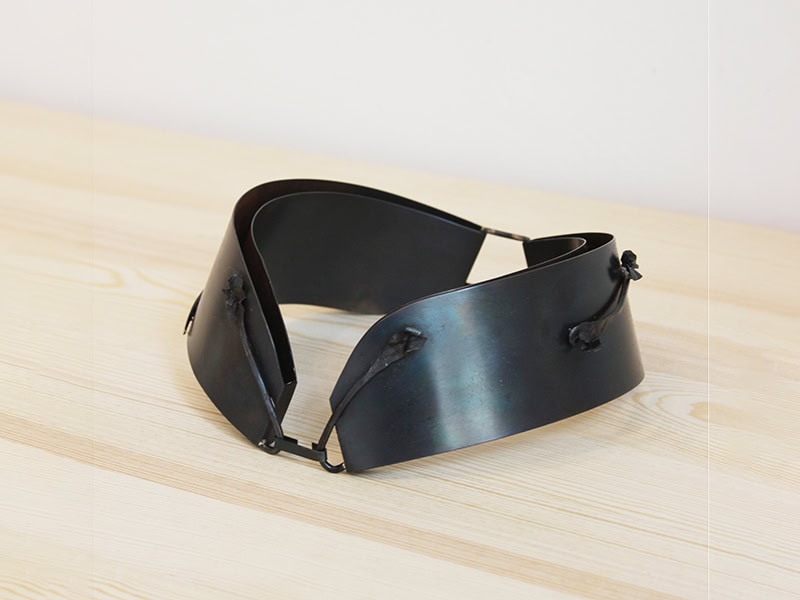
By pushing materials to their absolute limits, Locquet strips them down to reveal their fundamental nature. Her chosen forms deliberately evoke a tense duality between desire and death. Whether functioning as defensive weapons or intricate restraint devices, her pieces offer a singular wearing experience that tests our shared vulnerabilities. They pose a direct challenge to anyone who observes them, maintaining an unyielding tension between social discomfort and the latent temptation of an embrace.
An Exploration of Confinement and Mechanics
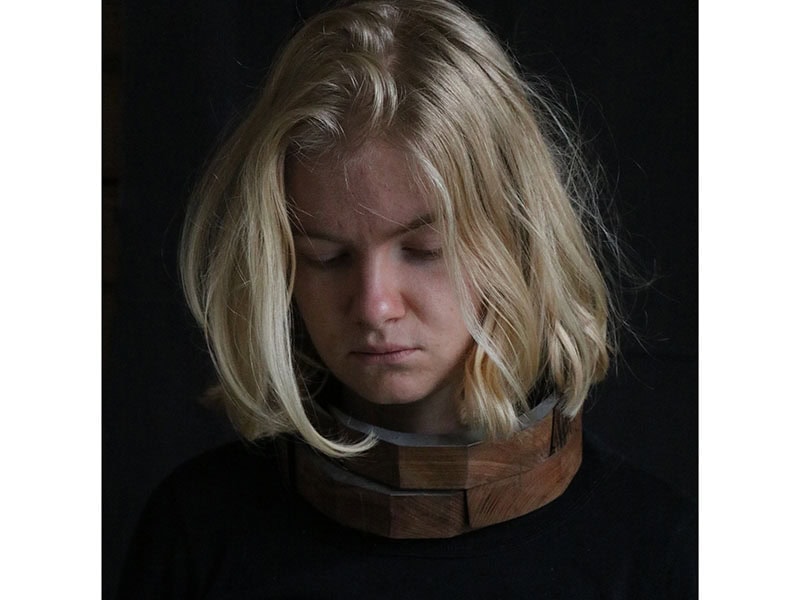
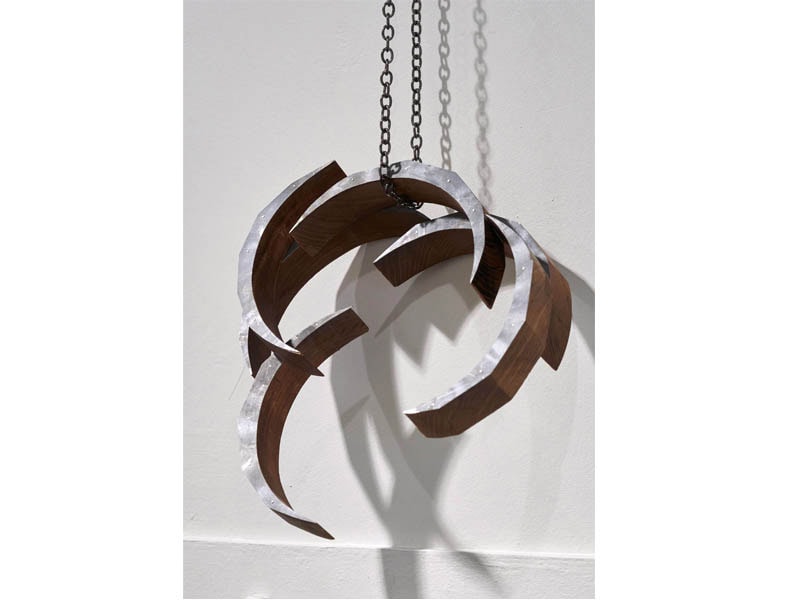
As her practice evolved, the physical manifestations of confinement, violence, and vulnerability led Locquet to investigate historic and cultural precedents of bodily constraint. Her research has drawn upon objects such as the collier d’appartenance—a collar traditionally bestowed by an individual upon those who submit to them in submissive relationships—alongside the "slave collar" rooted in 19th-century Norman and Auvergnat wedding traditions, where it was given to women as a token of possession. She has similarly examined animal-labor tools, such as the heavy working collar used for horses.
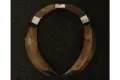
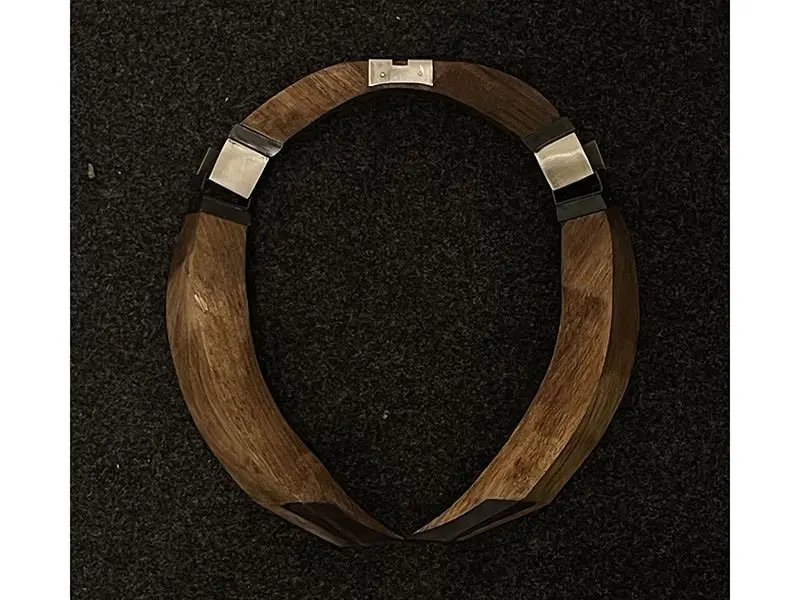
Among the standout pieces from her application is Hands (2024), a neckpiece meticulously crafted from elm wood, zinc-plated steel, and silver. This piece vividly encapsulates the multifaceted nature of her artistic output, showcasing her obsessive investigation into mechanical systems, intricate movements, specialized clasps, and the fluid border separating jewelry from standalone sculpture.
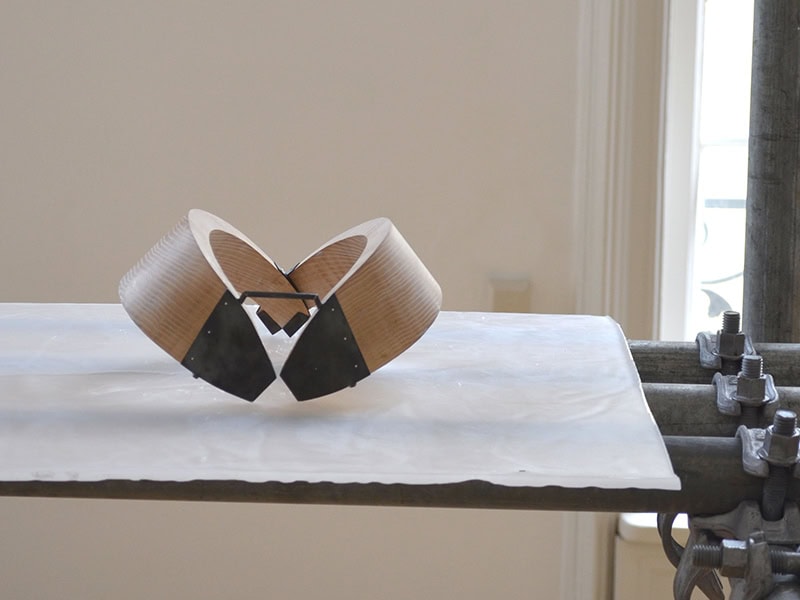
“The piece unfolds and occupies the space like a complex mechanical object, before closing around the neck… like an act of strangulation,” Locquet explains, describing the work as her most intimate and complex creation to date. Through its mechanical precision and visceral imagery, Hands gives physical form to the themes of confinement and violence that run deep through her portfolio.
Examining the Social Mirror of Adornment
What excites Locquet most about the field of art jewelry is its capacity to anchor a comprehensive creative approach—one that flows seamlessly from the physical object itself to theoretical research, culminating in the design of immersive exhibition spaces that harmonize with the work. More broadly, she is fascinated by how body ornamentation shapes the visual identity and cultural values of a society.
She firmly believes that everything we choose to wear draws directly from the unwritten rules, boundaries, and values of our surrounding world. Several years ago, she initiated a sweeping iconographic research project and collection centered on both wearable and unwearable items, adopting the guiding phrase: “Unwearable—adornment is impure, makeup is obscene, disguise is an abomination.” This extensive research continues to demonstrate how ornament, when brought into intimate contact with the human body, reveals profound insights about social norms, cultural representations, and the constant oscillation between the private sphere and the public space.
Navigating the Risks and Challenges of the Field
Reflecting on the current landscape of the discipline, Locquet recalls an exhibition titled Jewelry Is Still a Risky Business, which she and her colleagues curated as students during Munich Jewellery Week in 2018 in reference to a work by Paul Derrez. That title remains a guiding mantra for her philosophy: jewelry, in her view, should always retain an element of risk.
Despite the liberating potential of the medium, Locquet occasionally confronts frustrations regarding how contemporary art jewelry is perceived by the broader art world. During her studies at a French fine art school, she frequently encountered lingering biases that positioned jewelry as somehow secondary, superficial, or overly niche compared to other fine art disciplines.
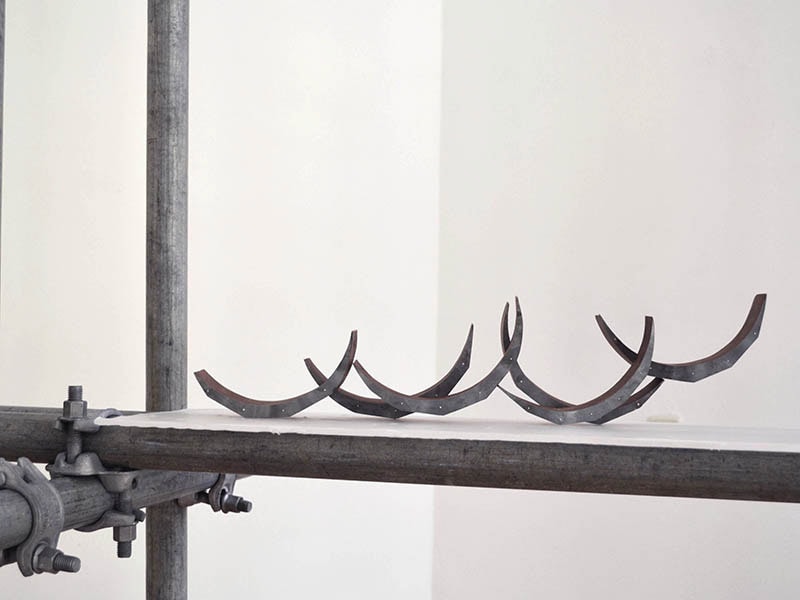
Yet, she views this outsider status as a distinct strength. While the medium’s unconventional nature opens fresh ways of looking and thinking, it also highlights a persistent distance between the specialized art jewelry community and wider audiences. This realization informs her decision to create pieces like Panicroom Vector I (2025)—works that are more literal in their approach, acting as accessible entry points for viewers unfamiliar with the genre. For Locquet, remaining steadfast in her artistic course means continuing to explore new territories, engineering meaningful experiences for viewers, and expanding the horizons of the medium. Being recognized as a finalist for the Young Artist Award reinforces her belief that she is forging her path in the right place.
Looking Ahead: Research, Teaching, and Collaboration
Looking toward the horizon, Locquet reflects on how much her practice has evolved since her graduation five years ago. Having recently opened a new chapter in her work by extending her sculptural thinking directly into spatial environments—an approach she plans to unveil in upcoming exhibition projects—she remains committed to the rhythm of artistic life. Her immediate goals include growing her practice, developing her unique artistic language, pursuing international residencies, and collaborating with fellow artists.
In addition to her studio practice, Locquet harbors a strong interest in academic research and teaching, viewing educational spaces as vital environments for reinventing and pushing forward our collective understanding of body ornament. For her, teaching offers a unique platform to continue extending, deforming, shaping, and questioning the very definition of jewelry.
As she looks to the future with cautious optimism and unwavering trust in her creative process, Locquet extends her deepest gratitude to everyone who has supported her artistic journey thus far.