





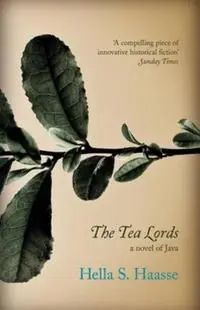
If the characters populating the pages of The Tea Lords feel remarkably authentic, breathing and suffering with an undeniable realism, it is because they are drawn directly from the historical record. The grande dame of Dutch literature, Hella S. Haasse, based her internationally acclaimed magnum opus concerning plantation life in the Dutch East Indies on a rich trove of authentic letters, official documents, and personal papers recovered from extensive archival research.
Originally published in Dutch as Heren van de thee in 1992 during the celebrated Dutch Book Week, the novel stands as a towering achievement in modern European literature. Nearly a decade after its initial publication, the book was skillfully translated into English by Ina Rilke, introducing a global audience to a world that is at once intimately domestic and grandly historical. The Guardian praised the translated work as “a graceful, marvellously achieved improvisation that only a novelist of the greatest imagination and sympathy could have written,” capturing the profound resonance of Haasse’s narrative approach.
At the narrative center of the novel is Rudolf Kerkhoven, a young man who finishes his studies at what is now TU Delft and makes the momentous decision to move to a remote, untamed tea plantation on the island of Java. It is a location that he optimistically nicknames “Eldorado.” The young man is driven by the desire to follow directly in his father’s footsteps, stepping into the demanding world of colonial enterprise. However, upon arrival, he quickly struggles to adjust to the harsh realities of life in Indonesia, where the environment is unforgiving and the social structures are rigid.
While the agricultural and commercial venture eventually prospers under his watch, Kerkhoven’s intimate thoughts, as revealed through Haasse’s careful archival reconstruction, show that he does not ultimately enjoy the success he worked so hard to achieve. The psychological toll of the enterprise weighs heavily upon him. As Haasse writes of one pivotal moment in the text: “Never in his life had Rudolf felt such profound relief as when the Telank dropped anchor in the roadstead of Batavia.”
Throughout the narrative, the reader witnesses Kerkhoven’s relentless struggle with the land itself, which can be punishingly inhospitable, as well as his complicated domestic life with his wife. His spouse faces personal trials, including significant issues with fertility, adding layers of emotional tension to their isolated household. Furthermore, Kerkhoven wrestles constantly with his own internal demons. The young man, who is only 24 years old when the sweeping novel begins, is deeply anxious, constantly concerned about his precarious position in society and whether he is properly adhering to the complicated, unyielding social rules of his class.
Beyond the deeply personal psychological portraits, the book also provides a sweeping look at the complicated political and social structures of the Dutch East Indies at the time. Haasse offers an in-depth examination of the intricate business of tea—an agricultural commodity that many consumers around the world enjoy frequently in their daily lives, yet think about very rarely in terms of the immense human labor and colonial infrastructure required to produce it.
Much like the historical correspondence referenced within the framework of the book, the plot of The Tea Lords moves slowly, if at all, across certain stretches of the narrative. This deliberate pacing serves as an interesting juxtaposition to today’s culture of instant communication and rapid media consumption, inviting modern readers to slow down and immerse themselves entirely in the psychological and environmental weight of the late nineteenth century.
It is important to note that The Tea Lords is not structured as a dry compilation or transcription of historical letters. Rather, it is a richly crafted work of fiction loosely based on one specific family’s harrowing experience as colonial plantation holders. Haasse discovered the Kerkhoven family documents safely preserved within the Indies Tea and Family Archive. However, her creative process was also deeply informed by her own childhood memories and personal history. She was born in Batavia, which is known today as Jakarta, giving her a visceral, sensory understanding of the landscape, climate, and atmosphere that she committed to paper.
Haasse remains a foundational, staple read for generations of Dutch schoolchildren and literature enthusiasts alike. Born in 1918, her celebrated literary career spans decades and multiple genres. Her famous novella Oeroeg, which is also famously set in the Dutch East Indies, was originally written as the prestigious gift for the Dutch-language Book Week in 1948. Oeroeg was later translated into English under the title The Black Lake and remains a classroom staple, taught in schools around the country to provoke discussions on colonial history, friendship, and cultural division.
Nearly 50 years after the publication of Oeroeg, Heren van de thee was published in 1992, once again coinciding with Dutch Book Week. Haasse holds a unique and distinguished place in Dutch literary history as the only author to have ever taken home the prestigious Book Week Prize three times. Her literary contributions earned her widespread national and international acclaim throughout her long life. In addition to the Book Week accolades, she was awarded the esteemed Constantijn Huygens Prize and the P.C. Hooft Award, alongside winning the NS Public Prize twice. She continued to write and inspire readers until her death in 2011 at the advanced age of 93.
The Tea Lords offers a patient, unhurried read, but it ultimately provides a fascinating, clear-eyed look at daily life during a historical era that is frequently romanticized in popular culture and historical fiction. Readers interested in exploring this complex historical landscape can secure a copy of the translated novel through the American Book Center.