






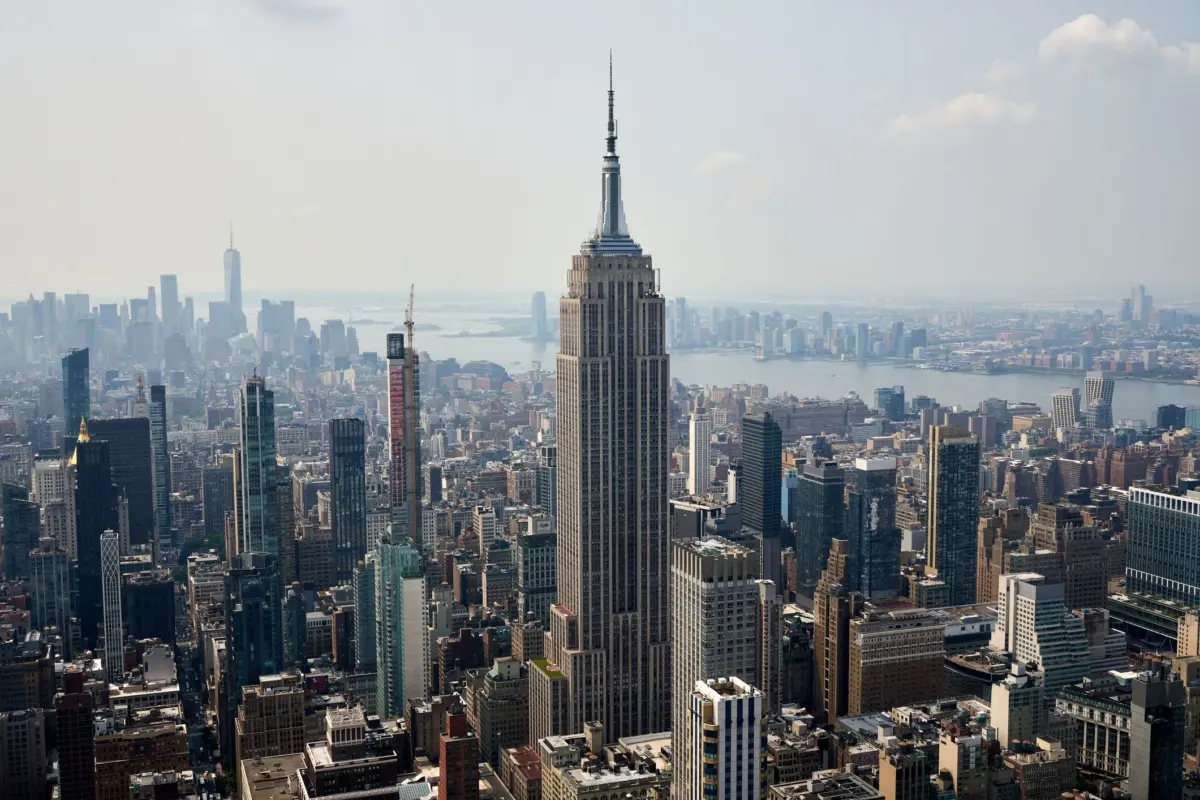
For globetrotters who make a habit of mapping out new metropolises from the clouds, climbing to the highest vantage point is often the ultimate travel ritual. Whether tracking footsteps from the roof of Barcelona’s Casa Milá or scaling the heights of Copenhagen’s historic Round Tower, ascending to an overhead view offers a unique way of orienting oneself. It turns a foreign labyrinth into an intelligible grid of streets, parks, neighborhoods, and missed opportunities, leaving mental breadcrumbs for a future return. Yet, for many residents of a city, the most iconic local landmarks are often the ones most easily overlooked in daily routines.
Having lived in New York City for five years—and just across the Hudson River in New Jersey for years prior—one longtime resident recently realized they had never ascended to the top of the Empire State Building. Despite spending a lifetime marveling at the towering Art Deco masterpiece from afar, the skyscraper remained an unticked box on a local bucket list. That oversight was finally corrected on a bright, sunny September morning at 350 Fifth Avenue, stepping inside the very landmark that has immortalized countless cinematic moments, from classic romantic dramas to historical adventure films.
There is a fascinating paradox to visiting the legendary skyscraper: the primary draw of ascending the Empire State Building is not actually about examining the building itself, but rather experiencing the breathtaking bird’s-eye view it provides of everything surrounding it. Travelers who prefer to appreciate the architectural exterior of the skyscraper are often advised to view it from alternative vantages like the Top of the Rock. However, stepping inside reveals a rich history. Beyond the panoramic vistas, the 2nd and 80th floors house thoughtfully curated museum exhibits offering a comprehensive historical overview of the structure’s construction and enduring legacy—including the astonishing fact that the massive project was erected in just 13 months during the height of the 1930s.
What is the Empire State Building?
The Empire State Building stands as a monumental 102-story Art Deco skyscraper situated in the heart of Midtown Manhattan. Designed by the architectural firm Shreve, Lamb & Harmon, the building was constructed with breathtaking speed between 1930 and 1931, rising at a staggering pace of about 4.5 stories per week. This made it one of the fastest large-scale construction projects in human history. Standing at 1,454 feet tall, the tower proudly held the title of the world’s tallest building for nearly 40 years, until the North Tower of the World Trade Center surpassed it in 1970. Today, it ranks as the eighth-tallest building in New York City, accommodating over 150 corporate offices, including prominent tenants like LinkedIn, Workday, and Expedia.
Attracting more than 2.5 million visitors annually, the skyscraper shares the spotlight with the Statue of Liberty as one of the most photographed cultural icons in the city. It has served as a backdrop for more than 250 movies and television shows, most famously starring in the 1933 classic King Kong. Its famous lighting tradition began in 1976, when the spire was illuminated in brilliant red, white, and blue to celebrate the United States Bicentennial, sparking a long-standing tradition of honoring seasonal events, cultural holidays, and global causes with custom color displays. In 2019, the building completed a massive, four-year, $165 million renovation project that revitalized the 2nd and 80th-floor exhibition spaces and completely reimagined the 102nd-floor observatory.
Centrally located in Manhattan, the dedicated visitor entrance is situated at 20 West 34th Street, within easy walking distance of major transit hubs like Port Authority, Penn Station, and the PATH, as well as virtually every major subway line including the 1, 2, 3, A, C, E, N, Q, R, W, B, D, F, M, 4, 5, 6, and 7 trains. While the original grand Art Deco lobby at 350 Fifth Avenue is reserved for office tenants, visitors are treated to its historic splendor upon exiting the observatory. Those seeking to purchase tickets on-site can find the physical ticket office conveniently located nearby at 12 West 34th Street.
How do you buy tickets for the Empire State Building?
Operating 365 days a year, rain or shine, the landmark welcomes visitors through all seasons and holidays, offering a unique perch to witness city spectacles like the Macy’s Thanksgiving Day Parade from above. Tickets can be secured in advance online through the official website or via authorized third-party platforms, or purchased directly at the physical ticket office. Visitors arriving during shoulder hours often find that standard booking slots remain readily available right up to the hour of entry.

When planning a visit, ticket options generally require a choice between accessing just the iconic 86th floor or upgrading to include the enclosed 102nd floor. Both choices include full access to the historic museum exhibits and offer flexible rescheduling policies for the selected date. The 102nd floor provides an elevated perspective with unobstructed views centered toward Central Park from a climate-controlled indoor space, making it an ideal retreat during inclement weather. For those visiting on a clear, sunny day, however, standard admission to the expansive open-air deck on the 86th floor offers plenty of magic, leaving room in the budget for a memorable meal in nearby Koreatown. While "Flex" and "Express" add-ons are available for expedited entry and open-date scheduling, standard ticketing remains efficient for most travelers. Additionally, tourists exploring multiple sights across the city can utilize bundled sightseeing packages such as the New York CityPass or the New York Pass by GoCity to access the landmark at a discounted rate over a set duration.
Do you have to purchase tickets in advance?
Reflecting modern post-pandemic tourism standards, the Empire State Building utilizes a timed-ticketing system designed to streamline visitor flow and prevent severe congestion at the ticketing kiosks and elevators. According to Dan Rogoski, senior vice president and observatory general manager, advance online purchases are strongly recommended to guarantee a preferred arrival slot, particularly during high-demand windows such as holidays and sunset hours. Even so, travelers maintaining flexible schedules will often find same-day availability thanks to the building’s year-round daily operations.
Are there guided tours to see the Empire State Building?
For visitors seeking an elevated experience, specialized guided tours are available as an upscale option. The Premium Experience provides a private small-group tour capped at seven participants alongside expedited entry. Meanwhile, the All Access Tour channels the exclusive treatment experienced by celebrity guests, offering private VIP entry, access to the celebrity green room stocked with complimentary refreshments, and a personalized guided exploration of the landmark.
What can you expect from a trip to the Empire State Building?
Upon entering through the 34th Street security checkpoint, guests pass through airport-style screening before reaching the second-floor interactive museum galleries. These exhibits trace the monumental engineering and labor behind the skyscraper’s historic construction. From there, staff members guide visitors to elevators ascending to the 80th floor, where the first indoor panoramic vistas unfold. This level features "NYC: Above and Beyond," a stunning mural of the Manhattan skyline meticulously rendered from memory by artist Stephen Wiltshire after a brief helicopter tour.
Continuing upward leads to the sprawling 86th-floor open-air observatory, the epicenter of the Empire State Building experience. Encircling the island behind classic protective metal railings—and outfitted with overhead heaters for chilly winter months—this 360-degree deck allows visitors to trace the city’s rivers, bridges, and famous neighborhoods. On exceptionally clear days, visibility stretches across six distinct states: New York, New Jersey, Pennsylvania, Connecticut, Massachusetts, and Delaware. Visitors holding tickets for the 102nd floor enjoy similarly sweeping sights from a weather-protected enclosure. While there is no strict time limit once inside the observatories, allocating one to two hours ensures ample time to absorb the sights. Exiting guests pass through the gift shop before stepping out through the historic Art Deco lobby, designated as an official landmark by the Landmarks Preservation Commission, with on-site dining options including the State Grill and Bar, a Starbucks Reserve, and Tacombi.
When is the best time to visit the Empire State Building?
As with many major global cities, experiencing the destination during shoulder seasons often yields the most rewarding atmosphere. Spring and autumn bring comfortable weather alongside striking seasonal views, whether it is Central Park framed by cherry blossoms or vibrant fall foliage.
Regarding the time of day, mornings and sunsets represent the peak hours of visitor traffic. Early risers can opt for specialized sunrise admission slots, which grant pre-dawn access to watch the sun rise over the Manhattan skyline and the neighboring Chrysler Building, complemented by a morning beverage and pastry. For locals or visitors seeking a quieter experience during the day, mid-afternoon windows between 1 p.m. and 4 p.m. typically see lighter crowds. Travelers desiring both daylight perspectives and glittering evening panoramas can also utilize multi-entry ticket options to experience the view at two different times of day.