






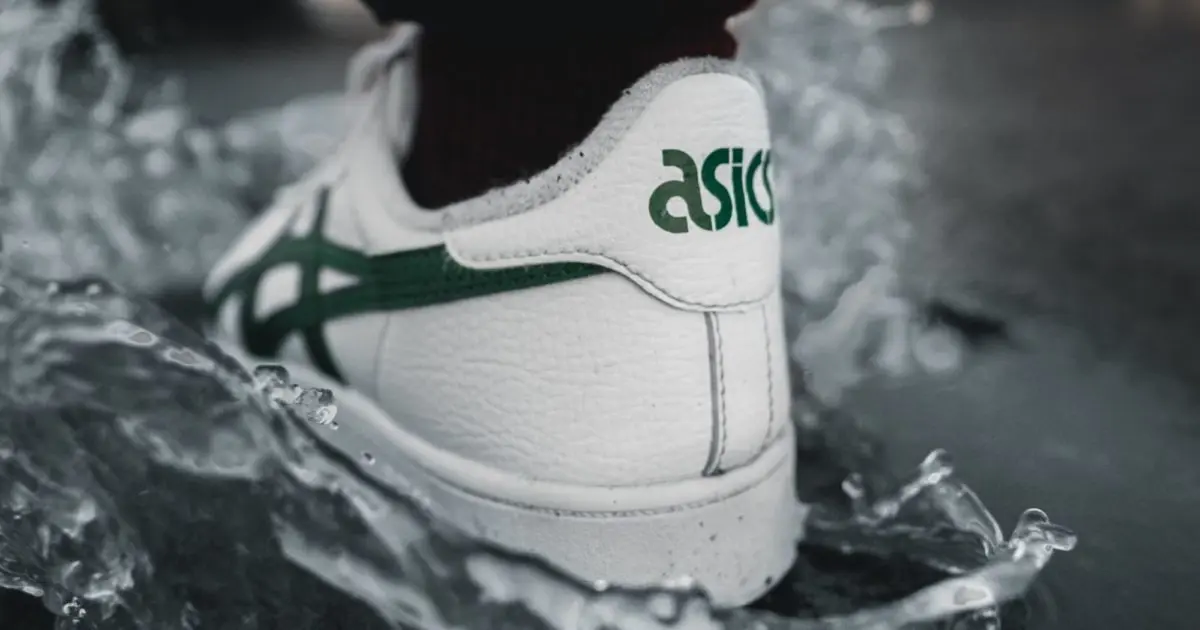
Editor’s Note: Editors curate highly rated brands that are first assessed by a rigorous ratings system. Buying through provided links may earn a commission, supporting ongoing editorial work.
Global sportswear giant ASICS famously derives its name from the Latin phrase anima sana in corpore sano, translating to "a sound mind in a sound body." The company states that its primary corporate mission is to "uplift the world through sport." However, as sustainability scrutiny intensifies across the fashion and activewear industries, consumers and analysts are increasingly asking: how ethical is ASICS in practice?
A fresh perspective on this question comes from the brand’s "It’s a Start" rating, published in April 2026 by sustainability ratings platform Good On You. While this middling score marks a notable improvement from ASICS’s historical "Not Good Enough" designation, a deep dive into the data reveals significant gaps in the company’s performance—particularly regarding living wages, chemical management, and supply chain transparency. Because ratings analysts are constantly updating their evaluations of thousands of brands, this assessment reflects the publicly available evidence at the time of publication and may not capture subsequent corporate claims.
Founded in post-war Japan in 1949, ASICS originally established its reputation manufacturing specialized basketball shoes before expanding into broader activewear and athletic accessories over subsequent decades. Today, it stands as one of the most recognizable athletic brands on the planet. Yet, despite its storied history and foundational philosophy centered on holistic well-being, the company’s environmental and social performance continues to invite critical examination.
Environmental Impact: Progress on Climate, But Gaps in Materials and Transparency
ASICS has managed to improve its environmental pillar score from "Not Good Enough" to "It’s a Start," signaling positive movement in how the company approaches ecological stewardship. Official corporate messaging emphasizes key goals centered on reducing greenhouse gas emissions and scaling up the use of recycled materials.
However, external analysts note that this scope feels increasingly narrow and dated. In an era marked by urgent ecological crises, contemporary sustainability benchmarks require brands to address broader challenges, such as fundamentally reducing overall reliance on synthetic fibers, ensuring rigorous chemical management—particularly the elimination of hazardous and solvent-based chemicals common in sneaker manufacturing—and accounting for microfibre shedding.
A closer look at ASICS’s material portfolio reveals that while the brand utilizes some lower-impact and recycled options, it does not publish an aggregate breakdown of its material mix. Consequently, it remains impossible to verify what proportion of total production these sustainable alternatives actually represent. Furthermore, a high volume of ASICS products relies heavily on synthetic materials, yet the brand lacks proactive initiatives to mitigate the release of microfibres during consumer laundering. Given that activewear garments are frequently washed, this represents a notable blind spot for a major apparel producer.
On the operational side, ASICS has implemented several positive measures. The company actively manages water usage throughout its supply chain, operates a product take-back scheme to encourage circularity, and provides introductory circular design training to its internal product developers. Additionally, ASICS has established science-based targets to curb greenhouse gas emissions across both direct operations and its wider supply chain. Despite these commitments, current public reporting lacks definitive evidence demonstrating that the brand is securely on track to meet these climate targets, underscoring a pressing need for greater transparency.
Labour Conditions: Improved Safeguards Overshadowed by the Living Wage Gap
When it comes to the social pillar governing labor conditions, ASICS’s latest review shows incremental progress, lifting its score from "Not Good Enough" to "It’s a Start."
The brand has introduced several targeted initiatives designed to enhance supply chain security and worker safety. Notably, ASICS provides financial security measures for its suppliers, a policy intended to help facilities upgrade infrastructure while mitigating the destabilizing economic impacts of volatile short-term contracting, such as forced overtime or sudden shifts in work volume. To protect vulnerable workers, the company maintains an internal anonymous grievance mechanism, allowing personnel to report concerns without fear of retaliation.
Geographically, a portion of ASICS’s final-stage manufacturing takes place in countries categorized as lower risk for labor abuses or occurs within certified facilities. The brand’s overarching code of conduct also formally aligns with core International Labour Organization (ILO) principles. However, because ASICS has not publicly shared an aggregate breakdown of its supplier network, independent verification of the exact proportion of manufacturing covered by these lower-risk facilities remains out of reach.
Despite these constructive steps, a glaring deficiency persists in ASICS’s labor performance: investigators found no verifiable evidence indicating that the brand ensures the payment of a living wage to workers across its extended supply chain. Because garment workers who cut, sew, and assemble athletic gear form the foundational backbone of the global fashion industry, labor advocates argue that these individuals deserve dignified livelihoods commensurate with the immense profits generated by major corporations. Observers strongly urge ASICS to leverage its substantial financial resources to close this critical wage gap.
Animal Welfare: Stagnant Scores and Slow Policy Evolution
In contrast to the environmental and labor pillars, ASICS’s animal welfare score remains stagnant at "Not Good Enough."
While the company has issued general statements expressing a commitment to minimizing animal suffering, it lacks a comprehensive, formal animal welfare policy. Furthermore, the brand has not established binding commitments to phase out animal-derived materials entirely or to secure independent ethical certifications for its leather supply chain.
There have been some recent shifts in sourcing practices. Following coordinated industry pressure, ASICS pledged to stop sourcing and using kangaroo leather in its footwear lines. Additionally, the brand maintains a policy requiring that sourced wool originate from non-mulesed sheep, though it fails to provide adequate documentation or third-party verification to substantiate these claims.
Public data indicates that ASICS continues to utilize leather, wool, and down in various product lines, with some of that leather incorporating recycled content. Positively, the brand does not appear to source fur, angora, exotic animal skins, or exotic animal hair.
Overall Assessment and Better Alternatives
Weighing the publicly available evidence, ASICS currently holds an overall rating of "It’s a Start." While it is encouraging to see a corporate giant implement constructive measures to stabilize supplier relationships and signal intent regarding circular materials and carbon reduction, these actions still fall short of what is expected from an enterprise of its global scale and financial muscle. A market leader with such extensive economic power possesses the capacity to guarantee living wages and enforce uncompromising sustainability standards.
Consumers seeking activewear alternatives with higher ethical ratings can explore several recognized brands evaluated by independent sustainability assessors. Happy Earth Apparel, a US-based organic clothing brand, partners with environmental non-profits to plant trees, combat climate change, and remove trash, offering apparel made from organic cotton across a wide size range. Similarly, UK-based BAM focuses on bamboo-viscose activewear, maintaining a transparency-first ethos that traces the majority of its supply chain while providing clothing recycling options to combat textile waste. Canadian brand tentree plants ten trees for every item purchased—having already surpassed 65 million trees—and constructs its earth-first products from lower-impact materials in fair working conditions. Finally, Italian label CASAGiN designs conscious apparel tailored for consumers looking to build sustainable wardrobes.
As sustainability standards continue to evolve globally, transparency and verifiable action remain the ultimate yardsticks by which sportswear giants will be judged.