






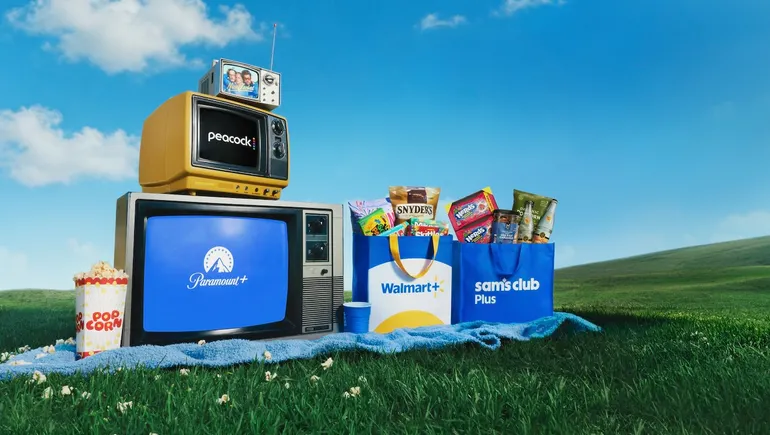
Retail giant Walmart has launched a major new strategic initiative by bundling its Walmart+ and Sam’s Club Plus memberships, offering consumers a combined savings of nearly $100. This aggressive pricing move arrives as American shoppers face mounting economic pressures, including persistent inflation and growing anxieties surrounding the job market. By pairing its premier digital and delivery subscription with its warehouse club tier, Walmart is directly targeting rival Amazon Prime and positioning its ecosystem as an unbeatable value proposition for cost-conscious households heading into the holiday shopping season.
The combined membership tier brings together a sweeping array of perks that span e-commerce delivery, wholesale shopping access, fuel discounts, and digital streaming options. Industry analysts note that the financial math of the offering is exceptionally compelling on paper, undercutting the traditional pricing structure of Amazon Prime while delivering the distinct advantages of a brick-and-mortar retail footprint and bulk-buying warehouse clubs.
Dive Insight: A Strategic Play Against Amazon Prime
This bold promotional and structural push from Walmart comes at a time when consumers are battered by rising prices and increasingly worried about employment security. The move serves as the latest and perhaps most formidable challenge to Amazon’s dominance in the subscription economy.
"This is a direct shot at Prime," said Brett Rose, founder and CEO at wholesale distributor United National Consumer Suppliers, in an email discussion regarding the retail landscape. "$120 vs. Amazon Prime’s $139, and you get a warehouse club, delivery, streaming, and gas thrown in. On paper, Walmart wins the value math easily."
The competitive chess match between the two retail titans has intensified on multiple fronts. In recent months, Amazon has aggressively pushed into Walmart’s traditional territory by expanding faster delivery capabilities to thousands of rural communities. This expansion has required the e-commerce giant to continuously build up its physical fulfillment capacity and last-mile station network in less densely populated regions of the country. Walmart’s bundled membership serves as a powerful counteroffensive, leveraging assets that Amazon simply cannot replicate overnight.
Walmart already maintains a massive structural advantage in its physical proximity to American consumers. In the United States alone, the retail corporation operates an expansive network of 4,615 Walmart retail stores alongside more than 600 Sam’s Club warehouse locations. By incorporating a streaming service option into the combined membership bundle, Walmart is directly attacking one of the primary retention hooks that has historically kept consumers loyal to Amazon Prime.
Capturing Higher-Income Shoppers and Driving Loyalty
Beyond appealing to budget-stretched shoppers, Walmart has successfully picked up sales and sustained customer loyalty from wealthier demographics over recent quarters. The introduction of a dual membership tier could prove instrumental in locking in these higher-income consumers who have increasingly crossed over to Walmart in search of both value and convenience.
Noting that a greater share of higher-income cohorts has become regular Walmart shoppers, Moody’s Ratings earlier this year designated the retailer as the single biggest winner in the U.S. retail environment. The ratings agency attributed this success to Walmart’s continuous innovation supporting its value offering and its best-in-class convenience.

Despite the compelling economics of the new bundle, market experts caution that consumer habits are deeply entrenched and that shoppers do not migrate away from established platforms overnight. According to Rose, consumers tend to shop at the two retail giants with entirely different mentalities and purposes—frequenting Walmart for everyday low prices and immediate product acquisition, while relying on Amazon out of habit and for ultimate convenience.
"A cheaper bundle doesn’t break that overnight and doesn’t create an imminent threat for Q4 holiday shopping," Rose noted. "Amazon has mastered lower prices and literally patented one-click buying. It’s a different shopping experience altogether."
The Power of Fuel Discounts and Recurring Revenue
At a time when gas prices remain stubbornly elevated well above $4 per gallon across most of the United States—with diesel commanding even higher figures—the fuel discount included in the Walmart ecosystem serves as a potent consumer draw. This particular Walmart+ perk has long been viewed as a direct challenge to Sam’s Club rival Costco, providing tangible, real-world savings on a frequent household expense. While Amazon has experimented with temporary fuel discount initiatives—such as offering a limited program to Prime members around the Fourth of July—it lacks a permanent infrastructure to compete with the extensive fuel station network tied to big-box and warehouse retailers.
The timing of the membership bundle is calculated to capture consumer commitments before peak seasonal spending begins.

"The timing tells you everything. Consumers are stretched heading into the holidays, and memberships lock in loyalty and recurring revenue before the spending gets decided," Rose observed. "Loyalty programs are what keep people coming back. However, not more so than lower prices."