




In college, there was a girl named Starla who lived down the hall, and she was the epitome of cool. The year was 1995, an era defined by original Gwen Stefani and the Tragic Kingdom aesthetic. Starla shredded on snowboard trips in Tahoe with the guys, frequented underground concerts, wore hip-huggers with lug-sole shoes, and possessed the kind of effortless, innate style that can only come from deep within.
Her style was so magnetic that, on more than one occasion, the author went out and bought the exact same items she owned—most memorably, a pair of black-and-white patent-leather boots that nobody else at school possessed. This choice, much like the boots themselves, was far from subtle.
Repeated acts of sartorial replication eventually earned the author a distinct reputation among peers. Friends playfully dubbed her "Single White Female," referencing the 1992 thriller about a woman whose admiration for her roommate spirals into a stalker-like obsession. Looking back, it raises a lingering psychological question: Was it a form of flattery born from appreciating a friend’s uniqueness, or was it a bizarre display that lacked respect for a singular sense of personal style?
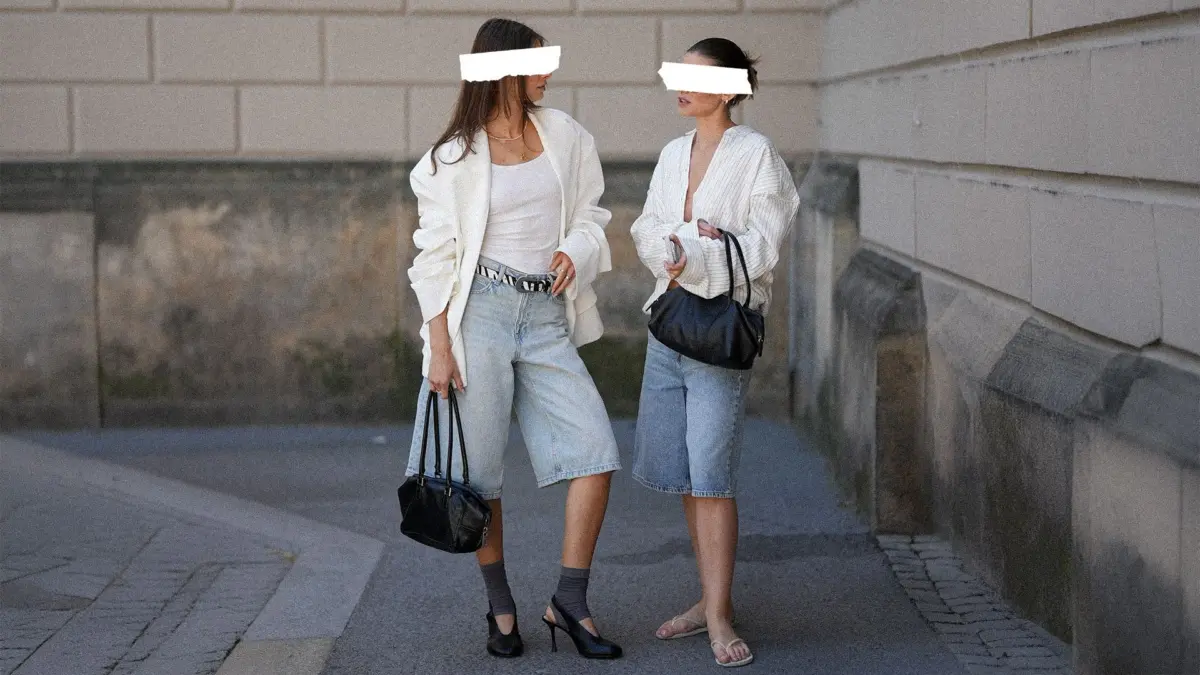
This dilemma feels deeply personal because fashion is, by its very nature, derivative. Society constantly takes cues from social media, celebrities, strangers, influencers, and even the person standing in line at the local coffee shop. However, when the individual serving as the muse is a close friend with whom one spends actual time, the social rules shift dramatically.
Lauren Santo Domingo, co-founder and chief brand officer of the luxury retailer Moda Operandi, once summarized the phenomenon succinctly on social media, writing, "Imitation is the sincerest form of stalkery." In an email interview, she confirmed that she still stands firmly by that mantra.
"It’s actually my job to inspire people to discover new pieces, new trends, and new designers," Santo Domingo explained. "Fashion is built on inspiration. We’re all constantly absorbing ideas from designers, friends, women on the street, Instagram, old photographs."
Yet, she noted that there is a critical distinction to be made. "There’s a subtle but meaningful difference between being inspired by someone and trying to recreate them. You know it when you see it."
A significant part of the underlying tension stems from the competing psychological demands placed upon clothing: the simultaneous desire to belong while also standing out.
"We tend to want to feel like we belong, but we want to feel like ourselves too," says Dr. Sarah Seung-McFarland, a licensed psychologist who specializes in fashion and design psychology. She is also the founder of Trulery, an editorial and commerce site exploring how clothing and spaces support identity and well-being. "We are influenced by the people around us, especially our friends, so sometimes dressing like them can be part of feeling connected to a group. At the same time, clothing is one of the ways we express our individuality."
According to Seung-McFarland, interpersonal friction arises when boundaries are crossed. "It becomes more of an issue when one person starts to feel like they can’t have something that feels like their own."
Imogen Lamport, an image consultant and personal stylist, points to academic research suggesting that the more a possession is tied to an individual’s sense of distinctiveness, the more irritating it feels to have someone else mimic it. In practical terms, a friend asking for the link to basic white t-shirts purchased in bulk is entirely benign. Conversely, a friend hunting down an exact deadstock vintage necklace that everyone in the social circle associates with a specific person crosses a sensitive threshold.
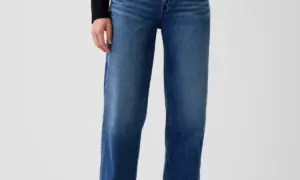
Despite these nuances, practical realities remain. "Nobody gets to ‘claim’ a dress," Santo Domingo points out. Clothing is commercial merchandise sold to anyone willing to pay for it, and trends exist precisely because masses of people adopt them. Experiencing a curiosity to try a particular denim silhouette worn by a friend does not inherently make someone a copycat. The psychological calculus changes, however, the moment an observer moves from a broad trend to duplicating an exact, highly signature item.
Santo Domingo has experienced the extreme version of this dynamic firsthand. "I’ve had people hunt down some of my most worn but coveted, incredibly hard-to-find vintage pieces and then show up wearing them in my own house," she revealed. "Without even a wink or an acknowledgment, that can feel genuinely unsettling."
That specific scenario is where harmless inspiration crosses the line to "feel more like impersonation." Determining when to ask permission versus when to simply buy an item comes down to context. For a basic or widely available commodity, seeking approval is likely unnecessary. But for a best friend’s extraordinarily distinctive new handbag that both individuals will inevitably carry to the same social dinners, a simple conversation can clear the air. Expressing sentiments like, "Hey, I love that bag so much, would you be annoyed if I got the same one? Be honest," requires minimal effort yet effectively wards off latent resentment.
Lamport offers a less socially awkward guideline for admirers: "Take the recipe, not the finished dish." If a person loves a friend’s distinctive coat, they should look for a similar silhouette rather than purchasing the exact garment from the identical store or designer.
Santo Domingo adopts a similar philosophy. When she borrows an obvious styling idea from someone else, she makes a deliberate point of crediting them. "It doesn’t diminish your own style to acknowledge where an idea came from," she notes. "If anything, it makes fashion more fun."
That microscopic social gesture illuminates why secret copying often feels so grating. Both parties usually know the exact origin of the idea. Pretending otherwise manufactures an artificial weirdness that would likely evaporate if the copycat simply admitted, "I loved yours so much I bought one too."
Navigating situations where one is the target of frequent copying by close associates requires initial evaluation. Identifying whether an incident is a one-off purchase or part of an ongoing pattern is essential.
Purchasing the same popular sneakers is one thing, but recreating entire outfits, adopting specific styling tricks, making a habit of tracking down exact personal pieces, or cribbing an aesthetic tied directly to one’s identity is entirely different. When a pattern causes genuine distress, addressing it before mild annoyance metastasizes into major resentment is a viable option. The objective is not to accuse a friend of identity theft, but rather to communicate maturely and kindly that having distinct sartorial territory matters.
Psychological research also indicates that mimicry can sometimes happen completely unconsciously. Lamport highlights the well-documented "chameleon effect," a phenomenon demonstrated in psychological literature showing that people naturally mimic the behaviors of others during social interactions. This suggests that a duplicating friend may simply be absorbing taste patterns without plotting a hostile takeover of a lifestyle.
Before turning a matching sweater into an interpersonal crisis, assessing the broader stakes is vital. Is it just a single item? Is it widely available on the open market? Is the friend openly enthusiastic about drawing inspiration? If the answers are affirmative, accepting the compliment and moving forward is often the healthiest path.
At other times, however, the clothes themselves are not the actual root of the problem. Santo Domingo admits that certain individuals’ imitation naturally gets under her skin simply due to underlying interpersonal dynamics.
"I’ve definitely inspired some copycats who, for one reason or another, irk me," she says. "If it’s someone I don’t personally respect or admire, then seeing even the slightest whiff of imitation is annoying. It’s hard to keep your distance from someone when there’s a constant sartorial connection."
Ultimately, this may be the most revealing truth underlying the entire discussion: sometimes the clothes are merely a flashpoint that brings pre-existing relationship dynamics to the surface.
No individual can legally or socially claim a trend, and no one holds permanent dibs on a pair of shoes. Friends will inevitably influence each other’s wardrobes, sometimes consciously and sometimes without realizing it. Yet the closer the relationship, the more distinctive the item, and the more frequent the duplication, the more considerate it is to acknowledge the source, ask permission before purchasing signature pieces, or ensure one’s own unique spin is applied to the idea.