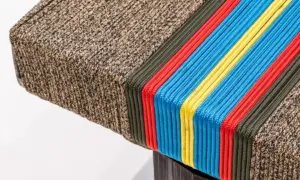





Marta Costa Reis, Mónica Gaspar, and Patrícia Domingues, eds., Madrugada: A joalharia e a política da Esperança (Daybreak: Jewellery and the Politics of Hope). Lisbon: PIN – Portuguese Association of Contemporary Jewellery and CML/MUDE Museu do Design, 2025.
As the international contemporary jewelry community turns its attention toward Lisbon for the opening of the 3rd Lisbon Contemporary Jewellery Biennial—running from September 19 to 27, 2026—the thematic groundwork laid by its predecessor remains a vital point of discussion. Organized by PIN, the Portuguese Association for Contemporary Jewellery, this year’s biennial theme, Coexistences, directly derives from the concluding section of the monumental 2024 exhibition Madrugada: Jewellery and the Politics of Hope. By revisiting the pages of the newly published Madrugada catalog, critics and enthusiasts can trace the intellectual and emotional ideas that sparked this ongoing dialogue.
“Madrugada” is a resonant Portuguese term signifying “daybreak” or the early hours of the dawn. Serving as the anchor of Lisbon’s second contemporary jewelry biennial, the exhibition brought together an expansive selection of political works. These pieces ranged from quiet, contemplative statements to intense, confrontational objects, yet all shared a unified determination to inspire hope amidst global crises.
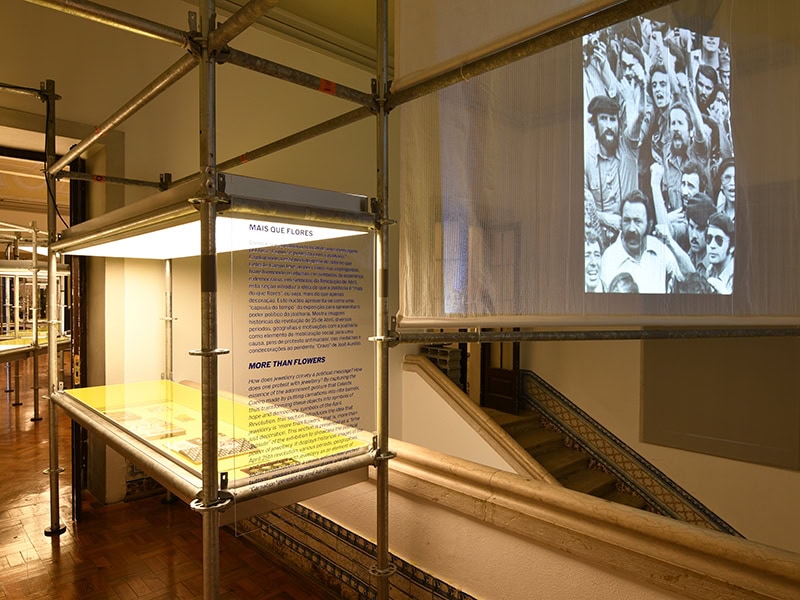
The project found its primary historical inspiration in the 50th anniversary of Portugal’s transformative 1974 Carnation Revolution. Curated by Marta Costa Reis, Mónica Gaspar, and Patrícia Domingues, Madrugada took over the atmospheric, vacant halls of the Calheta Palace in collaboration with MUDE – Museu do Design, widely recognized as a premier destination for Portuguese contemporary design and jewelry. Within these historic rooms, works by 90 jewelers hailing from 34 countries confronted pressing contemporary injustices, including systemic harms against migrants, oppressive beauty standards, and the alarming erosion of queer rights.
The curatorial framework offered a nuanced perspective on political art. The hope referenced in the exhibition’s subtitle is not a naive optimism or a paralyzing pessimism; rather, it is a resilient stance that endures uncertainty, keeping the practitioner’s hands free to get to work. The curators consciously sought out jewelry that carried both immediate rage and this enduring, active sense of hope.
Primarily for the Initiated
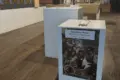
Writing a traditional review of such an exhibition presents distinct challenges, largely because the curators chose to accompany the physical works on view with only the sparest of information. Visitors encountering the display were typically provided with little more than the maker’s name, title, and materials.
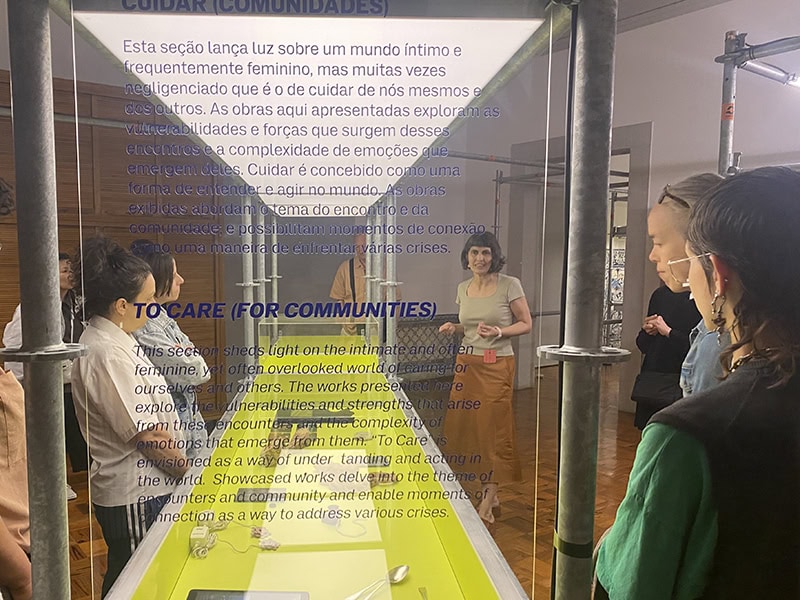
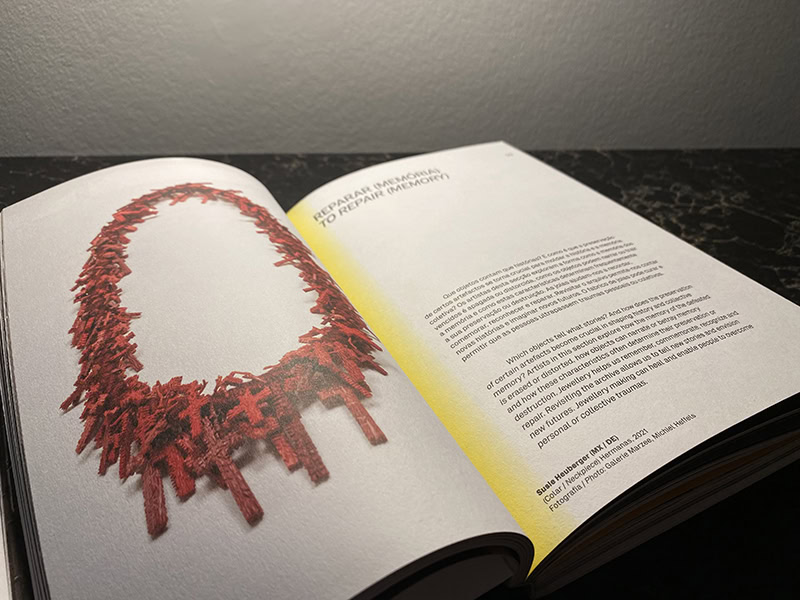
Navigating the space alongside Gaspar, Domingues, and participating artists provided crucial context. For instance, artist Nanna Melland explained the concept of a defensive swarm underlying her aluminum planes, while Johanna Zellmer gave profound personal meaning to a passport-inspired piece by sharing her own migration story. Similarly, Susie Heuberger revealed that the striking pinkish-red crosses in her neckpiece Hermanas were created to commemorate Mexican women lost to violent conflict.
For seasoned observers, familiar pieces offered moments of recognition. Ana Escobar Saavedra’s work—a newborn’s hospital ID band meticulously replicated in stone—reminds viewers that society begins constructing individual identity from the very moment of birth in the maternity ward. At the same time, the curators utilized the platform to challenge their own blind spots, selecting numerous young and underrepresented voices whose practices reflect fresh reactions to contemporary crises.
To structure this vast array of work, the curators organized the exhibition around eight hopeful actions: “To protest (voices),” “To empower (tools),” “To repair (memory),” “To acknowledge (materialities),” “To care (for communities),” “To transit (boundaries),” “To become (oneself),” and “To reimagine (coexistences).” Each section was introduced by a mini-essay. While these texts were sometimes difficult to read on the transparent display panels scattered throughout the Calheta Palace, they are easily savored within the pages of the catalog.
A Practice of Curatorial Care

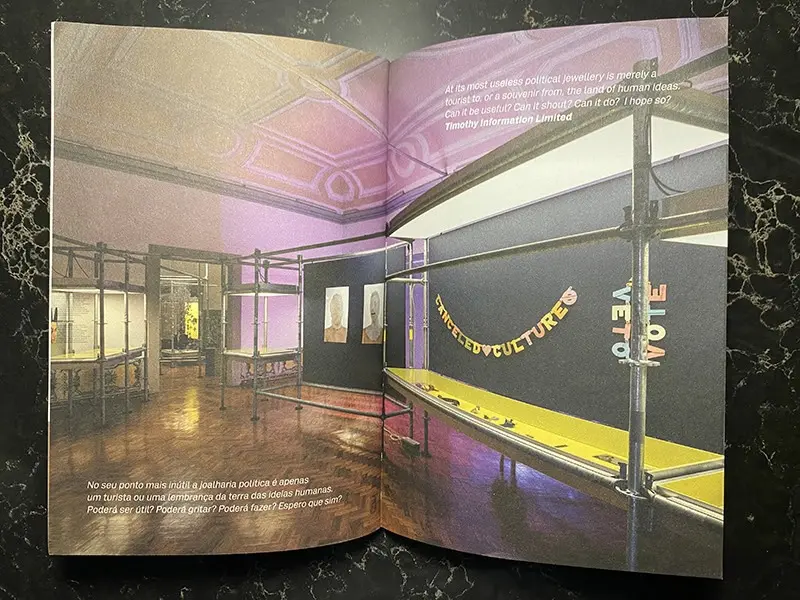
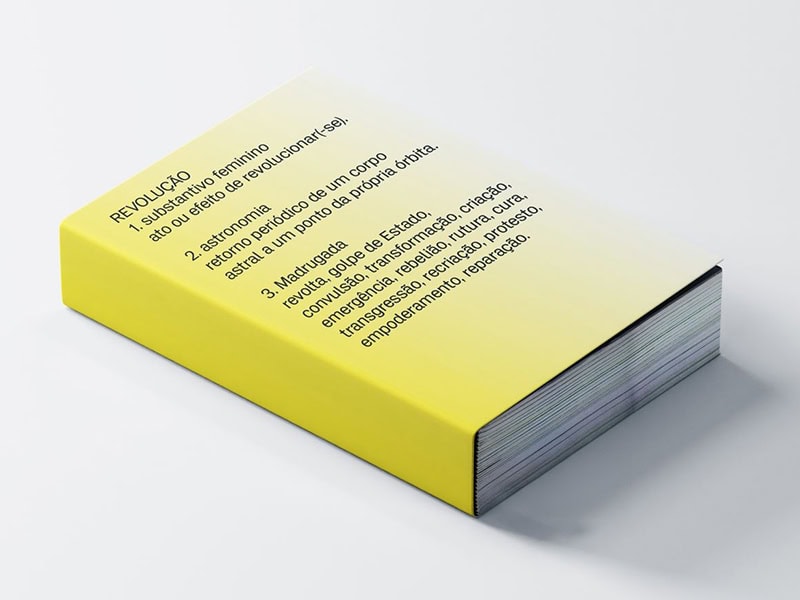
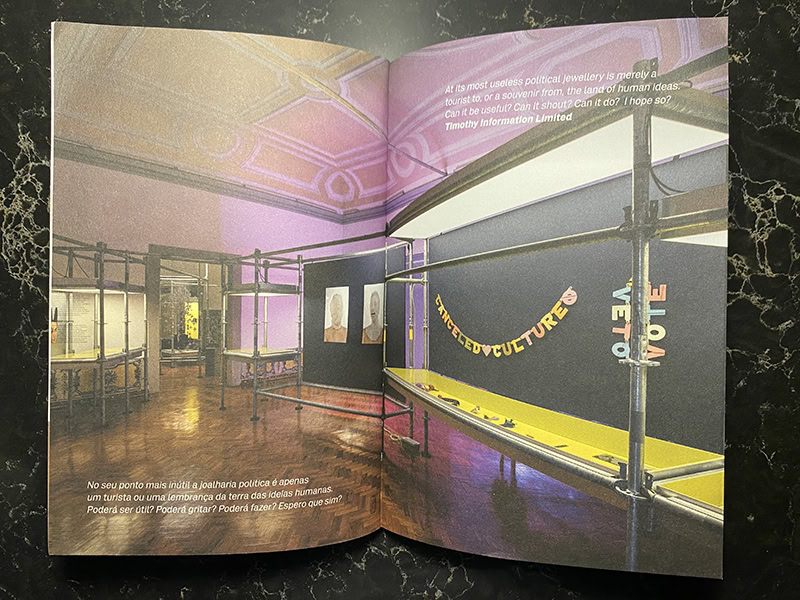
The catalog itself, distinguished by its bright yellow cover, acts as a mechanism to tend to the exhibition’s afterlife. Nearly all the imagery in the publication was captured in situ, documenting how the temporary exhibition scaffolding snaked gracefully through the tall rooms and narrow passages of the palace. Close-up photographs of works inside glass cases frequently capture the soft haze cast by the dominant yellow partitions.
This deliberate approach highlights how the curators extended their methodology beyond the physical deinstallation and return of artworks. During their appearance at Schmuck 2025, Gaspar and Domingues emphasized that the book functions as an active practice of “care,” designed to keep the project’s central ideas alive long after the physical show closed.
In an interview conducted by art critic Elena Karpilova and featured in the volume, the curators explained their decision to avoid providing a 200-page manual of literal explanations in the galleries. Instead, they opted for a limited number of QR codes, expressing a hope that audiences would feel curious enough to self-initiate acts of micro-research. While this minimalist strategy risked leaving certain works opaque to the casual viewer, it championed a philosophy of active engagement.
Avoiding Labels and Embracing Ambiguity
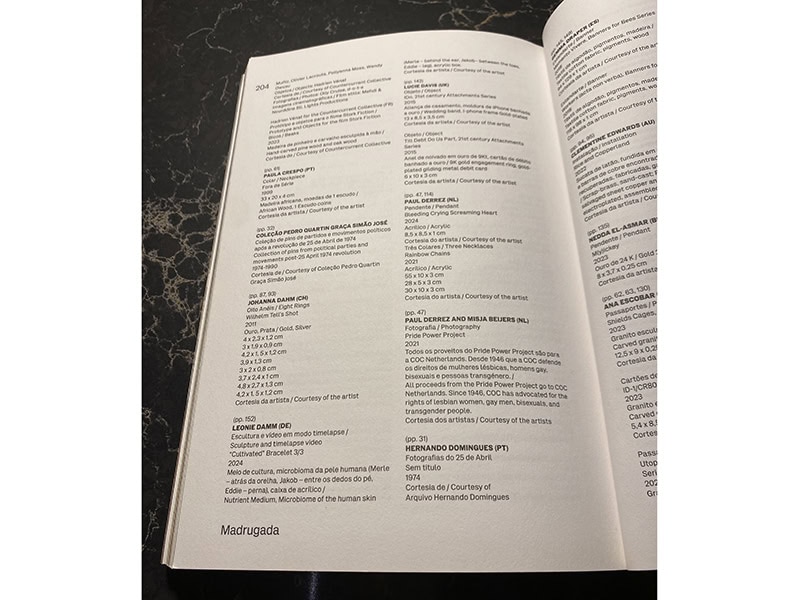
The catalog balances this philosophy by carefully listing the materials and dimensions of every piece, while occasionally offering deeper background and artists’ quotes. For instance, Auli Laitinen’s Nobel Bow references the secretary of the Swedish Academy, who wore distinctive bow-collared blouses before male colleagues forced her departure to sidestep #MeToo-related embarrassments. Wearing such a necklace carries genuine weight, particularly as political authorities worldwide increasingly penalize citizens for wearing “subversive” accessories, ranging from political pins to watermelon brooches symbolizing solidarity with Palestine.
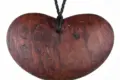
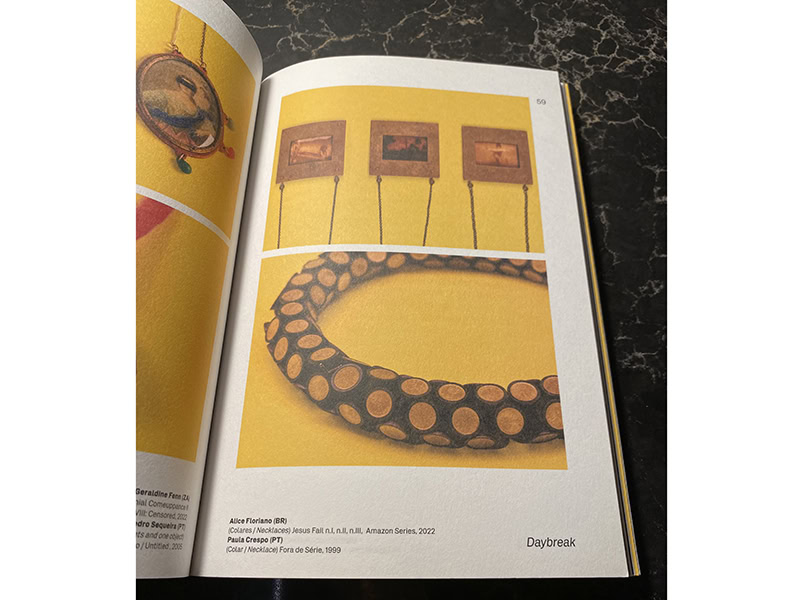
Other works demand similar deep looking. In Paula Crespo’s necklace Fora de Série, included in the “To repair (memory)” section, circular wooden disks are paired with 1-escudo coins. Only by consulting the catalog’s back index does the viewer learn the materials are “African Wood, 1 Escudo coins”—a subtle allusion to historical timber extraction in Portuguese colonies. Operating without the crutch of traditional descriptive wall labels creates a deliberate sense of unease, forcing viewers to weigh curatorial gatekeeping against the absolute freedom to look with their own eyes.
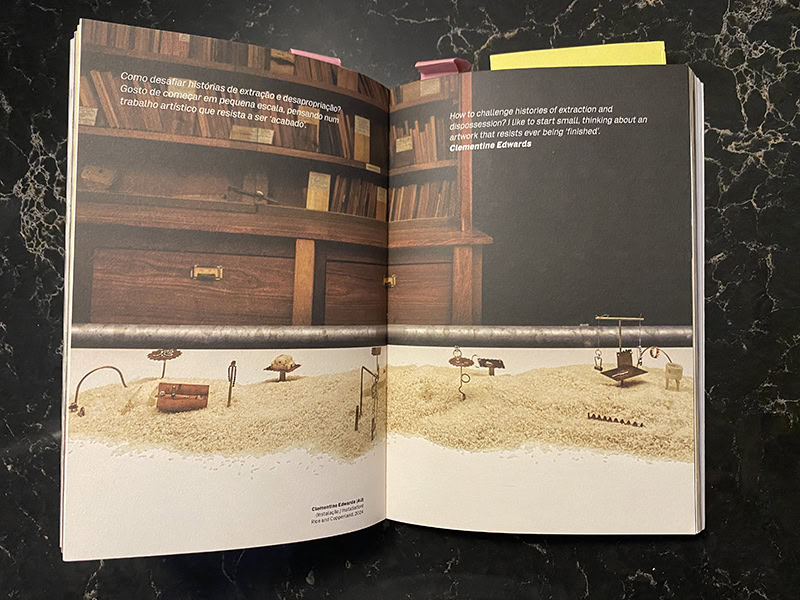
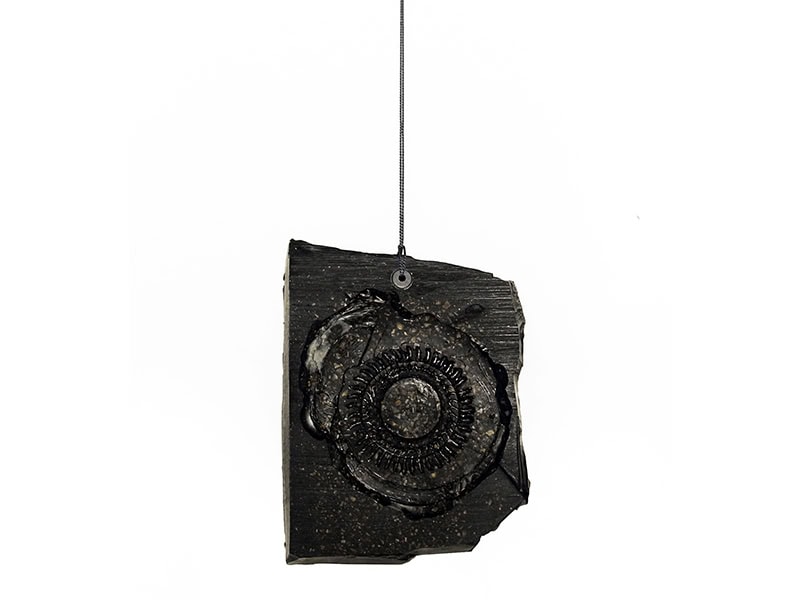
The publication provides vital keys to complex installations. Clementine Edwards’s Rice and Copperland, an installation incorporating scrap brass, sand-cast copper, and salvaged sheet copper against the backdrop of a former agricultural museum’s wood archive, is illuminated by the artist’s guiding philosophy: “How to challenge histories of extraction and dispossession? I like to start small, thinking about an artwork that resists ever being finished.” Similarly, Conversation Piece’s pendant Black Box, resembling an ammonite shell, gains critical depth when understood through the lens of technological obsolescence, overconsumption, and conflict minerals, utilizing materials as diverse as jet, ferrite, and seashell.
Jewelry as Protest
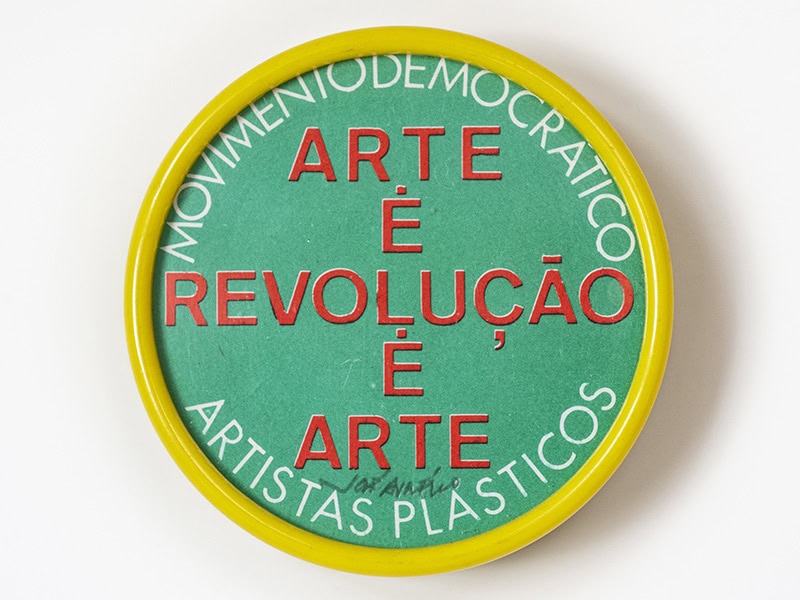
Madrugada sidesteps any tired debate over whether jewelry is an appropriate vehicle for political protest or hope, asserting instead that it inherently is. Nearly all art carries a revolutionary pulse, a sentiment echoed by José Aurélio’s 1974 medal reading Arte é Revolução é Arte. Midway through the volume, a quote by Timothy Information Limited challenges the medium directly: “At its most useless, political jewellery is merely a tourist to, or a souvenir from, the land of human ideas. Can it be useful? Can it shout? Can it do? I hope so?”
The exhibition and catalog demonstrate that jewelry “does” its work in multiple ways: by sounding alarms, by sketching utopian frameworks for human and non-human coexistence—such as in Countercurrent Collective’s film Stork Fiction—or by treating dystopia as a valid critical methodology. As Patrícia Domingues notes, acknowledging a complex reality through dystopia creates crucial room to imagine its opposite. Active hope is further embodied by collaborative projects like Makers Move, where Gitte Nygaard and Josephine Winther invited passers-by on the streets of Lisbon to craft wire jewelry centered on the concept of “freedom.”
Addressing the Chatter
The inclusion of two-dimensional works, videos, phone filters, and large installations successfully interrupts the visual cadence of traditional brooches and pendants. Helen Britton’s Shame Australia Shame presents an urgent, scrawled indictment on paper in tusche and acrylic, asking whether direct words are ultimately winning out over traditional metalwork as a medium of protest.
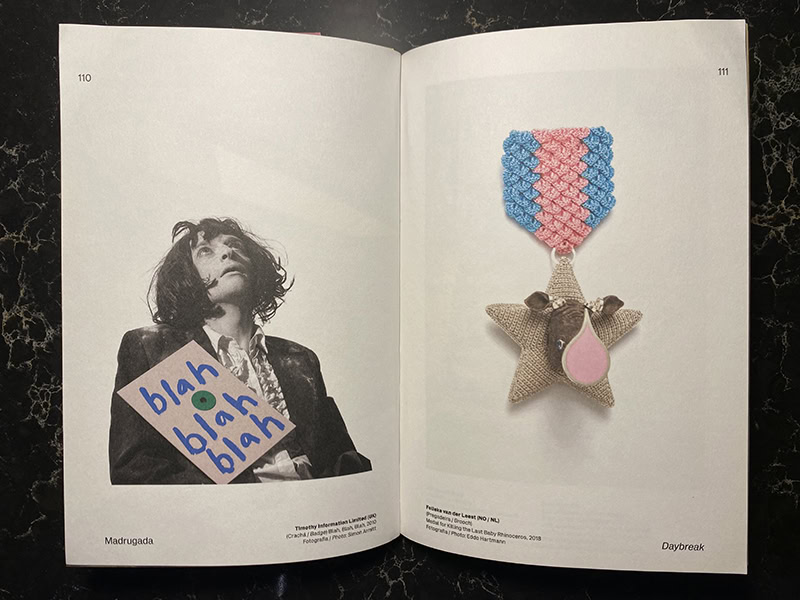
Yet words also manifest within traditional jewelry formats. Timothy Information Limited’s badge bearing the phrase “Blah blah blah” and Auli Laitinen’s readymade name tags spelling out “I am human” utilize text to question identity, coexistence, and social alienation.
Ultimately, Madrugada’s eight thematic pathways provide valuable clues regarding how political jewelry functions in daily life. Yet grasping how each individual piece embodies active hope remains a complex task without explanatory texts. By candidly addressing this curatorial dilemma, the exhibition and its accompanying catalog transform into a broader reflection on the precarious role of language within material art. As an enduring addition to the archive of contemporary jewelry literature, Madrugada sets a high standard, leaving many to hope that a similar publication will eventually document the upcoming Coexistences biennial.