





The design community in the Motor City is thriving more than ever, with over 100 events taking place across Detroit throughout the entire month of September. While cities like Milan, Mexico City, and London host celebrated design weeks, Detroit—the only designated UNESCO City of Design in the United States—devotes an entire month to celebrating creative innovation. Now in its 16th edition, the Detroit Month of Design features a diverse schedule of artist talks, open studios, film screenings, exhibitions, fashion shows, and community-oriented programming every September.
Design Core Detroit, an arts non-profit dedicated to supporting local design’s economic development and community growth, produces the festival. Despite its small size, the team works toward the collective goal of championing Detroit’s creativity on both a local and global scale. According to Kiana Wenzell, Detroit Month of Design Director and Design Core Detroit Co-Executive Director, design is inherently collaborative. The festival is co-curated with the community through an open call and stands as the only U.S. design festival produced by a member of the UNESCO Creative Cities Network (UCCN). Regular participation from other international members of the network, including representations this year from Kortrijk, Belgium, and Toronto, helps cement the event as a wide-reaching, electric, and diffuse festival united by a shared belief in the real-world value of creativity.
Visitors exploring the festival encounter a vibrant ecosystem of talented designers, local creators, and enthusiastic design aficionados. Volunteers at venues like Michigan Central’s Friday at the Station note that the event serves as an expansive window into the sheer volume of talent operating within Detroit. Throughout September, the city transforms into a living showcase where attendees gain a deeper appreciation for the passion and innovative drive embedded in the local creative community.
Shinola Presents: Designing for the Future | Time & Craft
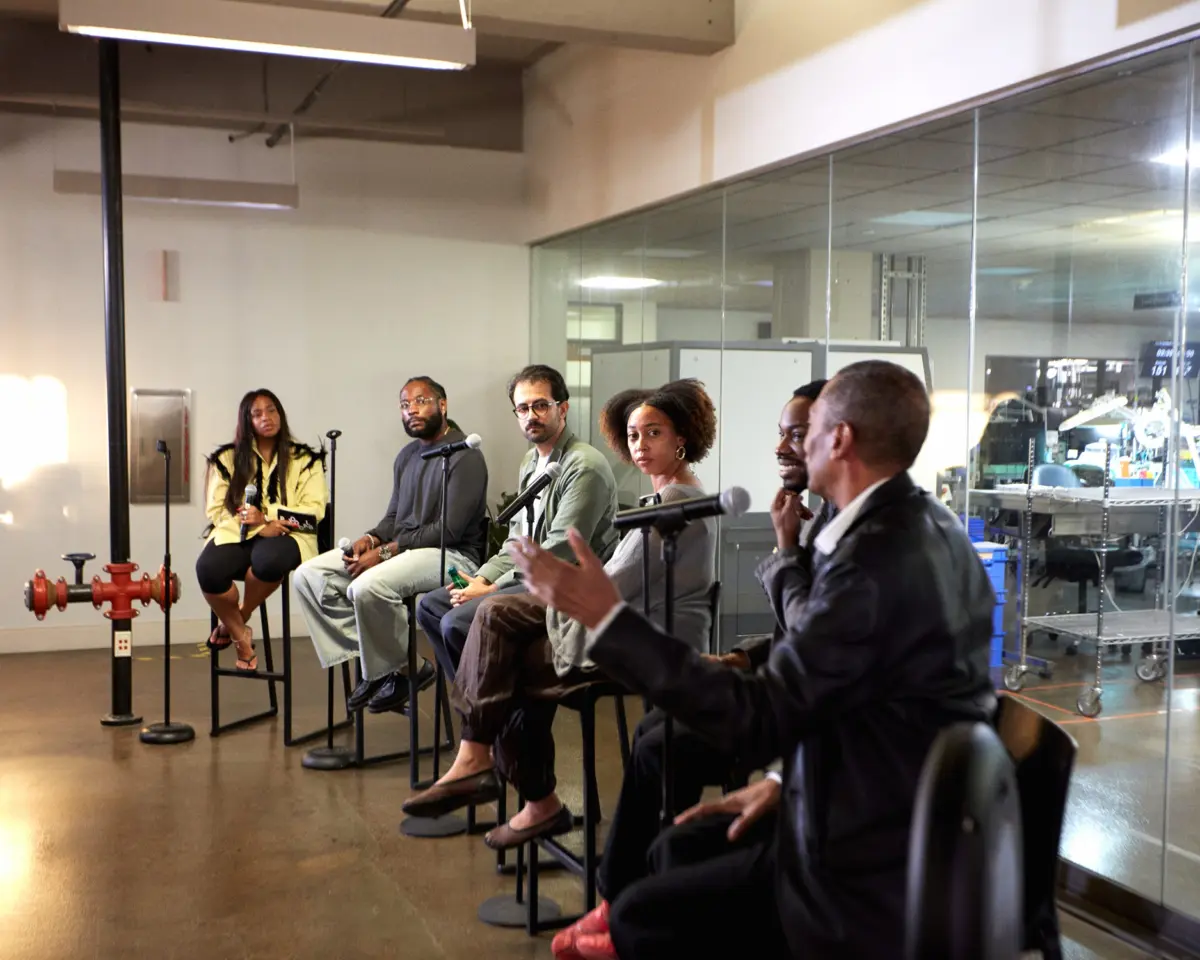
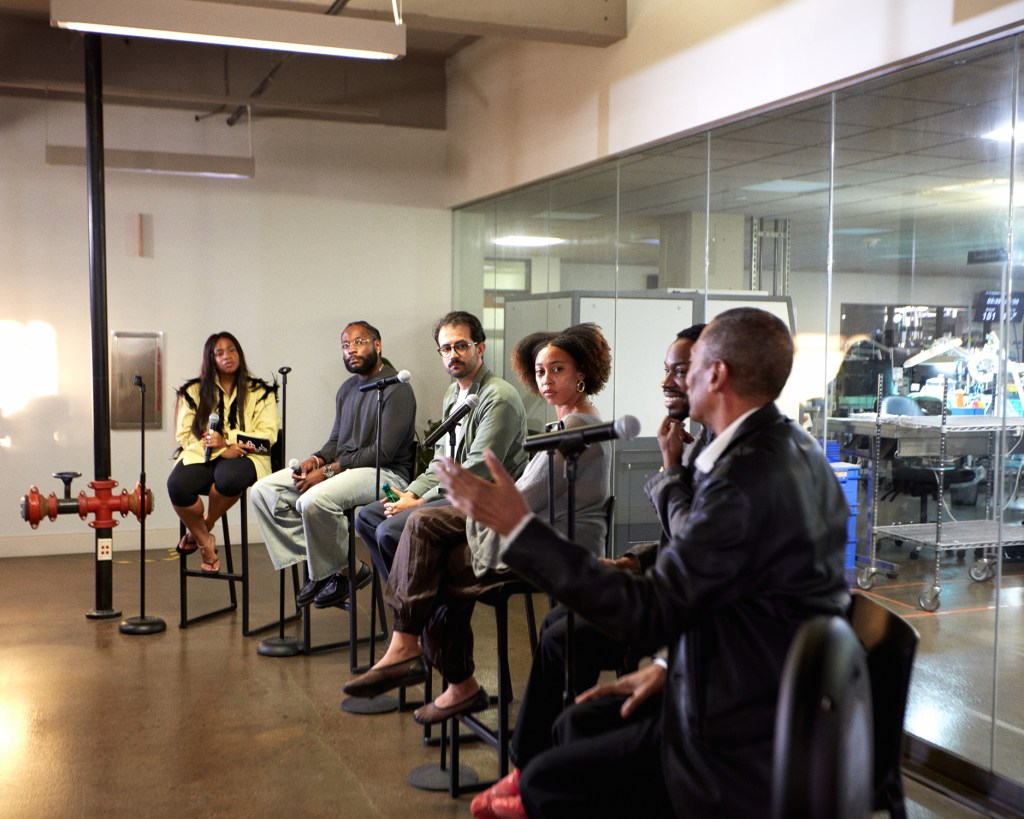
Shinola’s headquarters, alongside the College for Creative Studies and the office of Design Core Detroit, occupies the former GM Argonaut building in midtown Detroit. The facility also houses a 30,000-square-foot watch factory, serving as a firm nod to the city’s deep-rooted manufacturing heritage. As part of its Detroit Month of Design programming, the brand organized three artist panels exploring the concept of time through various lenses. The opening talk, Time & Craft, took place directly in front of the active factory floor. Aleiya Lindsey Olu, owner of the local magazine shop Periodicals, moderated the discussion featuring Detroit techno legend Jeff Mills, interdisciplinary artist Akea Brionne, Michelin Star- and James Beard Award-winning executive chef Charlie Mitchell of New York-based Saga, documentary photographer and former skateboarder Maen Hammal, and furniture designer Dozie Kanu.
As the audience settled into their seats, the panel explored sources of creative inspiration, the concepts of time and place, the role of diverse backgrounds in shaping distinct crafts, collaborative processes, and technology—including a thoughtful dissection of utilizing machines in the creative process. Mills noted that his studio work focuses heavily on theory and concepts, emphasizing that the idea remains the most vital element. Whether exploring classical and electronic music through live performance, constructing furniture from discarded materials, or weaving familial history into fine dining, the panel concluded that art permeates every aspect of life. Brionne added that putting anything out there constitutes an act of creativity, noting that art exists in virtually every aspect of life even when it lacks a traditional frame. Shinola’s Designing for the Future series continues with additional talks covering Time & Systems and Time & Space later in the month.
Art + Cars at GM Entrance One
Detroit’s legacy as the Motor City remains central to its industrial identity, and General Motors’ new global headquarters at Hudson’s Detroit exemplifies how the automotive industry continues to advance innovation and design. Designed by SHoP Architects, Kendall/Heaton Associates, and Pophouse for interior spaces, the building features a multi-floor core atrium centered around a massive hanging Bertoia sculpture, while GM’s workspace spans over 200,000 square feet across the top four floors. Its ground-floor public space, Entrance One, features an immersive exhibition room showcasing new vehicles, interactive displays, and the Art + Cars exhibition.
The auto-forward visual exhibition brings together paintings, hand-built pottery, light installations, dimensional sculptures, and woven pieces crafted from painted aluminum mesh. Three distinct concept cars anchored the display—a gunmetal gray Buick Wildcat, a butter yellow Cadillac Sollei, and a maroon GMC Hummer X—while three artist-painted cars were parked outside and a pair of clay modelers put finishing touches on a scale model. Perimeter panels and pedestals showcased works by artists including Ijanja Cortez, Patrick Ethan, Cathy Jacobs, KACEYKAL, Blythe McCaig, Sandra Osip, Bilge Nur Saltik, Matthew Shlian, Phillip Simpson, India Solomon, and Vaughn Taormina. GM’s Entrance One remains open to the public daily, with the exhibition running through November 1.
Fridays at the Station: Detroit Month of Design Takeover
Michigan Central, which officially reopened following a multi-year revitalization, continues to establish itself as a vital community hub. Originally constructed in 1913 by the architects behind New York’s Grand Central Terminal, the historic train station operated as a bustling travel center before closing in 1988 due to declining passenger train popularity. For decades, the vacant structure sat as an urban explorer’s haven and a canvas for graffiti writers. Following a six-year renovation involving 3,000 workers and 1.7 million hours of labor, the station and its 30-acre campus have been transformed into an innovation and community space, with the upper floors slated to host the NoMad Hotel in 2027.
The station’s monthly Friday evening cultural series featured special design-focused activations for the Month of Design. Sneaker designer and tap dancer Rick Williams performed his percussion album Introducing Metal Feet, produced by JRGottheHits, alongside a screening of the accompanying documentary.
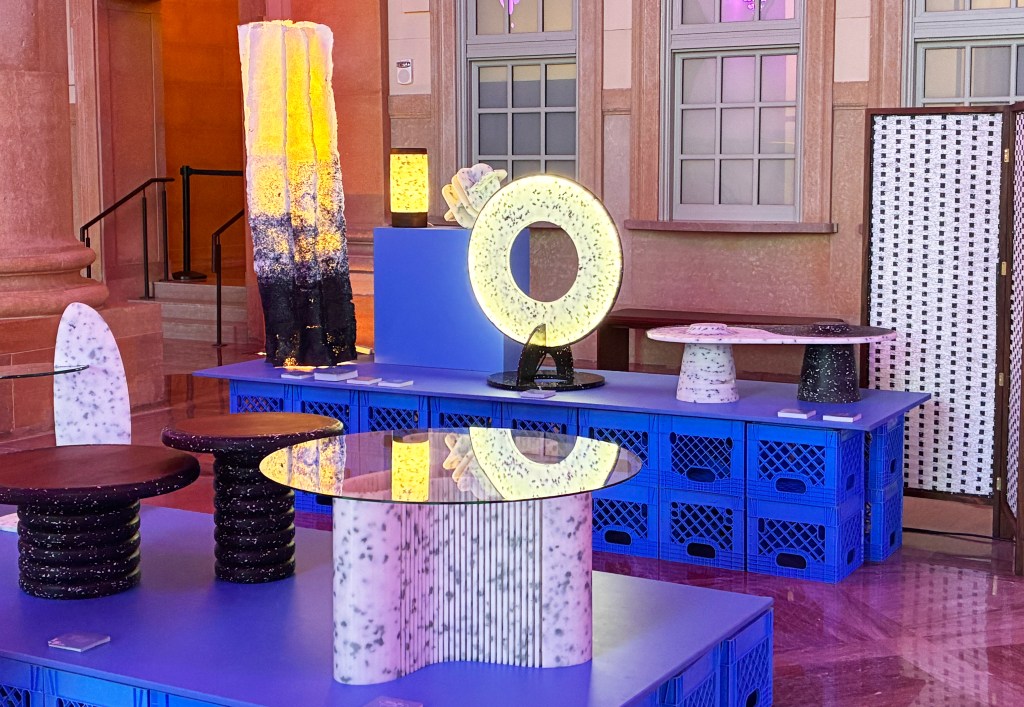
Visitors inside the rose marble Grand Hall were equally drawn to student works presented by Lawrence Technological University’s College of Architecture and Design. Product design students exhibited innovative furniture and lighting crafted from recycled HDPE sheets supplied by Design Declassified. The high-end pieces successfully diverted nearly 1,300 pounds of plastic waste into functional objects, a collection that previously earned the institution the ICFF WANTED Best of Schools award at the 2026 ICFF. LTU is set to host an upcoming talk exploring the collaborative process behind these award-winning designs.
Cars at the Station
Marking its third annual run, the Cars at the Station event drew a record-breaking 19,000 visitors to the plaza directly in front of Michigan Central. Described as a community-focused event that happens to feature automobiles, the family-friendly gathering offered Red Bull DJ sets, guest speakers, test drive opportunities, and a comprehensive exhibition of classic and contemporary car designs.
Wild.Form: Domestic Survival at Floyd Detroit
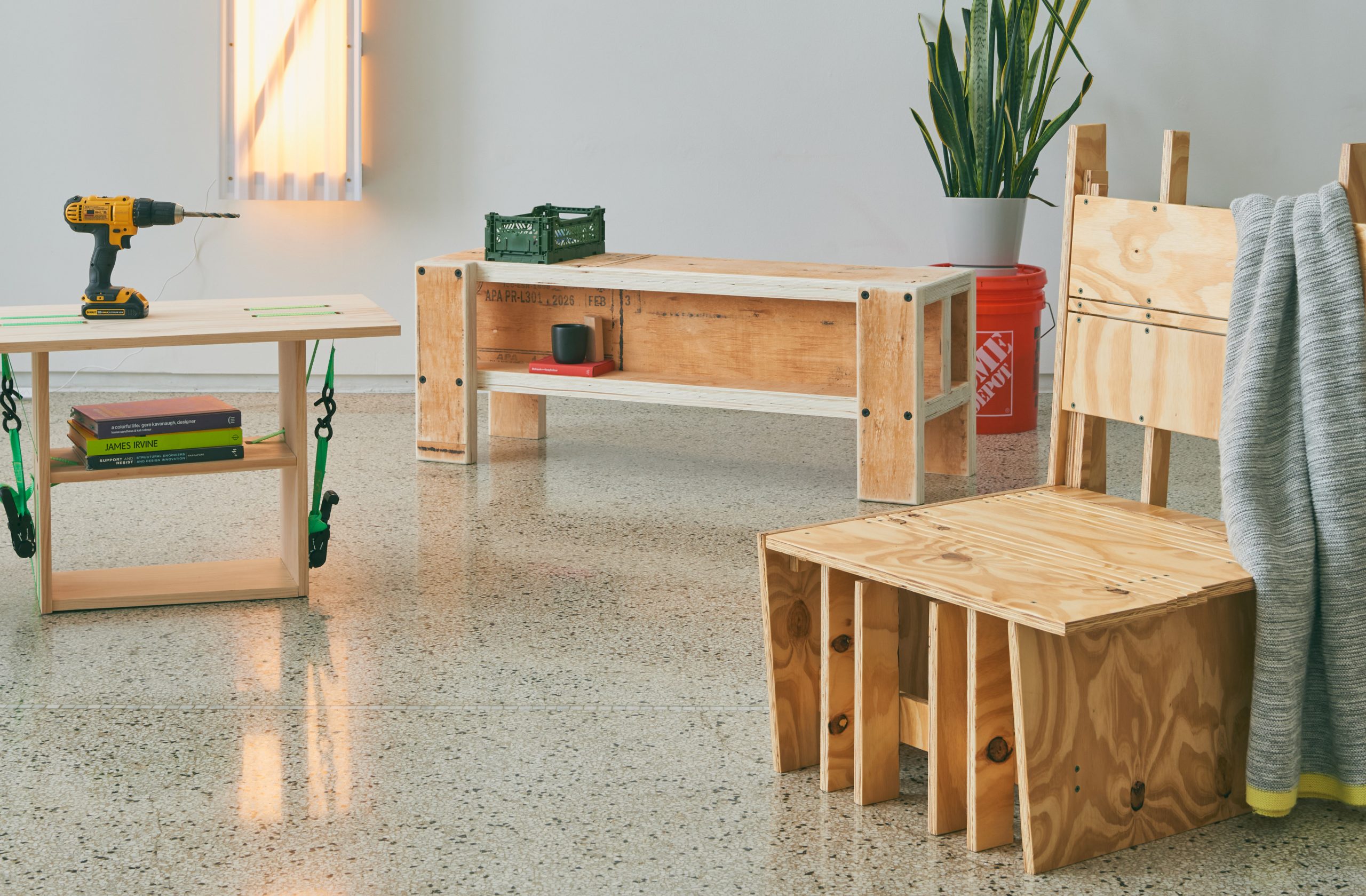
Collaborating to combat low-quality, disposable furniture, designers Sophie Yan and Valeria de Jongh established the Wild.Form project. Drawing on their backgrounds in architecture and design, the duo curated a tactile exhibition featuring hand-built furniture pieces contributed by 21 designers. Designed for active use and replication, the project accompanies a book titled Wild.Form: Recipes for Domestic Survival, which acts as a minimal furniture cookbook. Providing DIY instructions using accessible hardware staples such as plywood, bolts, and ratchet straps, the project encourages individuals to move away from cheap goods and build or repair functional home furnishings independently.
Georgia O’Keeffe: Architecture at DIA
Though widely celebrated for her iconic paintings of flowers and New Mexican landscapes, Georgia O’Keeffe’s architectural works take center stage in a major exhibition at the Detroit Institute of Arts. Inspired by the museum’s permanent collection piece Stables, DIA Curator of American Art Ben Colman spent a decade researching her architecture-focused creations. Georgia O’Keeffe: Architecture brings together depictions of the Brooklyn Bridge, her New York City apartment building, upstate New York barns, and a recurring series focused on the front door of her pueblo home. Colman notes that the exhibition highlights O’Keeffe’s consistent, decades-long exploration of place and identity through the built environment, offering visitors a fresh perspective on her artistic vision.
On Air Off Grid Music Tour
Celebrating the city’s rich musical heritage—which spans icons like Diana Ross, J Dilla, Stevie Wonder, Eminem, Moodymann, Marvin Gaye, Jack White, and Aretha Franklin—Solar Party Detroit and the Underground Music Academy hosted a solar-powered live DJ set aboard a bio-diesel party bus. The tour stopped at historic music landmarks across the city, including the Motown Museum, which is currently undertaking a major expansion designed by Perkins&Will and HamiltonAnderson, as well as the Apex Bar where John Lee Hooker launched his career.
Saarinen House at Cranbrook Academy of Art
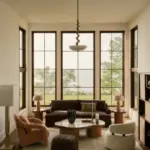
Located just a short drive north of Detroit in Bloomfield Hills, the Cranbrook Academy of Art campus offers visitors a peaceful retreat into mid-century design history. Architect Eliel Saarinen designed the sprawling 319-acre campus—comprising artist studios, an art museum, schools, and a library—after relocating to Michigan from Finland in 1928. A walk through the grounds reveals meticulous architectural details, including optical illusions, decorative arches, and custom slate shingles. Visitors touring the perfectly restored Art Deco Saarinen House can experience the living spaces designed by Eliel and his textile designer wife, Loja, showcasing custom-built furniture, hand-woven textiles, and integrated artistic details preserved from their years living on campus.