



Prada has officially expanded its historic and cultural footprint inside Milan’s iconic Galleria Vittorio Emanuele II, transforming its original birthplace into an expansive, eight-floor vertical universe. Named Prada Galleria, the landmark project occupies the exact site where Fratelli Prada first opened its doors back in 1913. Rather than merely modernizing a traditional flagship store, the luxury fashion house has stretched its presence both vertically through the historic 19th-century arcade and, most notably, deep beneath its stone floors.
Developed under the creative direction of Miuccia Prada, the ambitious complex officially opens to the public on September 23, bringing together more than a century of the brand’s storied history. Instead of locking this heritage inside a conventional, static brand museum, Prada Galleria frames the house’s distinct identity as something that has continuously evolved through dynamic encounters with architecture, fine art, cinema, contemporary culture, and sports. The final result blends vastly expanded retail boutiques with rotating archival exhibitions, traditional Milanese pastry culture, exclusive private salons, and cutting-edge spaces dedicated to contemporary art. Through this multifaceted approach, shopping becomes merely one component of a much larger, immersive itinerary.
THE ARCHIVE GETS A SECRET PASSAGE
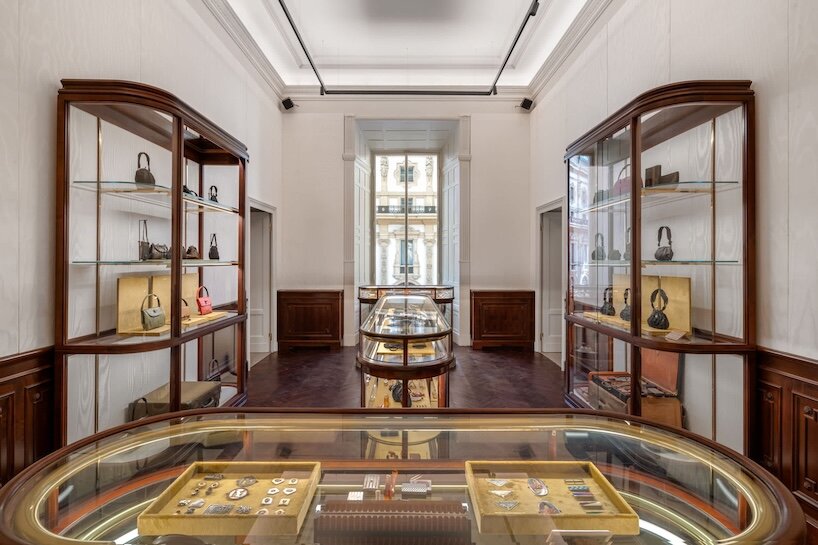
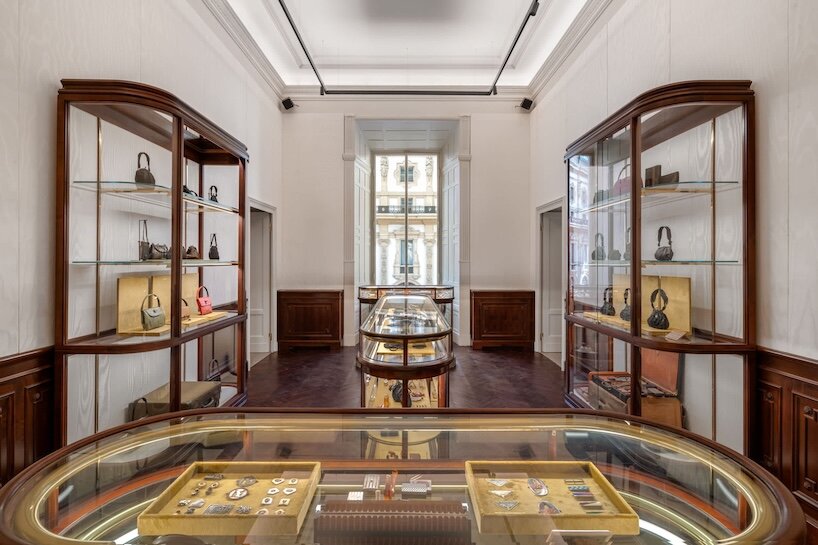
At street level and deep below ground, the original Prada Donna store has undergone a radical transformation, nearly doubling its usable display space. Alongside the expanded women’s collections, the renewed boutique now features dedicated, larger areas for travel accessories, home collections, and beauty products, all thoughtfully curated among historic architectural murals and rare archival objects. Diagonally opposite this retail anchor, the Prada Uomo store joins the newly integrated network through a striking subterranean pathway, physically stitching the two distinct addresses together beneath one of Milan’s most famous public interiors.
This newly minted subterranean connection has been christened with appropriate theatricality as the Passaggio Segreto, or the Secret Passage. Rather than serving purely as a utilitarian corridor for foot traffic, the tunnel doubles as an immersive exhibition space. It highlights lesser-known episodes from Prada’s long history, focusing particularly on early corporate experiments and brand "firsts" that anticipated the fashion house’s enduring interest in multidisciplinary collaboration and cultural cross-pollination.
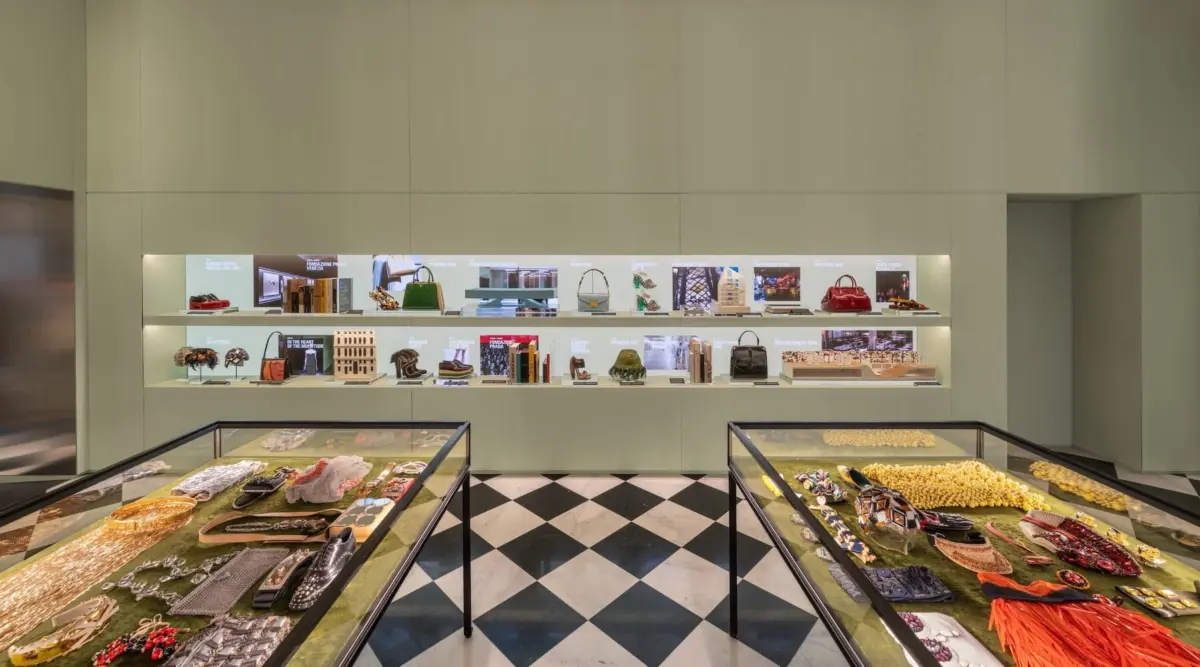
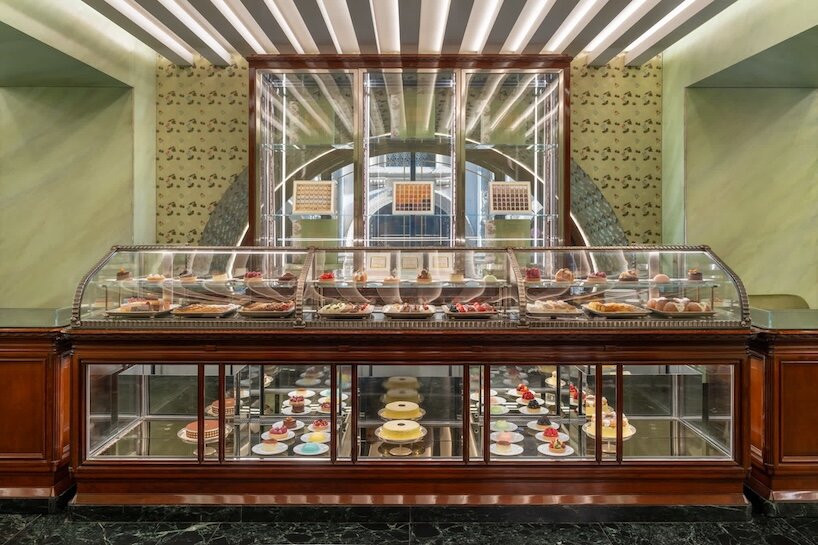
Directly above the men’s store, the historic pastry shop Marchesi 1824 continues the journey by offering a distinctly Milanese answer to cultural immersion through high-end pastry and café culture. Ascending one floor higher brings visitors to Pradasphere, which marks the first permanent exhibition space entirely dedicated to the brand. This floor gathers archival artifacts and material spanning the company’s 1913 origins to the present day, building upon the success of previous temporary iterations staged in London and Hong Kong in 2014, as well as a more recent edition in Shanghai in 2023.
FROM PRIVATE SALONS TO VISUAL EXPERIMENTS
Moving upward, the second floor of the Prada Galleria complex shifts into a considerably more private and intimate register. Known as Studio, this level is arranged as a sequence of salon-like rooms tailored for personalized, appointment-only shopping experiences. These private spaces are organized around a central hall capable of hosting exclusive private events and gatherings.
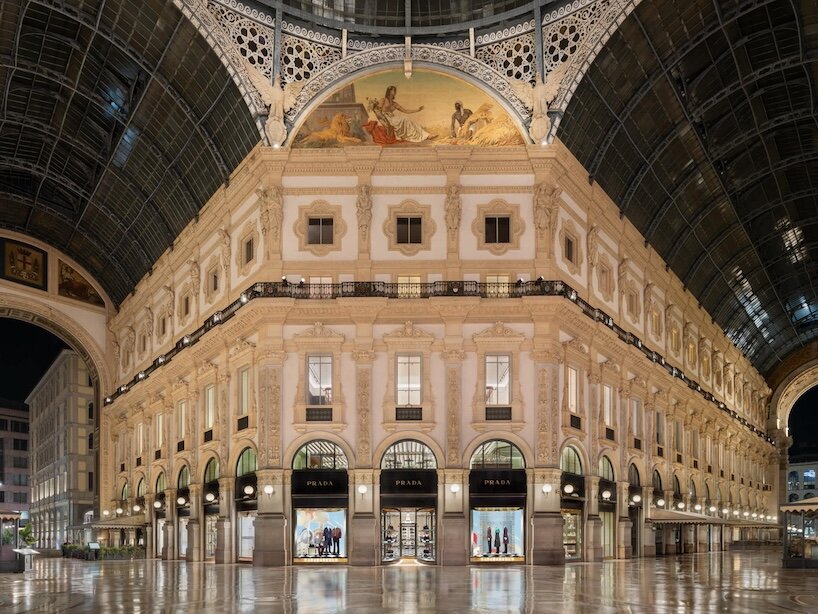
Directly above Studio lies Appartamento, a space designed to evoke an 18th-century domestic interior populated by a careful selection of antique Italian furniture juxtaposed against striking contemporary photography. Renowned artist Andreas Gursky has curated a special exhibition of his own large-scale works for the space, deliberately setting his modern images against an unlikely historical backdrop that looks out over the monumental mosaics of the Galleria arcade. Conceived strictly for private dinners, invitation-only gatherings, and special occasions, the apartment further blurs the already porous boundaries separating a retail boutique, an art gallery, and a private home.
At the uppermost levels of the building, the Osservatorio Fondazione Prada completes the sprawling complex with a dedicated venue for visual experimentation. This top-floor space sits at the intersection of technology, contemporary culture, and avant-garde artistic expression.
Taken as a whole, the eight floors transform Prada’s original Milanese address from a traditional retail flagship into a fully realized cultural ecosystem. Visitors can move seamlessly from fashion retail to historic archives, from artisanal cakes to Gursky’s photography, and from private dining rooms to high-tech image research without ever truly leaving the building. Ultimately, Prada Galleria treats the brand’s extensive history not as a static collection of artifacts to be viewed passively behind glass, but rather as an active series of interconnected rooms, secret passages, and physical encounters that invite the public to walk directly through the legacy of the house.