






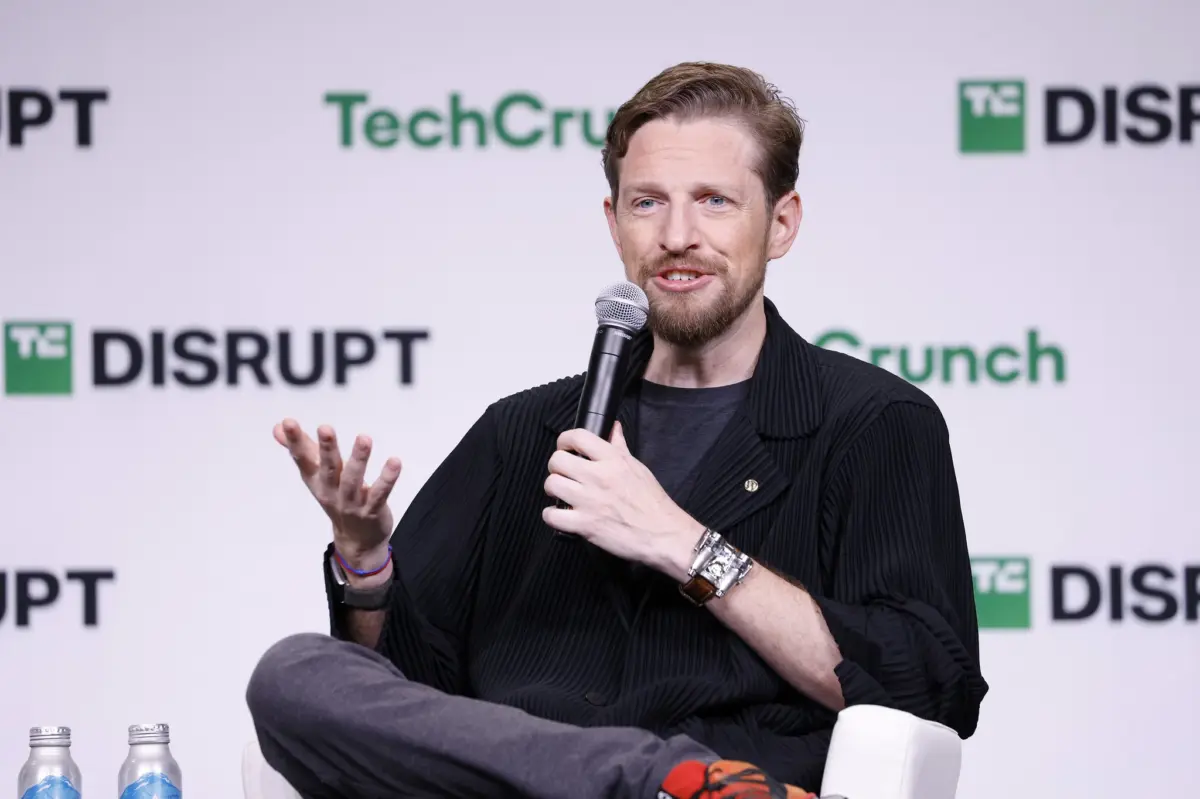
Matt Mullenweg, the co-creator of WordPress and the founder and chief executive officer of Automattic—the commercial parent company behind WordPress.com, WooCommerce, Tumblr, and Pocket Casts—has been abruptly removed from his position and placed on a paid leave of absence by the company’s board of directors against his will.
The stunning leadership shakeup came to light Wednesday when Mullenweg posted a candid message in an open Slack channel visible to all Automattic employees. According to the internal communication, the company’s chief financial officer, Mark Davies, allegedly conspired with fellow board members Ann Dunwoody, Toni Schneider, and Sue Decker to force Mullenweg out.
The internal dispute erupted into public view through Mullenweg’s message, which revealed that a formal board vote had taken place behind his back. The message explained that Mullenweg was unable to attend an upcoming meeting because he had been sidelined. He wrote that Mark Davies had conspired with Ann Dunwoody, Toni Schneider, and Sue Decker, and that they had voted to put him on a paid leave of absence, adding that he had voted against the measure while wishing Mark and the rest of the team the very best.
Furthermore, Mullenweg clarified that Mark Davies was voted in as interim CEO during the maneuver. He noted that he received the official resolution just 50 minutes before the meeting commenced and that his repeated requests for a brief extension of a few hours to have the document reviewed by independent legal counsel were flatly denied by the board.
Despite his removal from the helm of Automattic, the open source side of the ecosystem appeared to be operating under a different directive, at least initially. Mary Hubbard, the executive director of the WordPress.org project, issued a reassuring Slack message to the open source community to confirm Mullenweg’s change of status at the commercial enterprise while emphasizing that WordPress.org remained unaffected by the boardroom coup. Hubbard asserted that Matt remained the leader of the WordPress project and that she remained the executive director, assuring community members that teams, priorities, and work would continue precisely as planned.
Mullenweg’s initial Slack communication did not explicitly outline the exact catalysts behind the board’s sudden intervention. However, industry reporting from 404 Media, which first broke the news, noted that Toni Schneider—who previously served as Automattic’s CEO from 2006 to 2014—confirmed that the governance action was indeed initiated directly by the board. Additionally, Mark Davies addressed employees within the same Slack channel to confirm that despite losing his executive powers, Mullenweg technically retained his seat on the company’s board of directors.
Automattic formally corroborated the leadership transition later in the day through an emailed statement provided to tech publications. The company stated that Matt Mullenweg was currently on leave from Automattic, and that Mark Davies, the firm’s chief financial officer, would step up to lead the organization as interim CEO. The board expressed its full confidence in Davies’s leadership and in the broader executive team’s capacity to execute against the company’s ongoing strategic priorities.
The boardroom showdown marks a dramatic escalation in a turbulent period for Mullenweg and Automattic, which have spent the last few years mired in high-profile legal battles and deep-seated corporate controversies. The most prominent among these issues is a protracted and bitter legal conflict with WP Engine, a major WordPress web hosting competitor. The hostilities initially ignited after Mullenweg publicly accused WP Engine of improperly profiting from the open-source WordPress project without adequately contributing back resources or code to the community, culminating in a demand that the rival pay 8 percent of its monthly gross revenue as a royalty fee for utilizing the WordPress brand.
The friction quickly manifested into formal litigation. WP Engine filed a lawsuit against Automattic and Mullenweg, accusing them of defamation and an unlawful abuse of corporate power. Automattic responded by filing counterclaims against the hosting provider, alleging trademark misuse and unfair competition. The legal maneuvering continued to expand when WP Engine claimed in a court filing that Automattic had actively planned to target roughly ten additional competitors with similar royalty demands.
The internal and external strain under Mullenweg’s leadership has also taken a severe toll on Automattic’s workforce and corporate culture. The tensions reached such an intense pitch that in late 2024, Mullenweg publicly invited employees who disagreed with his leadership style or his crusade against WP Engine to resign in exchange for severance packages, an offer that was ultimately accepted by 159 departing employees.
Controversy also swirled around the management of the broader open-source ecosystem. Last year, Mullenweg threatened to deactivate the user accounts of several prominent members of the WordPress.org community after two of them allegedly discussed plans to spearhead a new, forked version of the open-source project. Although the individuals involved denied harboring any such plans, sources indicated that Mullenweg proceeded with deactivating their accounts alongside those of several other long-standing community contributors.
Compounding these operational and cultural strains, Automattic implemented a major round of layoffs in April 2025, cutting roughly 16 percent of its staff. Those reductions reportedly swept through the organization and claimed the jobs of veteran employees who had dedicated more than a decade of service to the company.
Following the news of Mullenweg’s suspension, reactions within the company’s network were sharply divided. According to sources familiar with internal communications, company alumni reached out to current employees to gauge the mood inside the organization. While some current staffers expressed feelings of relief or even ecstasy over the leadership change, others harbored mixed emotions, expressing anxiety that the sudden boardroom coup could introduce deeper instability into an already fractured corporate environment.
Speculation mounted regarding the precise timing of the board’s decision, with observers questioning why the directors chose this exact moment to strike. One insider theorized that the timing might be tied to Mullenweg’s annual pilgrimage to the Burning Man festival, an event from which he historically returns brimming with new ideas and unconventional initiatives. This year’s installment of the desert festival concluded on September 7.
However, Mullenweg himself appeared to offer substantial clues regarding the true motivations behind the board’s punitive action through a series of pointed posts published on X late Wednesday evening. In one post, he explicitly referenced the high-stakes legal dispute with WP Engine, writing that there was a pretty good chance his adversaries might convince a judge that he had spoiled evidence in a malicious way in an attempt to hide something. In his social media commentary, Mullenweg vehemently denied engaging in any such misconduct.
In another post on the platform, Mullenweg predicted that he would soon become the target of coordinated smear campaigns, advising observers to brace for tabloid-style rumors or hit pieces. He revealed that he believed an initial attempt at such tactics had already occurred when his Nikon D6 camera was stolen during his time at Burning Man—though it was recovered just a day later—noting with relief that among the more than 2,000 photographs stored on the memory card, there was nothing his detractors could use against him. To underscore the point, he shared several artistic photographs he had captured of installations at the festival.
Mullenweg did not respond to subsequent emailed requests for comment regarding his removal as CEO or the specific allegations swirling around the ongoing corporate and legal battles. As Mark Davies assumes the reins as interim CEO, the future direction of Automattic and its relationship with the vast WordPress ecosystem remains uncertain as the company navigates both a leadership vacuum and a complex web of legal challenges.