






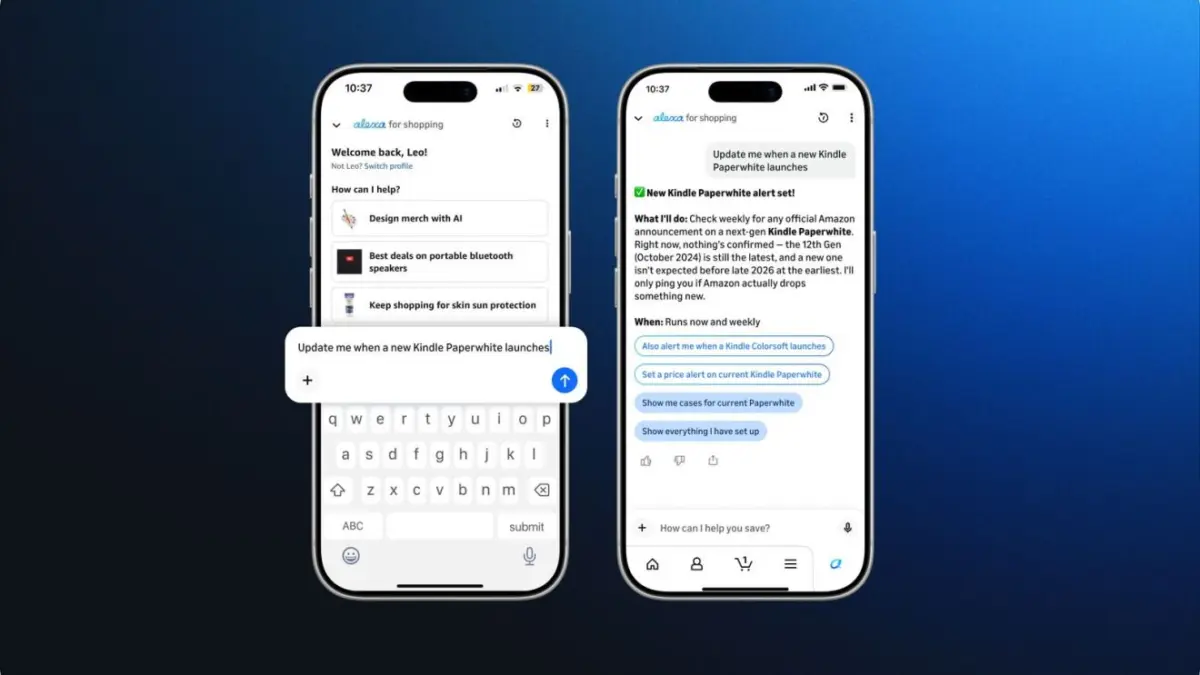
Amazon is continuing to push the boundaries of how artificial intelligence can reshape the digital retail landscape, introducing a major new capability designed to make its shopping experience even more proactive. On Tuesday, the retail giant officially launched "Update Me When," a fresh feature integrated directly into its Alexa for Shopping AI assistant. This latest addition is engineered to deliver personalized notifications straight to consumers, alerting them whenever a new, relevant event occurs that could spark a purchasing decision. Rather than waiting for a customer to log on and search for an item, Amazon’s assistant is learning to bridge the gap between consumer interests and market happenings before a search query is even typed.
The conceptual scope of "Update Me When" is remarkably broad, designed to touch upon numerous facets of consumer culture and commerce. According to examples provided by Amazon, shoppers will be able to configure the tool to track a wide variety of milestones and releases. For instance, a user might set an alert to notify them the exact moment a favorite apparel brand drops an anticipated new product line. Entertainment enthusiasts could track the premiere of a new season of a favorite television series, while music fans could receive alerts when a beloved recording artist announces upcoming tour dates. Avid readers might use the feature to find out when a preferred author releases a new book, and technology consumers could stay ahead of the curve by tracking when a preferred tech company announces a brand-new hardware release, among many other possibilities.
This strategic rollout is just one of several AI-powered shopping features that Amazon highlighted on Tuesday, pointing collectively toward a much larger, foundational shift in the company’s broader artificial intelligence strategy. For years, the traditional role of Alexa has been largely reactive—principally serving as a voice-activated helper designed to answer direct product questions when prompted by a shopper. The introduction of "Update Me When" represents a clear evolution away from this purely reactive model. Now, the assistant is evolving into a predictive partner capable of anticipating the exact moments that might prompt a user to make a purchase, effectively reaching out to the consumer before they have even thought to ask.
While initial implementations of the feature require consumers to configure their own custom alerts manually, the trajectory of retail technology points toward a far more automated future. It is not difficult to imagine a digital retail environment where Amazon’s intelligent systems begin automatically generating alerts on behalf of users, or proactively suggesting tailored alerts for shoppers to subscribe to as they browse their favorite product categories. By learning from user behavior, browsing history, and past purchases, the system could eventually curate a personalized stream of market updates designed to keep consumers perpetually informed about the exact niches and items they care about most.
The introduction of "Update Me When" joins a robust ecosystem of existing Alexa for Shopping capabilities that Amazon has steadily rolled out to refine the digital storefront. Among these companion tools, one of the most prominent and practical is the platform’s price-tracking feature. This system allows users to instruct the assistant to monitor specific goods and send an alert the moment a product drops to a particular price point or achieves a desired discount percentage. For ultimate convenience, the feature can even be configured to automatically execute a purchase on behalf of the user the exact moment those predefined conditions are met, removing friction from the transaction process entirely.
Beyond monitoring prices and future events, the retail giant has systematically integrated conversational and generative AI into nearly every corner of the shopping journey using Alexa and related tools. The platform has been leveraged to source personalized deals for individual users, generate comprehensive shopping guides tailored to specific needs, and dynamically build shopping carts populated with items derived from past purchasing behavior. Furthermore, shoppers can track a product’s detailed pricing history, view rich artificial intelligence-generated overviews when searching for products or browsing product detail pages, transcribe handwritten shopping lists to quickly add items to a digital cart, seamlessly compare competing items, and take advantage of numerous other intelligent enhancements designed to streamline commerce.